The Filter Coffee That Changed My Mornings
I first tasted real filter coffee on a train journey through Tamil Nadu, and this filter coffee recipe is my attempt to bring that morning back into my own kitchen. The train had stopped at a small station just after dawn, and a vendor came down the platform carrying a steel pot and a stack of small steel tumblers. He poured the coffee from one vessel to another in a long, high arc, and the froth rose like a crown on top. I took one sip standing in the doorway of the carriage, and the whole day rearranged itself around that cup. It was nothing like the instant coffee I had been drinking for years. It was darker, thicker, almost chocolatey, and it carried the smell of roasted beans and hot milk all the way down the platform.
What I did not know then was how simple the equipment behind that cup actually is. A South Indian filter is just two steel cylinders that stack together, a perforated disc, and a plunger — no electricity, no paper filters, no complicated machinery. The magic is in the slow drip: finely ground coffee and a little chicory sit in the top chamber while hot water coaxes out a thick, dark decoction, drop by drop. Once that decoction is ready, this filter coffee recipe takes about twenty-five minutes from start to finish, serves two people generously, and turns an ordinary morning into something worth slowing down for. If your coffee routine has gone stale, this is the cup that wakes it up.
Why This Filter Coffee Recipe Works
- Slow dripping means deep flavour: Water passes through the grounds over several minutes instead of seconds, so this filter coffee recipe pulls out the darkest, most concentrated coffee possible from a small amount of powder.
- Chicory adds body and bite: A little roasted chicory in the blend gives the decoction its signature thickness and a faintly caramel edge, which is why this filter coffee recipe tastes fuller than plain ground coffee alone.
- Frothed milk softens without dulling: Pouring the coffee back and forth between tumbler and dabara builds a thick foam and cools the drink to sipping temperature, so this filter coffee recipe stays strong yet silky on the tongue.
- Hot milk, never boiling: Milk heated just below a simmer blends smoothly with the decoction instead of curdling or scalding, and this filter coffee recipe keeps its sweetness natural rather than cooked.
- The ratio is forgiving: A spoon more or less of decoction shifts the cup from gentle to bold without ruining it, which makes this filter coffee recipe easy to tune to exactly how strong you like your mornings.
Ingredients for This Filter Coffee Recipe
This batch makes two full tumblers, the standard serving for a South Indian household at breakfast time. Use a coffee powder ground fine, almost like sand — coarse grounds let the water rush through and give a weak, pale decoction. Most Indian grocery stores sell a ready filter-coffee blend with chicory already mixed in, and that is the easiest place to start. Whole milk works best here because its fat carries the coffee flavour and froths into a stable foam.
For the decoction
- 4 tablespoons South Indian filter coffee powder (with chicory)
- 1 cup water, just off the boil
For the kaapi
- 1 1/2 cups whole milk
- 2 to 3 tablespoons sugar, or to taste
- 1/4 cup hot water, for adjusting strength (optional)
How to Make This Filter Coffee Recipe in 5 Steps
Five stages stand between you and a frothy tumbler, and the one people rush is the drip. A filter that is hurried with a spoon gives thin coffee, while a filter left alone gives a decoction dark enough to coat the back of a spoon. Patience here is not a virtue, it is the recipe, and the rest of this filter coffee recipe is mostly pouring and tasting.
Step 1: Load the filter
Place the perforated disc inside the top chamber of the filter and spoon in the coffee powder. Tap the chamber gently on the counter so the grounds settle into an even layer, then press the plunger down lightly — firm enough to hold the bed together, but not so hard that water cannot pass through. Set the top chamber over the bottom vessel, which will collect the decoction. This even, lightly tamped bed is the foundation of the whole filter coffee recipe, because water that finds a shortcut through loose grounds comes out weak and uneven.
Step 2: Bloom and pour the water
Heat the water until it has just boiled, then let it stand for about thirty seconds so it drops slightly below a rolling boil. Pour a few spoonfuls over the grounds first and wait half a minute while they swell and release their aroma — this is the bloom, and it lets the coffee open up before the main pour. Then pour the rest of the water in a slow circle, put the lid on, and walk away. Do not stir, do not press the plunger again, and do not peek every minute. The first dark drops should appear within a couple of minutes, and the full drip takes ten to fifteen.
Step 3: Heat the milk
While the filter drips, pour the milk into a small heavy saucepan and warm it over medium heat, stirring now and then. You want it steaming and just about to shiver at the edges, around 180°F if you use a thermometer — hot enough to blend and froth, but not boiling. Boiled milk turns flat and slightly sweet in the wrong way, and it refuses to hold a foam. If a skin forms, simply whisk it back in. When the milk is hot and the decoction has finished dripping, you have everything this filter coffee recipe needs on the counter at once.
Step 4: Mix the decoction and milk
Lift off the top chamber and look at what you have: the bottom vessel should hold a small amount of very dark, almost syrupy liquid. That is the decoction, and a little goes a long way. For each tumbler, pour in about 3 tablespoons of decoction, then add the hot milk and sugar, stirring until the sugar dissolves. Taste before you commit to a final ratio — if the cup feels too fierce, add a spoon of hot water; if it feels timid, add another spoon of decoction. This tasting step is where the filter coffee recipe becomes yours rather than mine, so take the extra minute.
Step 5: Froth by pouring from a height
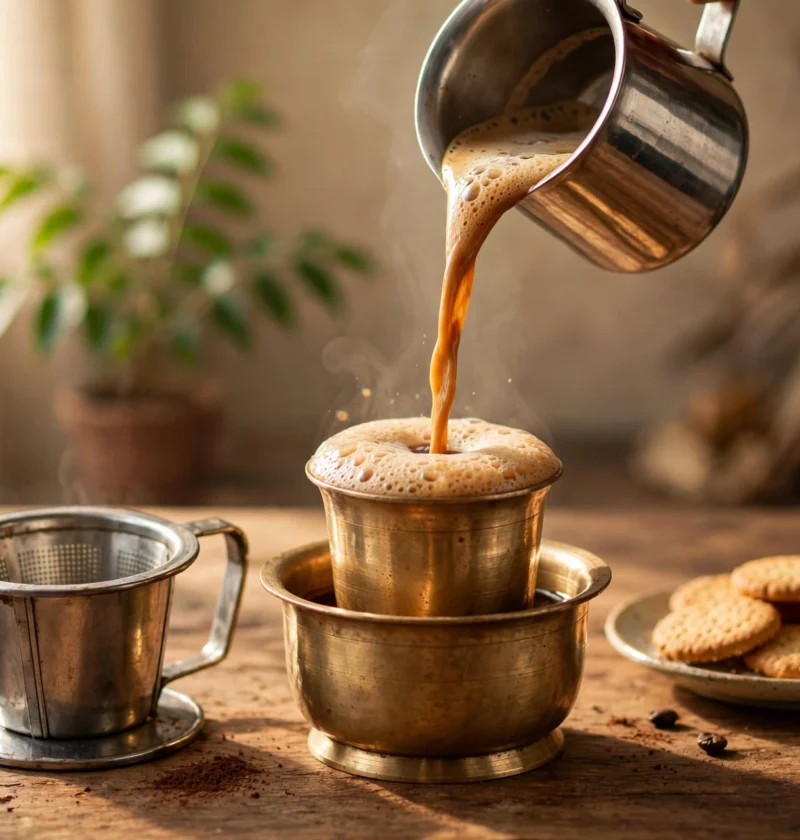
Now comes the part everyone remembers: the dabara pour. Hold the tumbler in one hand and the wide, shallow dabara in the other, and pour the coffee from the tumbler into the dabara from a height of about a foot, then back again. Repeat four or five times, raising the pour a little higher each time as your confidence grows. The coffee cools to drinking temperature, the milk and decoction marry fully, and a thick cap of foam rises on top. Pour the finished coffee into the tumbler, set it inside the dabara for serving, and drink it while the foam still stands proud. That tall pour is the signature of this filter coffee recipe, and it is worth practising even if the first attempt splashes a little.
Serving Suggestions
My favourite way to serve this coffee is the traditional one: tumbler sitting inside its dabara, with a plate of butter biscuits or a couple of banana fritters on the side for dunking. The coffee is strong enough that something plain and crisp beside it feels exactly right, and the ritual of lifting the tumbler out of its saucer slows the whole morning down in a good way. A quiet veranda and a newspaper complete the picture.
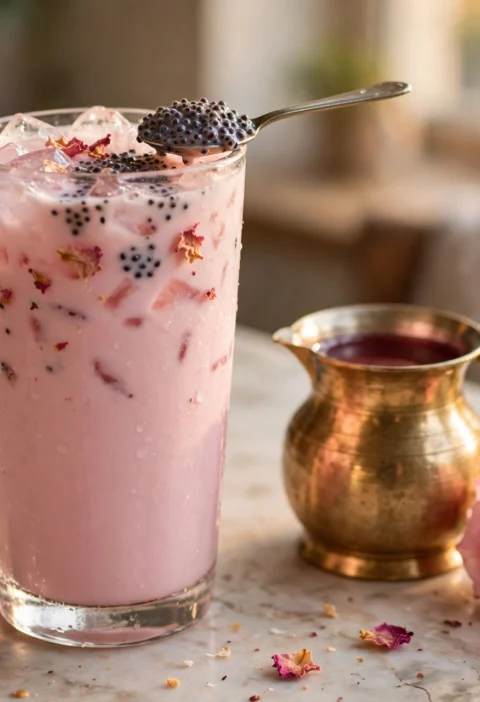
When friends visit, I make a full round of kaapi alongside other drinks so everyone can choose their strength. My Cold Coffee covers the iced, summer end of the table, and my Kashmiri Chai brings the pink, festive alternative, while this filter coffee recipe sits between them as the everyday classic — the one guests ask for by name on their second visit. A tray of murukku or a few slices of plum cake turns the coffee round into a proper gathering without any extra effort in the kitchen.
For breakfast, pair a tumbler with idli, dosa, or even simple buttered toast, and the coffee cuts through the richness of the meal beautifully. It also makes a fine afternoon pick-me-up on its own, especially on rainy days when the smell of fresh decoction fills the house. This filter coffee recipe doubles without any fuss too: brew a second filter load while the first round is being drunk, and the second pot of decoction is ready before anyone asks for a refill.
Storage and Reheating
Fresh decoction is the heart of this drink, and it keeps better than most people expect. Leftover decoction stays good in a covered steel container in the fridge for up to two days, and it actually deepens slightly overnight, so a Friday evening brew can rescue a Saturday morning. To use it, warm the decoction gently in a small pan — never let it boil hard — and mix it with freshly heated milk.
Do not store a finished tumbler for later in the day and expect the same cup; the foam collapses, the milk settles, and the brightness fades. The better habit is to brew the decoction ahead and froth each serving fresh, which takes only a few minutes once the decoction exists. Keep the coffee powder itself in an airtight tin away from heat and sunlight, and it will hold its aroma for weeks. Grind only what you need for the week if you buy whole beans, because stale grounds are the fastest way to flatten this filter coffee recipe.
Frequently Asked Questions
Do I need a special filter to make this coffee?
A South Indian brass or steel filter gives the most authentic result, and it costs very little at an Indian grocery store or online. In a pinch, a fine-mesh pour-over dripper with a paper filter comes close, though the decoction will be a little lighter. What matters most is the fine grind and the slow drip, so any setup that holds the grounds and lets water pass slowly will still give you a recognisable version of this filter coffee recipe.
Why is my decoction pale and weak?
Almost always, the grind was too coarse or the plunger was pressed too loosely, so the water rushed through instead of steeping. Use a powder ground as fine as sand, tamp it evenly, and let the drip take its full ten to fifteen minutes. Stale coffee powder is the other usual suspect — if the tin has sat open for months, even a perfect technique cannot rescue this filter coffee recipe, so start with a fresh pack.
Can I make this filter coffee without chicory?
Yes, though the cup will taste a little lighter and less syrupy. Pure coffee powder brewed the same way still gives a strong, fragrant kaapi, and some households prefer it that way. If you skip chicory, add an extra half tablespoon of coffee powder to keep the body, and keep the milk hot and well frothed — the foam does much of the work that chicory usually does in this filter coffee recipe.
Can I make a dairy-free version?
Oat milk is the best substitute because it froths well and its natural sweetness suits strong coffee. Heat it the same way, just below a simmer, and pour from a height to build the foam. Almond milk works too but froths less and thins the body, so use a little more decoction to compensate. Whichever milk you choose, taste and adjust the ratio — a dairy-free take on this filter coffee recipe still lives or dies by that final tasting step.
Recipe Summary
Allow fifteen minutes for the slow drip, five more for heating and frothing, and two generous tumblers are ready in about twenty-five minutes. Each serving runs close to 120 calories with the sugar, and this drink has earned its place in my kitchen as the bold, frothy morning ritual that no instant coffee has ever replaced.
If you try it, I hope that first dark, foamy, milk-softened sip explains why a station platform at dawn turned into a lifelong habit — strong, unhurried, and gone far too quickly. For the background on the brewing method, read about filter coffee and the wider story of coffee on Wikipedia.