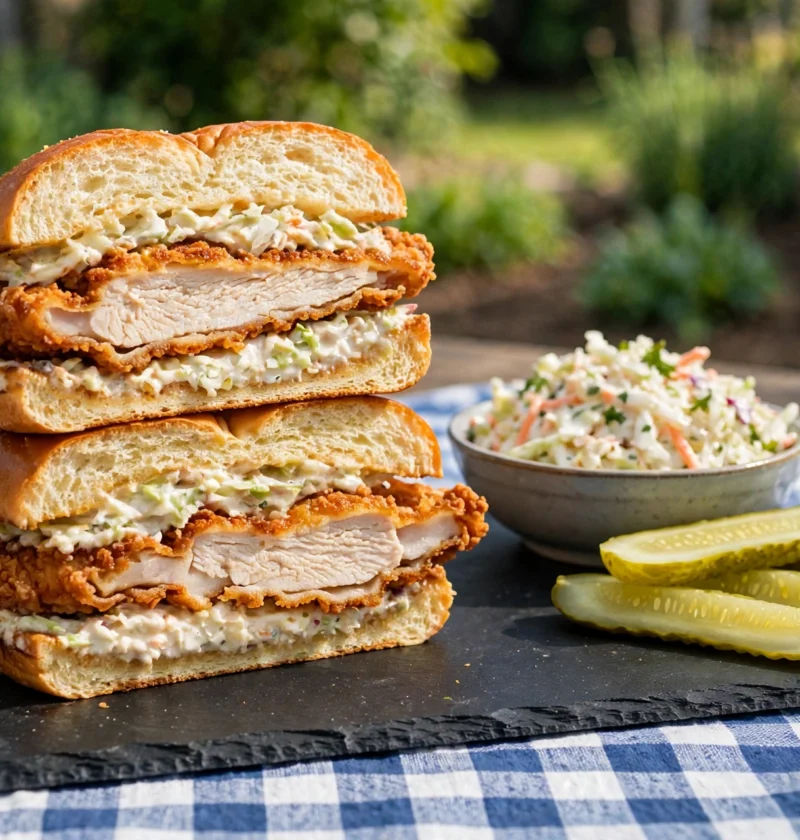
The Chicken Sandwich That Settled a Family Argument
Every family has one food argument that never quite gets resolved, and in mine it was the chicken sandwich recipe. My father swore by the plain grilled version he had eaten at roadside dhabas for years — no fuss, no sauce, just chicken and bread. My younger brother, on the other hand, would only eat the towering fried kind from fast-food places, the one that dripped sauce down his wrist and left crumbs all over the car seat. For years I stayed out of it, until one rainy Sunday when both of them were in my kitchen and the debate started up again over chai. That afternoon I decided to cook instead of argue, and this chicken sandwich recipe is what came out of the pan.
What I made that day was a compromise that pleased nobody in theory and everybody in practice. The chicken was brined so it stayed juicy like my father’s grilled version, but it was coated and fried crisp so my brother got his crunch. A quick cabbage slaw cut through the richness, and a smoky mayo tied it together without drowning it. They ate in silence for about thirty seconds — a record — and then both asked for a second one. Since then this chicken sandwich recipe has become my kitchen’s peace treaty, cooked whenever friends drop by or a weekend lunch needs to feel special. It takes about forty minutes from fridge to plate, feeds four generously, and honestly beats most takeout versions I have tried.
Why This Chicken Sandwich Recipe Works
- Buttermilk brine does the heavy lifting: Soaking the chicken in seasoned buttermilk for even thirty minutes keeps it juicy through frying, which is why this chicken sandwich recipe never turns out dry, even if you get distracted at the stove.
- Double dredging builds real crunch: A second dip in the flour mixture creates craggy layers that fry up extra crisp, so this chicken sandwich recipe stays crunchy long after it leaves the pan.
- Resting the coating matters: Letting the dredged chicken sit for ten minutes before frying helps the crust cling instead of sliding off, a small wait that saves this chicken sandwich recipe from its most common failure.
- Slaw cuts the richness: A sharp, vinegar-based cabbage slaw balances the fried chicken the way pickles balance a burger, keeping this chicken sandwich recipe bright instead of heavy.
- Toasting the bun is non-negotiable: A buttered, toasted bun holds its shape under sauce and chicken, so this chicken sandwich recipe eats cleanly instead of falling apart in your hands.
Ingredients for This Chicken Sandwich Recipe
This batch makes four sandwiches, and the quantities below are generous on purpose — nobody has ever complained about extra slaw or an extra piece of chicken. Use boneless, skinless chicken thighs if you can; they forgive a minute too long in the oil far better than breasts do. If you only have breasts, slice them horizontally into thinner cutlets so they cook evenly.
For the chicken
- 4 boneless, skinless chicken thighs (about 1 1/2 pounds)
- 1 cup buttermilk
- 1 teaspoon salt
- 1/2 teaspoon black pepper
- 1/2 teaspoon garlic powder
- 1/2 teaspoon paprika
- 1 cup all-purpose flour
- 1/2 cup cornstarch
- 1 teaspoon onion powder
- 1/2 teaspoon cayenne pepper (optional)
- Vegetable oil, for frying (about 2 cups)
For the slaw and assembly
- 2 cups shredded green cabbage
- 1/2 cup shredded carrots
- 3 tablespoons apple cider vinegar
- 1 tablespoon sugar
- 1/2 teaspoon salt
- 1/4 cup mayonnaise
- 1 tablespoon hot sauce
- 1 teaspoon smoked paprika
- 4 soft potato buns or brioche buns
- 2 tablespoons butter, softened
- 12 dill pickle slices
How to Make This Chicken Sandwich Recipe in 5 Steps
There are five stages here, and the brine is the one people always try to rush. Even half an hour in buttermilk changes the chicken completely, so do not skip it just to save time. Once the oil is hot, the rest of this chicken sandwich recipe is simple frying and stacking, and dinner lands on the table faster than a delivery order.
Step 1: Brine the chicken
Put the chicken thighs in a bowl with the buttermilk, salt, black pepper, garlic powder, and paprika. Flip the pieces so the buttermilk reaches every side, put a lid on the bowl, and chill it for half an hour at minimum — two hours gives an even better result if your schedule allows. The buttermilk gently tenderizes the meat and seasons it through, which is the quiet foundation of this chicken sandwich recipe. While the chicken brines, make the slaw: toss cabbage and carrots with vinegar, sugar, and salt, and let it sit so the cabbage softens and picks up a sharp edge.
Step 2: Mix the coating and the sauce
In a wide, shallow bowl, whisk together the flour, cornstarch, onion powder, cayenne if you are using it, and a good pinch of salt. The cornstarch is the secret to a crust that shatters instead of going soggy, so do not leave it out. In a second small bowl, stir the mayonnaise with the hot sauce and smoked paprika until smooth — this smoky mayo is what turns a plain fried chicken sandwich into something you will crave again. Taste it and add a little more hot sauce if you like heat; the sauce should be bold on its own, because the bun and slaw will soften it.
Step 3: Dredge twice and rest
Take one piece of chicken at a time from the buttermilk, letting the excess drip off, and press it firmly into the flour mixture. Dip it back into the buttermilk briefly, then dredge it a second time, pressing the flour on so it forms craggy, uneven layers — those crags are what fry up into crunch. Lay the coated pieces on a plate and rest them for ten minutes. This rest is easy to skip and foolish to skip: it lets the coating hydrate and grip the chicken, so the crust stays put instead of floating off in the oil — the step that separates a good chicken sandwich recipe from a messy one.
Step 4: Fry until deep golden
Pour oil into a heavy skillet to a depth of about half an inch and heat it over medium heat until it reaches 350°F — a small cube of bread should sizzle and brown in about a minute. Lay the chicken in carefully, away from you, and fry for 5 to 6 minutes per side until deeply golden and the internal temperature reaches 165°F. Fry two pieces at a time if needed — a crowded pan drops the oil temperature and gives greasy chicken instead of crisp. Drain on a wire rack, not paper towels, so the underside stays crisp while you toast the buns.
Step 5: Toast, sauce, and stack
Spread butter on the cut sides of the buns and toast them in a dry pan over medium heat until golden, about one minute — this takes no time and changes everything. Spread smoky mayo generously on both halves, place chicken on the bottom bun, add slaw and three pickle slices, and cap it. Press gently so the layers settle, and serve straight away while the chicken is still crackling. That first bite — crisp crust, juicy chicken, cool tangy slaw — is the whole point of this chicken sandwich recipe.
Serving Suggestions
My default plate is simple: the sandwich, oven fries, and extra pickles on the side. A glass of cold lemonade or iced tea beside it makes the meal feel complete without extra cooking, and on hot days I add leftover slaw so nobody has to ration the good stuff. This is the lunch I make when friends arrive hungry, even though the whole thing took less than an hour.
When the table is bigger, I put this sandwich out alongside its cousins so everyone can compare. My Club Sandwich covers the classic layered end of the table, and my Chicken Shawarma brings the warm, spiced, wrapped alternative, while this chicken sandwich recipe sits between them as the crowd-pleaser — the one nobody needs convincing about. A plain green salad or some crisps alongside is more than enough; the chicken should do the talking, and a second round of frying tends to vanish before you have even sat down.
For a party, slice each sandwich in half and stand the halves upright on a platter so guests can see the golden crust and the slaw peeking out. A row of small bowls with extra smoky mayo, hot sauce, and pickles lets everyone adjust their own sandwich, which stops the usual argument about who likes it spicy. This chicken sandwich recipe scales without any fuss too: hold the fried chicken on a rack in a low oven while the next round fries, and the earlier pieces hold their crunch surprisingly well.
Storage and Reheating
A fried chicken sandwich peaks in the first twenty minutes off the pan, while the crust still crackles and the slaw stays cool against the hot chicken — after that, no trick brings back that exact moment. If dinner has to wait, keep the parts of this chicken sandwich recipe apart: fried chicken holds 2 days chilled in a lidded container, the slaw holds 3 days, and the buns stay fresh in their bag. Assemble only when people are actually hungry; with the parts ready, the rest is a five-minute job.
A leftover piece of chicken revives best in a hot oven at 400°F for about 10 minutes on a wire rack, which brings back most of the crunch — skip the microwave, which leaves the crust limp and the chicken rubbery in seconds. I never freeze a finished sandwich, though the raw brined chicken freezes well for a month and thaws overnight in the fridge. Brine ahead, fry at the last minute, and every sandwich tastes freshly made.
Frequently Asked Questions
Can I use chicken breast instead of thighs?
Yes, but slice each breast horizontally into two thin cutlets first so they cook through without drying out. Thighs are more forgiving because their extra fat keeps them juicy, which is why this chicken sandwich recipe calls for them — but a well-brined breast, fried to exactly 165°F and rested for five minutes, makes a fine sandwich too.
Why did my coating fall off in the oil?
Usually, the coating skipped its ten-minute rest, or the oil was not hot enough when the chicken went in. A rested coating grips the meat, and oil at 350°F sets the crust instantly instead of letting it soak loose. Press the flour on firmly during the second dredge, rest the pieces before frying, and check the oil temperature between batches — those three habits fix nearly every crust problem in this chicken sandwich recipe.
Can I bake or air-fry the chicken instead?
You can, though the crust will be less shatteringly crisp. Spray the coated chicken generously with oil and air-fry at 400°F for about 14 minutes, flipping halfway, or bake at 425°F for 20 to 22 minutes on a wire rack. The flavour stays the same, and the slaw and smoky mayo carry the sandwich either way — but if crunch is the point, frying is still how this chicken sandwich recipe shines brightest.
How spicy is this chicken sandwich?
As spicy as you want it to be. The cayenne in the coating and the hot sauce in the mayo are both adjustable: leave the cayenne out and halve the hot sauce for a mild version children love, or double both and add sliced jalapeños for a fiery one. My house rule is one new heat level at a time — taste the sauce before building, because adding heat is far easier than removing it once this chicken sandwich recipe is stacked.
Recipe Summary
Allow thirty minutes for brining, ten more for frying, and four people are eating in about forty minutes. Each sandwich runs close to 650 calories, and this dish has earned its spot as the golden, crunchy classic that settles family arguments and empties platters alike.
If you try it, I hope that first crisp, juicy, tangy bite shows you why a rainy Sunday debate in my kitchen turned into one of my most-cooked meals — straightforward, filling, and usually finished within minutes. If you want the history behind the dish, the Wikipedia pages on the sandwich and the chicken sandwich are a good place to start.