The Tulsi Chai That Changed My Mornings
I did not grow up drinking this tulsi chai recipe, and that is the first thing everyone finds surprising when I serve it now. In my childhood home, chai meant one thing: strong black tea boiled hard with milk and sugar, the kind that could wake a whole house. Tulsi belonged in the courtyard, in a clay pot by the door, where my grandmother watered it every morning and plucked a few leaves for coughs and colds — never, as far as I knew, for tea. Then one winter I caught a cold that refused to leave, and an aunt pressed a steaming kulhad into my hands with the words “just drink it, don’t ask.” It was light, golden-green, smelling of basil and ginger, and by the third sip my chest felt looser and my head felt clearer. That cup was my introduction to this tulsi chai recipe, and it has been my first drink of the day ever since.
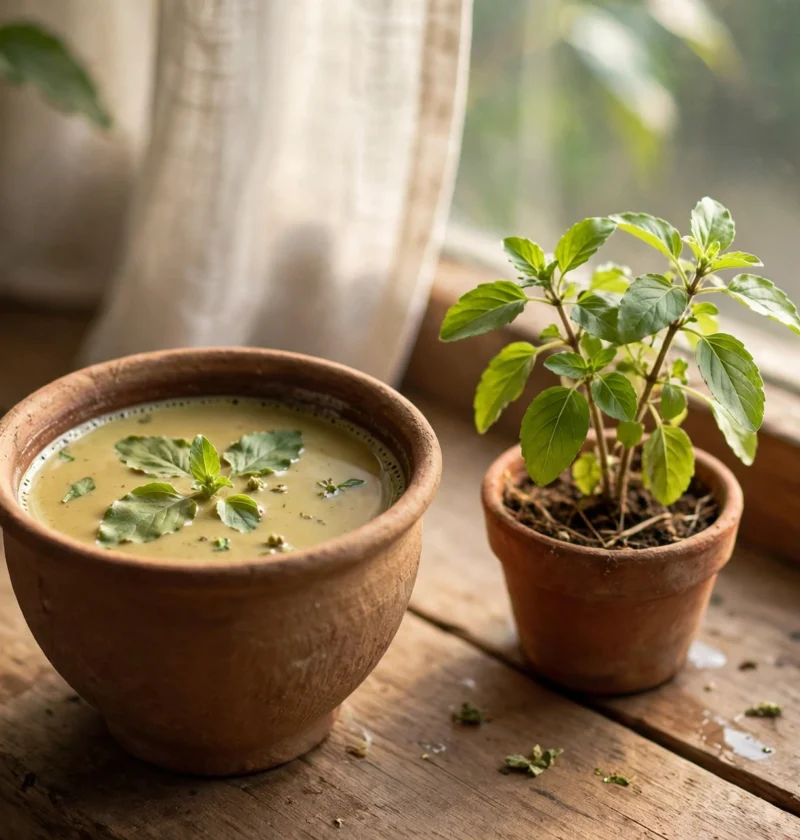
What won me over was not just the flavour, though the flavour is lovely — grassy and warm, a little peppery, with ginger humming underneath. It was the feeling of the ritual itself. Plucking leaves from a plant on my own windowsill, bruising them between my fingers, watching the water turn gold as it simmers: the whole process takes about twenty minutes and slows the morning down in the best way. This tulsi chai recipe serves two generously, uses ingredients you probably already have, and turns a humble herb into a cup that feels like a small act of care. If your mornings start in a rush of strong tea and noise, this is the gentler cup that might change them.
Why This Tulsi Chai Recipe Works
- Fresh leaves, never dried powder: Fresh holy basil gives this tulsi chai recipe its bright, peppery perfume, while dried tulsi turns flat and dusty in the cup.
- A bruise before the boil: Lightly crushing the leaves releases their oils into the water, which is why this tulsi chai recipe tastes deeply herbal instead of faintly green.
- Ginger as a partner, not a rival: A small amount of fresh ginger warms the brew without overpowering the basil, so this tulsi chai recipe stays balanced and soothing.
- A short, gentle simmer: Ten minutes of quiet bubbling extracts the flavour without bitterness, giving this tulsi chai recipe its clear golden colour.
- Milk added last, lightly: Just a splash of milk softens the cup without drowning the herb, so this tulsi chai recipe stays light where milky chais turn heavy.
Ingredients for This Tulsi Chai Recipe
This batch makes two large cups, and it doubles easily for guests — just use a bigger pot and keep the leaf-to-water ratio the same. Buy holy basil (tulsi) with deep green, unblemished leaves; if you grow your own, pick in the morning when the oils are strongest. Regular sweet basil is not a substitute here — it makes a pleasant tea, but it is a different plant with a different flavour, and this tulsi chai recipe depends on holy basil’s peppery edge.
For the brew
- 2 cups water
- 1 cup fresh holy basil (tulsi) leaves, loosely packed
- 1-inch piece fresh ginger, lightly crushed
- 2 green cardamom pods, lightly crushed (optional)
- 1 teaspoon honey, or to taste
For finishing
- 1/2 cup whole milk, warmed
- 1 teaspoon lemon juice (optional, for brightness)
- A few fresh tulsi leaves, for floating on top
How to Make This Tulsi Chai Recipe in 5 Steps
Brewing takes five stages, and the bruising is the one most people skip. Whole leaves dropped into hot water give up their flavour gradually and unevenly, while leaves crushed beforehand release it immediately. Take thirty seconds to bruise them properly, and the rest of this tulsi chai recipe practically makes itself.
Step 1: Pick and bruise the tulsi leaves
Rinse the tulsi leaves gently and shake off the water, then place them in a small bowl and press them lightly with the back of a spoon or between your palms until they darken slightly and release their scent. You are not trying to tear them to shreds — just enough pressure to break the leaf surface so the oils can escape. Set the bruised leaves aside. This small, fragrant step is the foundation of the whole tulsi chai recipe, and skipping it is why many homemade herbal teas taste like coloured water.
Step 2: Simmer the leaves with ginger
Pour the water into a small saucepan and add the bruised leaves, the crushed ginger, and the cardamom pods if you are using them. Bring it to a gentle boil over medium heat, then lower the flame and let it bubble quietly for 8 to 10 minutes. The water will deepen from pale green to a clear gold, and the kitchen will start to smell of basil and spice. Do not let it roll at a hard boil — fierce heat drives off the delicate top notes that make this tulsi chai recipe smell so inviting.
Step 3: Strain and sweeten lightly
Strain the brew through a fine sieve into a jug or directly into two kulhads or cups, pressing the leaves gently with the spoon to coax out the last drops. Stir in the honey while the liquid is still hot so it dissolves completely, then taste. The brew should be herbal and warm with a gentle sweetness in the background, not a dessert — honey here is a softener, and this tulsi chai recipe keeps it deliberately light so the basil stays the star.
Step 4: Add the milk and lemon
Pour in the warmed milk in a thin stream, stirring as you go, until the cup turns a soft green-gold. If you like a brighter finish, add the lemon juice now — just a few drops, since too much will curdle the milk. The colour should stay translucent and golden, not opaque like a milky chai. That lightness is the signature of this tulsi chai recipe, and it is what makes the cup feel refreshing even on a cold morning.
Step 5: Rest and garnish before serving
Let the cups sit for two minutes so the flavours settle and the temperature drops to a comfortable sip. Float a few fresh tulsi leaves on top of each cup and serve immediately, while the aroma is at its peak. Those two quiet minutes matter more than they sound: a cup served straight off the boil scalds the tongue and hides the flavour, while a rested cup of this tulsi chai recipe tastes rounded, fragrant, and calm.
Serving Suggestions
The way I like it best is the plainest one: in clay kulhads on the windowsill, with nothing more than a plate of plain butter biscuits for dipping. The earthy cup against the sweet, crumbly biscuit is a small morning ceremony, and drinking from clay keeps the chai warm while your hands stay comfortable. A quiet ten minutes with this cup, before phones and news, is the best start I know.
When friends visit in winter, I set this chai out beside its bolder cousins so everyone can choose their mood. My Masala Chai brings the spiced, milky classic to the same table, while my Adrak Chai offers the fiery ginger version — and this tulsi chai recipe sits between them as the light, herbal option that even non-tea drinkers tend to love. A bowl of roasted chana or a few dates alongside makes the spread feel generous without any cooking.
For an evening wind-down, skip the lemon and serve the chai slightly stronger, with an extra handful of leaves in the pot. It pairs beautifully with a slice of plain cake or a piece of dark chocolate, and the ritual of picking leaves at dusk feels like closing the day properly. However you serve this tulsi chai recipe, keep the cups small and the refills frequent — a fresh, hot second cup beats a large lukewarm one every time.
Storage and Reheating
Tulsi chai is at its best brewed fresh, when the aroma is bright and the colour is clear. If you must make it ahead, brew the leaf-and-ginger base without milk or honey and keep it in a covered jug in the fridge for up to 2 days; it will darken slightly, which is normal. When you want a cup, warm the base gently, then add fresh honey and milk — never boil the finished chai, since hard heat dulls the basil and can split the milk.
For reheating a finished cup, use the lowest flame and a small pan, stirring once or twice, and stop the moment it steams — do not let it bubble. I would not microwave it, since uneven heat flattens the herbal notes, and I would not freeze the brewed chai, because thawed herbal tea tastes tired and muddy. The one shortcut that does work is keeping a pot of tulsi on the windowsill: fresh leaves picked minutes before brewing are what make this tulsi chai recipe taste alive, and no storage method replaces them.
Frequently Asked Questions
Can I use dried tulsi leaves instead of fresh?
You can, but expect a different cup. Dried leaves need a longer simmer — about 15 minutes — and the flavour turns woodier and less peppery. Use 2 tablespoons of dried leaves for this tulsi chai recipe and skip the bruising step, since dried leaves crumble on their own. Fresh leaves are still my first choice, because their bright top notes are what make the chai taste green and alive rather than merely herbal.
Is tulsi chai the same as green tea?
No, and the difference matters. Green tea comes from the tea plant and contains caffeine, while tulsi chai is an herbal infusion made from holy basil leaves, so this tulsi chai recipe is naturally caffeine-free. That is why it works so well as an evening cup: you get warmth and ritual without the wakefulness. The two drinks share a light, grassy character, but they are different plants, different brews, and different moods.
Can I make this tulsi chai recipe without milk?
Absolutely, and many people prefer it that way. Without milk the brew stays a clear gold and the basil flavour comes forward even more sharply, especially with the optional lemon. Just brew, strain, sweeten, and serve — the milk in this tulsi chai recipe is a softener, not a requirement, and the plain version is lovely on a warm afternoon or when you want something lighter.
How long do fresh tulsi leaves keep?
About 4 to 5 days in the fridge, wrapped loosely in a damp paper towel inside a container. The leaves darken at the edges as they age, so pick them as close to brewing as you can. A potted plant on a sunny windowsill is the best solution of all: snip what you need each morning, and every cup of this tulsi chai recipe starts with leaves that were alive minutes earlier.
Recipe Summary
Allow five minutes of picking and bruising, ten minutes of gentle simmering, and a couple of minutes to rest, and two people are sipping in roughly twenty minutes. Each cup runs close to 35 calories with milk and honey, and this tulsi chai recipe has claimed a permanent place in my mornings as the light, golden, herbal cup that slows the day down before it starts.
If you try it, I hope that first sip — peppery basil, warm ginger, soft milk — shows you why a courtyard herb became my favourite way to begin the day. For the background on the plant, read about holy basil and the wider chai tradition on Wikipedia.