The Masala Chai That Slows the Whole House Down
The first thing I remember about rainy afternoons at my grandmother’s house is not the rain itself but the sound that came just before it: the clink of a steel pot being set on the stove, and then the smell of ginger hitting hot water. This masala chai recipe is the one she made on those afternoons, and it has followed me into every kitchen I have lived in since. She never measured anything. She crushed cardamom pods with the flat of a knife, broke a cinnamon stick in half with her fingers, and judged the milk by the colour of the pot. I spent years trying to turn that instinct into something I could write down, and this is the closest I have come — a cup that tastes like a monsoon afternoon even when the sky outside is doing nothing at all.
What makes a proper masala chai different from ordinary milky tea is the slow simmer. The spices need time to give up their flavour to the water, the tea leaves need time to darken and deepen, and the milk needs time to marry everything together instead of just sitting on top of it. Rushing any of those stages gives you a pale, thin drink that tastes vaguely of spice rather than properly of it. Done the slow way, this masala chai recipe takes about twenty-five minutes from the first crush of ginger to the last pour, makes four generous cups, and turns a regular evening into a small occasion. If your homemade chai has ever tasted flat next to the one from a roadside stall, the missing ingredient is almost certainly patience, not a fancier spice.
Why This Masala Chai Recipe Works
- Crushed spices, not whole ones: Cracking the ginger, cardamom, and cinnamon open before they hit the water lets their oils escape fast, so this masala chai recipe tastes deeply spiced in twenty minutes instead of an hour.
- Water first, milk second: Simmering the spices and tea in water before the milk goes in builds a dark, strong base, which is why this masala chai recipe never turns out washed-out or grey.
- A rolling boil at the end: Letting the finished chai rise and fall in the pot a few times froths it lightly and blends the milk fully, giving this masala chai recipe its silky, café-style finish without any gadget.
- Assam leaves for body: Strong, malty Assam tea stands up to milk and spice where delicate leaves disappear, so this masala chai recipe stays bold even with a generous pour of milk.
- Sugar at the right moment: Sweetening while the chai is still simmering lets the sugar dissolve completely and round off the spice, which is why this masala chai recipe tastes balanced rather than sharp.
Ingredients for This Masala Chai Recipe
This batch makes four cups — enough for a family sitting down together, or friends who will ask for a second. Buy fresh ginger if you can — a piece that snaps cleanly — because dried powder gives warmth but none of the fresh, peppery brightness that tops a good chai. Loose Assam leaves are best, but two strong tea bags per cup work in a pinch.
For the spice mix
- 1-inch piece fresh ginger, roughly crushed
- 5 green cardamom pods, lightly crushed
- 1 cinnamon stick, about 2 inches, broken in half
- 4 whole cloves
- 6 black peppercorns, lightly crushed
- 1 star anise (optional, for a gentle liquorice note)
For the chai
- 2 cups water
- 2 cups whole milk
- 4 tablespoons loose Assam tea leaves
- 3 to 4 tablespoons sugar, or to taste
- 1 teaspoon dried rose petals (optional, for garnish)
How to Make This Masala Chai Recipe in 5 Steps
Five stages stand between you and a properly spiced cup, and the one people skip is the spice simmer. Tea added too early turns bitter while the spices are still waking up, and milk added too early mutes everything. Give each stage its turn, and this masala chai recipe rewards you with a cup that smells like a spice market.
Step 1: Crush the spices
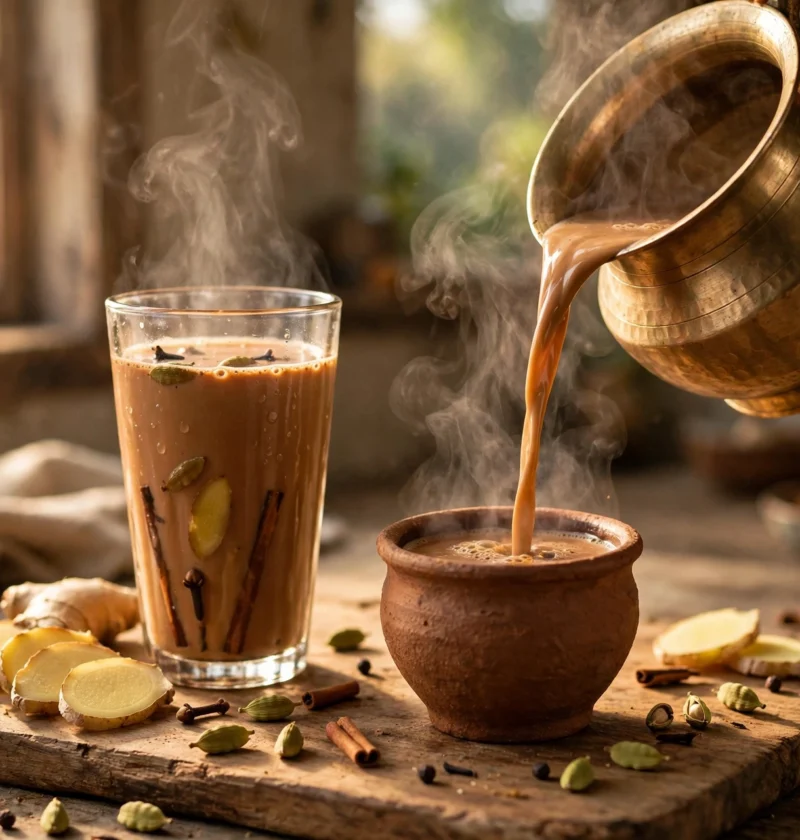
Crush the ginger, cardamom, cinnamon, cloves, and peppercorns with the flat side of a heavy knife or a quick turn in a mortar. You are not trying to grind them to powder — you want them cracked open, with the cardamom husks split and the ginger fibres showing, so the hot water can reach the oils inside. Tipping whole, uncrushed spices into the pot is the most common reason homemade chai tastes timid, and this crushing step is the quiet foundation of the whole masala chai recipe. If you are using star anise, drop it in whole; it opens on its own in the heat.
Step 2: Simmer the spices in water
Pour the water into a medium saucepan, add all the crushed spices, and bring it to a gentle boil over medium heat. As soon as it bubbles, turn the heat down and let it simmer for 8 to 10 minutes, until the water has darkened slightly and the kitchen smells of ginger and cinnamon. Don’t rush this stage — the water should taste clearly spiced on a spoon, almost like a thin, fragrant broth. This spiced-water base is what separates a real masala chai recipe from milky tea with a pinch of spice waved at it.
Step 3: Add the tea leaves
Stir in the Assam tea leaves and let them simmer with the spices for 3 to 4 minutes, until the liquid turns a deep, reddish brown. The leaves will swell and sink, and the colour change tells you the strength is building. Watch the pot here, because tea boiled hard for too long turns tannic and bitter, and no milk later can fully rescue a bitter base. When the brew looks dark enough to stain the spoon, it is ready for the next stage of this masala chai recipe.
Step 4: Pour in the milk and sugar
Add the milk and sugar, stir until the sugar dissolves, and bring the chai back to a simmer over medium heat. The colour softens to warm caramel brown, and the smell turns rounder and creamier. Let it simmer gently for 4 to 5 minutes, stirring now and then so the milk does not catch on the bottom of the pan. Taste at this point and adjust — another spoon of sugar if the ginger bites too hard, a splash more milk if the cup feels too fierce. Your own palate is the final judge here, so don’t skip the sip.
Step 5: Boil, pull, and pour
Now comes the part that makes the chai feel finished: turn the heat up and let the pot come to a full, rolling boil, then pull it off the heat just as the chai rises toward the rim. Repeat that rise and fall two or three times, which froths the milk lightly and blends everything into one silky drink. Strain through a fine sieve into cups or glasses, catching the leaves and spice bits, and serve immediately while the foam still sits on top. That final pull-and-pour is the signature of this masala chai recipe, and it is what gives the cup its café-style froth without a single piece of equipment.
Serving Suggestions
I like serving this chai the way roadside stalls do — in small glasses, with butter biscuits or rusks on the side for dunking. Holding a hot glass in both hands has a way of making everyone at the table slow down and actually talk. Add a quiet veranda and you have the whole evening sorted.
If friends are coming over, I put a few hot drinks out at once so everyone picks what suits them. My Doodh Patti Chai is the slow, milky one, and my Kashmiri Chai is the pink showpiece, while this masala chai recipe is the spiced middle ground that most people reach for first. Samosas or a slice of cake on the side, and the table looks after itself.
At breakfast it goes brilliantly with parathas, toast, or a plain bun — the spice wakes up a heavy plate. On its own it makes a lovely mid-afternoon break, best of all when rain is tapping at the windows and the house smells of ginger. Scaling up is simple too: a broader pot gives the milk space to rise, and you just keep a closer eye on the boil-and-pull at the end.
Storage and Reheating
Strain the chai before storing and it holds up surprisingly well. A sealed jug in the fridge keeps it drinkable for 2 days, and the flavour even deepens a touch overnight, so an evening pot can save a sluggish morning. Reheat it gently in a saucepan on low, stirring now and then — a hard boil on the second heating turns the milk grainy and dulls the spice.
A poured glass left sitting won’t taste the same hours later — the froth dies and the flavours go dull. A smarter routine is to simmer the spiced water base in advance (it keeps 3 days chilled) and finish each cup fresh with milk and tea, which takes only minutes once the base is waiting. Whole spices belong in a sealed tin away from heat and light, where they stay fragrant for months; cardamom past its best is the quickest way to dull this masala chai recipe, so buy small and buy fresh.
Frequently Asked Questions
Can I make this masala chai without fresh ginger?
Yes, though the cup will taste a little less bright and peppery. Use 1/2 teaspoon of dried ginger powder in place of the fresh piece, and add it with the other spices at the simmering stage. The warmth will still be there, just without the fresh bite — and a small nub of fresh ginger is worth using, because it is the top note that makes this masala chai recipe smell like a monsoon afternoon.
Why does my chai taste bitter?
Almost always, the tea leaves boiled too long or too hard before the milk went in. Tea turns tannic fast at a rolling boil, so keep the leaf stage to a gentle simmer of 3 to 4 minutes and no more. Stale tea leaves are the other usual suspect — if the packet has sat open for months, even perfect technique cannot rescue this masala chai recipe, so start with a fresh pack of strong Assam.
Can I make a dairy-free version?
Oat milk handles this best — it foams nicely and brings its own gentle sweetness that flatters strong spice. Warm it the same way, stopping just short of a hard boil, and use the rise-and-fall pull to raise a froth. Almond milk is workable but thinner and less foamy, so trim the water in the base a little to make up for it. Whatever you pour, keep tasting as you go — the last sip-and-adjust decides whether a dairy-free version of this masala chai recipe truly lands.
How strong should the spice be?
Strong enough that you can name at least two spices in the first sip, but not so strong that the tea disappears underneath them. If the ginger burns your throat, cut it back by half next time; if you cannot taste the cardamom, crush the pods more thoroughly rather than adding more of them. The balance in this masala chai recipe is meant to be tuned — my grandmother’s was fierier than mine, and yours will settle where it suits your table.
Recipe Summary
Ten minutes for the spice simmer, ten more for tea and milk, and four generous cups are ready in about twenty-five minutes. Each cup runs close to 110 calories with the sugar, and this drink has become my kitchen’s evening anchor — the bold, fragrant pause that makes an ordinary day feel properly finished.
If you try it, I hope that first hot, frothy, spice-warmed sip shows you why a steel pot on a rainy afternoon turned into a ritual I never dropped — punchy, unhurried, and finished far too soon. For the background on the drink, read about masala chai and the wider story of chai on Wikipedia.