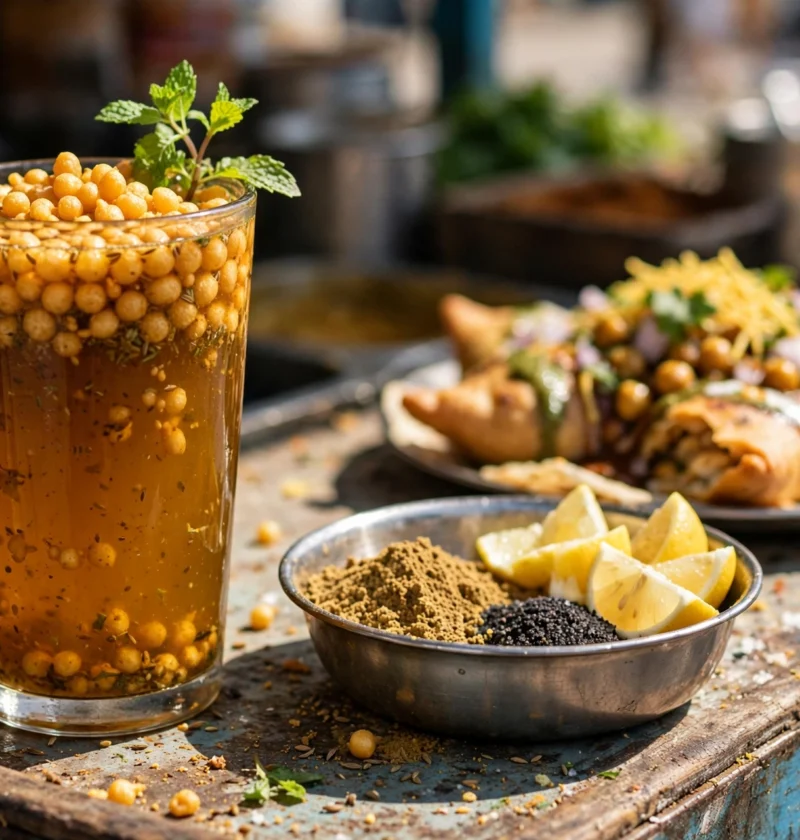
On Burns Road in Karachi, when the heat is bouncing off the pavement and the chaat wala is still setting up his cart, the first thing he hands you is not food. It is a tall, cold glass of something green-gold, with a spoonful of little golden balls floating on top. I must have been twelve the first time my father put that glass in my hand and told me to drink before I ate a single thing. This jaljeera recipe is my attempt to bottle that exact moment — the roasted cumin landing first, then the mint, then a sour-salty jolt that made the whole afternoon feel survivable.
When I started testing this jaljeera recipe at home, what surprised me is that there is almost nothing in the glass. No yogurt, no coconut, no fruit, no syrup — just water, spices and herbs, yet it tastes more complete than drinks with ten ingredients. A jaljeera is not a sweet sherbet and it is certainly not a lassi in disguise; it belongs to the streets, to the few minutes before a plate of chaat lands, when your mouth needs waking up rather than filling. Get the balance right and plain water turns into the most refreshing thing you will drink all summer.
Why This Jaljeera Recipe Works
Jaljeera has nowhere to hide — it is water and seasoning — so every small choice shows. Here is what makes this jaljeera recipe taste like the stall version:
- The cumin is roasted fresh, every single time. Raw cumin powder tastes dusty and a little bitter. Two minutes in a dry pan turns it dark, nutty and warm, and that roasted depth is the whole backbone of the drink.
- The mint is pounded to a paste, not floated as leaves. A handful of chopped leaves looks pretty and flavours nothing. Ground down with cilantro and green chili, mint perfumes every mouthful instead of just decorating the rim.
- Two salts do two different jobs. Black salt brings the funky, tangy, unmistakably chaat-stall soul; a pinch of ordinary salt underneath simply seasons. Leave out the kala namak and you have pleasant spiced water — not jaljeera.
- The sourness comes in layers. Amchur gives a dry, earthy tang that tastes like the bazaar itself; a squeeze of lemon over the top adds brightness. One without the other is fine. Both together is the real thing.
- It is served properly, properly cold. Lukewarm jaljeera is a sad rumour of itself. Fridge-cold water, ice in the glass, and boondi scattered on at the last second so it crackles instead of sogging — temperature is an ingredient here.
Ingredients for This Jaljeera Recipe
The name gives the method away: jal-jeera simply joins the words for water and cumin, and this glass has been the subcontinent’s answer to brutal summer afternoons for generations — a digestive, a cooler and an appetite-waker at once. Everything in it revolves around cumin, so buy whole seeds and roast them yourself if you can; a jar of ready powder that has sat open since last Eid will not carry this drink. Black salt (kala namak) is the other non-negotiable — any desi grocery stocks it, and one small bag lasts a year. The boondi, those tiny fried besan pearls sold for raita, is the classic crown: plain salted, never the sweet kind.
The spice base
- 2 teaspoons whole cumin seeds (or 1 1/2 teaspoons roasted cumin powder)
- 1 teaspoon black salt (kala namak), plus more to taste
- 1/2 teaspoon fine sea salt, or to taste
- 1 teaspoon amchur (dry mango powder)
- 1/4 teaspoon freshly ground black pepper
- 1 teaspoon finely grated fresh ginger, or 1 tablespoon ginger juice
- A pinch of sugar (optional — it only rounds the edges)
The green paste
- 1 cup packed fresh mint leaves (about 1 ounce / 30 g)
- 1/4 cup fresh cilantro leaves and tender stems
- 1 small green chili, roughly chopped (optional)
- 2 tablespoons fresh lemon juice (from about 1 lemon)
- 2 to 3 tablespoons cold water, for blending
To serve
- 4 cups (960 ml) ice-cold water
- Ice cubes
- 1/4 cup plain salted boondi
- Mint sprigs and lemon wedges
How to Make This Jaljeera Recipe – Step by Step
Step 1: Roast the cumin until it darkens. Set a small dry skillet over medium heat, drop in the cumin seeds, and keep them moving for about 2 minutes, until they turn a shade deeper and smell toasty and warm — the moment you catch a burnt note you have gone too far, so stay close. Slide them straight onto a cold plate to stop the cooking, let them sit for a minute, then grind to a powder in a spice grinder or crush them under a rolling pin. Fine is the goal, though a few stubborn flecks are no tragedy.
Step 2: Pound the mint into a green paste. Put the mint leaves, cilantro, green chili if you are using it, lemon juice and the cold water into a small blender and blitz until you have a smooth, deep-green puree, scraping the sides down once. No blender? A mortar and pestle does it the old way, or chop everything to confetti and rub it with a pinch of salt until it weeps green. Strain the paste if you like a clean-looking drink; I rarely bother, because the stalls never do.
Step 3: Build the spice base in cold water. Pour the ice-cold water into a big jug. Sprinkle in the roasted cumin powder, black salt, ordinary salt, amchur, black pepper and ginger, then whisk hard for half a minute so nothing clumps or sinks. Taste now, before the mint goes in: it should already taste boldly salty-sour, stronger than you think it needs to be, because the paste and the melting ice will soften it.
Step 4: Whisk in the paste and give it ten minutes. Stir the green paste through the spiced water and park the jug in the fridge for at least 10 minutes. This short rest is not laziness — the cumin blooms, the mint settles into the water instead of shouting over it, and the whole thing becomes one drink instead of two. Taste again and adjust like a chaat wala: more black salt if it tastes thin, more lemon if it tastes dull.
Step 5: Pour it tall and crown it with boondi. Fill tall glasses with ice, give the jug a final stir (the spices settle, always), and pour from a little height so the surface froths faintly. Scatter a spoonful of boondi over each glass and finish with a mint sprig and a lemon wedge. Serve immediately, while the boondi still crackles when you bite it — that small crunch against the cold, tangy water completes the whole street-stall illusion.
Serving Suggestions
Jaljeera’s natural home is the minutes before chaat: a glass while the samosas fry, another beside a plate of dahi bhallay or a round of golgappay, where its sour jolt resets your mouth between bites. At home I mix a jug whenever the grill comes out — seekh kababs, chicken chargha, anything smoky and rich begs for something this sharp and cold standing beside it. It is also the kindest thing you can hand someone who has just walked in from the heat: before the chai, before the questions, a glass of jaljeera.
Set it beside the other coolers on this site and the family differences show at once. My masala chaas is the yogurt drink — thin, savoury, made to settle a heavy lunch — while jaljeera carries no dahi in it at all and works before the meal instead of after it. And where my mint margarita takes mint into party territory with soda and a sweeter hand, this jaljeera recipe stays true to the stall: water, spice, salt, sour, cold. Three cumin-and-mint cousins, three completely different glasses.
Storage and Reheating
The dry spice base is the keeper here: the mixed roasted cumin, salts, amchur and pepper stay lively for about 2 weeks in a small airtight jar, and a jar on the shelf means jaljeera is three minutes away all summer long. The assembled drink is a different story — it is at its very best within a few hours of mixing. The mint darkens from bright green to olive by the next day and the flavour goes a little flat, though a jug from the fridge will still refresh you on day two if you stir in a squeeze of fresh lemon and an extra pinch of black salt before pouring.
Two rules survive every shortcut. Scatter the boondi on only at the moment of serving — ten minutes soaking in the glass turns it to porridge — and if you are mixing the drink ahead for guests, keep the boondi and the ice out entirely until everyone is at the table. As for reheating: there is none, and there never will be. This is a cold drink in its bones; a warm jaljeera is merely spiced water that missed its calling. Do not freeze it either — the herbs turn black and bitter when they thaw.
Frequently Asked Questions
Can I use a store-bought jaljeera powder instead?
Yes, and plenty of busy stalls do exactly that — but doctor it. Packet mixes lean hard on salt and citric acid and usually taste one-note and a little harsh. Stir the packet into cold water as directed, then whisk in a spoonful of fresh mint paste and a squeeze of lemon, and finish each glass with a pinch of your own freshly roasted cumin. The fresh herbs are what lift it from a packet drink to something people ask about.
Amchur, lemon or tamarind — which sour is best?
They give you three different drinks. Amchur is the classic stall flavour: dry, earthy, a little musky, and it keeps the colour golden-green. Lemon is brighter and cleaner, the one to lean on when the mint is very fresh. Tamarind — a tablespoon of pulp whisked in — makes the drink darker, deeper and almost savoury-sweet, closer to the water that comes with golgappay. My house standard is amchur in the base and lemon at the end; try all three across a summer and pick your loyalty.
Why does my jaljeera taste flat?
Almost always it is one of three culprits. The cumin was raw, or stale from an open jar — roast whole seeds fresh and the difference is not subtle. It was under-salted, because jaljeera should taste almost too bold in the jug; ice and cold mute everything that follows. Or the water was merely cool instead of properly cold, which flattens the spices the way a warm cola loses its bite. Season boldly, chill hard, rest it ten minutes, then taste once more before you judge the batch.
How do I turn this into a jaljeera soda?
Build a double-strength batch of this jaljeera recipe — same spices, same green paste, half the water — and chill it thoroughly. Fill glasses with ice, pour the concentrate to the halfway mark, then top with plain sparkling water or club soda and stir once, gently, so the fizz survives. Crown with boondi and serve on the spot; the bubbles fade within minutes and take half the fun with them. It is the version I put out on barbecue nights, and it empties faster than anything else on the table.
Recipe Summary
- Prep time: 10 minutes
- Cook time: 2 minutes (roasting the cumin)
- Total time: About 15 minutes, plus chilling
- Servings: 4 tall glasses
- Cuisine: Pakistani
- Course: Beverage