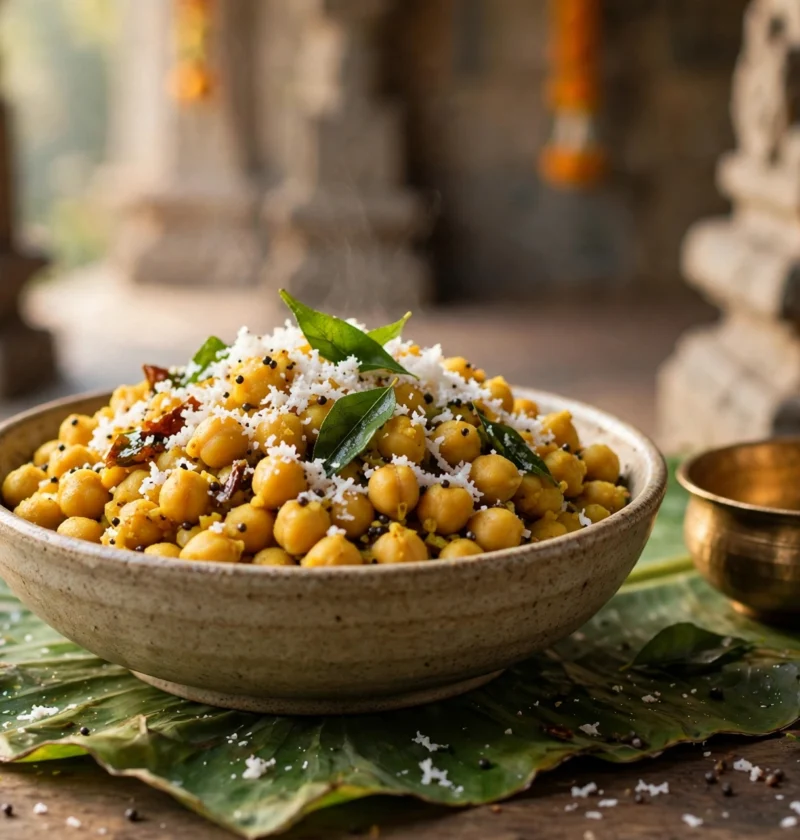
The Beach-Side Bowl I Did Not See Coming
I first met sundal on a crowded evening at Marina Beach in Chennai, where a vendor in a white shirt was selling it out of a steel bucket balanced on a bicycle. I had gone for the sea breeze and stayed, and the paper cone he handed me was warm, nutty, and unlike anything I had eaten before — chickpeas tossed with coconut and curry leaves, salty, lemony, gone in four minutes. I asked him what it was called, and he grinned and said just one word: sundal. That cone sent me down a rabbit hole, and this chana sundal recipe is the version I have cooked more than any other since, because it takes a pantry staple and turns it into something that tastes like a small celebration. I have since learned that this chana sundal recipe shows up at temples as prasadam, at Navratri gatherings, and in lunchboxes across Tamil Nadu — proof of how deeply loved this humble bowl is.
What I love about this dish is its honesty: no gravy to hide behind, no long list of ground spices, no technique needing a special pan. You boil chickpeas until tender but still holding their shape, crackle mustard seeds and curry leaves in hot oil, and fold everything together with fresh coconut and lemon. That is the whole trick, and this chana sundal recipe proves that a handful of good ingredients, treated with respect, can outshine the fanciest curry on the table. It is the snack I make when friends drop by unannounced, the lunchbox filler my family actually asks for, and the dish I now carry to every potluck where I want to look like I tried much harder than I did. Once you make this chana sundal recipe a single time, the method lodges itself in your memory, and you will reach for it on busy evenings when dinner needs to be quick and wholesome.
Why This Chana Sundal Recipe Works
- The chickpeas stay whole and nutty: Boiling them just until tender — never mushy — means every bite has a satisfying pop, which is the entire point of a sundal.
- The tempering does all the talking: Mustard seeds, urad dal, curry leaves and asafoetida bloomed in hot coconut oil give a wave of aroma no powdered spice mix can imitate.
- Fresh coconut is the finish, not an afterthought: Stirred in off the heat, the coconut stays sweet and fragrant instead of turning oily, and it makes this chana sundal recipe taste festive rather than plain.
- It is fast once the chickpeas are cooked: The tempering and tossing take barely ten minutes, so boiled chickpeas become a finished snack before the kettle boils.
- It flexes with your pantry: Canned chickpeas work on rushed days, frozen grated coconut stands in for fresh, and raw mango or pomegranate seeds turn this chana sundal recipe into a tangier, crunchier bowl.
Chana Sundal Recipe Ingredients
For this chana sundal recipe, gather everything before you start, because the tempering moves quickly once the mustard seeds start popping, and you will not want to hunt for the coconut with a pan full of crackling spices. The quantities below make four generous snack servings, or two light lunch portions with something fresh on the side.
For the chickpeas
- 2 cups dried chickpeas (kabuli chana), picked over and rinsed
- Water, for soaking and boiling
- 1 teaspoon salt, plus more to taste
- 1/2 teaspoon turmeric powder (optional, for a golden colour)
For the tempering and finish
- 2 tablespoons coconut oil
- 1 teaspoon black mustard seeds
- 1 teaspoon urad dal (split black gram)
- 2 dried red chillies, snapped in two
- 1 sprig curry leaves (about 12 leaves)
- 1 pinch asafoetida (hing)
- 1/2 cup fresh grated coconut (frozen grated coconut, thawed, works just as well)
- 1 tablespoon lemon juice, plus more to taste
- 2 tablespoons chopped fresh cilantro
- 1 small green chilli, finely chopped (optional, for extra heat)
How to Make This Chana Sundal Recipe in 5 Steps
The method of this chana sundal recipe is five steps and one golden rule: never let the chickpeas go soft. Sundal is a dry, toss-together dish, not a curry, so the chickpeas must stay firm enough to roll around the pan individually. Everything else is good timing and a hot pan.
Step 1: Soak and boil the chickpeas
Rinse the dried chickpeas and soak them in plenty of cool water for 8 hours or overnight — they nearly double in size, so use a big bowl. Drain and rinse again, then tip them into a large pot with fresh water, the salt and the turmeric, if using. Bring it up to a boil, spoon off the froth that rises, then turn the flame down and simmer for 45 to 60 minutes, until a chickpea squashes easily between your fingers but still holds its round shape. This step decides whether your chana sundal recipe turns out nutty or porridge-like, so start testing at 40 minutes and drain the moment they are tender. Drain them completely — wet chickpeas will never pick up the tempering properly.
Step 2: Get the tempering ingredients ready
While the chickpeas simmer, line up the tempering ingredients beside the stove: mustard seeds, urad dal, red chillies, curry leaves, asafoetida, coconut, lemon juice and cilantro. The tempering stage of this chana sundal recipe takes about two minutes from start to finish, and there is no pause button once the mustard seeds start popping. Having everything within arm’s reach is the difference between a fragrant tempering and scorched spices, so do not skip this small preparation.
Step 3: Bloom the tempering
Warm the coconut oil in a wide kadai over a lively medium-high flame until the surface glistens. Tip in the mustard seeds and listen for their sharp crackle — this takes about 30 seconds and sounds like tiny fireworks. Immediately add the urad dal and stir until it turns pale gold, then toss in the dried red chillies, curry leaves and asafoetida. Keep everything moving for 20 seconds more, until the curry leaves crisp and the kitchen smells savoury. If the dal colours past gold, pull the pan off the heat briefly, because burnt dal will bitter the whole bowl. This crackling tempering is the flavour engine of this chana sundal recipe, so give it your full attention for one short minute.
Step 4: Toss the chickpeas and coconut together
Tip the drained chickpeas into the pan with the green chilli, if using, and toss through the tempering for 2 to 3 minutes, so every chickpea picks up the mustard and curry-leaf flavour and warms through. Season with a little more salt if needed, then take the pan off the heat and fold in the grated coconut. This is the moment this chana sundal recipe comes alive — the coconut softens slightly against the warm chickpeas and releases a sweet, nutty perfume that fills the kitchen. Toss once more so the coconut clings to the chickpeas, and you are nearly done.
Step 5: Rest, lemon, and serve
Let the pan sit off the heat for two minutes so the flavours settle, then squeeze over the lemon juice and scatter the cilantro on top. Taste and adjust — a little more lemon if the bowl feels flat, a pinch more salt if the coconut has muted the seasoning. This last tasting is worth building into every chana sundal recipe you make, because chickpeas absorb salt and lemon differently depending on boil time. Serve the sundal warm or at room temperature, in small bowls or paper cones for the full beach-stall feeling.
Serving Suggestions
I most often serve this chana sundal recipe exactly as I first ate it: warm, in small bowls, with a glass of filter coffee or masala chai. It also sits beautifully next to a South Indian meal — a ladle of sambar and a spoonful of avial turn it from snack into proper lunch, with the sundal giving nutty, coconutty contrast to the tangy vegetables. For a party spread, pile it into a wide platter, scatter extra coconut and cilantro over the top, and let guests help themselves with small cups; it holds its texture far longer than fried snacks, which makes it a calm guest on a buffet table.
For a lighter twist on this chana sundal recipe, toss in diced raw mango or pomegranate seeds just before serving — the sour crunch against warm chickpeas is wonderful on hot days. Children tend to love the milder version, so leave the green chilli out and let everyone add heat at the table. I have also packed this sundal into lunchboxes with a wedge of lemon and cucumber sticks, and it travels better than almost anything else I cook, because there is no sauce to spill and no garnish to wilt. However you serve it, put the bowls out while the sundal is still faintly warm — that is when the coconut smells best and the tempering is most fragrant.
Storage and Reheating
Once the sundal has cooled completely, spoon it into a sealed container and refrigerate up to 4 days. It firms up in the cold, so reheat it gently in a skillet over low heat with a tiny splash of water, tossing until just warm — microwaving works too, but use short bursts and stir between them, or the coconut can turn oily. A fresh squeeze of lemon and a pinch of cilantro after reheating wakes this chana sundal recipe right back up, and the second-day bowl tastes even better, once the tempering has settled into the chickpeas overnight. For longer storage, freeze the boiled, untempered chickpeas up to 3 months and temper them fresh on the day — the tempering takes minutes, and a freshly tempered chana sundal recipe beats a reheated one every time.
Frequently Asked Questions
Can I use canned chickpeas for this chana sundal recipe?
Yes, and on busy days I do exactly that. Drain and rinse two 400-gram cans well, then warm them in the pan with the tempering for 2 to 3 minutes — skip the soaking and boiling entirely. The texture is slightly softer than home-boiled chickpeas, so toss gently over moderate heat. The tempering, coconut and lemon carry the dish either way, so nobody will guess you took the shortcut.
Why did my chickpeas turn out hard or mushy?
Hard chickpeas usually mean they were under-soaked or under-boiled, or the batch was simply old — dried chickpeas that sat in a pantry for a year take noticeably longer to soften, so soak longer and test early and often. Mushy chickpeas mean they boiled too long or were stirred too hard. For this chana sundal recipe, pull them the moment they squash between your fingers but still look round, drain immediately, and let them cool before tossing, which firms them up again.
Can I make this chana sundal recipe without coconut?
You can, though the coconut gives sundal its signature sweetness. Without it, add a tablespoon of roasted sesame seeds or crushed roasted peanuts at the end for similar nutty richness, and be more generous with the lemon. The tempering and curry leaves still carry plenty of flavour, so the bowl will not taste empty — just different.
Is chana sundal good for lunchboxes and meal prep?
It is one of the best lunchbox dishes I know. This chana sundal recipe packs without leaking, tastes good at room temperature, and keeps its crunch for hours — rare for a cooked snack. Make a double batch on Sunday, refrigerate half, and temper a fresh portion midweek from frozen chickpeas — a protein-rich snack ready in ten minutes.
Recipe Summary
Soaking takes 8 hours (or overnight) and active cooking about 25 minutes, so the bowl comes together with little hands-on time and serves 4 generously as a snack. The cuisine is South Indian, the course is a snack or light lunch, and each serving carries roughly 290 calories with plenty of protein and fibre.
This chana sundal recipe is the bowl I make when I want something warm, wholesome and quietly festive: tender chickpeas, crackling mustard tempering, sweet coconut and bright lemon, all in one pan. If you try it, boil the chickpeas with care, let the mustard seeds pop properly, and save the coconut for the very end — those three habits are the whole magic of the dish, and now they belong to you.
For more background on the star ingredient, read about chickpea and coconut on Wikipedia.