The Sabudana Kheer That Taught Me Patience
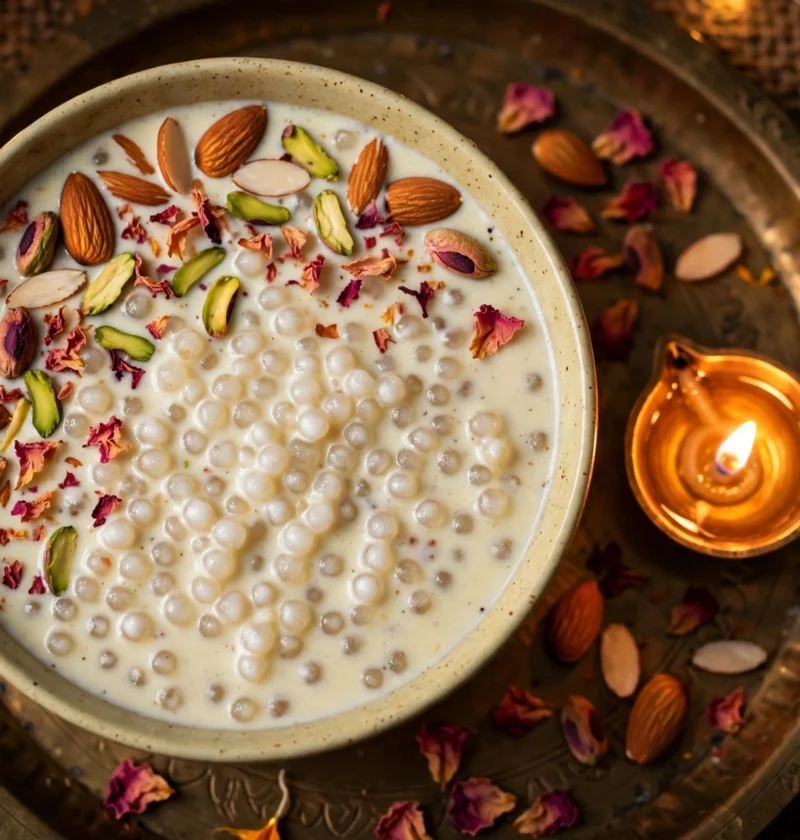
I learned this sabudana kheer recipe on a fasting day, when the whole house was quiet and the kitchen smelled faintly of cardamom. My grandmother was observing a fast, and instead of the usual elaborate dinner she made a single pot of something simple: milk, sugar, and a handful of small white pearls that turned glassy as they cooked. I watched her stir that pot for what felt like forever, and when she finally ladled it into small steel bowls, the pearls hung suspended in the creamy milk like tiny jewels. That first spoonful — cool, sweet, and impossibly silky — is the reason this sabudana kheer recipe has stayed in my kitchen ever since, long after I stopped needing a fasting day as an excuse to make it.
What I did not understand back then was why her version always came out smooth while mine turned into a sticky lump the first few times I tried it on my own. The secret, it turns out, is not complicated at all: the pearls must be soaked just enough, the milk must never boil hard, and the sugar must wait until the very end. Get those three things right and this sabudana kheer recipe takes about forty minutes from start to finish, feeds four people generously, and turns the humblest pantry ingredients into a dessert that feels festive. If your sago pudding has ever clumped into a sad, gluey mass, this is the version that fixes it.
Why This Sabudana Kheer Recipe Works
- Soaking, not boiling, softens the pearls: A short soak lets each pearl drink up water evenly, so this sabudana kheer recipe cooks into separate, translucent beads instead of a starchy clump.
- Low heat protects the milk: A gentle simmer keeps the milk from catching or splitting, which is why this sabudana kheer recipe stays silky from the first stir to the last.
- Sugar goes in last for a reason: Sweetening too early makes the pearls tough and chewy, but adding it at the end keeps this sabudana kheer recipe tender and glossy.
- Cardamom and saffron do the perfuming: A few crushed pods and a pinch of saffron give this sabudana kheer recipe its celebration flavour without a single artificial drop.
- It works warm or chilled: Served warm it comforts like a hug, served cold it turns into an elegant dinner-party dessert, so this sabudana kheer recipe fits every season and every table.
Ingredients for This Sabudana Kheer Recipe
This batch makes four generous bowls — enough for a family dessert, or two nights of something sweet after dinner. Buy small sabudana pearls, not the large ones meant for khichdi; the small pearls cook faster and give the pudding its signature jewel-like look. Use full-cream milk if you can, because the richness of the milk is what makes the finished kheer taste luxurious rather than thin.
For the kheer
- 1/2 cup small sabudana (sago) pearls
- 4 cups full-cream milk
- 1/2 cup sugar, or to taste
- 4 green cardamom pods, crushed
- 1 generous pinch of saffron strands, soaked in 2 tablespoons warm milk
- 1 teaspoon rose water (optional)
For garnishing
- 2 tablespoons pistachios, thinly sliced
- 2 tablespoons almonds, blanched and slivered
- 1 tablespoon dried rose petals (optional)
- 1 teaspoon charoli seeds (optional, for a traditional touch)
How to Make This Sabudana Kheer Recipe in 5 Steps
The road to the finished pudding has five stops, and the one cooks skip is the soaking. Pearls that go into the pot dry will never cook evenly, no matter how long you stir. Soak first, then let the milk do the rest, and this sabudana kheer recipe is almost impossible to spoil.
Step 1: Soak the sabudana
Rinse the sabudana pearls in a sieve under cold water until the water runs mostly clear, then tip them into a bowl and cover with just enough water to sit about half an inch above the pearls. Leave them for 2 to 3 hours, or overnight if you are planning ahead. The pearls are ready when you can squash one easily between your fingers with no hard white centre. Drain them well before cooking; this soaking step is the quiet foundation of the whole sabudana kheer recipe, and skipping it is how most failed batches begin.
Step 2: Warm the milk gently
Pour the milk into a heavy-bottomed pot and set it over medium-low heat with the crushed cardamom pods. Stir often with a wooden spoon, scraping the bottom so nothing catches, and bring the milk to the barest simmer — small bubbles around the edges, never a rolling boil. A heavy pot matters here more than it seems; thin pots scorch milk in minutes, and scorched milk will flavour the entire sabudana kheer recipe no matter what you add later.
Step 3: Add the pearls and simmer
Tip the drained pearls into the warm milk and stir immediately so they do not settle and stick. Keep the heat low and simmer for 12 to 15 minutes, stirring every minute or so, until the pearls turn almost fully translucent with just a tiny dot at the centre. The milk will thicken noticeably as the pearls release their starch. If the mixture looks too thick before the pearls are done, splash in a little warm milk — this sabudana kheer recipe should stay loose and pourable at this stage, because it thickens further as it cools.
Step 4: Sweeten and perfume
Once the pearls are tender, stir in the sugar and keep simmering for 2 to 3 minutes until it dissolves completely. Now add the saffron milk and the rose water if you are using it, and stir once more. Taste and adjust the sweetness — the pudding should be sweet but not cloying, the kind of sweetness that lets the cardamom shine through. Adding the sugar at this late stage is the detail that keeps this sabudana kheer recipe soft and glossy instead of rubbery.
Step 5: Garnish, rest, and serve
Take the pot off the heat and let the kheer rest for ten minutes, stirring once halfway so a skin does not form on top. Ladle into bowls and scatter the pistachios, almonds, rose petals, and charoli over the surface. Serve it warm for comfort, or chill it for 2 hours for a firmer, spoonable dessert. That first spoonful, with pearls suspended in saffron-gold milk, is the moment this sabudana kheer recipe is made for.
Serving Suggestions
My favourite way to serve this pudding is chilled, in small glass bowls, with an extra pinch of pistachios on top and a pot of masala chai on the side. The cool creaminess against the warm spice of the tea is a pairing that turns an ordinary weeknight into something a little special, and the pearls catch the light in a way that makes even a simple bowl look celebratory. For a fasting day, I serve it at room temperature in steel bowls, exactly the way my grandmother did, with nothing else on the table — this sabudana kheer recipe needs no company when it is the main event.
When guests come over, I put this pudding out next to its creamy cousins so everyone can compare bowls. My Kheer brings the classic slow-cooked rice version to the same table, while my Sabudana Khichdi shows the savoury side of the very same pearl — and this sabudana kheer recipe sits between them as the delicate, jewel-like dessert that disappears first. A plate of dry fruits or a few pieces of barfi alongside is plenty; the pudding should stay the star.
For a party, set the kheer in one large glass bowl and let guests help themselves, with small bowls of extra nuts and rose petals for topping. It also makes a lovely make-ahead dessert for Eid or Diwali gatherings, since it tastes even better on the second day once the cardamom has settled into the milk. This sabudana kheer recipe doubles without any fuss too: just use a wider pot so the milk has room to simmer, and stir a little more often as the quantity grows.
Storage and Reheating
Sabudana kheer is at its best within a day of making, when the pearls are still soft and distinct and the milk is silky. Store leftovers in a lidded container in the fridge for up to 3 days; the pudding will thicken considerably as it chills, which is perfectly normal. To serve it again, stir in a splash of cold or warm milk until it loosens to the consistency you like, and it will taste freshly made.
Reheat gently if you want it warm: pour it into a heavy pot over the lowest possible heat and stir constantly for a few minutes, adding milk as needed. Skip the microwave for a full bowl, which heats unevenly and can turn the pearls rubbery in spots. I never freeze this pudding, because thawed pearls go mushy and the milk separates — but the soaked pearls themselves keep in the fridge for a day, so you can soak ahead and cook fresh whenever the craving strikes. Soak ahead, cook at the last minute, and every bowl of this sabudana kheer recipe tastes just made.
Frequently Asked Questions
Why did my sabudana turn into one sticky lump?
Almost always, the pearls were under-soaked or the heat was too high. Dry centres burst and release starch all at once, and fierce boiling makes them glue together. Soak until every pearl squashes easily, keep the milk at a gentle simmer, and stir often — those three habits fix nearly every clumping problem in this sabudana kheer recipe.
Can I skip soaking the sabudana?
You can, but I would not recommend it. Unsoaked pearls take much longer to cook, drink up far more milk, and often stay hard in the middle while the outside turns to mush. The 2 to 3 hour soak is the cheapest insurance in this sabudana kheer recipe, and overnight soaking in the fridge works beautifully if you plan ahead.
Can I make this sabudana kheer with other milks?
Full-cream dairy milk gives the richest result, but you can use toned milk with a spoon of condensed milk stirred in at the end for body. For a dairy-free version, thick coconut milk works well and pairs beautifully with the cardamom, though the flavour leans more tropical. Whatever milk you choose, keep the heat low and the stirring steady, and this sabudana kheer recipe will still deliver its silky texture.
How long does sabudana kheer keep?
Up to 3 days in the fridge in a sealed container, though the texture is best on the first day. The pearls slowly absorb more milk as they sit, so the pudding thickens — just loosen it with a splash of milk before serving. I would not keep it longer than 3 days, since milk puddings spoil quietly, and this sabudana kheer recipe is quick enough to make fresh whenever you want it.
Recipe Summary
Allow a few hours for soaking (mostly hands-off), about twenty minutes at the stove, and four people are eating in roughly forty minutes of active time. Each bowl runs close to 320 calories, and this dish has earned its spot on my dessert shelf as the pearl-studded, saffron-scented pudding that turns a quiet fasting day into a small celebration.
If you try it, I hope that first cool, creamy, cardamom-scented spoonful shows you why a single pot of milk and pearls became one of my most-cooked desserts — simple, silky, and finished long before anyone asks for seconds. For the background on the dish, read about kheer and the wider sago tradition on Wikipedia.