The Adrak Chai That Fixed a Rainy Evening
The first time I made this adrak chai recipe properly, it was raining sideways outside and I had a sore throat coming on, the kind that announces itself with a scratch at the back of your neck. My grandmother would have marched straight to the kitchen, crushed a knob of ginger with the flat of a knife, and had a pot on the stove before I finished complaining. I did not have her confidence, but I had her method in my head: ginger first, water second, patience third. Twenty minutes later I was holding a glass of golden, steaming chai that smelled like a hug, and the scratch in my throat had already started to back down. That is the thing about this adrak chai recipe — it is not just a drink, it is the answer to a bad evening, and it has rescued more of my rainy days than I can count.
What I learned that night is that ginger chai is a different animal from ordinary chai. The ginger does not sit politely in the background; it leads, warming your chest and clearing your head, while the tea leaves give it backbone and the milk rounds off the edges. This adrak chai recipe takes about twenty minutes from the first crush of the ginger to the table, makes two generous glasses, and needs nothing fancier than a saucepan, a strainer, and a piece of fresh ginger root. If your chai has ever tasted flat or one-note, this is the version that wakes it up.
Why This Adrak Chai Recipe Works
- Crushed ginger, not sliced: Bruising the ginger releases its juices and oils, so this adrak chai recipe tastes properly gingery instead of faintly spiced.
- A slow simmer builds the heat: Letting the ginger steep in the water before the milk goes in gives this adrak chai recipe its deep, throat-warming warmth.
- Strong leaves stand up to milk: A bold, kadak patti keeps this adrak chai recipe from turning pale and milky the way weak tea does.
- Pulling the chai aerates it: Pouring from a height froths the milk and cools it to drinking temperature, which is why this adrak chai recipe tastes like a roadside stall made it.
- Sugar goes in at the end: Sweetening last lets you taste and adjust, so this adrak chai recipe is never cloying, just balanced.
Ingredients for This Adrak Chai Recipe
This batch makes two large glasses, the kind you wrap both hands around on a cold day. Buy fresh ginger that snaps cleanly when you break it — wrinkled, bendy ginger has lost its fire, and this adrak chai recipe depends on that fire. Use full-cream milk if you can; it gives the chai its body and its golden colour, and low-fat milk makes a thinner, paler cup.
For the chai
- 1 1/2-inch piece fresh ginger root (about 1 oz), peeled
- 1 1/2 cups water
- 2 tablespoons loose-leaf black tea (or 3 strong tea bags)
- 1 cup whole milk
- 2 to 3 teaspoons sugar, or to taste
For serving
- Crushed cardamom (optional, a pinch)
- Biscuits or rusk, for dunking
How to Make This Adrak Chai Recipe in 5 Steps
The cooking has five moves, and the one people skip is the ginger simmer. Tea leaves steep in minutes, but ginger needs time to give up its heat, and a chai where the ginger went in with the milk always tastes like an afterthought. Simmer the ginger first, and the rest of this adrak chai recipe falls into place in minutes.
Step 1: Crush the ginger
Peel the ginger and crush it with the flat side of a large knife, then chop the bruised pieces roughly. You want ragged, juicy bits, not neat slices — crushing breaks the fibres open and lets the flavour flood out. Put the crushed ginger into a small saucepan with the water. This bruised, uneven ginger is the foundation of the whole adrak chai recipe, and it is the step that separates a properly warming chai from one that merely smells of ginger.
Step 2: Simmer the ginger water
Bring the water to a boil over medium-high heat, then turn it down and simmer gently for 6 to 8 minutes. The water will turn a pale gold and smell sharply of ginger, and the kitchen will start to smell like a monsoon afternoon. Do not rush this simmer — ginger gives up its warmth slowly, and a short boil leaves this adrak chai recipe tasting thin. If the water reduces a lot, top it up with a splash more so you still have enough for two glasses.
Step 3: Add the tea leaves
Stir in the loose tea leaves (or drop in the tea bags) and simmer for 3 to 4 minutes, until the liquid turns a deep, dark amber. The stronger the brew at this stage, the better the finished chai, because the milk is about to soften it. Taste a drop if you like — it should be bold and slightly bitter on its own, since the milk and sugar will round it out. This dark, gingery base is what makes this adrak chai recipe taste kadak rather than milky.
Step 4: Add milk and simmer again
Pour in the milk and bring the pot back to a gentle boil, watching it closely so it does not boil over — milk has a habit of rising the moment you look away. Let it bubble softly for 3 to 4 minutes, stirring now and then, until the chai turns a rich golden brown and the ginger, tea, and milk have married into one flavour. Stir in the sugar and the pinch of cardamom if you are using it, and taste. The chai should be warm, sweet, and gingery all at once, and that balance is the whole point of this adrak chai recipe.
Step 5: Strain and pull the chai
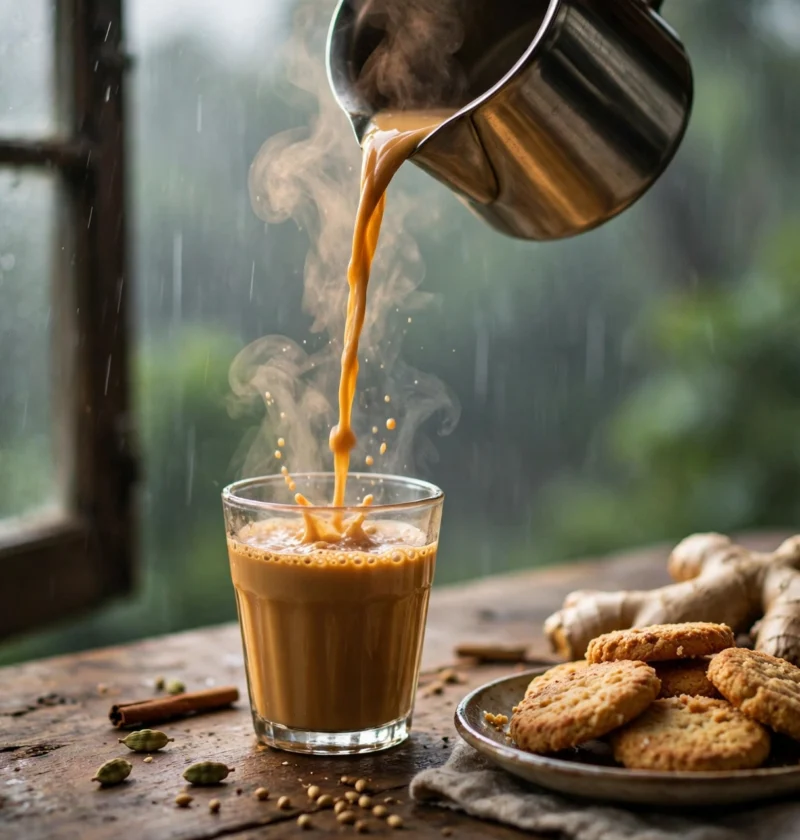
Turn off the heat and strain the chai into a jug, pressing the ginger and leaves gently with a spoon to get every drop. Now pour it from a height into the serving glasses, lifting the jug a good foot above the glass and pouring in a steady stream, then pour it back into the jug and repeat once more. This pulling froths the chai, cools it just enough to drink, and gives it that silky, stall-style texture. Pour into warmed glasses and serve at once — a pulled chai waits for no one, and this adrak chai recipe is at its best in the first five minutes.
Serving Suggestions
My favourite way to serve this chai is the simplest one: in small, thick glasses with a plate of butter biscuits for dunking, preferably by a window while it rains. The dunked biscuit going soft at exactly the wrong moment is half the ritual, and the steam fogging the glass is the other half. A few extra slices of fresh ginger on the saucer look pretty and tell everyone what is in the cup before they even taste it.
When friends drop by unexpectedly, I put this chai out next to its spicier and creamier cousins so the table has range. My Masala Chai brings the full-spice version to the same gathering, while my Doodh Patti Chai offers the milky, slow-simmered classic — and this adrak chai recipe sits between them as the sharp, warming one that guests ask about first. A plate of pakoras alongside turns an ordinary visit into an occasion, and a bowl of roasted peanuts covers anyone who wants something salty with their sweet chai.
For a quiet morning, one glass and the newspaper are genuinely enough, no ceremony needed. It also works beautifully as the drink after a heavy dinner, when the ginger settles everything down and the warmth sends you pleasantly towards sleep. However you serve this adrak chai recipe, serve it hot and freshly pulled — reheated chai loses its froth and its charm in equal measure.
Storage and Reheating
Adrak chai is at its best the minute it is pulled, when the froth is high and the ginger heat is brightest. If you must keep it, strain it into a covered jug and refrigerate for up to a day; the flavour will flatten a little, but a fresh simmer brings most of it back. To serve again, warm it slowly in a saucepan without boiling it hard, then pull it once more from a height to rebuild the froth, and it will taste close to fresh.
Do not microwave a full jug from cold, since the milk heats unevenly and can scald at the edges while the middle stays cool. I would not freeze finished chai at all — thawed milk separates and the ginger turns dull. The ginger water, however, keeps well: simmer a double batch of ginger in water, cool it, and refrigerate for up to 3 days, then finish with fresh tea and milk whenever the craving strikes. That way the next adrak chai recipe evening starts halfway done.
Frequently Asked Questions
Should I grate the ginger instead of crushing it?
You can, and grated ginger gives an even stronger flavour, but it makes straining harder — fine shreds slip through most strainers and leave a gritty cup. Crushing gives you nearly all the heat with none of the grit, which is why I use it for this adrak chai recipe. If you do grate, strain through a fine cloth or a tea strainer, and you will get a beautifully fiery cup.
Can I make this adrak chai recipe without milk?
Yes, and it becomes a different, sharper drink — more like a ginger tea than a chai. Skip the milk, simmer the ginger and tea a little longer, and sweeten with honey off the heat instead of sugar. The version with milk remains the classic, though: the milk softens the ginger’s bite and turns the whole cup golden, which is what most people picture when they think of adrak chai.
How do I stop the milk from boiling over?
Use a pot much bigger than you think you need, keep the heat at medium once the milk is in, and stay nearby with a spoon in hand. The moment the milk starts to rise, lift the pot off the heat for a few seconds and it settles right back down. A wooden spoon laid across the rim helps too, though nothing beats simply watching the pot — and this adrak chai recipe only needs three or four minutes of that watchfulness.
Can I make a big batch for guests?
Easily. Double or triple everything and use your widest pot so the milk has room to rise, keeping the same simmering times. Strain into a large jug and pull the chai in batches just before serving, so every glass arrives frothy and hot. Made ahead, the ginger water holds in the fridge for days, and you can finish the chai fresh in ten minutes when guests arrive — which keeps you out of the kitchen while everyone is settling in.
Recipe Summary
Allow five minutes for crushing and prep, about fifteen minutes at the stove, and two people are sipping in roughly twenty minutes. Each glass runs close to 90 calories with sugar, and this drink has claimed a permanent corner of my cooking as the golden, warming chai that turns a rainy evening, a sore throat, or an ordinary afternoon into something worth slowing down for.
If you try it, I hope that first steaming sip — sharp ginger, strong tea, soft milk — shows you why a knob of ginger and a handful of tea leaves became one of my most-made recipes. For the background on the drink, read about ginger and the wider story of chai on Wikipedia.