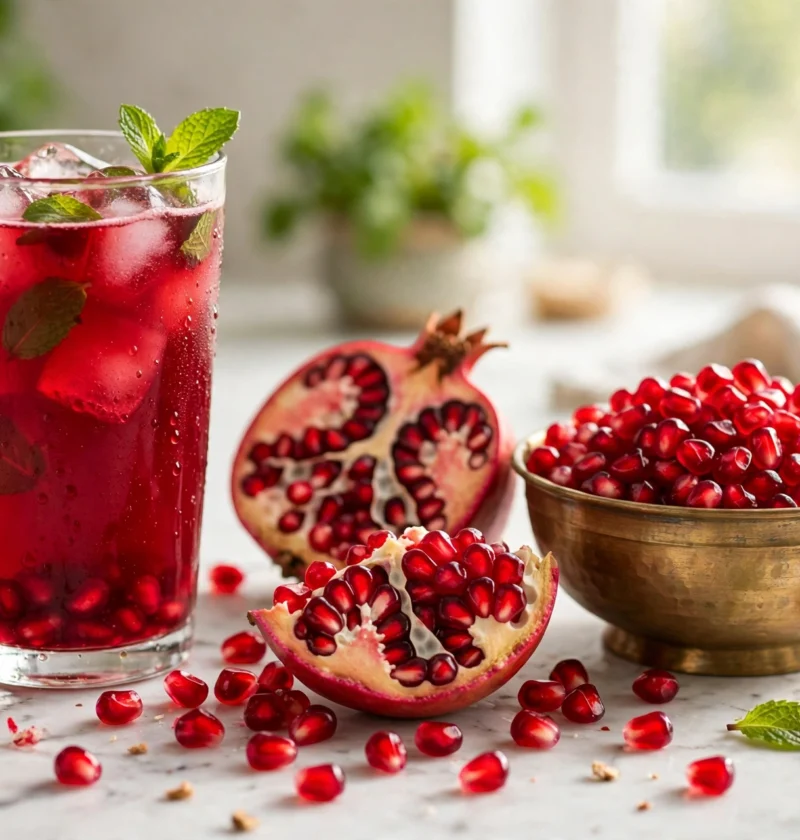
The first time I made anar juice at home, I did it out of pure stubbornness. A juice bar near my old house charged a small fortune for a single glass of fresh pomegranate juice, and every time I paid for it, I wondered why one ingredient cost that much. So one Saturday morning I bought four heavy pomegranates from the fruit seller, spread newspaper over the kitchen counter, and set about learning how to get the juice out of them without staining everything I owned. It took me three tries to get it right, and the kitchen looked like a crime scene for a while, but the glass I finally poured was every bit as good as the juice bar’s. This anar juice recipe is the method I settled on after all that messy experimenting, and it has saved me a small fortune ever since.
What I love about this juice is how undemanding it is. Nothing needs cooking, no sugar gets added, and the only equipment is a blender, or even just your hands and a strainer. You pick ripe, heavy pomegranates, you free the arils, you blend and strain, and twenty minutes later you are holding a glass of something ruby-red, naturally sweet with a gentle tart edge, and far fresher than anything that comes out of a carton. Once you learn the seeding and straining tricks, you will make this anar juice recipe whenever pomegranates are in season.
Why This Anar Juice Recipe Works
- No juicer required, just a blender and a strainer. Pomegranate arils blend easily and the seeds strain out cleanly, so this anar juice recipe works with equipment you already own instead of a machine you would use twice a year.
- The seeding trick keeps your kitchen clean. Seeding the fruit underwater in a bowl stops the juice from spraying everywhere, which is why this anar juice recipe is genuinely practical and not just delicious.
- No sugar needed when the fruit is ripe. A good pomegranate is sweet on its own with a tart finish, so this anar juice recipe stays naturally sweet and lets the fruit do all the work.
- Straining twice gives a silky, clear glass. A coarse strain followed by a fine one removes every trace of pulp and seed grit, giving this anar juice recipe the smooth texture of a juice bar pour.
- Chilling the fruit first means instant refreshment. Cold pomegranates straight from the fridge blend into a juice that is ready to drink at once, so this anar juice recipe needs no waiting time before serving.
Ingredients
The list could hardly be shorter. Everything depends on the quality of the fruit, so spend your effort choosing good pomegranates rather than adding extras. Look for fruits that feel heavy for their size, with tight, glossy skin that has a little give when pressed.
- 4 large ripe pomegranates, chilled
- 1 tablespoon lemon juice, freshly squeezed (optional, for brightness)
- 1 teaspoon honey (optional, only if your fruit is tart)
- Ice cubes, to serve
- Fresh mint leaves, to garnish
- A pinch of black salt (optional, for a street-cart twist)
On the pomegranates: the variety matters less than the ripeness, but if your fruit seller offers a choice, pick the deep-red, slightly angular fruits over the perfectly round, pale-pink ones. Avoid fruits with soft spots or cracked skin, since a cracked pomegranate often hides dried-out arils. This anar juice recipe makes about two generous glasses, and it doubles easily if you have a crowd.
Method
Step 1: Seed the pomegranates underwater
Fill a large bowl with cold water. Cut each pomegranate in half across the middle, then hold one half cut-side down over the bowl and tap the skin firmly with a wooden spoon. The arils will drop into the water in satisfying showers. Pick out any large pieces of white pith that fall in, since pith adds bitterness, and use your fingers to free any stubborn clusters. The water catches every stray drop, so your counter stays clean. Scoop the floating pith off the top, then drain the arils in a colander. This underwater seeding is the single trick that makes this anar juice recipe worth making at home instead of dreading.
Step 2: Blend the arils in short bursts
Tip the drained arils into a blender and pulse in short bursts, five or six times, just until the arils break open and release their juice. Do not run the blender continuously, because over-blending crushes the small white seeds inside the arils and turns the juice bitter and cloudy. You want the mixture to look like a thick, jewel-red pulp with visible seed pieces still intact. If your blender struggles, add two tablespoons of cold water to get things moving, but no more, since this anar juice recipe is meant to be pure fruit, not diluted. Work in two batches if your blender jar is small.
Step 3: Strain twice for a silky finish
Set a coarse strainer over a large jug and pour the blended pulp through it, pressing gently with the back of a spoon to coax the juice out without forcing seed bits through. Discard the pulp, then strain the juice a second time through a fine mesh strainer or a double layer of muslin cloth. The second straining removes the last fine grit and leaves the juice clear and silky. Taste it now: if your pomegranates were ripe, it should be sweet with a pleasant tart edge. Stir in the lemon juice if you want a brighter finish, and the honey only if the fruit genuinely needs it.
Step 4: Taste and adjust the flavour
Taste the strained juice now, before it ever reaches a glass. If your pomegranates were ripe, it should be sweet with a pleasant tart edge, and it needs nothing at all. Stir in the lemon juice if you want a brighter finish, and add the honey only if the fruit genuinely tastes tart, a teaspoon at a time, tasting as you go. This is the moment to decide on the street-cart version too: a tiny pinch of black salt sharpens the sweetness in a way that surprises first-time drinkers.
Step 5: Chill, garnish, and serve
If your pomegranates were chilled, the juice is ready to pour right away. Fill two tall glasses with ice, pour the juice over, and garnish with a sprig of mint and a few loose arils floating on top. Serve immediately, while the colour is at its deepest ruby and the flavour is at its freshest. That is the whole method, and honestly, the hardest part of this anar juice recipe was seeding the fruit, which the water bowl already made easy.
Serving Suggestions for This Anar Juice Recipe
On a hot afternoon, this anar juice recipe needs nothing more than ice and a tall glass. I make a jug when friends drop by in summer, and it disappears faster than any cold drink I have ever served. It is also a beautiful breakfast drink, poured beside parathas or a simple omelette, where its tart sweetness cuts through rich food the way orange juice never quite manages.
For a fancier table, serve this anar juice recipe in small glasses as a welcome drink, garnished with a few loose arils floating on top and a mint leaf. It pairs wonderfully with a fruit platter or a light chaat spread. If your table already enjoys our sugarcane juice, set the two out together for a fun contrast, the grassy sweetness of cane beside the tart ruby depth of pomegranate. And for another jewel-coloured drink with a completely different character, our falsa sharbat brings a tangy berry sourness beside this smooth, sweet-tart juice.
Storage and Reheating
Fresh anar juice is at its best the hour it is made, and I will be honest about that first. The colour stays gorgeous for a day, but the bright, just-pressed flavour softens with every hour in the fridge. That said, this anar juice recipe keeps well enough for next-day drinking if you store it right. Pour it into a clean glass bottle or jar with a tight lid, filling it as close to the top as you can so less air sits on the juice, and refrigerate for up to 2 days.
Do not freeze this juice expecting it to come back the same, because freezing dulls the fresh flavour and the thawed juice tastes flat compared to a fresh glass. If you have more pomegranates than you can drink, freeze the arils instead, spread on a tray and then bagged, and blend them fresh later, which gives you a far better result. And never reheat this juice, since heat destroys exactly what makes it special: the cool, raw, just-pressed character that no cooked drink can imitate.
Anar Juice Recipe FAQs
Is anar juice the same as falsa sharbat or kokum sharbat?
No, and the difference is the fruit and the method. Falsa sharbat is made from small falsa berries, soaked and sweetened into a tangy, dark purple drink, while kokum sharbat comes from dried kokum rinds steeped in sweetened water. This anar juice recipe is different from both: it is pure pressed pomegranate, unsweetened and uncooked, with a naturally sweet-tart flavour and a ruby colour that comes only from pomegranate arils.
How is anar juice different from sugarcane juice?
The two could hardly be further apart. Sugarcane juice is pressed from raw sugarcane stalks and tastes grassy, intensely sweet, and almost syrupy, usually served with lemon and ginger over ice. This anar juice recipe gives you something lighter and more complex: a tart-sweet, ruby-red juice with a faint tannic edge from the pomegranate, made by blending arils rather than pressing stalks.
Do I need to remove every bit of white pith?
Almost every bit, yes, because pith is the main source of bitterness in pomegranate juice. The underwater seeding method helps enormously, since the pith floats and the arils sink, so you can skim most of it away in seconds. A few tiny flecks will not ruin the glass, but a large piece of pith blended in will leave a bitter aftertaste that no amount of honey can fully hide. Spend the extra minute skimming, because this anar juice recipe rewards that small care with a clean, sweet finish.
Can I make anar juice without a blender?
Yes, with a little more elbow grease. Put the arils in a sturdy bowl and crush them with a potato masher, then tip the crushed pulp into a muslin cloth and squeeze it over a jug, twisting the cloth until no more juice comes out. The yield is slightly lower than the blender method, and the juice may be a touch cloudier, but the flavour is just as good. For a single glass, this hand method is honestly faster than washing a blender.
Recipe Summary
Prep time: about 15 minutes of seeding, mostly relaxed work over a bowl of water. Blending and straining: about 5 minutes. Makes 2 generous glasses. Level: easy, with the underwater seeding as the only technique worth learning. This anar juice recipe takes four ripe pomegranates, a blender, and a strainer, and turns them into a ruby-red, naturally sweet juice that tastes like it came from the best juice bar in town. Make it once while pomegranates are in season, and I suspect it will become the drink your family asks for by name.
A little background for the curious: pomegranates have been grown across South Asia and the Middle East for thousands of years, prized for their jewel-like arils and their sweet-tart juice. And juice made fresh at home, without pasteurisation or added sugar, keeps the bright, raw flavour that cartons lose in processing. Pressing pomegranates fresh is one of the oldest ways to enjoy the fruit, and that simple, direct pleasure is exactly what you taste in this anar juice recipe.