The first time I paid real attention to kachumber, I was sitting cross-legged at a dhaba outside Lahore, waiting for a karahi that was taking its sweet time. The waiter set down a small steel bowl almost as an afterthought, just chopped onion, tomato and cucumber with a squeeze of lemon, and I barely glanced at it. Then the karahi arrived, rich and heavy, and suddenly that little bowl became the most important thing on the table. Every rich bite needed a crisp, sharp, cold counterpoint, and the kachumber delivered it perfectly. I have never treated a salad as an afterthought since. This kachumber recipe is the version I make at home now, and it has quietly become the side dish my family asks for whenever anything spicy or fried is on the menu.
What I love about kachumber is its honesty. There is no cooking, no fancy technique, and nothing to hide behind. The whole dish stands or falls on three things: vegetables cut fresh, a lemon squeezed at the last minute, and seasoning that is bold enough to wake up the palate. It takes fifteen minutes, costs almost nothing, and turns a heavy desi meal into something balanced. Once you learn the small details that matter — the size of the chop, the order of mixing, and the timing of the salt — you will make this kachumber recipe on autopilot, because it belongs beside almost everything your kitchen produces.
Why This Kachumber Recipe Works
- Everything stays raw and crunchy. No heat ever touches the vegetables, so this kachumber recipe keeps the snap of onion, the juice of tomato and the cool crunch of cucumber exactly as nature made them.
- The chop size is deliberate, not random. Small, even pieces mean every spoonful carries all three vegetables at once, which is why this kachumber recipe tastes balanced instead of like separate ingredients sharing a bowl.
- Lemon goes in last, never first. Acid added at the end brightens everything without softening the vegetables, so this kachumber recipe stays crisp from the first serving to the last.
- Chaat masala does the heavy lifting. One spice blend brings salt, tang, warmth and a little funk all at once, giving this kachumber recipe its unmistakable street-side character.
- It is made to order in minutes. Fifteen minutes from chopping board to table means this kachumber recipe can rescue any meal that turns out richer or heavier than planned.
Ingredients
The shopping list is short enough to remember without writing it down, and that is part of the charm. The one choice worth making carefully is the tomatoes. Pick ones that are ripe but still firm, because a soft, overripe tomato will collapse into pulp and turn the whole bowl soggy. The same rule applies to the cucumber: firm and heavy for its size, with tight, unblemished skin. Everything else is pantry stock, and the whole kachumber recipe comes together from ingredients most desi kitchens already have on hand.
- 2 medium red onions, peeled and finely chopped
- 3 medium tomatoes, firm and ripe, chopped into small pieces
- 1 large cucumber, peeled in stripes and chopped
- 1 green chilli, seeds removed and minced fine
- 1/4 cup fresh coriander leaves, roughly chopped
- 2 tablespoons fresh lemon juice, squeezed just before mixing
- 1 heaped teaspoon chaat masala
- 1/2 teaspoon cumin powder, dry-roasted
- Fine salt, 1/2 teaspoon, adjust to taste
- Black pepper, 1/4 teaspoon, freshly cracked
- A tablespoon of extra-virgin olive oil (optional, for gloss)
- Lemon wedges, to serve
On the onion: red onions are the classic choice because they are milder and sweeter than white ones, and their purple edges look beautiful against the red tomato and green cucumber. If red onions are unavailable, a sweet white onion works, but soak the chopped pieces in cold water for ten minutes first and drain well. That quick soak takes the harsh edge off raw onion without dulling its crunch, and it is a trick worth knowing for any raw salad.
Method
Step 1: Chop the vegetables small and even
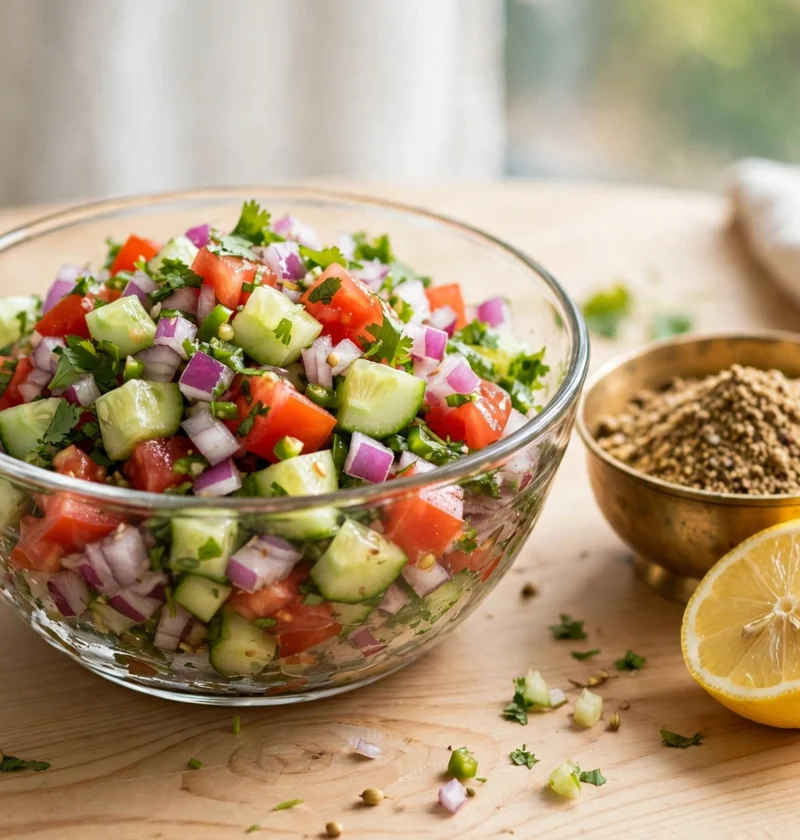
Start with the onions, cut into small, even pieces, roughly the size of a pea, and drop them into a large mixing bowl. Chop the tomatoes next to about the same size; do not worry about the seeds and juice — they belong in the bowl and become part of the dressing. Peel the cucumber in alternating stripes for pretty green edges, then chop it to match the other vegetables. Even chopping is the quiet foundation of this kachumber recipe: wildly different sizes mean some bites are all onion and others all cucumber.
Step 2: Add chilli, coriander and dry spices
Scatter the minced green chilli and chopped coriander over the vegetables, then sprinkle in the chaat masala, roasted cumin powder, salt and black pepper. Hold the lemon juice back for now — that comes last, and the order matters more than it seems. Toss everything gently with a large spoon so the spices coat the vegetables evenly without crushing the tomato pieces. At this stage the bowl already smells wonderful — sharp onion, warm spice — and the colours look like a small celebration.
Step 3: Rest the mixture briefly
Let the bowl sit for five minutes at room temperature. This short rest lets the salt draw a little juice from the tomatoes and onions, mingling with the spices to form a light, natural dressing. It also softens the raw onion just slightly, taking the aggressive edge off while leaving the crunch intact. Do not stretch this rest beyond five minutes, or the vegetables will release too much water and the salad will turn soupy. Timing is one of the small disciplines this kachumber recipe teaches, and it pays off in texture.
Step 4: Squeeze lemon, drizzle oil and toss
Now, and only now, squeeze the lemon juice over the bowl, drizzle the olive oil if you are using it, and toss everything once more, gently but thoroughly. Taste and adjust: a little more salt if the tomatoes are very sweet, another squeeze of lemon if the bowl tastes flat, or a pinch more chaat masala if you want a stronger tang. The finished kachumber recipe should taste bright and punchy, the lemon sitting on top of the flavours rather than drowning them. Serve immediately, while the vegetables are at their crispest and the dressing is still light.
Step 5: Chill briefly or serve at once
You have two good options. Serve the kachumber straight away at room temperature, as dhabas do, with the vegetables still firm and the flavours sharp. Or cover the bowl and chill it for ten to fifteen minutes, which firms the cucumber further and lets the flavours settle into each other. Chilling longer than half an hour is not recommended, because the salt keeps pulling water from the vegetables and the bowl gradually loses its snap. Either way, give it one final gentle toss just before it reaches the table, and set out lemon wedges for anyone who wants extra tang.
Serving Suggestions for This Kachumber Recipe
On an ordinary weeknight, this kachumber recipe asks for nothing more than a hot curry and some bread or rice. I put a bowl beside dal, karahi, biryani, or anything fried, and it does the same job every time: it cools, cuts and refreshes between bites. It is also the salad I reach for when guests arrive unexpectedly, because it can be on the table before the kettle boils, and it makes even a simple meal look considered and generous.
For a fuller spread, pair this kachumber recipe with a cooling yogurt dish for contrast. Our cucumber raita sits beautifully next to it, one bowl crisp and sharp, the other cool and creamy, and together they cover everything a spicy main dish needs. And when the main course is a hearty home curry, our aloo chana with a pile of kachumber on the side is the kind of simple, honest plate I grew up eating. For a festive table, serve kachumber in a wide, shallow bowl so the colours show, with lemon wedges and extra green chillies for the brave.
Storage and Reheating
Honest truth first: this kachumber recipe is a make-and-eat salad, and it is at its best within half an hour of mixing. The salt keeps drawing water from the vegetables, so a bowl left sitting for hours turns soft and watery, and no amount of stirring brings the crunch back. If you must keep it, cover the bowl tightly and refrigerate it for up to four hours, then drain off any collected liquid and add a fresh squeeze of lemon and a pinch of chaat masala before serving. It will be good, though never quite as shattering as fresh.
The smarter move is to prep ahead without mixing. Chop the onion, tomato and cucumber separately, store them in sealed boxes in the fridge for up to a day, and keep the lemon, spices and coriander ready beside them. Mixing takes two minutes when dinner is ready, and this way the salad tastes freshly made every time. There is no reheating here at all — heat is the one thing this salad never wants — and freezing is out of the question, since thawed cucumber turns limp and watery.
Kachumber Recipe FAQs
Is kachumber the same as raita?
No, and the difference is the base. Raita is a yogurt dish: whisked dahi with vegetables or herbs stirred through it, served cool and creamy. Kachumber contains no yogurt at all. This kachumber recipe is a raw chopped salad dressed only with lemon juice, spices and a little oil, so it is crisp, sharp and light where raita is smooth and cooling. They complement each other beautifully on the same table, but they are entirely different dishes, and confusing them is like confusing a pickle with a sauce.
Is kachumber a cooked sabzi or curry?
Not at all. A sabzi is cooked: vegetables simmered or fried with spices until soft, often with a gravy. Kachumber never sees a flame. The vegetables stay raw, the dressing is squeezed lemon and dry spices, and the whole dish is assembled rather than cooked. That rawness is the point of this kachumber recipe — it is the fresh, crunchy contrast to the cooked dishes around it, the way a green salad balances a roast in any cuisine.
Why does my kachumber turn watery?
Almost always, the salt sat on the vegetables too long before serving. Salt draws moisture out of tomato and cucumber steadily, so a bowl mixed an hour ahead will swim in its own juice. Mix close to serving time, keep the rest to five minutes at most, and add the lemon last. If the bowl does go watery, drain the liquid, add a handful of freshly chopped cucumber for crunch, and re-season with lemon and chaat masala. Using firm, just-ripe tomatoes rather than soft ones also helps a great deal.
Can I add other vegetables to this kachumber recipe?
Yes, with restraint. Grated carrot adds sweetness and colour, finely diced radish adds peppery bite, and a handful of pomegranate seeds turns the salad festive. Keep the classic trio — onion, tomato, cucumber — as the backbone, and treat additions as guests rather than hosts. Avoid watery vegetables like lettuce, which wilt instantly, and avoid anything that needs cooking. The spirit of this kachumber recipe is simplicity: a few fresh things, cut well, seasoned boldly, eaten promptly.
Recipe Summary
Prep time: about 15 minutes of chopping, no cooking at all. Makes 4 side servings. Level: easy, with even chopping and last-minute seasoning as the only skills to practise. This kachumber recipe takes onion, tomato and cucumber, seasons them with lemon, chaat masala and cumin, and turns them into the crisp, tangy salad that belongs beside every rich desi meal. Make it once, and it will become the quiet workhorse of your table, the bowl that disappears first even though nobody planned the meal around it.
A little background for the curious: kachumber is a traditional chopped salad served across South Asia, valued precisely because it is raw, quick and refreshing beside heavy curries and grilled meats. And chaat masala, the spice blend at its heart, is the tangy seasoning that gives countless Indian street foods their unmistakable lift. A bowl of fresh vegetables, a squeeze of lemon and a pinch of that masala is one of the oldest tricks in the desi kitchen, and that simple combination is exactly what you taste in this kachumber recipe.