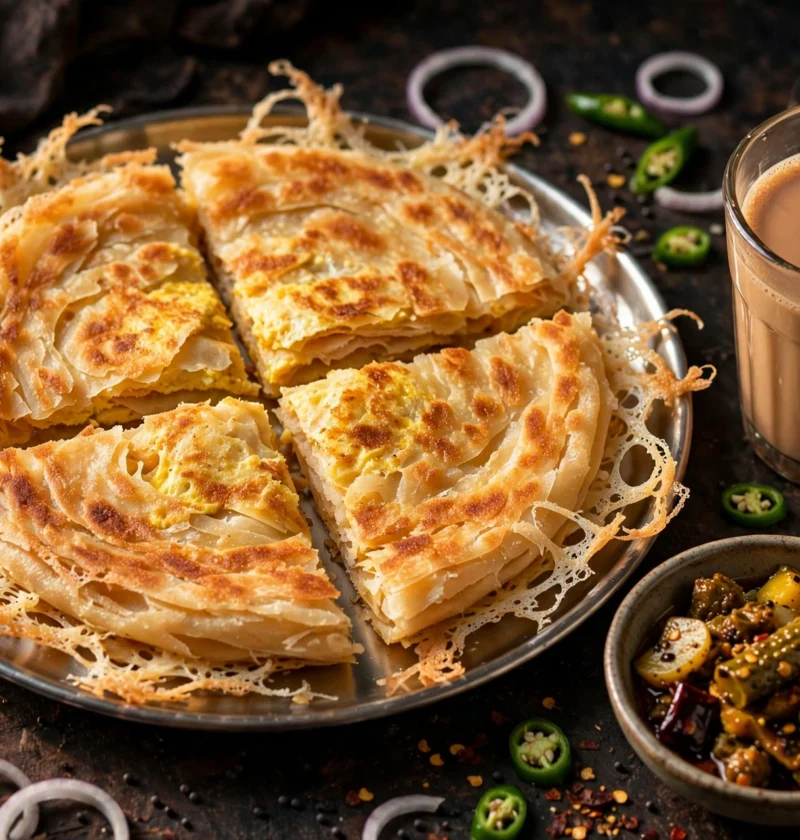
Every college canteen and late-night dhaba in Pakistan runs on one sound after midnight: an egg being beaten in a steel glass, fork ringing against the sides. Anda paratha was the order — cheap, fast, and filling enough to carry a student through an all-night study session or a bus driver through the next three hundred miles. The cook would slap a paratha onto the tawa, pour the whole frothy egg over it in one confident motion, and flip it onto a plate before you had finished deciding about chai. This anda paratha recipe is that plate, rebuilt with the small pieces of technique the canteen cooks never explained because their hands already knew them.
At home, my first versions failed in ways the canteen never allowed. I poured egg onto a cold, raw paratha and watched the whole sheet slide off in one rubbery piece when I tried to flip it. I cooked over a fierce flame and got a scorched bottom with a slick, underdone egg layer on top. And once, being generous, I flooded the pan with oil first, and the egg floated on the fat like a raft instead of bonding to the bread. Each failure taught one rule of this anda paratha recipe: the paratha cooks first and goes in hot, the egg meets a surface that is already set, the heat is medium and patient, and the ghee is measured by the teaspoon — never poured by mood.
Why This Anda Paratha Recipe Works
An anda paratha is two simple things — bread and egg — that refuse to combine unless the order of operations is respected. This anda paratha recipe respects it in five ways:
- The paratha is cooked before the egg arrives. A hot, already-setting surface is what egg bonds to; raw dough is wet and cool, and egg slides across it like rain on a window. Here the paratha gets its first minute on the tawa alone, so when the egg lands it grips the crust instead of floating over it. That sequencing is the whole secret of this anda paratha recipe, and it takes sixty seconds.
- The egg is beaten until it is truly uniform. Streaks of white become rubbery ribbons; a fully whisked egg — no threads, no clear patches, slightly frothy on top — pours into an even coat that sets as one delicate layer. The onion, green chili, and coriander are whisked into the egg rather than sprinkled on later, so the seasoning is inside every bite instead of sitting on top of this anda paratha recipe like an afterthought.
- One egg per paratha, spread to the very edges. Less egg leaves bare patches that taste like plain bread; more pools in the middle and stays custardy while the edges burn. One large egg, spread with the back of a spoon right out to the rim, gives the thin, complete coating that defines the dish. Guests who want a double can ask for a second paratha — this anda paratha recipe holds its ratio.
- The heat stays at a steady medium. Egg sets fast and then burns all at once; a moderate tawa gives you the thirty calm seconds you need to spread the coat before flipping, and another thirty to set the egg side to a pale gold. High heat is how you get a blackened paratha under raw egg, a combination no amount of achaar redeems. Patience at the flame is written into this anda paratha recipe for a reason.
- The ghee belongs on the tawa, not in the egg. A thin film of ghee under the paratha and a few drops around the edges fry the egg’s border into lacy, crisp frills — the part everyone picks at first. Ghee mixed into the beaten egg, or a pan drowning in it, does the opposite: the coat goes greasy and loses its delicate crispness. In this anda paratha recipe, fat is a tool for edges, used sparingly and on purpose.
Ingredients
Serves 4 (4 parathas)
For the paratha dough:
- 2 cups (260g) whole wheat flour (atta)
- 1/2 teaspoon salt
- 3/4 cup (180 ml) warm water, added gradually
- 1 teaspoon neutral oil
- About 3 tablespoons ghee, for cooking
For the egg coating:
- 4 large eggs (1 per paratha)
- 1 small onion (about 80g), very finely chopped
- 2 green chilies, finely chopped
- 2 tablespoons fresh coriander leaves, chopped
- 1/2 teaspoon red chili flakes
- 1/2 teaspoon fine salt
- 1/4 teaspoon ground black pepper
For serving:
- Mixed pickle (achaar)
- Ketchup — the canteen way, no apologies
- Hot doodh patti chai
The base here is the paratha, the layered, pan-fried flatbread of the subcontinent, cooked plain this time rather than stuffed — the egg coat does the enriching. And the egg laid over it is working the same magic it works in omelettes and French toast: a protein that arrives liquid, clings to hot bread, and sets into a savory skin. This anda paratha recipe is essentially those two old friends introduced properly, in the right order.
How to Make This Anda Paratha Recipe – Step by Step
Step 1: Knead and rest a simple dough.
Stir the flour and salt together, add the warm water gradually, and knead for 7 to 8 minutes into a soft, smooth dough. Rub the teaspoon of oil over the surface, cover, and rest for 20 to 30 minutes. There is no filling to prepare and nothing to leak, so this dough can be a shade softer than a stuffed paratha’s — soft dough rolls thin and puffs into layers. While it rests, everything else in this anda paratha recipe can be put in order.
Step 2: Beat the eggs with their seasonings.
Crack the eggs into a jug and whisk hard for a full minute, until the mixture is one even, pale gold with no streaks of white. Whisk in the onion, green chilies, coriander, chili flakes, salt, and black pepper. Beating all four eggs together is faster, but the coat is fairer if you pour from a spouted jug and judge a quarter of the mixture per paratha by eye. Set the jug beside the stove — once the first paratha is on the tawa, this anda paratha recipe moves quickly.
Step 3: Roll plain, even parathas.
Divide the dough into 4 balls. Roll each into a round about 7 inches across — medium-thin, with no floury tears — and brush or smear a thin film of ghee over the surface, fold it in half, then in half again into a triangle, and roll it out once more. That quick fold is what gives the finished paratha its layers. Keep the rolled parathas under a cloth so their surfaces do not dry out while the first one cooks.
Step 4: Cook, coat, flip, set.
Heat a tawa over medium heat and lay on the first paratha. Cook 45 to 60 seconds, until the underside has set and pale spots appear, drizzle a teaspoon of ghee around the edges, and flip it. Immediately pour a quarter of the egg mixture over the hot top surface and spread it to the edges with the back of a spoon. Give it 30 seconds to begin setting, then flip the paratha once, egg-side down, and cook 30 to 40 seconds more, just until the egg is set and faintly golden with crisped fringes. That is one; repeat with the remaining three, and this anda paratha recipe starts to feel like a rhythm rather than a task.
Step 5: Serve egg-side up, at once.
Slide each paratha onto a warm plate with the egg side facing up — the golden coat is the presentation — and cut it into quarters if you are serving it canteen-style. Achaar for the traditionalists, ketchup for the canteen nostalgics, chai for absolutely everyone. Eat it while the edges still crackle at the borders; an anda paratha recipe forgives many things, but a ten-minute wait under a cover, steaming itself soft, is not one of them.
Serving Suggestions
As a standalone nashta, this is complete: protein, bread, heat, and chai, on the table inside half an hour. For a slower weekend spread, serve it beside a bowl of leftover daal or cholay for dipping — the egg coat and a spoonful of gravy are better together than either deserves. A sliced onion-and-tomato salad with lemon keeps the plate honest, and second helpings are not so much offered as assumed.
Know where it sits in the paratha family. My aloo paratha is the stuffed sibling — spiced potato sealed inside, rolled with light hands, the Sunday classic — while this anda paratha recipe is the quicker, protein-first cousin that asks for no filling at all. And when the table wants the full festive production instead, my halwa puri is the other great Lahori nashta: balloons of fried bread with sweet halwa, where this plate is the everyday answer.
Storage and Reheating
Anda parathas are at their best within minutes, but life is not always arranged that way. Cooked parathas keep in the fridge for up to 2 days, wrapped, and reheat best on a dry, medium-hot tawa — about a minute per side — until the egg coat crisps at the edges again; the microwave returns them soft and faintly rubbery. The dough holds refrigerated for up to 2 days and should come back to room temperature before rolling. What I do not recommend is coating ahead: the egg must meet the paratha on the tawa, in the moment, for this anda paratha recipe to be itself.
Frequently Asked Questions
Why does the egg slide off my paratha?
Almost always a sequencing problem. If the egg went onto raw, cool dough, it never had a hot surface to grip; if the tawa was awash with oil, the egg floated on the fat instead of touching the bread. Cook the paratha’s first side until it sets, flip it, and pour the egg onto that hot, just-cooked face with only a film of ghee in the pan. Follow the order in this anda paratha recipe and the coat stays exactly where you put it.
Can I stuff the egg inside the paratha instead?
You can, and it is a different pleasure — the pocket style, where beaten egg is poured into a half-cooked paratha that has puffed into a pouch. It is fiddlier, leaks more often, and gives you steamed egg rather than a crisped coat. Try it once the coated version is in your hands; most home cooks I know come back to the method in this anda paratha recipe for weekday mornings and keep the pocket trick for impressing guests.
What else can I put in the egg?
The canteen rules are generous: a chopped tomato with its seeds squeezed out, a spoonful of grated cheddar for the modern version, leftover qeema folded through for a genuinely lavish breakfast, or a pinch of chaat masala whisked in for tang. Keep the additions dry and few — a watery tomato or a heavy handful of cheese will break the coat’s delicate set. This anda paratha recipe’s classic onion-chili-coriander trio remains the benchmark everything else is measured against.
Can I make this with oil instead of ghee?
Yes — a neutral oil works and keeps the dish lighter, though you lose some of the nutty richness ghee brings to the paratha’s layers. What matters more than the fat’s identity is its quantity: a thin film, refreshed by the teaspoon between parathas, never a pool. Mustard oil, warmed until it just smokes and cooled slightly, is the dhaba variation and gives this anda paratha recipe a pleasantly sharp edge for those who like it.
Recipe Summary
- Prep time: 15 minutes (+ 20 minutes resting)
- Cook time: 15 minutes
- Total time: 30 minutes (+ resting)
- Servings: 4
- Cuisine: Pakistani
- Course: Breakfast