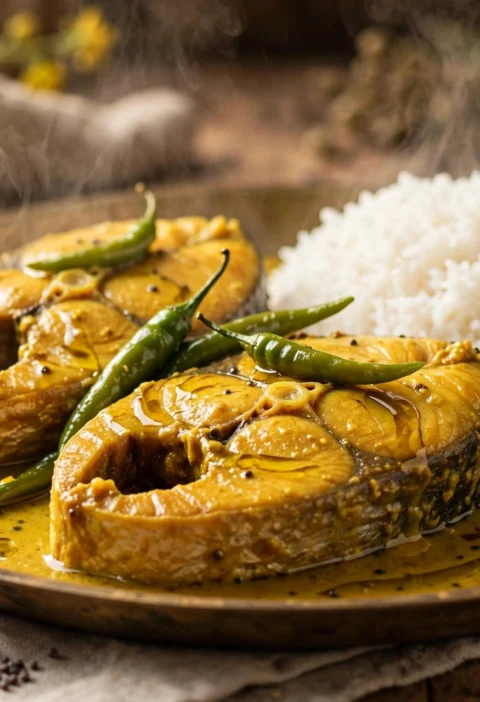
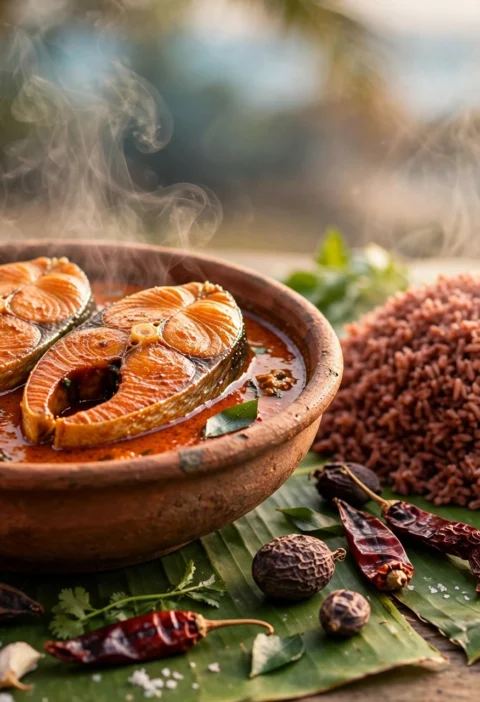
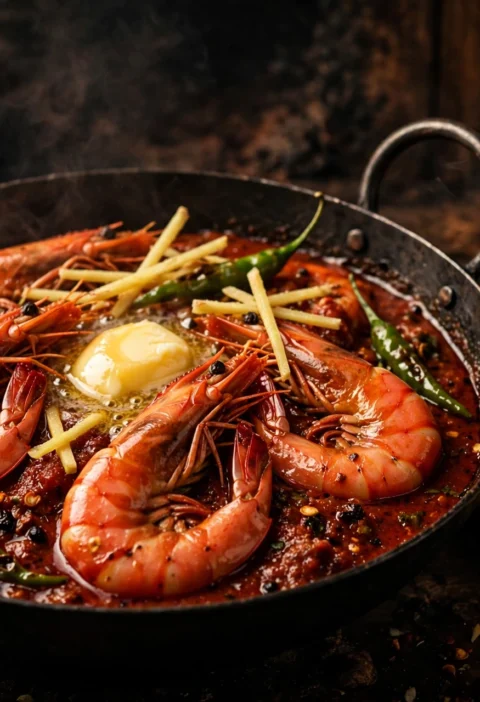
The first time I made this chingri posto recipe away from home, I stood in a cramped apartment kitchen with a small packet of poppy seeds my mother had pressed into my suitcase, wrapped twice in plastic like something precious. She had written the proportions on the back of a bus ticket — posto, this much; prawns, that much; chillies, as many as your courage allows — and I followed that fading pencil writing the way you follow a voice. The prawns curled pink in the pale sauce, the mustard oil bloomed at the end, and for one quiet minute my little kitchen smelled exactly like my mother’s on a Sunday afternoon. That is the power of this dish: it carries a whole home in a handful of seeds.
Chingri posto is the quiet member of Bengal’s prawn family. Its famous cousin swims in coconut milk, golden and celebratory, but posto chingri keeps a different company — a smooth white sauce ground from poppy seeds, nothing in it louder than a green chilli and a whisper of nigella. The prawns are barely seasoned, just turmeric and salt, because the sauce is the point: nutty, faintly sweet, so gentle that the sweetness of the prawn itself comes through. It is not feast food. It is the dish a Bengali mother makes when good prawns come home from the morning market and nobody wants to bury them under spice. There is a practical wisdom in it too: poppy seeds keep through the year in a tin on the shelf, so this is the sauce a household can make on any ordinary day, without a coconut to crack or a celebration to justify it.
Why This Chingri Posto Recipe Works
Poppy seed sauce has a reputation for splitting, turning gritty, or swallowing the prawns whole. Five small habits keep this chingri posto recipe silky and balanced every time:
- The poppy seeds soak long and grind longer. An hour in warm water softens the seeds so they grind into a true cream instead of a gritty sand. Ten patient minutes in the grinder, with splashes of water, is the difference between silk and stubborn texture.
- The prawns are fried briefly, then finished in the sauce. A quick sear in mustard oil gives the prawns colour and keeps their juices in; they return to the pan only at the end, so they stay plump and snappy instead of curling into rubber.
- The posto paste goes in off the fiercest heat. Poppy seed paste scorches and turns bitter if it hits a violently hot pan. Lowering the flame and stirring it in gently keeps the sauce pale, sweet and clean-tasting.
- Almost no spice — on purpose. Nigella seeds, green chillies and turmeric are the whole cast. Restraint is what makes this chingri posto recipe taste like itself; every extra spice would push it toward an ordinary curry.
- Raw mustard oil finishes the dish. A teaspoon stirred through at the very end, off the heat, gives that unmistakable pungent lift Bengalis call the smell of home. Cooked oil seasons; raw oil perfumes.
Ingredients
Two ingredients carry this dish, and both deserve a sentence. The first is the poppy seed — posto in Bengali — tiny ivory seeds that grind into a paste both delicate and quietly rich, the backbone of a whole family of Bengali dishes. Buy them from a South Asian grocer, where they are sold as khus khus or posto, and check they smell faintly nutty, never musty. The second is the prawn itself: medium to large, as fresh as you can find, because a sauce this gentle hides nothing. Everything else — mustard oil, nigella, green chillies — is pantry support for those two leads.
Serves 4
For the prawns:
- 1 pound medium-large prawns (about 16–20), cleaned and deveined, tails kept on if you prefer
- 1/2 teaspoon fine salt
- 1/2 teaspoon ground turmeric
For the posto sauce:
- 1/3 cup white poppy seeds (posto / khus khus)
- 3/4 cup warm water, for soaking, plus more for grinding
- 2 tablespoons mustard oil, plus 1 teaspoon raw, to finish
- 1/2 teaspoon nigella seeds (kalonji)
- 4 green chillies, slit lengthways — 2 for the sauce, 2 to garnish
- 1 small onion, ground to a smooth paste (about 1/3 cup) — optional, see the FAQ
- 3/4 teaspoon fine salt, or to taste
- 1/2 teaspoon sugar
- 1/2 cup warm water, to thin the sauce as needed
How to Make This Chingri Posto Recipe – Step by Step
Step 1: Soak and grind the poppy seeds into a silk paste. Rinse the poppy seeds under the tap in a fine sieve, then cover them with the warm water in a bowl and let them soak for a good hour at least — overnight in the fridge is even better. Drain, keeping a little of the soaking water, and grind the seeds in a small grinder or mortar, adding the reserved water a spoonful at a time. Grind, rest the motor, grind again: a full 8 to 10 minutes of patience until the paste is completely smooth, pale and pourable, with no grit left when a pinch is rubbed between finger and thumb. This paste is the whole sauce, so do not rush it.
Step 2: Season the prawns and give them a quick fry. Dry the prawns well on kitchen paper, then rub them all over with the turmeric and salt. Warm the mustard oil — all 2 tablespoons of it — in a wide, heavy pan over a medium-high flame until it pales in colour and its raw sharpness softens — about a minute past the first wisp of smoke. Lay the prawns in a single layer and fry for barely 45 seconds a side, just until they turn pink and curl into a loose C. Lift them straight out onto a plate with every drop of their oil; they finish cooking later.
Step 3: Temper the nigella and soften the onion. In the same pan, over medium heat now, add the nigella seeds and let them crackle for 20 seconds. If you are using the onion paste, stir it in and cook patiently for 5 to 6 minutes, stirring often, until it loses its raw smell and turns the faintest gold at the edges. Keep the heat moderate — the sauce of a chingri posto recipe must stay pale, and dark browning belongs to other curries.
Step 4: Stir in the posto paste and simmer the sauce gently. Drop the heat to low. Add the ground poppy seed paste, the 2 slit green chillies, sugar and salt, and stir it through the pan. Pour in the 1/2 cup of warm water and let the sauce come to the gentlest simmer, stirring often so it never catches. Cook for 5 to 6 minutes, until the raw, green smell of the paste turns sweet and nutty and the surface shows a faint sheen of oil. The sauce should coat a spoon like thin cream; loosen with a splash more warm water if it thickens too far. Do not walk away during these minutes — posto paste is placid one moment and catching on the pan the next, and a lazy stir every half minute is all the attention it asks.
Step 5: Return the prawns, finish with raw mustard oil. Slide the prawns and their resting juices back into the sauce, fold everything together, and simmer for just 2 minutes — no more — until the prawns are cooked through and wearing the sauce like a coat. Take the pan off the heat. Stir through the teaspoon of raw mustard oil, scatter the remaining slit chillies on top, cover, and rest for 5 minutes. Serve straight from the pan, while the perfume is still rising.
Serving Suggestions
Chingri posto is served the way it is cooked — quietly. A mound of plain steamed rice, the prawns and their pale sauce spooned beside it, a wedge of lemon nobody quite uses, and the meal is complete. The rice matters: it should be a soft, fragrant everyday rice rather than anything spiced, because the pleasure here is the sauce soaking into plain grains. A thin dal and a wedge of fried potato on the side make it a full Bengali lunch, but honestly, the prawns need very little company. In my mother’s house it arrived in the same pan it cooked in, set in the middle of the table without ceremony, and the first serving always went to whoever had shelled the prawns — a cook’s tax nobody disputed.
If you want to taste the whole posto family and its famous neighbour in one week, start here, then cook my chingri malaikari — the same prawns in their golden coconut-milk celebration dress — and taste how completely the mood changes with the sauce. And for the vegetarian heart of posto cooking, my aloo posto pairs potatoes with the same silky paste; serve the two side by side at one table and you understand why Bengal never tires of a seed so small.
Storage and Reheating
Poppy seed sauce thickens as it sits, so leftovers of this chingri posto recipe will look set and firm in the fridge — that is normal, not spoilage. Store the prawns in their sauce in a covered container for up to 2 days. The flavour, if anything, deepens overnight as the prawns rest in the posto.
Reheat gently in a pan over the lowest heat with a splash of warm water, stirring just until the sauce loosens and the prawns are warmed through — never boil it hard, or the sauce can split and the prawns toughen. A fresh drizzle of raw mustard oil after reheating brings back the perfume that the fridge dulls. I do not freeze this dish; the sauce turns grainy on thawing.
Frequently Asked Questions
Poppy seeds are restricted where I live. What can I use instead?
Poppy seeds are regulated in a few countries, so this is a common problem. The closest stand-in is melon seeds (magaz), soaked and ground exactly the same way — the sauce stays pale and nutty. A half-and-half mix of soaked cashews and white sesame seeds also works well. The spirit of any chingri posto recipe is a pale, ground-seed sauce, and either substitute keeps that spirit honestly.
Should onion go into chingri posto?
Families argue about this over the table. Many traditional versions use no onion at all — just posto, chillies and nigella — and that is the purest, most delicate form. Others grind one small onion into the sauce for body. I have written it as optional: try it without first, and you will taste why the minimalists defend their version so fiercely.
Why did my posto sauce turn bitter?
Two causes, almost always. The paste was fried too hot or too long — poppy seeds scorch quickly and scorching is bitter — or the seeds themselves were old and rancid. Keep the heat low once the paste goes in, stir constantly, and buy seeds that smell sweet and nutty. A pinch of sugar softens a mild bitterness, but a badly scorched sauce cannot be rescued. If the bitterness is only faint, an extra spoon of warm water and a longer rest under the lid sometimes rounds it out enough to serve without apology.
Can I make this with frozen prawns or with fish instead?
Frozen prawns are fine — thaw them in cold water, pat them very dry, and season just before frying, since wet prawns steam instead of searing. For fish, firm white pieces like rohu or sea bass work beautifully in the same sauce; the dish becomes macher posto, a close and equally beloved cousin. Handle fish even more gently than prawns in this chingri posto recipe, and give the pieces a full minute a side in the oil.
Recipe Summary
- Prep time: 20 minutes, plus 1 hour soaking the poppy seeds
- Cook time: 20 minutes
- Total time: About 1 hour 40 minutes, including soaking
- Servings: 4
- Cuisine: Pakistani
- Course: Main Course