The Apple Halwa That Saved a Bag of Forgotten Apples
I owe this apple halwa recipe to a fruit bowl I had been ignoring for a week. There were five apples sitting in it, going soft at the edges, too tired for lunchboxes and too plain for anyone to reach for after dinner. I was about to throw them out when my aunt, who was visiting, stopped me with a hand on my wrist and said, “Arre, halwa bana lo” — just make halwa. I laughed, because apples in my mind belonged in pies and crumbles, not in a karahi. She peeled one anyway, grated it into a pan of bubbling ghee, and within minutes the kitchen smelled like an orchard in autumn. That evening, the bowl she handed me was golden, buttery, and scented with cinnamon, and nobody at the table believed it had started life as five forgotten apples. This apple halwa recipe is my faithful version of her rescue act, and it has changed the way I look at fruit that is past its crisp best.
The trick, I discovered, is that apples are almost built for halwa. They grate into soft ribbons, they collapse into a jammy sweetness with barely any help, and their gentle tartness keeps the dessert from ever turning cloying. This apple halwa recipe takes about forty minutes from peeling to serving, feeds four people generously, and turns ordinary eating apples into a dessert that tastes like something from a festive table. If your fruit bowl is full of apples nobody is eating, this apple halwa recipe is the bowl that gives them a second life.
Why This Apple Halwa Recipe Works
- Grated apples melt fast: Fine ribbons of apple soften into a jammy base within minutes, so this apple halwa recipe never needs the long simmer a chopped fruit would demand.
- A ghee fry deepens the flavour: Cooking the grated apple in ghee first caramelises its edges, which is why this apple halwa recipe tastes rich and toasty rather than simply fruity.
- Cinnamon does the perfuming: A pinch of cinnamon and a whisper of cardamom give this apple halwa recipe its warm, autumnal fragrance without overpowering the apple itself.
- Sugar goes in at the right moment: Sweetening only after the apple has softened keeps the texture silky, so this apple halwa recipe never turns grainy or stiff.
- Toasted almonds add the crunch: A scattering of golden almonds against the soft halwa gives this apple halwa recipe the contrast that makes every spoonful interesting.
Ingredients for This Apple Halwa Recipe
One batch fills four dessert bowls nicely — plenty for a family pudding, or a small gathering where everyone wants a second helping. Pick apples that are sweet with a little tang: Gala, Fuji, or Honeycrisp all work beautifully. Very tart cooking apples need more sugar and can turn the halwa sharp, so save those for pies. A mix of two varieties, if you have them, gives the most interesting flavour.
For the halwa
- 1 1/2 pounds (about 680 g) sweet apples, peeled, cored, and grated
- 3 tablespoons ghee, divided
- 1/2 cup whole milk
- 1/3 cup sugar, adjusted to your taste
- 1/2 teaspoon ground cinnamon
- 1/4 teaspoon ground cardamom
- 1 tablespoon condensed milk (optional, for extra silkiness)
For garnishing
- 2 tablespoons almonds, slivered and toasted
- 1 tablespoon pistachios, roughly crushed
- A few thin apple slices, for the top
- An extra pinch of cinnamon, to dust
How to Make This Apple Halwa Recipe in 5 Steps
Five moves stand between you and the finished bowl. Most cooks rush the ghee fry, and that is the mistake to avoid: apple tossed straight into milk stays pale and faintly raw, while apple fried in ghee first turns golden and caramel-sweet. Fry with patience, let the milk and sugar finish the job, and this apple halwa recipe is very hard to spoil.
Step 1: Grate the apples
Peel the apples, cut out the cores, and grate the flesh on the coarse side of a box grater — you want shreds, not mush, so they hold a little texture in the finished halwa. Work quickly, because grated apple browns in the air, and toss the ribbons with a squeeze of lemon if you are grating ahead. A generous mound of grated apple looks like a lot for one pan, but it cooks down to barely half its volume, so do not be shy about the quantity. This grated pile is the starting point of the whole apple halwa recipe, and a coarse grate is what keeps the finished bowl from turning into baby food.
Step 2: Fry the apple in ghee
Melt two tablespoons of the ghee in a wide, heavy pan over medium heat and tip in the grated apple, stirring to coat every shred. Fry for 8 to 10 minutes, stirring often, until the apple darkens to a light gold, smells caramel-sweet, and the pan looks almost dry. That colour change tells you the fry is working: pale, wet shreds become golden and sweet-smelling, and that is the moment the dessert finds its flavour. Skip ahead too soon and the whole bowl stays flat, so let the pan have its full ten minutes before anything else goes in.
Step 3: Simmer with milk and spice
Tip in the milk, cinnamon, and cardamom, then lower the flame and let the mixture murmur away for 10 to 12 minutes, giving it a scrape along the bottom now and then so it cannot catch. The milk will slowly turn into a sauce that clings to a spoon while the apple softens into jam and deepens to amber. Should the pan start to look dry while the apple still has bite, add a splash of warm milk — a little slackness now is fine, since the halwa tightens once it leaves the heat.
Step 4: Sweeten and enrich the pot
When the apple has gone completely soft and the milk has become a thick sauce that coats the back of a spoon, sprinkle in the sugar and keep cooking for 3 to 4 minutes, stirring until every grain has melted away. Stir in the condensed milk at this point if you are using it, and keep stirring until the surface turns shiny and the halwa starts to leave the sides of the pan on its own. Have a taste — apple sweetness varies by variety, so a sharp batch may want one more spoon of sugar while a very ripe batch wants none. Holding the sugar until now is what keeps the texture smooth; sweeten too early and the apple firms up instead of melting.
Step 5: Toast the almonds and finish
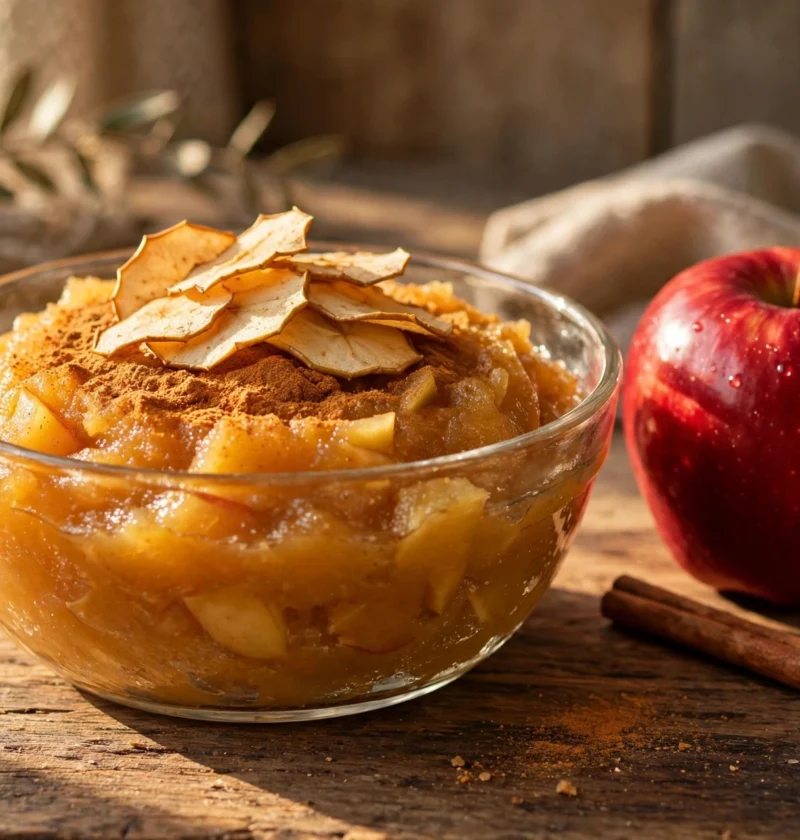
Warm the last spoon of ghee in a small pan and fry the slivered almonds briefly, just until they colour to pale gold and smell toasted. Fold half of them into the halwa and save the remainder for scattering on top. Slide the pan off the burner and let the halwa sit for five minutes, stirring once halfway through so the top cannot form a skin. Dish it into bowls while it is still warm, then crown each portion with the saved almonds, pistachios, apple slices, and a pinch of cinnamon. That first warm, fragrant spoonful, gold and nutty, is the whole point of this apple halwa recipe.
Serving Suggestions
My favourite way to eat this is barely dressed up at all: warm halwa in a small glass bowl, the gold showing through the sides, and a cup of kadak chai next to it. The tea’s bite against the sweet cinnamon apple makes an ordinary evening feel like a small occasion, and a plain bowl suddenly looks like a celebration when the colour glows through the glass. On a bigger table I tip the whole batch into one wide serving dish at room temperature, so everyone can admire the amber shine before serving themselves.
At a gathering I like to set this bowl beside the halwa everyone already knows. My Gajar Ka Halwa is the classic carrot one on the table, and my Suji Ka Halwa is the golden semolina one — this apple halwa recipe arrives as the fragrant newcomer that tends to empty first. A scoop of vanilla ice cream beside it makes a celebration plate out of a simple bowl, the cold cream against warm halwa doing half the work.
For a party, I put out one big bowl with little dishes of extra nuts and apple slices so people can dress their own portions. It also keeps beautifully overnight — the cinnamon sinks deeper into the apple and the flavour improves by morning, which makes it a smart make-ahead choice for autumn get-togethers. Doubling the batch is no trouble either: pick a wider pan so the milk can reduce properly, and give the pot an extra stir or two as it gets bigger.
Storage and Reheating
Any halwa left over goes into a lidded box in the fridge, where it keeps for four days; it will firm up considerably in the cold, which is completely normal. When you want it again, warm it slowly in a covered pot over gentle heat with a little milk, stirring now and then until it loosens back to a spoonable texture — it comes back tasting freshly made. Day one is still when it tastes best, with the colour at its brightest and the halwa at its softest and glossiest.
Reheat on the hob, not in the microwave: microwaves warm unevenly and can leave the edges dry while the middle stays cold. Freezing is not something I recommend, since thawed apple weeps water and the milk splits — but grated apple tossed with lemon holds in the fridge for a day, so grate in advance and cook fresh when the craving arrives. Grate now, cook later, and every bowl of this apple halwa recipe tastes freshly made.
Frequently Asked Questions
Which apples work best for this recipe?
Sweet, firm eating apples are ideal — Gala, Fuji, and Honeycrisp all hold their flavour and collapse into a jammy texture. Very tart varieties like Granny Smith need noticeably more sugar and can make the halwa sharp rather than mellow. A mix of two sweet varieties gives the best result, since each brings a slightly different note. Whatever you choose, peel and core them well, because skin left in the grate darkens the colour and adds a bitter edge to this apple halwa recipe.
Can I make this apple halwa recipe without milk?
Yes, though the result is a little less silky. Skip the milk and cook the fried apple down with a splash of water instead, letting it reduce until jammy before sweetening. The condensed milk can also be left out entirely; the halwa will be slightly less rich but still glossy and fragrant. Keep the heat low and the stirring steady, and the milk-free version of this apple halwa recipe still delivers its golden colour and cinnamon warmth.
Can I make this apple halwa recipe dairy-free?
Simple. Use coconut oil instead of ghee and thick coconut milk instead of dairy milk, and skip the condensed milk or swap in a coconut-based one. The flavour turns a touch more tropical, but the golden colour stays just as beautiful. Keep the flame gentle and the spoon moving, and the dairy-free version of this apple halwa recipe still comes out glossy and smooth.
How long does apple halwa keep?
Four days in a sealed box in the fridge is the safe limit, though the colour and texture peak on day one. As it rests it firms up, so stir in a little warm milk to loosen it before serving. Milk-based puddings go off quietly, so do not push past four days — and since this apple halwa recipe is done in under an hour, cooking a fresh batch is never a big job.
Recipe Summary
Count on ten minutes of peeling and grating, around twenty-five minutes of stove time, and dessert for four in roughly forty minutes. Each bowl lands near 260 calories, and this dish has earned a permanent place among my desserts as the golden, cinnamon-scented halwa that rescued a forgotten fruit bowl and turned it into a pudding everyone asks about.
If you cook it, I hope that first warm, glossy, nut-topped spoonful tells you why a humble bag of apples is now one of my most-cooked desserts — fragrant, buttery, and finished before anyone has time to ask for more. If you want the backstory, read about apples and the wider halva tradition on Wikipedia.