Every summer of my childhood had one smell that meant the season had truly arrived: a crate of Alphonso mangoes ripening on top of the fridge, sweetening the whole kitchen. My grandmother would wait until they were so soft they practically sighed when you touched them, then she would sit down with a bowl and a paring knife and make aam ras the slow way, peeling each mango by hand and pressing the pulp through her fingers. This aam ras recipe is my version of that memory, and I have kept it deliberately simple, because when the mangoes are perfect, there is almost nothing you need to do to them.
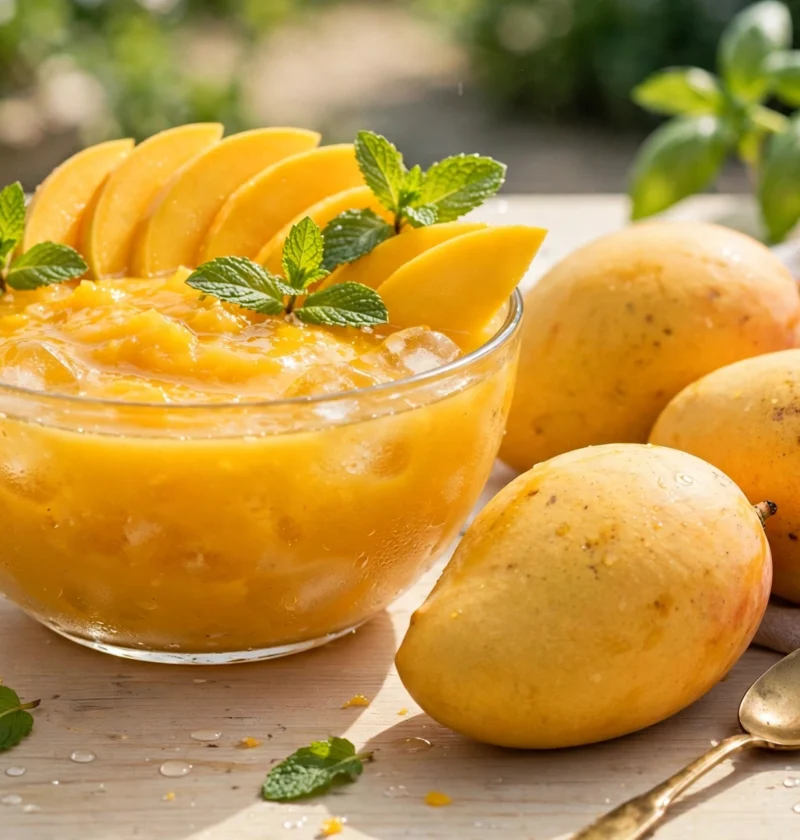
If you have never had aam ras before, think of it as mango in its purest dessert form: no cream, no custard, no cooking, just ripe mango pulp, chilled until it is silky and cold, and eaten with a spoon straight from the bowl. This aam ras recipe takes about fifteen minutes of actual work, and most of that is peeling mangoes. It is the dessert I make when friends drop by on a hot evening and I want something that tastes like I spent hours on it, when really the mangoes did all the work.
Why This Aam Ras Recipe Works
- The mangoes do the talking. This aam ras recipe uses only fully ripe, fragrant Alphonso mangoes, so the pulp is naturally sweet, thick, and golden without any cooking or thickeners.
- No heat means pure flavour. Because nothing is cooked, the fresh, floral taste of the mango stays completely intact, which is exactly what makes this aam ras recipe taste like summer itself.
- Chilling makes it silky. A proper chill in the fridge lets the pulp settle into a smooth, spoonable texture that is cool all the way through, never icy or grainy.
- It is endlessly flexible. Serve this aam ras recipe plain, with hot puris, over ice cream, or beside a slice of cake, and it works beautifully every single time.
- It scales without effort. Whether you are making aam ras for two people or twenty, the method stays the same: peel, pulp, chill, serve.
Ingredients
You need very little for this aam ras recipe, and that is the whole point. Buy the best mangoes you can find, and let them ripen fully before you start. A mango that is still firm or sour will never make good aam ras, no matter what you add to it.
- 6 large ripe Alphonso mangoes (about 4 cups of pulp)
- 2 tablespoons powdered sugar, or to taste (optional)
- 1/2 teaspoon green cardamom powder (optional)
- A pinch of saffron strands, soaked in 1 tablespoon of warm milk (optional)
- 2 tablespoons chilled milk or cream, only if the pulp is very thick
- Fresh mango slices and mint leaves, to garnish
A word about the mangoes: Alphonso is the classic choice for aam ras because it is sweet, low in fibre, and deeply fragrant. If you cannot find Alphonso, use any fully ripe, fibreless mango variety you trust, such as Kesar or Sindhri. Avoid fibrous mangoes, since the strings will ruin the silky texture no matter how well you blend. Smell the mango near the stem: if it smells sweet and floral, it is ready. If it smells like nothing, give it another day or two in a warm spot.
Method
Step 1: Pick and ripen the mangoes
Choose mangoes that yield gently when you press them and smell sweet at the stem end. If they are still firm, wrap them in newspaper and leave them at room temperature for a day or two until they soften. This step decides everything about your aam ras recipe, because underripe mangoes make sour, thin pulp, while perfectly ripe ones give you that thick golden silk. Wash the mangoes well and pat them dry before you start peeling.
Step 2: Peel and cut the pulp away
Peel each mango carefully with a sharp knife or vegetable peeler, working over a bowl so you catch every drop of juice. Slice the flesh away from the flat stone, cutting in long strips, then scrape any remaining pulp off the stone with a spoon. You should have about 4 cups of golden flesh. Do not worry if the pieces look ragged; they are going into the blender anyway. Tip everything, including the juice in the bowl, into the blender jar.
Step 3: Blend until completely smooth
Blend the mango flesh on low speed first, then on high, for about a minute, until the pulp is completely smooth and glossy. Stop and scrape down the sides once if you need to. If the pulp is so thick it barely moves, add the chilled milk or cream a tablespoon at a time, but go easy: this aam ras recipe should be thick enough to coat a spoon, not pour like juice. Taste it now. If your mangoes are perfectly ripe, you may need no sugar at all.
Step 4: Sweeten gently and perfume it
If the pulp needs sweetness, add the powdered sugar a tablespoon at a time and blend briefly after each addition, tasting as you go. Stir in the cardamom powder and the saffron milk if you are using them. I usually keep it simple and skip the extras when the mangoes are exceptional, but cardamom and saffron turn a good aam ras recipe into something that tastes like a celebration. Pour the finished pulp into a clean glass bowl or jug.
Step 5: Chill thoroughly, then serve cold
Cover the bowl and chill it in the fridge for two hours at minimum, or leave it overnight if you have the patience. Aam ras must be properly cold, not just cool, because the chill is what makes the texture feel so luxurious. Give it a gentle stir before serving, spoon it into chilled bowls, and garnish with mango slices and mint leaves. This aam ras recipe is at its best on the day it is made, served ice cold with a spoon and absolutely nothing else to distract from it.
Serving Suggestions for This Aam Ras Recipe
In my house, aam ras is rarely served alone, because half the joy is what you eat it with. The classic pairing is hot, puffed puris: tear off a piece of warm puri, scoop up some cold aam ras, and you get hot and cold, crisp and silky, in a single bite. It is the combination I grew up with, and it still feels like a small festival every time. If you are serving this aam ras recipe at a family dinner, make the puris fresh and keep the aam ras in the fridge until the very last moment, so the contrast stays sharp.
For a brunch table, I sometimes set out a big bowl of aam ras beside warm parathas and a pot of chai, and let everyone help themselves. It feels generous without any last-minute cooking, and the cold sweetness against hot, flaky bread is the kind of contrast people remember long after the meal is over. Keep the bowl sitting on a tray of ice if the morning is warm, so every serving stays properly chilled.
For a lighter table, serve this aam ras recipe in small chilled glasses as a dessert on its own, with a single mint leaf on top. It also loves company: pour it over vanilla ice cream for an instant mango sundae, spoon it over a plain sponge cake, or serve it next to a bowl of mango lassi so guests can compare two very different mango moods. On a truly hot day, I sometimes freeze half the batch into popsicle moulds, and the children treat those like treasure. And if your summer table already has a tangy drink on it, a chilled glass of aam panna next to this sweet aam ras gives everyone both sides of the mango season.
Storage and Reheating
Aam ras is a fresh dessert, and it rewards being eaten quickly. Keep it in a covered glass container in the refrigerator and finish it within 2 days for the best flavour. After that, the bright mango taste starts to fade and the pulp can turn slightly sour, especially if the container has been opened often. Stir it gently before serving, since a little liquid may separate on top, which is completely normal.
Freezing works better than you might expect for this aam ras recipe. Pour the pulp into freezer-safe containers, leaving a little room at the top for expansion, and freeze for up to one month. Thaw it overnight in the refrigerator, stir well, and serve it cold again. The texture after freezing is a touch less silky, but the flavour holds up beautifully. There is no reheating here, of course, since aam ras is meant to be cold, but if your fridge has made it almost icy, just let the bowl sit on the counter for ten minutes before serving so the silkiness returns.
Aam Ras Recipe FAQs
Can I make aam ras without a blender?
Yes, and that is how my grandmother made it. Peel the mangoes, then press and squeeze the flesh through your hands or a fine sieve into a bowl, working it until smooth. It takes longer and your hands get gloriously sticky, but the texture is wonderfully rustic and the flavour is identical. For very fibrous mangoes, though, a blender is kinder, because it breaks the fibres down far better than hand-pressing can.
Which mangoes are best for aam ras?
Alphonso is the gold standard for this aam ras recipe: sweet, fragrant, and almost fibreless, with a deep golden colour. Kesar is a close second, slightly more floral, and Sindhri works well too. Whatever variety you choose, ripeness matters more than the name on the box. A perfectly ripe ordinary mango will always beat an underripe Alphonso, so smell, squeeze, and wait until they are ready.
Do I need to add sugar to aam ras?
Not always. If your mangoes are fully ripe and sweet, this aam ras recipe needs no sugar at all, and I often leave it out entirely. Sugar is a correction, not a requirement. Taste the pulp after blending and add powdered sugar only if the mangoes are a little tart. Add it a tablespoon at a time, because you can always add more, but you cannot take it back once it is in.
Can I make aam ras ahead for a party?
Absolutely, and I recommend it. Make this aam ras recipe the night before, chill it overnight, and keep it covered in the fridge until serving time. The flavour actually settles and deepens overnight, and you will be free to make puris or set the table instead of peeling mangoes while guests arrive. For a large crowd, simply double the mangoes and blend in two batches so the blender never struggles.
Recipe Summary
This aam ras recipe is mango at its simplest and best: ripe Alphonso mangoes, peeled and blended into a silky golden pulp, sweetened only if needed, perfumed with a whisper of cardamom and saffron, and chilled until ice cold. It takes fifteen minutes of work, no cooking at all, and serves four generously, or six in smaller dessert bowls. Keep it cold, serve it proudly, and let the mangoes take the credit, because they have earned it.
A little background for the curious: the mango has been treasured in South Asia for thousands of years, and the Alphonso variety is named after a Portuguese general and is still considered the king of mangoes by many who grow and eat them. Turning that fruit into aam ras is one of the oldest and simplest ways to honour it, and every spoonful of this aam ras recipe carries a little of that long, sweet history with it.