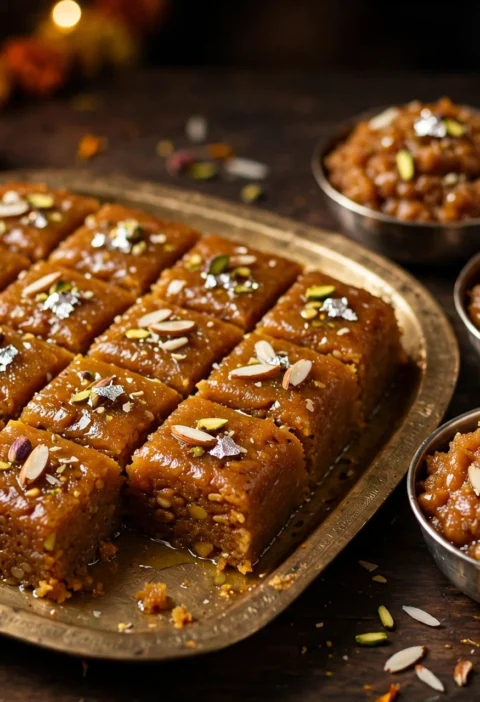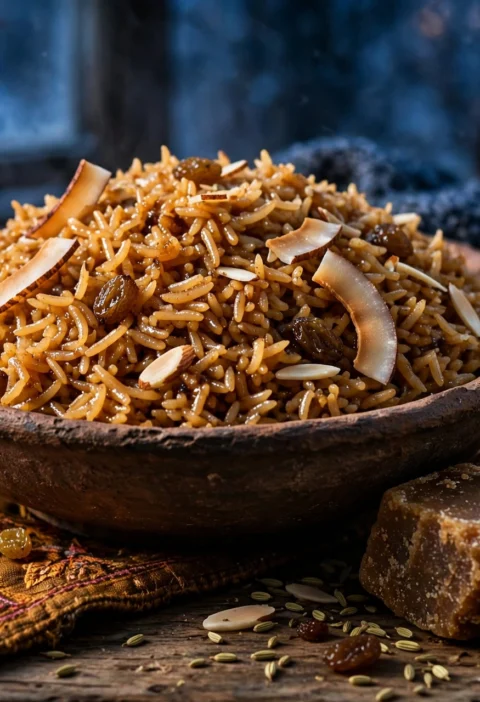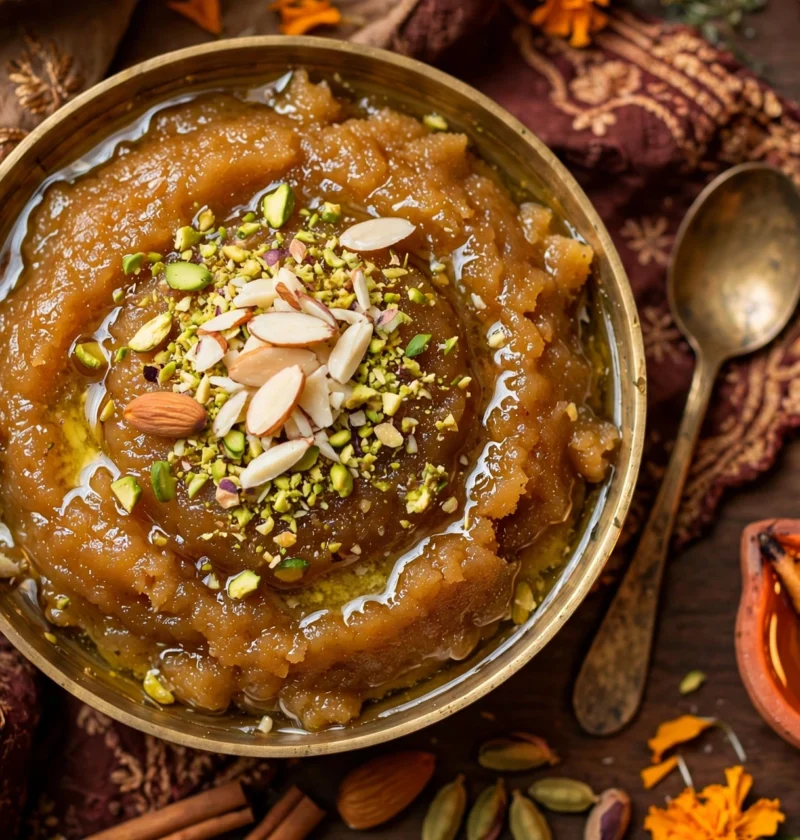
The Prasad Bowl I Grew Up Chasing
Some desserts you remember for their taste, and some you remember for the room they filled. This atta halwa recipe belongs to the second kind. In my grandmother’s kitchen, Sunday afternoons had a smell all their own: ghee warming in the kadai, whole-wheat flour slowly turning the colour of toasted almonds, and cardamom drifting down the hallway long before anyone was called to the table. She never measured much — a steel tumbler for the flour, a ladle for the ghee, sugar by the handful — but the halwa always landed the same way: dark gold, glossy, and soft enough to slide off the spoon. I would hover near the stove with a small steel bowl, and she would pretend not to notice, then fill it anyway.
What I did not understand as a child is that this atta halwa recipe is also one of the simplest sweets in the whole desi repertoire. There are only four real ingredients, one pan, and no soaking, grinding, or overnight waiting. The whole magic sits in one skill: roasting the flour patiently until it smells nutty and looks like wet sand at sunset, then letting hot syrup turn it into something silky. If you have ever been nervous about making halwa at home, this is the version to start with. It takes about thirty minutes, it forgives a slightly heavy hand with the ghee, and it tastes like a celebration even on an ordinary Tuesday.
Why This Atta Halwa Recipe Works
- Roasting is the flavour: The deep, toasty taste of this atta halwa recipe comes entirely from flour roasted low and slow in ghee. Rush it and the halwa tastes raw; give it fifteen honest minutes and it tastes like prasad.
- Hot syrup, no lumps: Pouring boiling syrup into the roasted flour — never cold water — lets the mixture come together smoothly instead of seizing into stubborn lumps.
- Equal parts keep it simple: One cup flour, one cup sugar, and two cups water is a ratio you can memorise forever, so this atta halwa recipe never needs a notebook once you have made it twice.
- Ghee does double duty: It carries the roast, then rises back to the surface as a glossy sheen that tells you the halwa is done. That sheen is the cook’s signal, not a flaw.
- It suits every occasion: Festival prasad, a quick dessert after daal and roti, or a warm bowl on a cold night — this atta halwa recipe dresses up or down without changing a single step.
Ingredients for This Atta Halwa Recipe
Everything below serves four generously as dessert, or six in small prasad-style portions. Use a heavy kadai or deep pan if you have one; thin pans scorch flour fast, and scorched flour cannot be rescued. Measure everything before the stove goes on, because once the flour starts roasting, this atta halwa recipe moves quickly.
For the syrup
- 2 cups water
- 1 cup granulated sugar
- 1/2 teaspoon green cardamom powder
- A generous pinch of saffron threads (optional)
For the halwa
- 1 cup atta (whole-wheat flour), sifted
- 3/4 cup ghee, plus 1 tablespoon more for finishing
- 2 tablespoons chopped almonds
- 2 tablespoons chopped pistachios
- 1 tablespoon golden raisins (optional)
For serving
- Extra chopped pistachios, for garnish
- Warm puris or roti, if serving it as a meal
How to Make This Atta Halwa Recipe in 5 Steps
There are five stages to the method, and one golden rule: never leave the pan while the flour is roasting. Atta goes from perfectly golden to bitter in about ninety seconds, and the difference is entirely in your attention. Keep the heat low, keep stirring, and this atta halwa recipe will reward you.
Step 1: Make the cardamom syrup first
Pour the water into a small saucepan, add the sugar with the cardamom powder and the saffron if you have it, then set it over a medium-high flame until it bubbles hard. Let it bubble for two minutes, just until the sugar has fully dissolved and the liquid smells faintly floral, then turn the heat to its lowest setting and keep the syrup hot. Hot syrup is non-negotiable for this atta halwa recipe: cold liquid hitting roasted flour shocks it into lumps that no amount of stirring will smooth out. Set the pan where it stays steaming while you roast.
Step 2: Roast the flour in ghee until sunset-gold
Melt the ghee in a heavy kadai over low-medium heat. When it shimmers, sift in the atta and start stirring with a wooden spoon or flat spatula. For the first few minutes the mixture will look like thick, pale paste; keep going. Around the ten-minute mark it loosens, darkens, and starts smelling like roasted nuts and warm bread. Keep stirring the whole time, scraping the corners and the base, until the flour turns a deep golden brown — the colour of jaggery in sunlight — and the ghee begins to separate at the edges. This is the heart of the atta halwa recipe, so trust your nose more than the clock: nutty and fragrant means ready, sharp or smoky means you have gone too far.
Step 3: Pour in the hot syrup, carefully
Turn the heat to low and step back slightly, because the pan will hiss and bubble hard. Pour the hot syrup into the roasted flour in a slow, steady stream, stirring constantly with your other hand. The mixture will seize, splutter, and look alarming for about thirty seconds — that is normal. Keep stirring through the steam and it will relax into a thick, bubbling mass. If a few lumps appear, press them against the side of the pan with the back of the spoon; the heat and the stirring will dissolve them. This is the moment this atta halwa recipe transforms from toasted flour into actual halwa.
Step 4: Cook until the ghee returns
Keep the halwa on low heat and stir for another four to five minutes. You will feel it thicken, then loosen slightly, then pull away from the sides of the pan in a soft, glossy mound. Watch for the sign every halwa cook waits for: little beads of ghee glistening on the surface and at the edges of the pan. That sheen means the flour is fully cooked and the water has reduced to exactly the right point. Stir in the chopped almonds, pistachios, and raisins now, so they warm through and soften slightly in the heat.
Step 5: Rest, garnish, and serve warm
Take the pan off the heat, dot over the last tablespoon of ghee, and cover the kadai for five minutes. This short rest lets the halwa settle, deepens the flavour, and gives you that soft, spoonable texture instead of a stiff block. Spoon it into small bowls while still warm, scatter extra pistachios over the top, and serve. This atta halwa recipe is at its best in the first hour, when the ghee is still fragrant and the top is glossy — though honestly, in my house it rarely survives that long.
Serving Suggestions
The classic pairing is the simplest one: warm halwa with freshly puffed puris and a cup of chai, the way it appears at festivals and family breakfasts across Punjab. The salty, blistered puri against the sweet, ghee-rich halwa is one of those contrasts that needs no explanation. If you are serving this atta halwa recipe as prasad, keep the portions small and the bowls plain — a little goes a long way, and the gesture matters more than the garnish.
For an everyday dessert, I serve it on its own in small bowls with extra nuts and a dusting of cardamom, sometimes with a scoop of vanilla ice cream on the side for guests who like hot-and-cold together. It also sits happily on a dessert table next to its lighter cousin — my Suji Ka Halwa is paler, grainier, and quicker, while this atta version is darker and more deeply nutty, and tasting them side by side is a small education in itself. In winter, when carrots are at their sweetest, my Gajar Ka Halwa takes the slow-cooked crown, but on a weeknight this atta halwa recipe wins on speed alone.
Storage and Reheating
Atta halwa keeps well in a sealed container in the refrigerator for up to five days, and the flavour actually deepens overnight as the cardamom settles. To warm it again, slide the cold halwa into a pan on the lowest flame with a spoonful of water or milk, stirring until it loosens back into a soft, glossy mound. The microwave works in short bursts too, thirty seconds at a time with a stir between each, but watch it closely: overheated halwa turns stiff and oily. I do not freeze this atta halwa recipe, because thawed halwa weeps ghee and loses its silkiness. If you know you will want it again soon, make a double batch and keep half chilled; it reheats so well that nobody will guess it is a day old.
Frequently Asked Questions
Why is my halwa lumpy?
Almost always the syrup was not hot enough, or it went in too fast. Cold or lukewarm liquid shocks roasted flour into clumps, and dumping it all at once gives those clumps no chance to dissolve. Keep the syrup at a gentle boil, pour in a slow stream while stirring constantly, and press any small lumps against the pan wall — this atta halwa recipe smooths itself out if you give it heat and patience.
Can I use less ghee or sugar?
You can trim both a little, but not by much. Dropping the ghee below half a cup makes the flour roast unevenly and stick, and cutting the sugar below three-quarters of a cup leaves the halwa tasting flat rather than lighter. If you want a less rich version, serve smaller portions with fruit on the side instead of changing the ratio — this atta halwa recipe depends on its balance.
Is whole-wheat flour the same as regular flour here?
No, and the difference is the whole point. Atta is stone-ground whole-wheat flour with the bran still in it, which is what gives the halwa its nutty depth and darker colour. Plain white flour makes a paler, blander halwa that tastes closer to a sweet paste. If your grocery store stocks atta in the flour aisle — most Indian grocers do — buy that; it is worth the trip.
Can I cook this halwa the day before a party?
Yes — it is one of the most reliable desserts to prepare in advance. Cook it fully a day ahead, cool it, and refrigerate it covered. On the day, reheat it gently with a splash of milk until glossy, then garnish fresh with nuts just before serving. Guests will assume you made this atta halwa recipe that morning, and your stove will be free for everything else.
Recipe Summary
Count on five minutes of measuring, about twenty minutes at the stove, and five minutes of resting — this atta halwa recipe reaches the table in 30 minutes for four people. A serving lands near 430 calories with nuts, and the dish belongs on the festive dessert shelf, beside the prasad bowls and winter sweets it grew up with.
If you make it this weekend, steal a spoonful straight from the kadai before anyone else reaches the bowls. That opening bite — warm, nutty, shining with ghee — is the reason this recipe has a permanent place in my kitchen. To learn more about this sweet’s background, read about halva and atta flour on Wikipedia.