Every old bazaar in Pakistan has a halwai shop with a giant kadhai of rabri going, and every one of those shops has a crowd standing around it doing nothing but watching. I was that crowd as a kid — I’d stop with my father on the way home and we’d watch the halwai work: a wide, shallow pan of milk at the gentlest simmer, and every few minutes he’d take a flat spoon and fold the skin forming on top into the milk, layer after layer, until the whole thing turned into this thick, creamy, impossibly rich dessert. He made it look like meditation. “Jaldi ka kaam nahin hai,” he’d say without looking up — this is not hurried work. I didn’t understand then. I do now.
Rabri is the purest expression of patience in Pakistani desserts — just milk, reduced slowly, with the malai layers folded in instead of stirred away. No shortcuts survive contact with rabri: high heat scorches it, rushing it thins it, and the condensed-milk hacks taste like a photocopy of the real thing. This rabri recipe is the halwai’s method scaled down for a home stove — same wide pan, same low simmer, same folding rhythm — and the first time you lift a spoonful and see those distinct creamy layers, you’ll understand why he called it meditation.
Why This Rabri Recipe Works
Rabri fails when it’s just thickened sweet milk — no layers, no texture, no soul. This rabri recipe is engineered around the one technique that makes rabri rabri:
- A wide, shallow pan maximizes the malai. The magic of rabri is the skin (malai) that forms on the milk’s surface — and skin forms on surface area. A wide kadhai or sauté pan gives you dramatically more malai per hour than a deep pot. This rabri recipe specifies wide and shallow because the geometry is the recipe.
- The malai gets folded in, never stirred away. Every 8–10 minutes, the skin forming on top is gently pushed to the side and folded into the milk — layer upon layer accumulating into those distinct creamy strata. Stirring breaks the layers into nothing; folding preserves them. This single technique is the difference between rabri and sweet condensed milk.
- Low, patient heat — never a boil. A rolling boil scorches the milk solids in minutes and gives the whole batch a burnt undertone no amount of cardamom can hide. The gentlest simmer, the barest trembling of the surface, for over an hour. Boring to watch, transcendent to eat. This rabri recipe is 90% waiting, and the waiting is the work.
- Sugar goes in at the end, off the heat’s peak. Sugar added early interferes with the malai formation and risks caramelizing into an off flavor during the long reduction. Stirred in during the last ten minutes, it dissolves cleanly into the already-thickened milk. The rabri sweetens; it never scorches.
- Saffron and cardamom bloom separately, then join. Saffron steeped in warm milk and cardamom freshly crushed — added in the final stretch so their perfume doesn’t cook away during the long simmer. Delicate aromatics go in late; that’s just chemistry. This rabri recipe perfumes at the finish line, not the starting gun.
Ingredients
Makes about 3 cups (serves 6)
For the rabri:
- 2 liters (about 8 1/2 cups) full-cream milk — the richest you can find
- A good pinch of saffron threads, steeped in 2 tablespoons of warm milk
- 8 green cardamom pods, seeds crushed fresh (about 1/2 teaspoon)
- 1/2 cup (100g) sugar, plus more to taste
- 1 teaspoon kewra water (optional, the floral finish)
For serving:
- 1/4 cup (30g) pistachios, finely slivered
- 2 tablespoons almonds, slivered and lightly toasted
- Dried rose petals (optional)
- Silver warq (optional, for festive occasions)
A note on the milk: this is the one ingredient in this rabri recipe where quality is everything — the entire dessert is milk, reduced. Use the highest-fat fresh milk available; standardized 3.5%+ or, better, milk from a local dairy. UHT/boxed milk works but produces thinner malai layers (the ultra-heat treatment changes the proteins). And never, ever use skimmed or low-fat — you’ll simmer for two hours and wonder where the magic went. The magic was the fat.
How to Make This Rabri Recipe – Step by Step
Step 1: Set up the wide pan.
Pour the milk into your widest, heaviest pan — a 12-inch kadhai, wok, or deep sauté pan. The wider the better; surface area is where the malai happens. Bring it to a boil over medium-high heat, stirring once or twice so the bottom doesn’t catch, then immediately reduce to the lowest simmer that keeps the surface barely trembling. From here on, the heat does not change. Settle in — this rabri recipe takes about 90 minutes, and most of it is watching.
Step 2: Begin the fold rhythm.
Within 10–15 minutes, a thin skin will form on the surface. Take a flat spatula and gently push the skin to the side of the pan, letting a new skin start forming on the exposed surface. Don’t stir it in — push and fold, leaving the layers distinct. Repeat every 8–10 minutes: push the new skin aside, fold it over the previous layers. You’ll start seeing strata building up along the pan’s edge like geological layers. That’s exactly right.
Step 3: Keep folding for an hour.
Continue the rhythm — simmer, skin, fold — for 60–75 minutes. The milk will reduce to about a third of its original volume, turning from white to the palest ivory-gold. Scrape the sides occasionally; the malai clinging there is the best part, fold it in too. The kitchen will smell like warm milk and patience. If a skin breaks or tears, don’t fuss — fold the pieces in anyway. Perfection is not the goal; layers are.
Step 4: Sweeten and perfume.
When the rabri is thick enough to heavily coat a spoon and the folded layers are clearly visible, stir in the sugar. It will thin slightly as the sugar dissolves — simmer 8–10 more minutes, folding gently, until thick again. Stir in the bloomed saffron milk and crushed cardamom; watch the whole pan blush the palest gold. Remove from the heat and stir in the kewra water if using. Taste: it should be rich but not cloying, perfumed but not soapy.
Step 5: Chill and serve in layers.
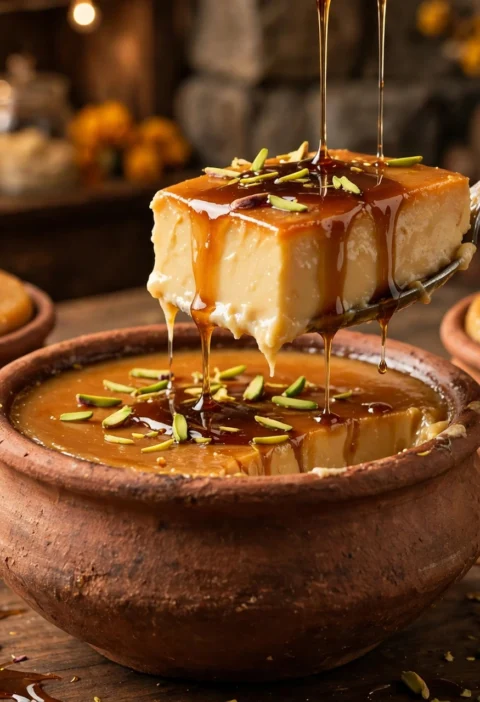
Transfer to a bowl and cool to room temperature, then refrigerate at least 4 hours — rabri is served chilled, and the cold firms the layers into distinct, spoonable strata. Serve in small bowls or glasses, showered with slivered pistachios and almonds. The first spoonful should show you ribbons of malai running through the thickened milk — if you see those layers, this rabri recipe worked exactly as the halwai intended.
Serving Suggestions
Rabri is complete on its own — chilled, in a small bowl, eaten slowly with a spoon while the layers melt on your tongue. It’s the traditional partner to jalebi (hot, crisp jalebi drowned in cold rabri is one of the great dessert combinations of the subcontinent), and it crowns falooda, shahi tukray, and gulab jamun whenever a dessert needs to go from excellent to legendary.
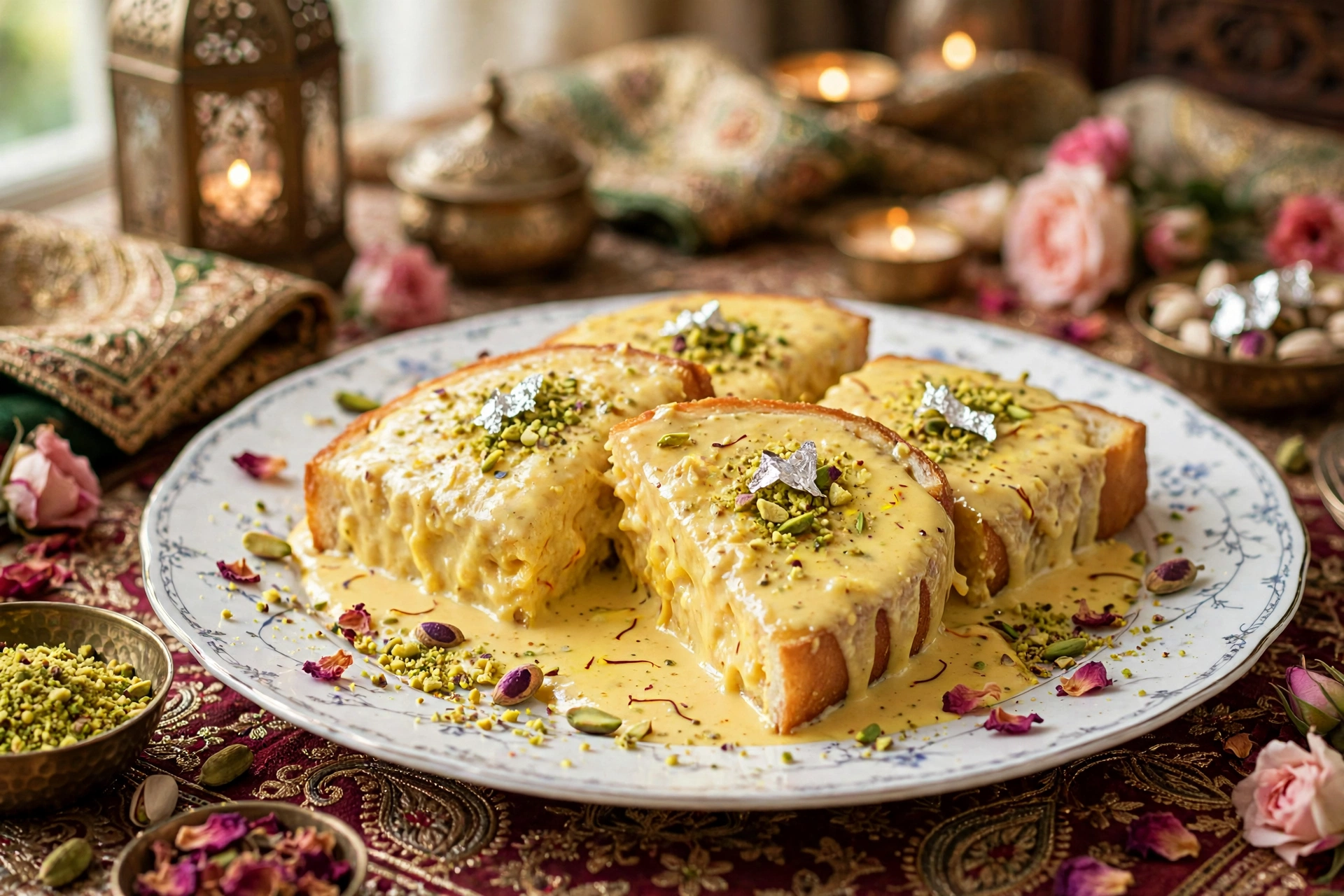
If you’re building a dessert table, this rabri recipe pairs beautifully with my kheer — the slow-cooked, layered rabri against the delicate rice pudding shows two completely different things milk can become. And serve it alongside my shahi tukray; the crisp saffron-soaked bread with a quenelle of cold rabri on top is the kind of combination guests talk about for months.
Storage and Reheating
Rabri keeps in the fridge for up to 5 days in a sealed container — and honestly, day two is when the flavors settle into their best balance. Serve it cold, always; there’s no reheating here, this is a chilled dessert. Don’t freeze it — thawed rabri turns grainy as the milk proteins seize, and the delicate layers collapse into a sad, separated mess. If the top dries out slightly in the fridge, just fold the surface skin back in before serving (very on-brand for this rabri recipe). Make it a day ahead for parties — it actually improves with the rest.
Frequently Asked Questions
Why doesn’t my rabri have distinct layers?
You stirred instead of folded — that’s almost always it. Stirring breaks the malai skins into the milk and you end up with uniformly thick milk (tasty, but that’s not rabri). The technique is push-and-fold: move each new skin to the side intact, let layers accumulate. Also check your pan: a deep narrow pot gives you a fraction of the malai a wide kadhai does. Geometry and gentleness — that’s the whole secret of this rabri recipe.
Can I speed it up with condensed milk or milk powder?
You can make something sweet and thick quickly, but it won’t be rabri — it’ll be a shortcut dessert wearing rabri’s name. Condensed milk gives you sweetness without layers; milk powder gives you thickness without the caramelized depth of slow reduction. The halwai’s 90 minutes exist for a reason: time builds both the layers and the flavor. There are no honest shortcuts to this rabri recipe.
My milk scorched at the bottom — is the batch ruined?
Depends how badly. A faint golden tinge on the bottom is fine — don’t scrape it up, just leave it. But if you smell actual burning or see dark brown bits, the bitter flavor has already permeated the milk, and no amount of cardamom will save it. Pour the unburnt top portion into a clean pan and continue (leaving every scorched bit behind), and next time keep the heat lower and the stirring of the bottom more regular during the first 20 minutes.
How is rabri different from kheer?
Both are slow-cooked milk desserts, but kheer has rice (the starch thickens it and gives it body), while rabri is pure milk reduced by evaporation, with its signature folded malai layers. Kheer is delicate and spoonable; rabri is dense, rich, and almost chewy with the layered cream. If you love my kheer, think of rabri as its more indulgent, more patient sibling — same family, deeper obsession.
Recipe Summary
- Prep time: 5 minutes
- Cook time: 1 hour 30 minutes
- Total time: 1 hour 35 minutes (+ 4 hours chilling)
- Servings: 6
- Cuisine: Pakistani
- Course: Dessert