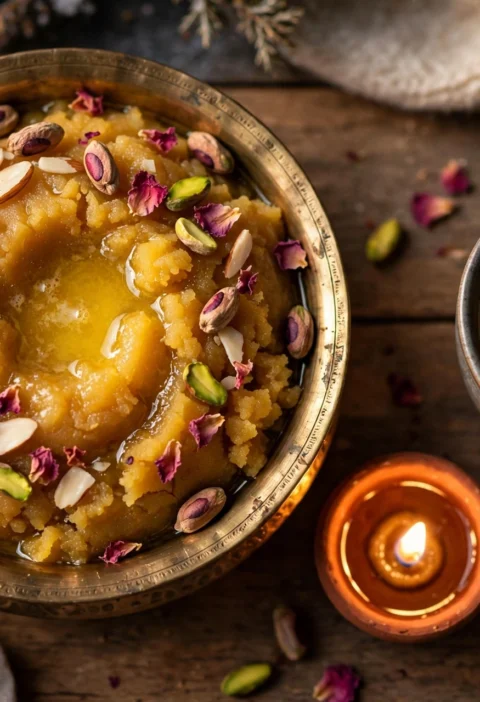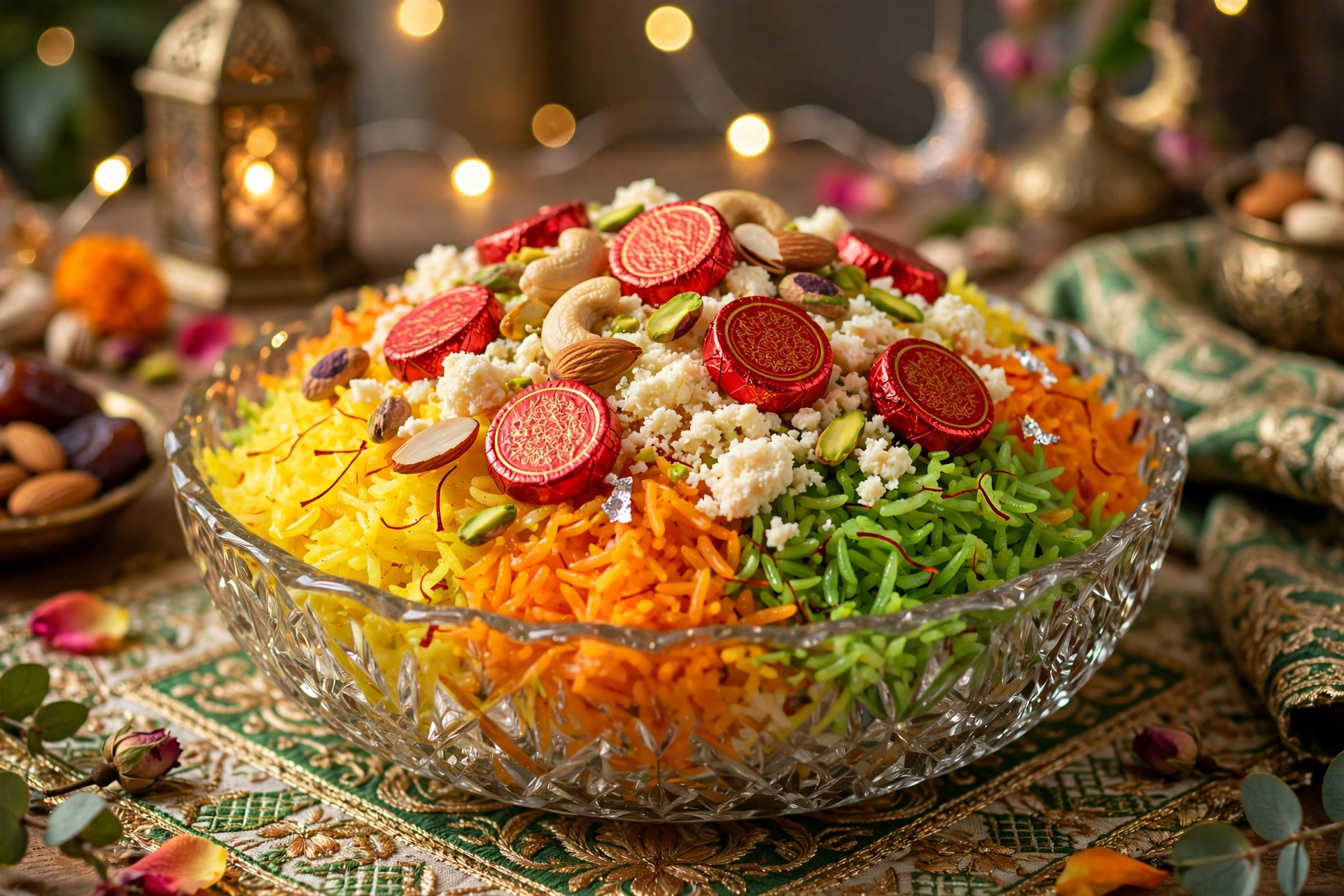
Zarda was the reason I learned to love the color orange. At every Eid dawat of my childhood, after the biryani plates were cleared and the chai was brewing, my nani would emerge from the kitchen carrying a massive deg of zarda — and the whole table would go quiet for a second just looking at it. The rice glowed amber and gold, studded with red and green ashrafi like jewels, little silver warq leaves catching the light. It looked too beautiful to eat, which of course made us want it more. Nani always served the kids first, piling our plates high, and the rule was you had to find at least three colors in every spoonful. This zarda recipe is hers, and I still catch myself hunting for the red ashrafi first.
The tragedy of bad zarda is that it’s so easy to avoid. Mushy rice, tooth-aching sweetness, or that flat artificial taste from too much food coloring — all of it comes from rushing. Real zarda is about restraint: rice cooked to exactly 90%, sugar measured rather than dumped, and the dum finish that lets every grain absorb the saffron syrup separately instead of drowning in it. This zarda recipe takes 40 minutes and most of that is waiting, and the result is the kind of dessert that makes people take photos before they take bites.
Why This Zarda Recipe Works
Homemade zarda usually fails as either mushy, bland, or aggressively sweet. Here’s how this zarda recipe nails the festive classic:
- The rice stops at 90%. Parboiled until just shy of done — still firm in the center — then finished on dum in the sugar syrup. Fully cooked rice plus syrup equals mush; 90% rice plus dum equals distinct, fluffy grains that glisten. This single timing decision makes or breaks zarda.
- Sugar goes in as syrup, not crystals. Dissolving the sugar with saffron and kewra into a syrup first means it distributes evenly instead of pooling at the bottom. Every grain gets coated; no crunchy sugar pockets, no bland patches. This zarda recipe treats the syrup like the sauce it is.
- Real saffron, bloomed properly. A generous pinch of saffron steeped in hot milk for 10 minutes releases both color and that unmistakable floral-earthy flavor. Food coloring alone gives you orange rice that tastes like nothing; saffron gives you zarda that tastes like celebration.
- Khoya goes in at the end. Crumbled khoya stirred through the hot rice melts into creamy pockets without disappearing entirely. Added too early, it dissolves into the syrup and vanishes; added at the end, you get those luscious white streaks that make every spoonful interesting.
- The dum does the magic. Ten minutes on the lowest heat with the lid sealed lets the rice finish cooking in the fragrant steam, absorbing the syrup evenly. Lifting the lid early releases the steam and leaves you with wet, uneven rice — patience is an ingredient here.
Ingredients
Serves 6–8
For the rice:
- 2 cups (400g) long-grain basmati rice, soaked 30 minutes and drained
- 8 cups water, for boiling
- 1/2 teaspoon orange food coloring (optional, for the festive hue)
- 2–3 drops yellow food coloring (optional)
For the saffron syrup:
- 1 1/2 cups (300g) sugar
- 1 cup (240 ml) water
- 1/4 teaspoon saffron threads, steeped in 2 tablespoons hot milk for 10 minutes
- 1 tablespoon kewra water
- 4 green cardamom pods, lightly crushed
For the nut mixture:
- 3 tablespoons ghee
- 1/4 cup (35g) slivered almonds
- 1/4 cup (35g) pistachios, roughly chopped
- 2 tablespoons raisins
- 1/4 cup (60g) khoya, crumbled
For garnishing:
- 1/4 cup colorful ashrafi (candied sugar pieces)
- 2–3 silver warq leaves (optional, for the full festive look)
- Extra chopped pistachios, for sprinkling
A note on the rice: proper aged basmati is worth seeking out for this zarda recipe — the long grains stay separate and elongate beautifully instead of breaking. And soak it for the full 30 minutes; the soaking hydrates the grains evenly so they cook uniformly in the short parboil. Skipping the soak is how you get half-mushy, half-crunchy zarda.
How to Make This Zarda Recipe – Step by Step
Step 1: Parboil the rice to 90%.
Bring 8 cups of water to a rolling boil in a large pot. Stir in the food coloring (if using) until the water is evenly tinted. Add the drained soaked rice and boil 5–6 minutes — no longer. Bite a grain: it should be cooked on the outside with a firm, white core. Drain immediately in a colander and spread on a tray for 2 minutes to stop the cooking and let surface moisture evaporate.
Step 2: Make the saffron syrup.
While the rice drains, combine the sugar, 1 cup water, cardamom pods, and the saffron-milk mixture in a heavy pot. Bring to a boil, stirring until the sugar dissolves completely, then simmer 2–3 minutes until slightly syrupy — it should coat a spoon thinly. Stir in the kewra water and remove from heat. The syrup should smell like a flower garden.
Step 3: Toast the nuts in ghee.
In a small pan, heat the 3 tablespoons ghee over medium heat. Add the almonds and pistachios and toast 1–2 minutes until fragrant and lightly golden. Add the raisins — they’ll plump up in seconds. Remove from heat immediately; nuts go from toasted to burnt in a heartbeat. Set aside.
Step 4: Layer it all together.
Return the drained rice to the heavy pot. Pour the hot saffron syrup evenly over the rice, then scatter the toasted nut mixture and the crumbled khoya over the top. Don’t stir yet — layering keeps the colors distinct and prevents the grains from breaking. Drizzle any remaining ghee from the nut pan over everything.
Step 5: Dum finish.
Cover the pot with a tight-fitting lid (seal the edge with a clean kitchen towel if your lid is loose). Cook on the absolute lowest heat for 10–12 minutes. Don’t peek — the trapped steam is finishing the rice and marrying the syrup into every grain. Turn off the heat and rest, still covered, for 5 more minutes.
Step 6: Garnish and serve.
Uncover and gently fluff with a fork, folding the khoya and nuts through the rice — you’ll see beautiful white and golden streaks. Transfer to a serving dish, scatter the colorful ashrafi over the top, add the silver warq if using, and finish with extra pistachios. Serve warm or at room temperature, never cold from the fridge.
Serving Suggestions
Zarda is dawat food — it belongs at the end of a celebratory spread, served in small portions because it’s gloriously rich. The classic sequence is biryani first, zarda after, chai to finish; that progression is practically a law of Pakistani hospitality. A small bowl per person is plenty — this is a jewel-box dessert, not a main event.
For the full Eid table, serve this zarda recipe after my chicken biryani — the savory-to-sweet arc from spiced rice to saffron rice is the most satisfying transition in our cuisine. And if you’re building a dessert spread, pair it with gulab jamun for the warm-cold, soft-syrupy contrast that keeps guests going back for “just one more.”
Storage and Reheating
Zarda keeps well — the sugar acts as a preservative. Store it in an airtight container in the refrigerator for up to 5 days; the flavors actually deepen as the saffron and cardamom settle in. To serve, bring it to room temperature (cold zarda is a sad thing) or warm individual portions gently in the microwave with a teaspoon of water sprinkled over. Don’t freeze it — thawed rice turns mushy and the khoya goes grainy. It reheats beautifully, but honestly, leftover zarda has never survived more than two days in my house.
Frequently Asked Questions
Why did my zarda turn out mushy?
Almost always overcooked rice. The parboil must stop at 90% — firm white core when you bite a grain. If the rice is fully cooked before the syrup goes on, the dum finish turns it to pudding. Set a timer for the parboil and trust the bite test over the clock.
Can I make this zarda recipe without food coloring?
Yes — the saffron gives a beautiful natural golden hue on its own. The food coloring just amps it up to that festive amber-orange everyone expects at dawats. Without it, your zarda will be paler but taste identical. Use a generous pinch of saffron (not a stingy one) for the best natural color.
What is khoya and where do I find it?
Khoya (also called mawa) is milk slowly reduced until solid — it’s the creamy backbone of many Pakistani desserts. Find it at South Asian grocery stores in the refrigerated section, or make a quick version by simmering 2 cups of full-fat milk powder with 1/2 cup cream until thick. In a pinch, ricotta cheese (drained well) gives a similar creamy pocket effect.
Can I reduce the sugar?
You can drop it to 1 1/4 cups without breaking the recipe, but zarda is meant to be properly sweet — it’s celebration food, not everyday food. The sugar also creates the syrup that keeps the rice grains separate and glossy. Cut it too far and you lose both the flavor and the texture that make zarda what it is.
Recipe Summary
- Prep time: 15 minutes (+ 30 minutes rice soaking)
- Cook time: 30 minutes
- Total time: 45 minutes (+ soaking)
- Servings: 6–8
- Cuisine: Pakistani
- Course: Dessert