The Anjeer Halwa That Tastes Like a Celebration
The first time I made this anjeer halwa recipe, I was not cooking for a festival at all. I was clearing out a pantry shelf the week after a wedding in the family, staring at a bag of dried figs someone had brought as a gift and nobody had opened. Figs were not a sweet I grew up craving — they sat in the dry-fruit bowl at every gathering, polite and ignored, while everyone reached for the ladoos. On a whim, I soaked a handful overnight, mashed them the next morning, and folded them into hot milk and ghee just to see what would happen. What happened was the quietest kind of revelation: the kitchen filled with a deep, honeyed smell, the mixture turned thick and dark as toffee, and the first spoonful tasted like something that had simmered for hours when it had barely taken forty minutes. That bag of forgotten figs became the dessert I now make whenever I want a table to go quiet in the best possible way.
What makes this anjeer halwa recipe different from every other halwa in my kitchen is that the figs do most of the sweetening themselves. Dried figs are already dense with natural sugars, so the dish needs only a little added sugar to round it out, and the result is a pudding that tastes rich without tasting cloying. The figs break down into a jammy, almost fudge-like base, the milk softens it into something spoonable, and the ghee gives it that glossy finish that tells you a halwa is done. It is the dessert I reach for when guests are coming and I want something that looks celebratory but asks for no special skill — just a pot, a spoon, and a little patience while the figs melt down.
Why This Anjeer Halwa Recipe Works
- The figs sweeten it themselves: Dried figs carry so much natural sugar that this anjeer halwa recipe needs only a small amount of added sugar, so the sweetness tastes deep and fruity rather than sharp or syrupy.
- An overnight soak does the hard work: Soaking the figs until they are soft means they collapse into a smooth, jammy paste with barely any mashing, which is why this anjeer halwa recipe never turns grainy or lumpy.
- Milk keeps it soft, not stiff: Simmering the fig paste in milk instead of water alone gives the halwa a creamy, almost pudding-like body that stays spoonable even after it cools.
- Ghee goes in at the end for shine: A final spoon of ghee, stirred in off the heat, is what makes this anjeer halwa recipe finish glossy and rich instead of dull or dry.
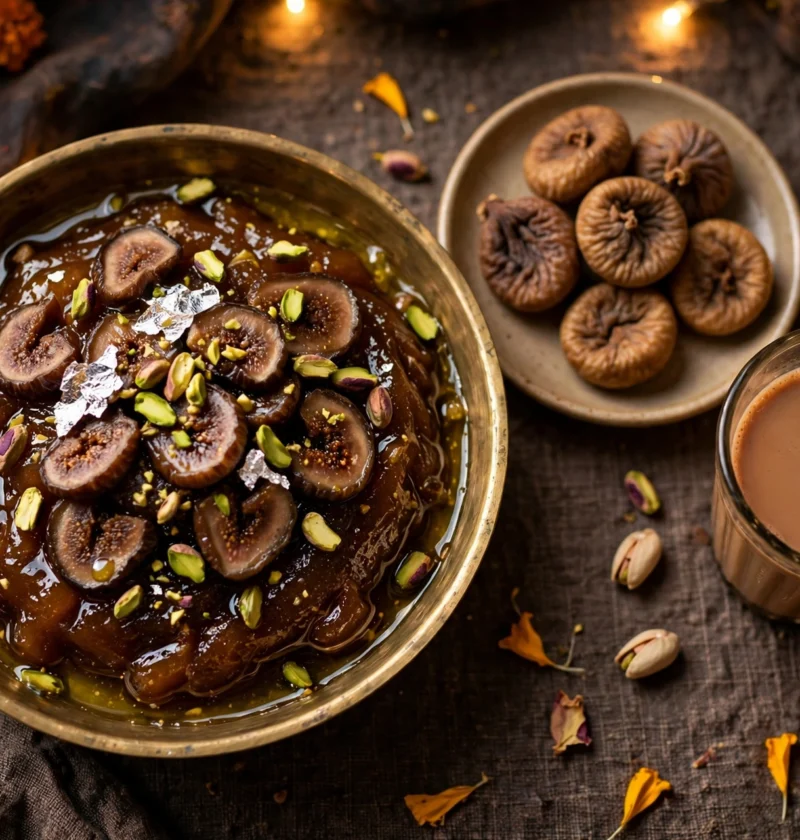
- It looks far fancier than it is: A dark, glossy halwa scattered with nuts and silver leaf looks like it came from a sweet shop, yet the whole anjeer halwa recipe uses one pan and pantry ingredients.
Ingredients for This Anjeer Halwa Recipe
The quantities below feed four people well, or stretch to six when everyone is just having a small sweet after dinner. Hunt down soft, plump dried figs if you can — the hard, pale ones demand a much longer soak and never quite dissolve the way you want. Get everything measured before the stove goes on, because once the fig paste is in the pan, this anjeer halwa recipe speeds up and asks for your eyes on it the whole time.
- 2 cups dried figs (about 12 ounces), stems removed
- 2 cups whole milk, divided
- 4 tablespoons ghee, divided
- 1/4 cup sugar
- 1/2 teaspoon green cardamom powder
- 2 tablespoons chopped pistachios
- 2 tablespoons chopped almonds
- 1 tablespoon chironji or chopped cashews (optional)
- 1 pinch saffron, soaked in 2 tablespoons warm milk (optional)
- Edible silver leaf, for garnish (optional)
How to Make This Anjeer Halwa Recipe in 5 Steps
Five stages take you from soaked figs to the table, and the soak is the one that decides the whole dish. Figs that have gone properly soft dissolve into the milk in minutes; figs that are still firm stay in stubborn pieces no matter how long you stir. Give the soak its full night and the rest of this anjeer halwa recipe is almost hard to ruin.
Step 1: Soak the figs overnight
Put the stemmed figs in a bowl, pour over enough warm water to cover them by an inch, and leave them to soak overnight, or at least 6 hours. By morning they will be swollen, dark, and soft enough to squash between your fingers. Drain them well, and do not be tempted to skip this step for speed — a quick 30-minute soak in boiling water works in a pinch, but the overnight soak is what gives this anjeer halwa recipe its silky, lump-free texture.
Step 2: Grind into a coarse paste
Tip the drained figs into a food processor with 1/2 cup of the milk and pulse until you have a thick, coarse paste. You want it mostly smooth but with a few tiny flecks of fig skin still visible — those flecks are texture, not a flaw, and they remind you this is real fruit, not a jarred jam. If the processor struggles, add milk a spoon at a time, but keep the paste thick; a runny paste takes far longer to cook down, and this anjeer halwa recipe should thicken, not boil away.
Step 3: Simmer the paste in milk
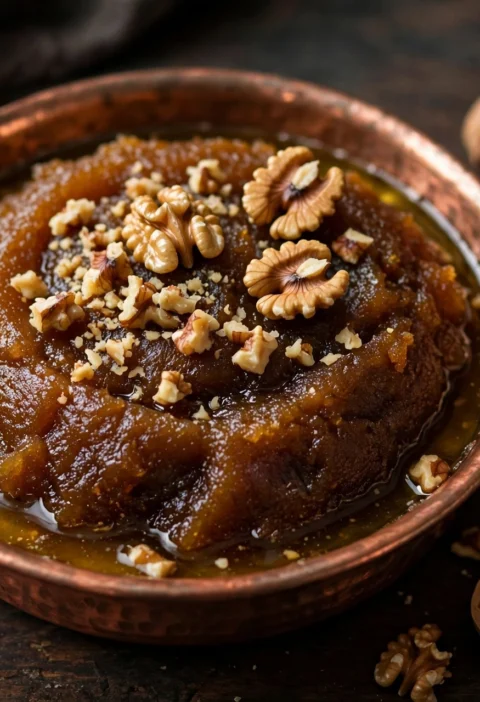
Melt half the ghee in a heavy karahi or thick-bottomed pan over medium heat, then add the fig paste and the remaining milk. Stir steadily as it comes to a gentle simmer, then lower the heat and let it cook for 12 to 15 minutes, stirring often so it does not catch on the bottom. The mixture will darken from light brown to a deep, glossy caramel color and start to pull away from the sides of the pan in a soft mass. That color change, not the timer, is the real sign this anjeer halwa recipe is on track.
Step 4: Sweeten and perfume it
Stir in the sugar, cardamom powder, and saffron milk if you are using it, and keep cooking for another 3 to 4 minutes until the sugar has dissolved completely and the halwa shines. Taste it here — figs vary in sweetness, so if your batch is already deeply sweet, hold back a spoon of sugar rather than adding it out of habit. The halwa should taste rich and figgy first, with the sugar sitting quietly in the background, which is exactly the balance this anjeer halwa recipe aims for.
Step 5: Finish with ghee and nuts
Take the pan off the heat and stir in the remaining ghee, a spoon at a time, until the halwa turns glossy and leaves the sides of the pan cleanly. Fold in half the chopped pistachios and almonds, saving the rest for the top. Dish it up while it is still warm, scatter the reserved nuts over it, and add silver leaf if you like a festive finish. Fig halwa is at its best warm, when it is soft, shiny, and fragrant — and a taste straight from the pan, before anyone else gets a spoon, is the cook’s quiet reward.
Serving Suggestions
My own favorite plate is uncomplicated: a small bowl of warm fig halwa, a steaming cup of chai, and nowhere to be for ten minutes. At home we eat it this way on cold nights, sometimes with extra pistachios on top, sometimes plain, because a halwa this dark and fragrant genuinely needs nothing else. That is the habit I have kept, and when I cook this anjeer halwa recipe for visitors, the bowls always come back empty.
When there is a crowd, I like to put the fig halwa beside the other halwas so everyone can compare spoonfuls. My Besan Halwa brings the roasted, nutty side of the family, my Atta Halwa brings the wheaty, prasad-style warmth, and the fig halwa brings something darker and fruitier than either. Set out chai and a stack of small bowls and let people help themselves — that little tasting table turns an ordinary evening into one guests mention later.
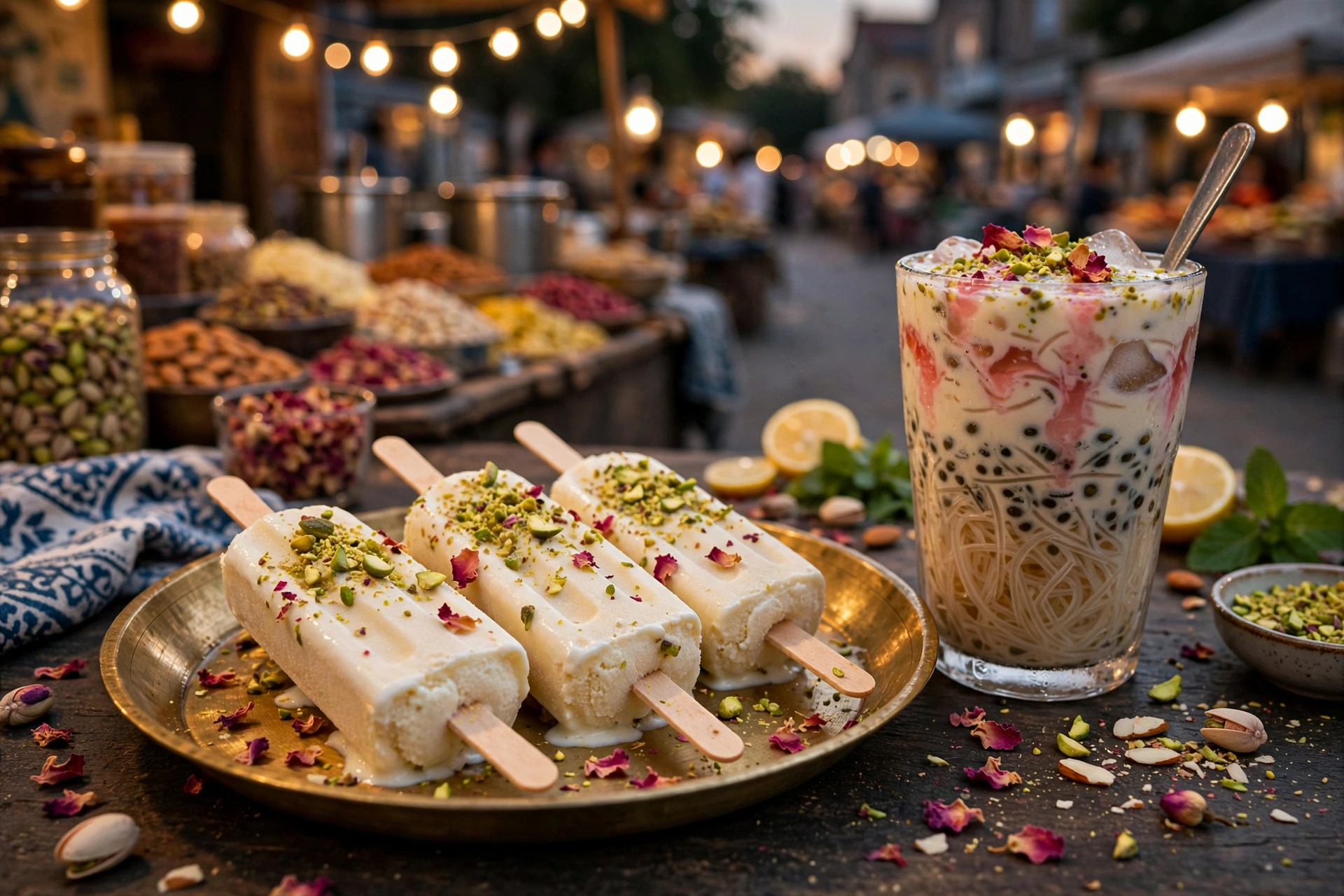
For a smarter occasion, try it with a quenelle of malai kulfi or a spoon of thick cream on top; the cold dairy against the warm figs is a combination that surprises people in a good way. A few toasted almond slivers and a pinch of cardamom over the cream finish the plate. Serve this anjeer halwa recipe while it is still warm, because it thickens as it cools, and although it is lovely cold too, the warm version is the one everyone remembers.
Storage and Reheating
One thing I appreciate about fig halwa is how gracefully it waits. Seal it in a container and it stays good in the fridge for a full week, or two days on the counter when the weather is cool. Cold, it sets into something close to fudge, and plenty of people in my house actually prefer it sliced straight from the fridge. Hot or cold, this anjeer halwa recipe holds onto its deep fig character for days.
When you want it warm again, put a portion in a heavy pan on low heat with a splash of milk and stir until the gloss returns, which takes about three minutes. A microwave does the job as well if you go in short bursts and stir between them, with a little milk drizzled over the top. Freezing is the one thing I skip — thawed halwa loses its silkiness. Cook it fresh instead, since this anjeer halwa recipe needs only about forty minutes at the stove once the figs have soaked.
Frequently Asked Questions
Can I use fresh figs instead of dried?
You can, but the result is quite different. Fresh figs are mostly water, so they cook down into something lighter and less intensely sweet, and you will need to simmer the paste much longer to reach the same thick, fudge-like consistency. Dried figs are the right choice for this anjeer halwa recipe because their concentrated sugars and dense flesh are what give the halwa its dark color and rich body.
Why is my halwa lumpy?
Lumps almost always mean the figs were under-soaked or under-ground. Soak them until they squash easily between your fingers, and grind the paste until it is mostly smooth before it goes anywhere near the pan. If lumps still appear while cooking, squash them with the flat of a wooden spoon and keep the heat low; most of them melt away within a minute or two. A little patience smooths this anjeer halwa recipe just as well as any gadget.
Can I make anjeer halwa with less sugar or no sugar?
Yes, and it is one of the few halwas where that genuinely works. Because dried figs are so sweet on their own, you can cut the sugar in half or leave it out entirely and still get a dessert that tastes complete. Taste the cooked fig paste before sweetening and let the figs decide — that is the honest way to judge this anjeer halwa recipe, and many batches need barely any sugar at all.
Is anjeer halwa gluten-free?
Yes, everything in this anjeer halwa recipe is naturally gluten-free: figs, milk, ghee, sugar, cardamom, and nuts contain no wheat at all. Just check your nut packets if cooking for someone with celiac disease, since some are processed on shared equipment. It is a reliable dessert for mixed tables, and one of the few celebration sweets that needs no adaptation.
Recipe Summary
Plan on roughly 10 minutes of hands-on prep plus the overnight soak, then about 30 minutes at the stove, so the dish reaches the table in around 40 minutes once the figs are ready, and feeds four well. One serving lands near 380 calories, and the dish belongs on the festive dessert shelf of Pakistani cooking, somewhere between an everyday sweet and a full celebration pudding. Make it twice and it will earn a permanent spot in your rotation.
If you try it, I hope the first dark, honeyed, ghee-glossed spoonful shows you why a bag of forgotten figs became one of my favorite desserts — dense, fruity, and gone far too fast. For the backstory on the star ingredient, read about figs and the wider family of halva sweets on Wikipedia.