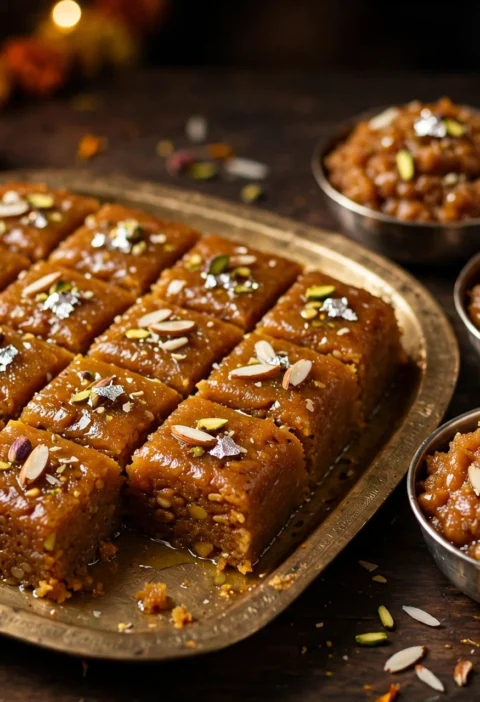
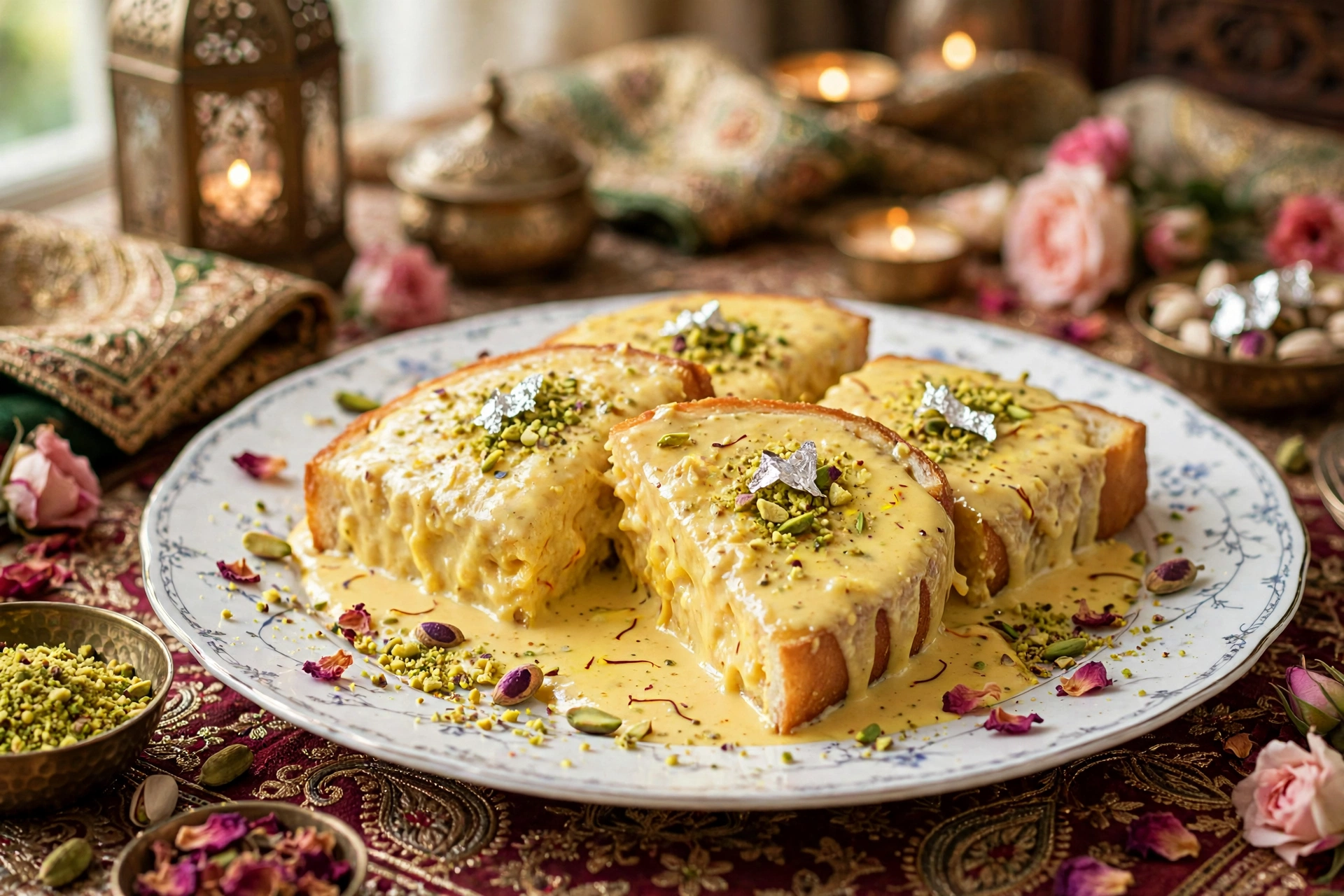
Ramadan evenings at my grandmother’s house ran on a timetable nobody ever wrote down. The pakoras went in first, the fruit chaat waited in its bowl of juice, and about an hour before the maghrib call she would take down the dented steel bowl where her malpua batter had been resting since mid-afternoon, give it one slow stir, and set the ghee to heat. We grandchildren were meant to be laying the dastarkhwan. What we actually did was drift toward the stove in ones and twos, watching each ladle of batter bloom in the hot ghee into a golden disc with edges like torn lace, hoping — correctly, most years — that the first malpua off the pan would be declared “too misshapen for guests” and divided among us, still dripping syrup, far too hot, utterly worth it. This malpua recipe is hers, measured out from years of standing exactly where she stood, stealing exactly what she pretended not to see us steal.
A malpua is, at heart, a pancake that dressed up for a festival. A thin batter of flour and milk, perfumed with fennel and cardamom, is ladled into hot ghee, fried until its edges crisp into lace, then bathed in saffron syrup and — if the cook loves you — crowned with a spoonful of rabri. It is one of the oldest sweets in South Asian kitchens, claimed happily by Punjab, Bengal and Bihar alike, turning up at Holi, at winter weddings, and all through Ramadan, where its richness answers a long fast like nothing else on the table. It also has a reputation for being temperamental, and I understand why: batter a spoonful too thick gives you doughy discs, syrup a degree too hot gives you a sweet, sorry puddle. This malpua recipe takes the temper out of it. Every one of those failures has a small, fixable cause, and once you know them, the dish turns obedient.
Why This Malpua Recipe Works
Malpua fails in three familiar ways — thick, greasy, or soggy — and each one is decided before the first ladle is ever poured. This malpua recipe is built on five habits that settle all three:
- The batter rests a full 30 minutes. Resting lets the flour drink in the milk and gives the fennel time to open up its perfume through the whole bowl. Batter rushed straight to the pan fries unevenly, pale and raw in the middle.
- The batter stays thin — like heavy cream. It should pour off the ladle in a ribbon and spread itself in the pan, because that self-spreading is exactly what builds the lacy, frilled edge. Thick batter lands and sits where it falls, and fries up like a pancake’s plain cousin.
- Milk powder does the quiet enriching. A few spoonfuls worked into the flour give the centres their soft, almost custardy richness, without the curdling risks and long reducing that cooking fresh milk down into a batter would bring.
- The ghee is hot, and only just deep enough. About 1/4 inch at 350°F crisps the edges in the first thirty seconds, before the centre has time to drink in fat. Ghee that is too cool simply soaks in, and the malpua comes out greasy instead of crisp.
- Warm syrup, and a short soak. Syrup kept warm — never boiling — and a soak of two to three minutes coats each malpua in a sweet gloss while its crisp rim survives. Hot syrup, or a long lazy bath, is precisely where the sogginess everyone fears comes from.
Ingredients
For a dish this old, the shopping list is almost suspiciously short. The malpua has been fried in some form for centuries — its ancestors turn up in very early South Asian writing — and it still asks for little more than flour, milk and sugar. The perfume is the point: fennel seeds, crushed just enough to wake them, and cardamom, which goes into both the batter and the syrup so the finished sweet smells layered rather than simply sugary. Use whole milk and real ghee if you possibly can; this malpua recipe has nowhere for substitutes to hide, and the small extra care at the shop repays you at the table.
Makes about 12 malpuas (serves 6)
For the batter:
- 1 cup all-purpose flour
- 1/4 cup fine semolina (sooji), for extra-crisp edges
- 1/4 cup milk powder
- 2 tablespoons sugar
- 1 teaspoon fennel seeds, lightly crushed
- 1/2 teaspoon ground cardamom
- 1/4 teaspoon fine salt
- 1 1/4 cups whole milk, at room temperature, plus a splash more if needed
- A pinch of baking soda, whisked in just before frying
For the syrup:
- 1 cup sugar
- 1/2 cup water
- 4 green cardamom pods, cracked open
- 8 to 10 saffron threads
- 1 teaspoon rose water (optional)
- 1 teaspoon lemon juice
For frying and serving:
- About 1 cup ghee, for shallow-frying
- 2 tablespoons crushed pistachios and slivered almonds
- Rabri, to serve (optional, but deeply recommended)
How to Make This Malpua Recipe – Step by Step
Step 1: Make the syrup first. Put the sugar, water, cracked cardamom pods and saffron in a small saucepan over medium heat and stir until the sugar has completely disappeared. Let it bubble gently for 3 to 4 minutes, until it feels sticky between finger and thumb — thinner than honey, just coating a spoon. Stir in the lemon juice, which keeps it from crystallising, and the rose water if you are using it. Take it off the heat and keep it somewhere warm; if it thickens while you fry, a minute over low heat loosens it.
Step 2: Mix the batter and let it rest. Whisk the flour, semolina, milk powder, sugar, fennel, cardamom and salt together in a wide bowl, breaking up every lump of milk powder with the whisk. Pour the milk in a third at a time, whisking steadily, until you have a smooth batter the consistency of heavy cream that falls off the whisk in a ribbon. Cover the bowl and rest it for 30 to 45 minutes. Just before frying, whisk in the pinch of baking soda; the batter will have thickened slightly as it rested, so loosen it with a spoonful of milk if it no longer pours freely. A rested, pourable batter is the backbone of this malpua recipe.
Step 3: Heat the ghee to the right temperature. Set a wide, flat pan or kadai over medium heat and add ghee to a depth of about 1/4 inch — the malpuas should swim, but only just. Bring it to about 350°F: a drop of batter flicked in should sizzle at once, gather bubbles, and rise within seconds, taking colour slowly. Too cool, and the batter sits and drinks ghee; too hot, and the lace edges scorch before the centre sets. Settle the heat here and keep an eye on it between batches, because in this malpua recipe the temperature is honestly the whole game.
Step 4: Fry one ladle at a time, and leave it alone. Stir the batter once, then pour a small ladleful — about 1/4 cup — from a little height into the centre of the pan, and then do not touch it. The batter spreads itself into a ragged round, bubbles rise through it, and the edges frill and darken. Fry for 1 1/2 to 2 minutes, until the rim is a deep amber and the top looks mostly set, then slide a thin spatula underneath and flip it once. Give the second side just 30 to 45 seconds, lift the malpua out, and hold it over the pan a few seconds to drain before moving on to the next.
Step 5: Soak briefly and serve warm. Slide each fried malpua straight into the warm syrup, turning it once so both faces drink, and leave it for 2 to 3 minutes — long enough to gloss and sweeten through, short enough that the crisp edge survives. Lift them out with a slotted spoon, let the excess syrup fall away, and arrange them overlapping on a warm plate. Spoon rabri over the top if you are serving them the festive way, scatter over the pistachios and almonds, and get them to the table warm. The cook’s reward, in my grandmother’s house, was always the last malpua in the pan, eaten standing up, straight over the syrup bowl.
Serving Suggestions
The full festive treatment is a generous spoonful of my rabri over warm malpuas, the thick, reduced-milk layers melting slightly against the syrupy pancakes, with the crushed nuts scattered last so they stay crunchy. At iftar my grandmother sent them out alongside dahi baray and a tall glass of something cold, and that sweet, cool, tangy shuffle is still my favourite way to meet them. On an ordinary winter evening, though, they need nothing more than a cup of strong doodh patti and a quiet corner.
On a full wedding or iftar sweet table, malpua takes the soft, milky end of the tray, and its natural partner is my jalebi — all crunch and bright syrup snap — because the two together give a guest both textures a desi dessert table exists to offer. If you are making this malpua recipe for a crowd, fry them in steady batches and hold the finished ones, soaked and plated, in a low oven at 200°F for up to half an hour; they keep their edges better there than under a lid, where their own steam softens them.
Storage and Reheating
Malpuas are at their absolute best within the hour, but leftovers keep better than their reputation suggests. Stored in a covered container in the fridge, soaked malpuas hold for up to 3 days — they will keep drinking syrup as they sit and turn softer and more pudding-like, which some people in my family quietly prefer. If you know you are cooking ahead, keep a little syrup back in a separate jar; it is the secret to reviving them properly the next day.
To reheat, warm them in a single layer in a 300°F oven for 6 to 8 minutes, or in a dry non-stick skillet over the lowest heat, then give each one a quick 30-second dip in warmed syrup to bring back the gloss. Leftover batter from this malpua recipe keeps in the fridge for up to 24 hours — whisk it well and thin it with a spoonful of milk before frying, since it thickens as it stands. Fried but unsoaked malpuas freeze for up to a month, layered with parchment; thaw, warm in the oven, and soak them fresh.
Frequently Asked Questions
Why are my malpuas not getting lacy edges?
Almost always the batter is too thick, or the ghee is not hot enough, or the ladle was poured too low and too slowly. The batter must pour like heavy cream and spread itself the instant it lands; if it sits in a mound, whisk in milk a spoonful at a time. Heat the ghee to a proper 350°F and pour from a little height in one confident go, and the frilled edge this malpua recipe promises will appear.
Can I use khoya instead of milk powder, or skip both?
Yes to both. Crumbled khoya — about 1/2 cup, rubbed into the flour before the milk goes in — is actually the older, more traditional route, and gives a slightly denser richness. Skipping both works too: the malpuas will be a touch less custardy in the middle, so add one extra tablespoon of flour to keep the batter’s body, and do not skip the rest.
Why did my malpuas turn soggy after soaking?
The syrup was too hot, or the soak ran too long. Syrup at a rolling boil floods straight through the crumb and erases the crisp edge; it should feel warm, comfortable to a fingertip, and two to three minutes is genuinely enough. Also drain each fried malpua well before it goes in — surface ghee carried into the syrup dulls the gloss and makes the batch taste heavier.
Can I fry malpua in oil instead of ghee, or bake them?
A neutral oil will fry them perfectly well, and a half-and-half mix of oil and ghee is a sensible compromise, but the flavour will be flatter — ghee is not a detail in this dish, it is one of the ingredients. Baking or air-frying I cannot honestly recommend: without the shallow bath of hot fat, the batter sets like an ordinary pancake and the lace never forms. Make them the fried way, on a day that deserves them.
Recipe Summary
- Prep time: 15 minutes, plus 30 to 45 minutes resting the batter
- Cook time: 25 minutes
- Total time: About 1 hour 15 minutes
- Servings: 6
- Cuisine: Pakistani
- Course: Dessert