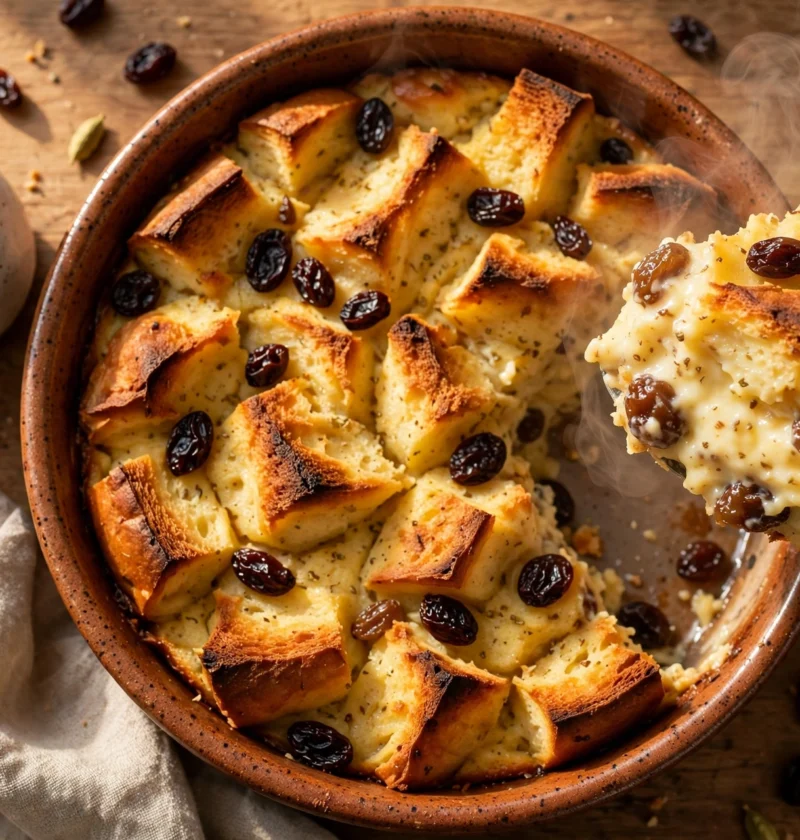
Every bakery loaf in our house had the same fate. The soft middle slices vanished into sandwiches within a day, and then the two end pieces sat in the bread box, ignored and slowly drying out, waiting for someone to feel guilty about them. In our kitchen that someone was my mother, and her answer to the problem was this bread pudding recipe — a cardamom-scented custard poured over cubes of that neglected bread, baked until the top turned golden and crackly while the middle stayed soft enough to eat with a spoon. Nothing was wasted, and somehow the leftovers everyone had refused became the dessert everyone fought over.
I still make it on Sunday afternoons, and I still believe the smell is half the recipe. Cardamom and warm milk drifting out of the oven does something to a house — it slows people down, draws them into the kitchen on invented errands, makes them ask what time dessert is. This is not a fancy pudding. There is no frying, no syrup to babysit, no unmoulding drama. You cube the bread, whisk a simple custard, let the two sit together for twenty unhurried minutes, and bake. What comes out tastes like childhood and thrift at the same time, which is a combination I never get tired of.
Why This Bread Pudding Recipe Works
Bread pudding looks forgiving, and mostly it is, but there is a real gap between a sodden brick and a pudding with crisp edges and a custard-soft middle. This bread pudding recipe is built around the handful of habits that land you on the right side of that gap:
- The bread must be properly stale, not just yesterday’s. Dry, day-old bread drinks up custard like a sponge and holds its shape in the oven. Fresh bread is already full of moisture, so it collapses into mush the moment the custard hits it — that is where gummy puddings come from.
- The cubes get a full twenty-minute soak before baking. This is the step impatient cooks skip, and it matters. The soak lets the custard travel all the way to the centre of every cube, so you never bite into a dry, bready pocket hiding inside the finished pudding.
- The custard is rich but not heavy. Two cups of milk with a splash of cream and just enough egg to set it gives you a pudding that slices cleanly yet stays spoon-soft. Too much egg and it turns rubbery, almost omelette-like; too little and it never firms up at all.
- Raisins are plumped before they go in. Ten minutes in warm water or warm milk keeps them juicy in the oven instead of scorching into hard little pebbles on the surface. A plump raisin bursts; a dry one just sits there being chewy.
- The pudding rests before anyone touches it. Ten minutes out of the oven lets the custard finish setting and the steam settle, so the slices hold together and the centre stays silky instead of soupy. Served straight from the oven it falls apart; rested, it behaves.
Ingredients
Nearly every bread-eating culture has arrived at some version of bread pudding, because every kitchen everywhere faces the same small tragedy of bread going stale. The desi touch in ours is the perfume: green cardamom crushed fresh, a thread of rose water if the bottle is open, and raisins where a Western recipe might use chocolate chips. Use whatever firm white bread or double roti you have — sandwich loaf, bakery loaf, even the thick end of a brioche-style bun — as long as it is genuinely dry. If your bread is still soft, cube it and leave the cubes spread on a tray for a few hours, or dry them in a low oven for ten minutes; this bread pudding recipe will forgive almost anything except fresh, springy bread.
Serves 6
For the pudding:
- 6 cups day-old firm white bread, crusts on, cut into 1-inch cubes (about 8 slices)
- 2 cups whole milk
- 1/2 cup heavy cream (or use all milk for a lighter pudding)
- 3 large eggs, at room temperature
- 1/2 cup granulated sugar
- 2 tablespoons unsalted butter, melted, plus more for the dish
- 1 teaspoon vanilla extract
- 3/4 teaspoon ground cardamom, from about 8 freshly crushed pods
- 1 teaspoon rose water or finely grated orange zest (optional, but lovely)
- 1/4 teaspoon fine salt
- 1/2 cup raisins, plumped in warm water for 10 minutes and drained
To finish and serve:
- 1 tablespoon coarse or granulated sugar, for sprinkling over the top
- 2 tablespoons slivered pistachios or almonds (optional)
- Warm cream, rabri-style thickened milk, or vanilla ice cream, for serving
How to Make This Bread Pudding Recipe – Step by Step
Step 1: Dry the bread and plump the raisins. If your bread is truly day-old and firm, simply cut it into rough 1-inch cubes, crusts and all — the crust pieces become the crisp, toasty corners everyone picks at. If it still feels soft, spread the cubes on a baking sheet and dry them in a 300°F oven for about 10 minutes, until they feel papery at the edges but not browned. While that happens, cover the raisins with warm water and set them aside to swell. Butter a 2-quart baking dish generously, right up the sides, because the custard likes to climb as it puffs.
Step 2: Whisk the cardamom custard. In a large bowl, whisk the eggs and sugar together until the mixture turns pale and slightly thick, about a minute of honest whisking. Pour in the milk and cream, then add the melted butter, vanilla, ground cardamom, rose water or orange zest if you are using it, and the salt. Whisk just until everything is one smooth, fragrant liquid. Taste it — it should smell like sweet chai and taste a touch sweeter than you want the final pudding, because the bread will dilute it.
Step 3: Soak the cubes for a full twenty minutes. Tip the bread cubes into the custard and fold gently with a wide spoon or your hands, lifting from the bottom so every cube gets its turn in the liquid. Drain the plumped raisins and fold them through. Now walk away for 20 minutes. The cubes will slump and drink and the bowl will look noticeably less liquid by the end — that is exactly right. Give it one last gentle fold, then scrape everything into the buttered dish and nudge the cubes into an even layer, letting a few crusty corners poke up at jaunty angles; those are the ones that crisp.
Step 4: Bake until puffed, golden and just set. Sprinkle the extra tablespoon of sugar over the surface — it melts into a thin, crackly glaze — and scatter the nuts if you are using them. Bake at 350°F for 40 to 45 minutes, until the pudding has puffed up proudly, the top is deep golden with darker crisp edges, and the centre gives a slight, custardy wobble when you nudge the dish. A knife slipped into the middle should come out mostly clean with a little moisture on it. If you like an extra-silky texture, you can bake the dish inside a larger pan half-filled with hot water, which gentles the heat; it is optional here, because the slightly crisp edges of the unprotected bake are half the charm.
Step 5: Rest it, then serve it warm. Let the pudding sit on the counter for at least 10 minutes — it will sink back a little and firm up just enough to slice into generous squares or spoon out in soft mounds. Serve it warm, never piping hot, with a drizzle of warm cream or a spoonful of thickened rabri-style milk over each portion. That contrast, warm spiced pudding against cool or warm cream, is the moment this bread pudding recipe earns its place in the family rotation.
Serving Suggestions
Warm is non-negotiable — this pudding’s whole personality is in the contrast between its crisp, sugary top and the soft custard underneath, and both fade as it cools. Serve it straight from the dish at the table, family style, with a jug of warm cream or a small bowl of rabri-style milk for drizzling, and let people take the corner pieces if they have earned them. A scoop of vanilla ice cream melting into the warm pudding is a more modern pleasure and an extremely good one. With strong chai after a Sunday lunch, it needs nothing else at all.
It also has proud relatives on this site worth knowing. When I want the bread-and-milk idea dressed for a celebration — fried bread, syrup, rabri and silver leaf — I make my shahi tukray, the royal cousin that shares this pudding’s soul but none of its restraint. And for the days when the oven is already on and I want something silkier and more set, the caramel custard covers that mood, all wobble and amber sauce. Baked and humble, fried and royal, set and silky — three desserts, one family habit of turning milk, eggs and bread into comfort.
Storage and Reheating
Covered tightly, leftovers from this bread pudding recipe keep in the fridge for up to 3 days, and it reheats beautifully, which is more than most desserts can claim. Warm individual portions in a 325°F oven for about 10 minutes, covered with foil so the top does not darken further, until heated through — the crisp edges revive surprisingly well. The microwave works in a pinch at half power, though the top softens. A splash of milk over a portion before reheating restores any custard that has firmed up too much in the cold. I do not freeze this one; the custard weeps on thawing and the texture never quite recovers, and honestly, leftovers rarely survive long enough for the question to matter.
Frequently Asked Questions
Can I use fresh bread if that is all I have?
Yes, with one extra step. Cube the fresh bread and dry the cubes in a 300°F oven for about 10 minutes, or leave them spread on a tray for a few hours, until they feel firm and papery. Fresh bread used as-is drinks too little custard and collapses into a dense, gummy layer, which is the single most common way this bread pudding recipe goes wrong.
Why did my bread pudding come out soggy in the middle?
Usually the soak was too long, the bread too fresh, or the bake too short. Twenty minutes of soaking is plenty — much beyond that and the cubes disintegrate before they even reach the oven. Also check your centre wobble: the pudding should still tremble slightly, but a knife should come out mostly clean. If the middle is wet after resting, another 5 minutes in the oven next time will fix it.
Can I make this bread pudding recipe ahead for guests?
Happily, yes. Assemble everything in the buttered dish, cover and refrigerate for up to 12 hours — the long cold soak actually improves the flavour — then bake it fresh before serving, adding about 5 minutes to the baking time since it starts cold. Alternatively, bake it fully, refrigerate, and reheat covered at 325°F for 15 minutes; serve it warm either way.
What bread works best, and can I add other flavours?
Any firm white loaf or double roti works; richer breads like brioche make a more luxurious pudding and need about a tablespoon less sugar. For variations, swap the raisins for chopped dried apricots or a handful of chocolate chips, trade the cardamom for cinnamon in winter, or stir a spoonful of desiccated coconut through the custard. The formula is forgiving as long as the bread-to-custard ratio stays roughly the same.
Recipe Summary
- Prep time: 15 minutes (plus 20 minutes of soaking)
- Cook time: 45 minutes
- Total time: About 1 hour 20 minutes
- Servings: 6
- Cuisine: Pakistani
- Course: Dessert