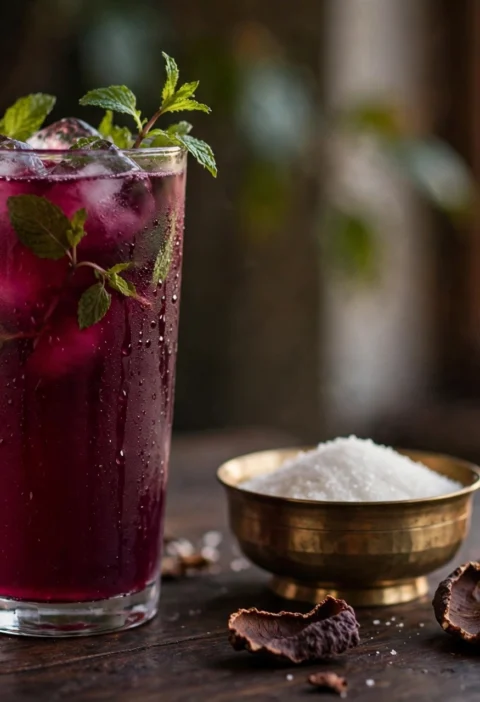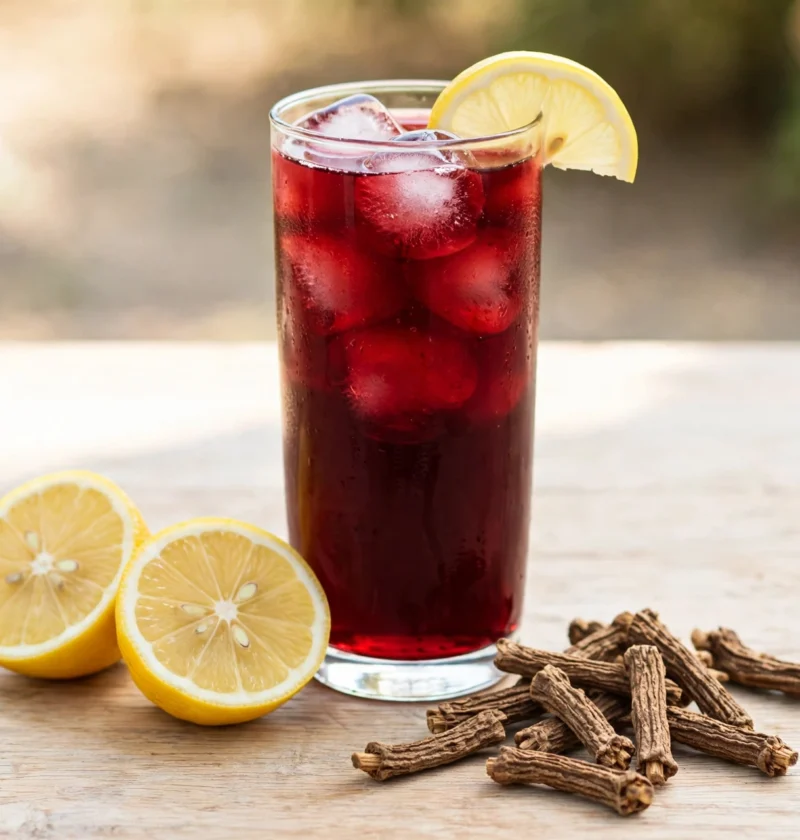
I first tasted nannari sharbat on a train journey through Tamil Nadu, and I still remember the exact moment the vendor held up his glass bottle. It was late May, the kind of heat that glues your shirt to the seat, and the train had stopped at a small station where a man sold drinks from a steel cart. His bottle glowed a deep, almost ruby red, and when he poured it over crushed ice with a squeeze of lemon, the glass turned the colour of a summer sunset. One sip and the heat seemed to step back a little. It was earthy and sweet and faintly woody, like nothing I had ever drunk before, and I spent the rest of the journey trying to work out what was in it. This nannari sharbat recipe is my attempt to recreate that station-platform glass at home, and after many summers of tweaking it, this is the glass I now make on repeat.
What makes this drink so special is the root at its heart. Nannari, also called Indian sarsaparilla, is a slender, fragrant root that South Indian kitchens have brewed into summer coolers for generations. It is not a fruit juice or a flavoured syrup from a bottle, it is a slow, old-fashioned infusion that takes a little patience and rewards you with something no shop-bought bottle can match. This nannari sharbat recipe needs no cooking skill and no special equipment, just dried nannari root, sugar, lemon, and cold water, and about twenty minutes of active work for a ruby-red cooler straight from a Kerala juice stall.
Why This Nannari Sharbat Recipe Works
- The root is soaked, not just rinsed. Dried nannari root is tough and woody, and a quick wash will not wake it up. Soaking it properly softens the fibres and draws out the deep colour and fragrance that make this nannari sharbat recipe so distinctive.
- The syrup is simmered low and slow. A gentle simmer coaxes the flavour out of the root without boiling it harsh, so this nannari sharbat recipe stays smooth and earthy instead of turning bitter or medicinal.
- The sugar is balanced with real lemon. Nannari on its own is sweet and woody, and lemon is what keeps it refreshing. This nannari sharbat recipe adds lemon at the end, after cooling, so the brightness stays sharp instead of cooking away.
- The syrup is made in a batch. One pot of syrup fills a whole bottle that lives happily in the fridge for weeks, so this nannari sharbat recipe gives you instant coolers all summer from one afternoon of work.
- It is endlessly adjustable. Stronger, lighter, sweeter, sharper, with soda or still water, this nannari sharbat recipe bends to your mood and your guests without ever losing its character.
Ingredients
The shopping list is delightfully short, and that is part of this drink’s charm. The one thing worth hunting down is genuine dried nannari root, which you will find in South Indian grocery stores or online, sold in small bundles of thin, brown, wiry roots. Do not substitute bottled nannari syrup here, because the whole point of this nannari sharbat recipe is the flavour of the root itself, and bottled versions are mostly sugar and colour.
- 50 grams dried nannari root (about 1 large handful)
- 4 cups water, for simmering
- 2 cups sugar
- 1 tablespoon lemon juice, plus more to serve
- 1/4 teaspoon green cardamom powder, optional
- Ice cubes, to serve
- Lemon wedges and mint leaves, to garnish
- Cold water or soda water, to dilute
A word about the root: sniff before you buy. Good dried nannari smells warm, woody, and faintly sweet, almost like vanilla mixed with earth. If it smells dusty or like nothing at all, it has sat on the shelf too long, and no simmering will rescue it. Buy small quantities, keep them in an airtight jar away from sunlight, and the root will hold its fragrance for months.
Method
Step 1: Wash and soak the nannari root
Put the dried nannari root in a bowl and rinse it under running water, rubbing the strands gently to remove any dust or grit. Then submerge it in a fresh bowl of water and give it a good long soak, two hours at minimum, overnight if your schedule allows. The root will soften and darken slightly, and the soaking water will blush faintly pink. Drain and set it aside. This patient start is the foundation of this nannari sharbat recipe, because a properly soaked root gives up its colour and fragrance far more generously than a dry one tossed straight into the pot.
Step 2: Simmer the root into a deep red brew
Put the soaked root in a heavy saucepan with the 4 cups of water and heat it over a medium flame until it just starts to bubble. Then turn the flame right down and leave it to murmur away for 25 to 30 minutes. Do not let it boil hard, because aggressive boiling can pull bitterness out of the root. Watch the water turn from pale pink to a rich, deep red while the kitchen starts to smell warm and woody, like a spice shop after rain. That colour change is your sign this nannari sharbat recipe is on its way.
Step 3: Sweeten and strain the syrup
Lift the root pieces out with a slotted spoon and discard them. Stir the sugar into the hot red liquid until it dissolves completely, then let the syrup simmer for another 5 minutes until it thickens slightly and coats the back of a spoon. Take it off the heat and cool it to room temperature. Strain it through a fine sieve or muslin into a clean bottle, and stir in the lemon juice and optional cardamom once cool. Never add lemon to boiling syrup, because heat dulls its brightness.
Step 4: Chill the syrup properly
Seal the bottle and refrigerate the syrup for at least 4 hours, or overnight if you can wait. Chilling does more than make it cold, it lets the flavours settle and marry, so the woody sweetness and the lemon round each other out. The syrup may throw a fine sediment at the bottom in the fridge, which is perfectly normal, just shake the bottle gently before using it. Do not skip this rest in your hurry to pour.
Step 5: Dilute, ice, and serve
To serve, fill a tall glass with ice, pour in 3 to 4 tablespoons of chilled syrup, top up with cold water or soda water, and stir well. Taste and adjust: more syrup for a deeper glass, more water for a lighter one. Squeeze in a lemon wedge, drop in a mint leaf or two, and serve immediately while the ice is still crackling. The first glass always vanishes fastest, so keep the bottle within reach, because everyone will want a second round of this nannari sharbat recipe.
Serving Suggestions for This Nannari Sharbat Recipe
In my house, this nannari sharbat recipe rarely waits for a special occasion. It is the drink that comes out the moment the afternoon turns scorching, poured over a mountain of ice while lunch is still on the stove. The classic way is simple: syrup, cold water, lemon, ice, nothing else. It sits beautifully next to spicy food, because its cool sweetness calms a fiery plate the way plain water never can.
For guests, I like to set up a little sharbat station and let everyone build their own glass. Put out the chilled syrup bottle, a jug of cold water, a jug of soda water, a bowl of lemon wedges, and a pile of mint, and let people choose still or fizzy, strong or light. Children usually go for the sweeter, still-water version with extra ice, while adults tend to pick the soda version with a hard squeeze of lemon. If you want a second cooler on the same table, my bel sharbat brings a mellow, wood-apple richness that pairs beautifully with nannari’s woody brightness, and a glass of kokum sharbat offers a tangy, garcinia sharpness for anyone who likes their summer drinks with a little more bite.
Storage and Reheating
Let me be honest with you: this is a drink built for storing, and the syrup is the whole secret. Once strained and bottled, the syrup keeps in the refrigerator for 3 to 4 weeks without losing colour or fragrance, as long as the bottle is clean and tightly sealed. Use a clean, dry spoon every time you pour. I make one big batch at the start of the hot season and it quietly carries us through weeks of afternoons.
There is no reheating here, of course, since heat is the enemy of a cold sharbat, but a bottle that has gone too cold and syrupy in the back of the fridge just needs ten minutes on the counter and a good shake before pouring. To keep it longer, freeze it in ice cube trays or small jars for up to 3 months. Drop a frozen cube or two into cold water, let it melt, stir, and you have an instant glass of this nannari sharbat recipe mid-heatwave without ever standing at the stove.
Nannari Sharbat Recipe FAQs
What does nannari sharbat taste like?
It tastes like nothing else in the cooler world, which is exactly why people remember it. The flavour is woody and earthy with a natural sweetness, a little like vanilla and root beer had a gentler, more fragrant cousin. Lemon lifts it, ice sharpens it, and the finished glass of this nannari sharbat recipe is cooling and smooth rather than sharp or fizzy-sweet. First-timers often pause after the first sip, surprised, and then go straight back for another.
Can I make this nannari sharbat recipe without sugar?
You can reduce the sugar, but I would not remove it entirely, because sugar does more than sweeten here, it preserves the syrup and carries the root’s flavour. If you want a lighter version, cut the sugar to 1 cup and keep the finished syrup refrigerated, using it within a week instead of a month. Honey works as a partial swap, though it clouds the syrup and shifts the flavour slightly. Taste as you go, since the root itself brings mild natural sweetness.
Is nannari sharbat good for summer heat?
In South Indian homes, nannari has been the default answer to summer heat for as long as anyone can remember, and I reach for a chilled glass of this nannari sharbat recipe the moment the afternoon turns brutal. I am not claiming it cures anything, only that a cold, lemony glass leaves me feeling steadier on a hot day than any shop-bought fizzy drink ever has. Keep the sugar modest, drink it properly chilled, and enjoy it as the gentle, traditional cooler it is.
Can I use fresh nannari root instead of dried?
Yes, if you can find it, though dried root is far easier to buy and keeps much longer. Fresh root needs a thorough wash and a shorter soak, since it is already soft, and roughly double the weight, about 100 grams, for the same depth of colour. The simmering time stays the same, and the rest of this nannari sharbat recipe does not change. Whichever form you use, the key is the same: simmer gently, sweeten after straining, and always add the lemon once the syrup has cooled.
Recipe Summary
This nannari sharbat recipe takes one humble dried root and turns it into a ruby-red summer cooler: nannari root soaked, simmered gently into a deep red brew, sweetened into a syrup, chilled, and poured over ice with lemon. It takes about twenty minutes of active work plus soaking and chilling, fills a whole bottle that lasts weeks in the fridge, and serves glass after glass all summer long. It needs no cooking skill and no special equipment, yet it tastes like something from a proper South Indian juice stall. If you have only ever drunk sharbats from a bottle, this is the glass that will make you buy a bundle of roots just for itself.
A little background for the curious: nannari comes from Hemidesmus indicus, a slender climbing plant whose fragrant root has flavoured South Indian drinks for centuries, while sharbat itself is far more than a drink across South Asia and the Middle East, it is a welcome, a celebration, and a daily ritual in hot weather. Pouring those two histories into one tall, ice-crackling glass feels like a small tribute to both, and that is precisely the taste this nannari sharbat recipe carries.