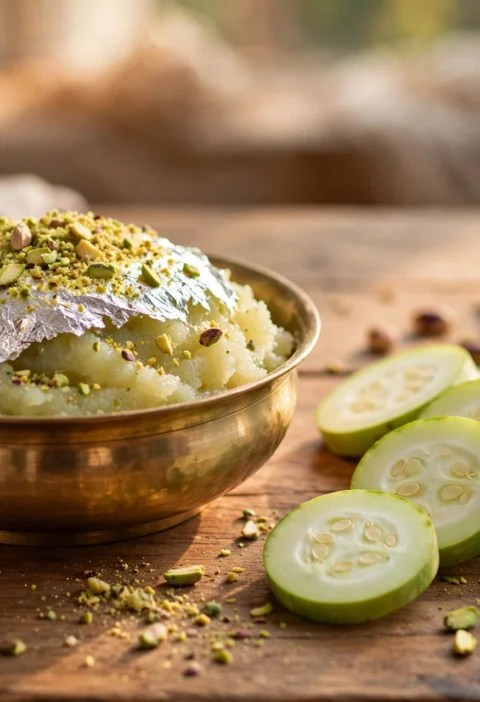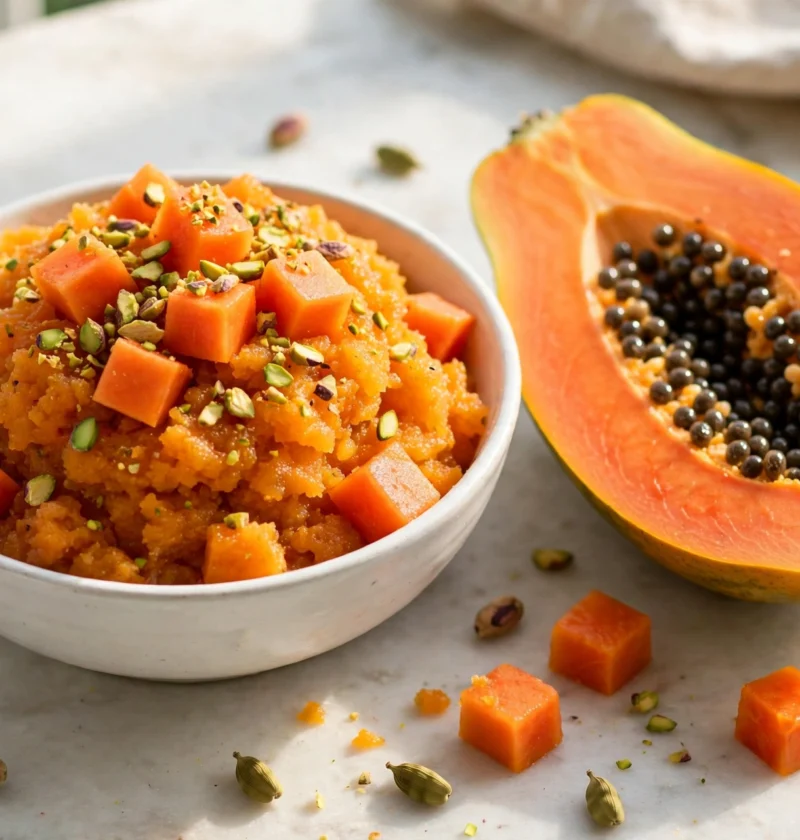
I never planned to make papaya halwa. Papaya in our house was always a breakfast fruit, sliced cold from the fridge, squeezed with lemon, eaten standing at the kitchen counter before school. It never occurred to me that it could become a dessert until a neighbor brought a steel dabba of something glowing orange to a dinner party and set it down next to the usual kheer. One spoonful and I was converted. It was soft and silky, warm with ghee and cardamom, sweet without being heavy, and it tasted like sunshine in a way no other halwa I knew quite managed. This papaya halwa recipe is my version of that surprise discovery, worked out over many batches until it became one of the desserts I reach for whenever ripe papayas show up in the market.
What I love most about this papaya halwa recipe is how it takes a fruit most people overlook and turns it into something genuinely special. Ripe papaya melts down beautifully, almost like pumpkin, and once it meets ghee, sugar, and cardamom, it becomes a halwa that is lighter than most of its cousins yet just as comforting. It comes together in about thirty-five minutes, uses one pan, and fills the kitchen with a warm, tropical smell that makes everyone wander in to ask what is cooking. If you have a papaya sitting on your counter that is almost too ripe, this is the best possible use for it.
Why This Papaya Halwa Recipe Works
- The papaya is cooked down first. Raw papaya is watery and faintly grassy, so we sauté the grated fruit with a little ghee until it softens and deepens in colour. That step concentrates the sweetness and keeps this papaya halwa recipe thick and spoonable instead of loose.
- The semolina gives it body. A small amount of roasted suji stirred into the papaya adds structure without turning the halwa stodgy. It is the quiet backbone that lets this papaya halwa recipe hold its shape in the bowl.
- Cardamom and saffron give it perfume. Crushed green cardamom plus saffron steeped in warm milk turn the papaya’s mild sweetness into something festive and layered, far beyond a plain fruit sweet.
- The sugar is adjustable. Papayas vary wildly in sweetness, so this papaya halwa recipe tells you to taste and adjust rather than blindly following a fixed amount. That flexibility is what makes it work with any batch of fruit.
- It is good warm, cold, and in between. Most halwas demand to be eaten hot, but this one is lovely at every temperature, which makes it a rare cook-ahead dessert for guests.
Ingredients
The shopping list is short, and most of it is probably sitting in your kitchen already. The single non-negotiable is a truly ripe papaya. It should yield gently when pressed and smell sweet at the stem end. An underripe papaya will never make good halwa, no matter how much sugar you add.
- 2 cups ripe papaya, peeled, seeded, and grated (about 1 medium papaya)
- 1/4 cup fine semolina (suji)
- 1/4 cup ghee, plus 1 tablespoon extra for the pan
- 1/2 cup sugar, plus more to taste
- 1/4 teaspoon green cardamom, freshly crushed
- 1 pinch saffron strands, steeped in 2 tablespoons of warm milk
- 2 tablespoons chopped pistachios
- 2 tablespoons chopped almonds
- 1 tablespoon golden raisins
- A pinch of salt
- Fresh papaya cubes and mint leaves, to garnish
A quick note on the papaya: grate it on the coarse side of a box grater so you get soft shreds rather than mush. If your papaya is extremely ripe and juicy, let the grated fruit sit in a sieve for ten minutes and press out a little of the excess liquid before cooking. That small step keeps this papaya halwa recipe from turning watery later.
Method
Step 1: Cook the papaya down until soft
Warm 1 tablespoon of ghee in a thick-bottomed kadhai on a medium flame. Tip in the grated papaya and stir frequently for 8 to 10 minutes. Early on it looks light-coloured and damp, but slowly it will soften, darken to a deeper orange, and lose its raw smell. You want it thick and jammy, the kind of mixture that holds a trail when you drag a spoon through it. This step is the heart of this papaya halwa recipe. If you rush it, the halwa will taste faintly raw and refuse to set properly.
Step 2: Roast the semolina in ghee
Push the cooked papaya to one side of the pan, or tip it into a bowl for a moment. Melt the rest of the ghee (1/4 cup) in that same kadhai on a low-medium flame, sprinkle in the semolina, and toast it with steady stirring for 4 to 5 minutes. It should turn light golden and smell nutty and warm. Do not let it brown too far, because burnt suji will overpower the delicate papaya flavour. Stir in the almonds and raisins for the last minute so they toast gently.
Step 3: Combine papaya, sugar, and semolina
Return the cooked papaya to the pan and add the sugar, a little at a time, stirring well after each addition. Taste as you go, because a very ripe papaya may need far less sugar than a mildly sweet one. Cook the mixture on low heat for 5 to 6 minutes, stirring often, until the sugar dissolves completely and the papaya and semolina come together into one thick, glossy mass. Add the saffron milk, the cardamom, and a pinch of salt, and stir until the colour turns a warm, even gold.
Step 4: Cook until glossy and pulling away
Keep cooking this papaya halwa recipe on low heat for another 4 to 5 minutes, stirring constantly. You will know it is ready when the halwa grows dense, develops a shine, and begins to leave the pan’s sides, with ghee glistening at the edges. That pulling-away moment is the classic sign of a finished halwa. If the mixture still feels loose, give it two more minutes; if it feels stiff, splash in a tablespoon of warm milk and stir it in.
Step 5: Rest, garnish, and serve
Lift the pan off the heat, cover it, and let the halwa sit covered for 5 minutes. That pause gives the semolina time to drink up the remaining moisture and sets the halwa firm enough to keep its form. Dish it into bowls and top with pistachios, fresh papaya cubes, and mint leaves. This papaya halwa recipe is at its best served warm, when the ghee is still fragrant and the papaya is soft and glowing, but it is equally lovely once it has cooled to room temperature.
Serving Suggestions for This Papaya Halwa Recipe
At our house, papaya halwa rarely needs a partner. A small warm bowl of this papaya halwa recipe after dinner with doodh patti is honestly satisfying on its own. When friends come over, though, a couple of combinations shine. Vanilla ice cream beside warm halwa is a classic winner, because the cold cream melts into the soft papaya like a tropical sundae. Serve it alongside gajar ka halwa at a family gathering, so guests can compare the two orange halwas and debate fondly over which one wins.
To dress it up for a dawat, mould the warm halwa in small oiled ramekins, rest them ten minutes, then unmould each onto a plate as a neat golden mound. Crown each mound with papaya cubes, pistachio shards, and a mint leaf. It could pass for restaurant plating, yet it costs no extra work at all. It also travels nicely to a potluck in a shallow steel dabba lined with parchment, and it holds up on the journey better than most desserts, since it needs no reheating to taste good.
Storage and Reheating
Let the halwa reach room temperature before you pack it away. Move it into a sealed container and refrigerate for up to 4 days. It will stiffen when chilled, which is expected. To warm this papaya halwa recipe again, drizzle a tablespoon of milk over a serving, lid it, and heat gently in a pan on a low flame or in the microwave in short 30-second bursts, stirring between bursts. The milk softens the semolina and restores the silky shine. Warm only the portion you plan to eat, so the remainder stays fresh.
For keeping it longer, freezing works well. You can also freeze this papaya halwa recipe for a month at most. Divide it among small freezer-safe boxes, lay cling film right on the surface to stop ice crystals, and close the lids. Defrost overnight in the fridge, then warm as explained earlier. Frozen-then-thawed halwa feels slightly softer, but the flavour holds up well, and the cardamom perfume survives freezing better than you might expect.
Papaya Halwa Recipe FAQs
Can I use unripe papaya for this papaya halwa recipe?
I would not recommend it. Unripe papaya is firm, pale, and starchy, and it lacks the sweetness and fragrance that make this papaya halwa recipe work. It also contains more latex, which can taste bitter and unpleasant. Wait until your papaya is fully ripe, soft to the touch, and sweet-smelling at the stem. If you only have a half-ripe fruit, give it another day or two in a warm spot, wrapped in newspaper, before you start.
Why did my halwa turn out watery?
Watery halwa almost always comes from skipping the first cooking step or from using an extremely juicy papaya without draining it. Cook the grated papaya down until it is thick and jammy before adding anything else, and if your fruit is very wet, press out some liquid through a sieve first. Also make sure the semolina is properly roasted, because raw suji absorbs moisture unevenly and leaves the halwa loose instead of glossy.
Can I make this papaya halwa recipe vegan?
Yes, with two easy swaps. Swap the ghee for plain coconut oil or a decent plant butter, and steep the saffron in warm oat milk or plain water instead of dairy milk. Coconut oil brings a gentle tropical hint that pairs nicely with papaya, and the texture stays soft and glossy. The rest of the recipe is already plant-based, so nothing else needs to change.
Is papaya halwa good for parties?
This papaya halwa recipe ranks among my favourite party sweets exactly because it forgives mistakes. Cook it the day before, chill it, and warm it softly right before guests arrive. Scaling is simple: double each quantity and choose a broader pan so the papaya cooks down evenly. Serve it in small bowls rather than one big dish, because guests love having their own portion. If you are already making pineapple halwa for the same event, this papaya version adds a second sunny choice to the spread without doubling the effort.
Recipe Summary
This papaya halwa recipe starts from the comfort of old-style suji halwa and adds a tropical turn: ripe papaya simmered into a soft jam, a spoonful of roasted semolina for structure, ghee for richness, and saffron-cardamom fragrance tying it all into a golden, glossy sweet in roughly 35 minutes. It feeds 4 to 6, stores happily for days, and pleases whether served warm, at room temperature, or warmed up again. If papaya as a dessert is new to you, this is the batch to begin with. Try it once, and I suspect it will earn a permanent spot in your dessert rotation, just as it has in mine.
A quick bit of background, for the curious: the papaya is a tropical fruit that travelled from Central America around the world and became a breakfast staple in many warm countries, while halva belongs to a family of thick, sweet treats loved across South Asia, the Middle East, and further afield. Cooking the two together in one pan feels like honouring both food traditions at once, and that is precisely what this papaya halwa recipe tastes like.