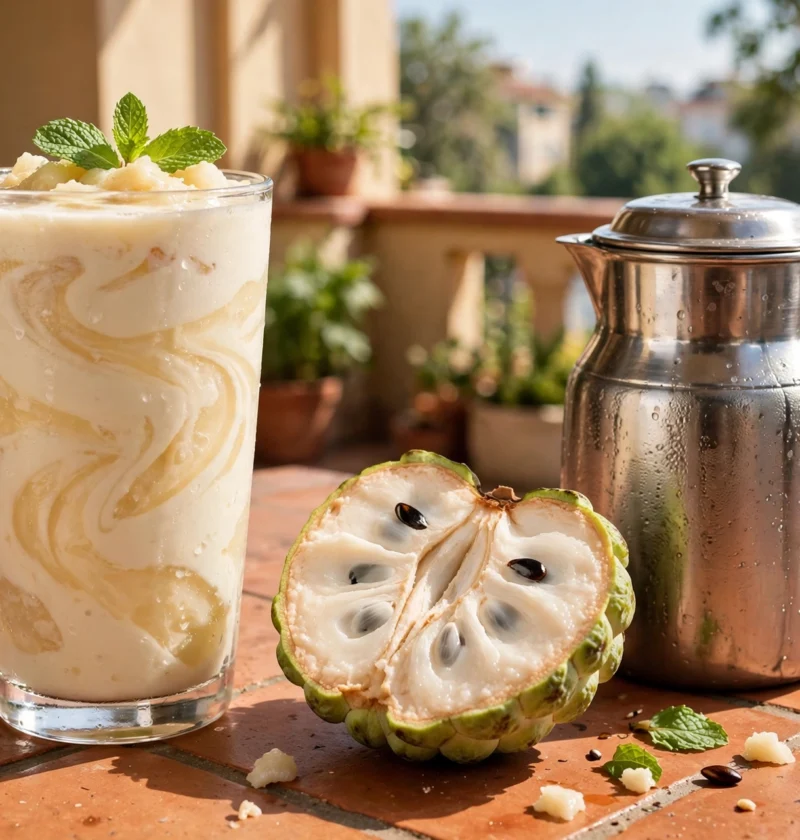
The first sitaphal shake I ever drank came from a juice centre in Mumbai, squeezed between a flower stall and a pani puri cart on a lane that smelled of marigolds and frying chaat. It was late September, the season when sitaphal pyramids appear at every fruit cart, and the man behind the counter cracked open a ripe fruit, scooped its creamy flesh into a steel blender jar, and poured in cold milk without measuring a thing. What came out was thick enough to eat with a spoon, sweet in a way that tasted like no added sugar at all, and fragrant in a manner I had never tasted in any other shake. I stood on that crowded lane, drinking it slowly through a thick straw, and understood at once why people queue for this drink every autumn. This sitaphal shake recipe is my attempt to recreate that juice-centre glass at home, refined over many seasons until the thickness, the sweetness, and the perfume all land exactly right.
What keeps this shake in my autumn rotation is how little stands between you and it. There is no syrup to cook, no ice cream to soften, and no exotic ingredient to chase across town. A couple of ripe sitaphals, a jug of cold milk, a little vanilla, and a blender are enough to make a drink that feels like dessert and breakfast at the same time. It is what I pour on slow Sunday mornings, and what I serve guests who have never tasted a sitaphal before, watching their faces change at the first spoonful. Once you learn to pick a fruit that yields softly to your palm and to blend it just long enough, you will stop buying shakes and start making this sitaphal shake recipe whenever the season allows.
Why This Sitaphal Shake Recipe Works
- Fully ripe fruit does all the sweetening. A sitaphal that gives gently under your thumb is naturally honeyed, so this sitaphal shake recipe needs barely any added sugar, and the flavour stays clean and fruity rather than syrupy.
- Cold milk keeps the pulp silky. Chilled full-cream milk blends with custard apple flesh into a smooth, thick pour, which is why this sitaphal shake recipe feels luxurious without a scoop of ice cream in sight.
- The seeds are removed before blending. Pulp is picked clean of its hard black seeds by hand, so this sitaphal shake recipe never turns gritty or bitter, the two faults that ruin most homemade attempts.
- Vanilla lifts the fruit instead of hiding it. A few drops of vanilla echo the custard-like perfume of the sitaphal itself, giving this sitaphal shake recipe a rounded aroma that neither ingredient achieves alone.
- Ice joins only at the very end. Blending the pulp and milk first, then pulsing in ice, keeps this sitaphal shake recipe thick and frosty instead of watery, with a soft froth that holds for the first few minutes in the glass.
Ingredients
Everything here fits on a small shopping list, and most of it is already in your fridge. The one choice worth making with care is the sitaphal itself. Buy fruits that feel heavy for their size, with skin that has opened slightly between its knobby segments and yields softly when you press near the stem. A hard, tight-skinned sitaphal is underripe and will taste starchy, while one that collapses in your hand is overripe and may have soured. The perfect fruit smells faintly sweet even before you open it.
- 2 large ripe sitaphals (custard apples), chilled
- 2 cups cold full-cream milk
- 1 tablespoon sugar, or to taste (optional)
- 1/2 teaspoon vanilla extract
- 1 cup ice cubes
- 1 pinch of fine salt
- 1/4 teaspoon ground green cardamom (optional)
- 1 tablespoon chopped pistachios, to garnish
- Fresh mint leaves, to garnish
- 1 tablespoon sitaphal pulp, reserved, to garnish
On the milk: full-cream milk gives the thickest, most juice-centre-like result, and I recommend it for a first attempt. If only toned milk is available, reduce it to one and three-quarter cups so this sitaphal shake recipe stays thick. Almond milk works for a dairy-free version, though the shake will taste lighter and less creamy.
Method
Step 1: Open the sitaphals and scoop out the pulp
Twist each chilled sitaphal apart with your hands, or cut it in half with a knife, and scoop the creamy segments into a bowl with a spoon. Work over the bowl so none of the soft flesh escapes. A ripe fruit will fall apart easily into segments, each one holding a glossy black seed. Take your time with this hands-on step rather than rushing to the blender.
Step 2: Pick the pulp clean of every seed
Press each segment gently between your fingers and flick out the hard black seeds, dropping the clean pulp into a measuring jug. You should end up with about one and a half cups of seedless pulp. Check twice, because a single seed left behind will grind into bitter grit. If the pulp clings stubbornly to a seed, a small spoon scrapes it off cleanly. This patience is what separates a silky sitaphal shake recipe from a grainy one.
Step 3: Blend the pulp with milk, vanilla, and salt
Tip the seedless pulp into the blender, pour in the cold milk, and add the vanilla extract, the pinch of salt, and the sugar if you are using it. Blend on medium for about thirty seconds, until the mixture looks completely smooth and pale cream in colour. Taste a spoonful now: a well-ripened sitaphal may need no sugar at all, while a milder fruit may want the full tablespoon. Getting the sweetness right at this stage matters for this sitaphal shake recipe, because ice will dull it later.
Step 4: Crush the ice in short bursts until frosty
Tip the ice cubes into the blender and crush them in brief bursts of about five seconds, pausing between each one, until the shake turns thick, pale, and crowned with a soft cap of foam. Short bursts matter: a long continuous blend melts the ice and thins everything out, while stop-start crushing keeps the drink icy. The finished shake should mound slightly as it pours and coat a spoon. If it refuses to move, add just a little more cold milk and give it one final brief blitz.
Step 5: Pour into frosted glasses and finish at once
Pour the shake into glasses you chilled in the freezer, spoon the reserved pulp over the foam, scatter pistachios, and tuck in a mint leaf. Drink without delay — within minutes the foam settles and the chill softens, and a sitaphal shake is never quite as good as it is in those first cold sips.
Serving Suggestions for This Sitaphal Shake Recipe
On a quiet autumn morning, this sitaphal shake recipe needs no company at the table. It is filling enough to serve as breakfast, especially with buttered toast or a handful of roasted nuts alongside. I usually carry my glass to the balcony and sip it slowly while the morning air is still cool, and that slow start has become a ritual I look forward to all season. Children love smaller glasses with a thick straw and a spoon for the froth.
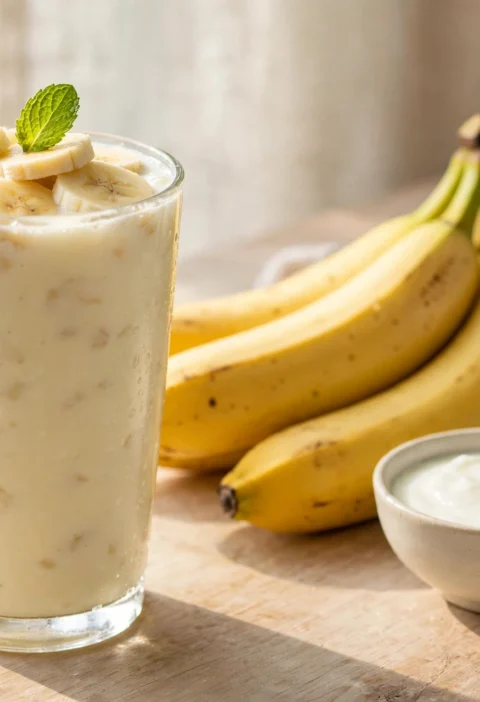
For a gathering, put out a small topping bar instead of garnishing every glass yourself: a bowl of chopped pistachios, a dish of reserved pulp, and a jug of extra chilled milk, so guests can finish their own drinks. It also ends a festive lunch on a gentle note, cooling the mouth after rich, spiced dishes. If a second shake would help the table, my chikoo shake brings a deeper, caramel-like sweetness beside this floral custard apple version, while a glass of banana lassi gives yogurt lovers a tangy, creamy alternative. This sitaphal shake recipe also pairs well with spicy street snacks, the cool sweetness balancing the heat.
Storage and Reheating
Be honest with yourself about this one: a sitaphal shake is a drink-it-now pleasure, and it fades quickly once blended. The foam flattens, the colour grows duller, and the texture loosens, though a well-chilled glass still tastes pleasant for a short while. When you cannot serve it immediately, pour this sitaphal shake recipe into a bottle filled to the brim, cap it tightly, and keep it in the coldest part of the fridge for no more than 4 hours. Shake the bottle firmly before pouring, and add the pistachios and mint only at the moment of serving.
A better backup is the pulp itself, not the finished drink. Seedless sitaphal pulp freezes beautifully: pack it into small lidded boxes and it keeps for up to 2 months. Thaw one box overnight in the refrigerator and blend it fresh with cold milk whenever a craving strikes. Never freeze a shake that already contains ice, since the melting ice waters it down as it thaws. For the finest result with this sitaphal shake recipe, blend only the glasses you plan to drink right away, because the whole job takes barely fifteen minutes.
Sitaphal Shake Recipe FAQs
Is sitaphal shake the same as fruit custard?
No, and the two are easy to tell apart once you know how each is made. Fruit custard is a set dessert: milk thickened with custard powder or egg, cooled, and folded with chopped fruits, then chilled until it sets into a spoonable pudding. This sitaphal shake recipe is a blended drink, not a dessert: fresh sitaphal pulp whipped with cold milk and ice, poured into a glass and drunk at once, with no cooking, no setting, and no custard powder involved. One is eaten with a spoon after hours of chilling, the other is sipped through a straw minutes after blending.
Why does my sitaphal shake taste bitter or gritty?
Almost always, a seed slipped into the blender, or the fruit was underripe. Seeds grind into bitter grit that no amount of sugar can hide, so pick the pulp clean with your fingers and check twice before blending. Underripe sitaphal tastes starchy and astringent even when fully blended, so wait until the fruit yields softly to your palm and smells faintly sweet. If the glass in front of you is already gritty, strain it through a fine sieve and blend in another half cup of plain milk, which softens the fault though it cannot fully erase it.
Can I make this sitaphal shake recipe without sugar?
Yes, and with a properly ripe fruit you may prefer it that way. A soft, fragrant sitaphal is naturally honeyed, so the sugar in the list is optional rather than essential. Blend the pulp and milk first, taste, and add sugar only if the fruit tastes mild. A teaspoon of honey works as an alternative, though it adds its own floral note. What you should not do is add sugar blindly before tasting, because an over-sweetened sitaphal shake recipe loses the delicate perfume that makes the fruit special.
Can I make sitaphal shake ahead for a party?
Yes, with one firm rule: get the pulp ready a day early and keep it covered in the fridge, but hold back the milk and ice until guests are actually there. Chilled pulp keeps beautifully for a day, and its fragrance deepens slightly overnight. When it is time to serve, blend the pulp with cold milk and fresh ice in small batches, pour into frosted glasses, and finish each one with pulp and pistachios as you pass it over. Blending everything hours ahead is a false economy: the foam dies, the mixture separates, and no amount of re-shaking brings back that fresh-blended frost.
Recipe Summary
This sitaphal shake recipe turns an autumn fruit into a small occasion: ripe custard apple pulp whipped with chilled milk, vanilla, and ice, served frosty in a cold glass within fifteen minutes, using no stove and no equipment beyond a blender. It is smart enough for visitors yet simple enough to carry a quiet morning alone.
A quick note for the curious: the custard apple has been grown across South Asia for centuries, prized for flesh so creamy that it tastes like a dessert the tree made on its own, while milkshakes turned chilled milk and fruit into a beloved cafe drink the world over. Matching a fruit treasured for its natural creaminess with a drink treasured for its frosty thickness is an idea that needs no improvement, and that match is exactly what you taste in this sitaphal shake recipe.