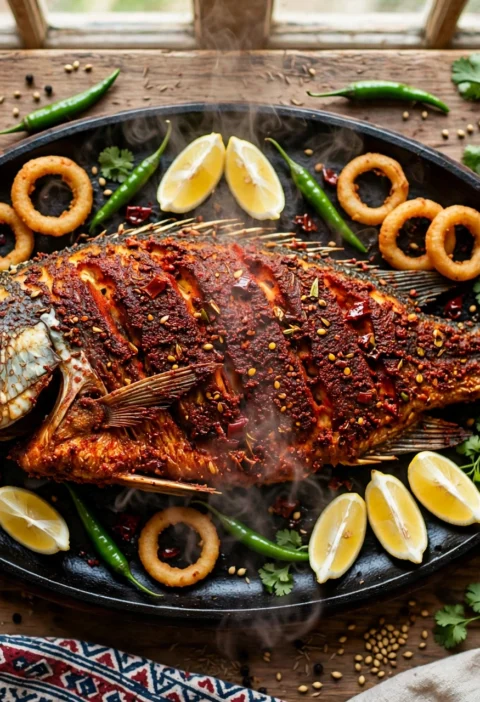
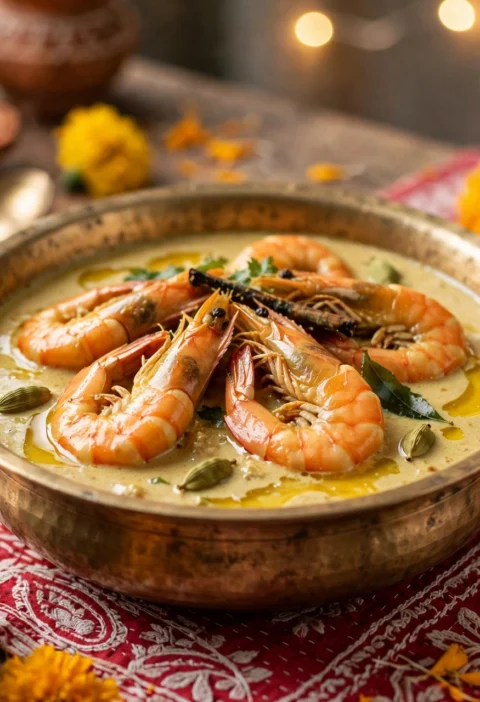
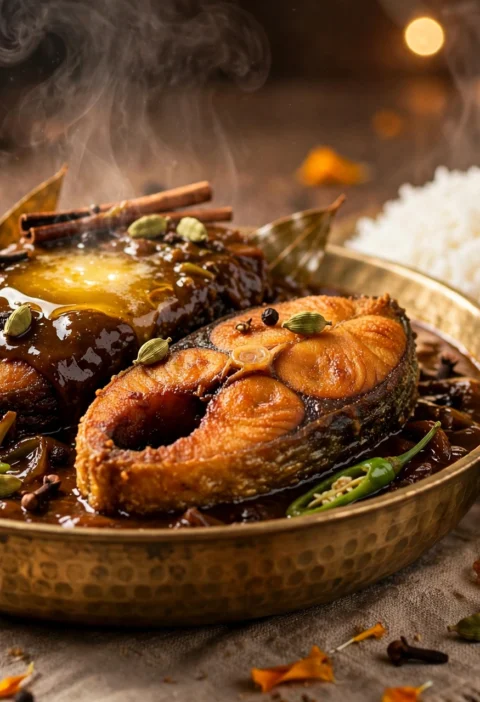
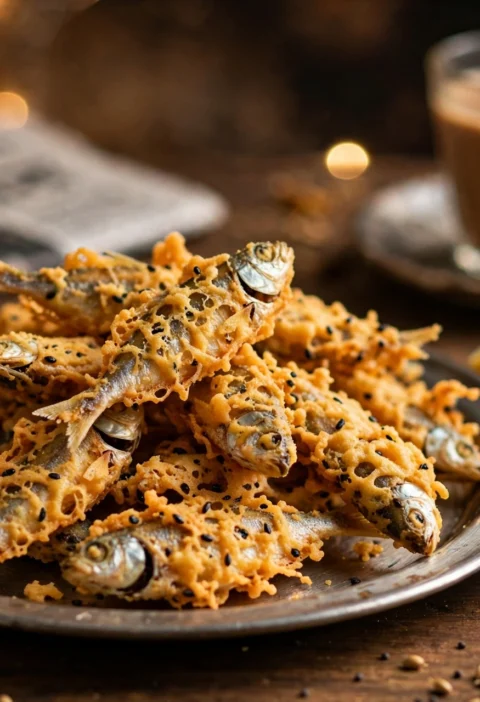
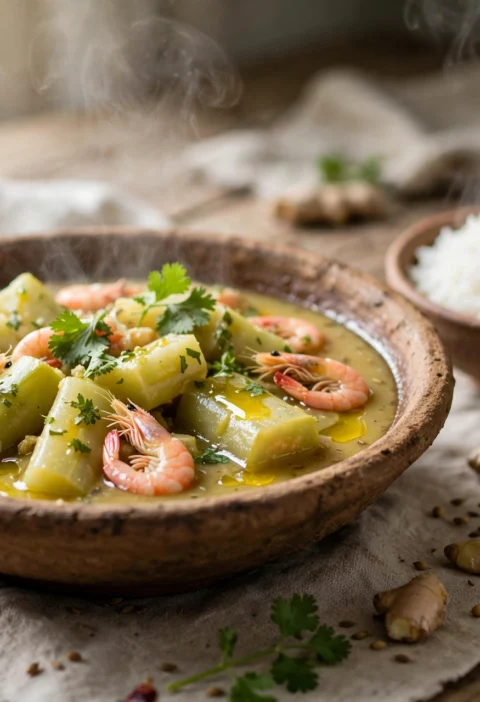
An aar never arrived at our house quietly. It came in my father’s two hands, held like a trophy from the morning bazaar — a river catfish so long its tail curled past his elbow, silver-grey and gleaming. My mother would clear the biggest board she owned, my grandmother would sharpen her boti and deliver her verdict on the steaks as they were cut, and by noon the house smelled of mustard oil and cumin — the smell of serious fish, not weekday fish. This aar macher jhol recipe is the curry that fish became: thick, meaty steaks in a golden gravy with enough body to stand up to them, the potatoes soft at the edges, the whole pot eaten with a respect the little fishes of the week never demanded.
It helps to know what aar is before the pot comes out. This is one of the great river catfish of Bengal — a fish that grows large and cuts into steaks with real presence: firm, white, sweet flesh with a single central bone and none of the fiddly needle-bones that make small fish an exercise in patience. A jhol for aar is therefore a different creature from the delicate broths built around tiny fish. The gravy here is golden and brothy still, but it carries tomato for weight, potato for substance, and a spice base cooked long enough to have opinions. That is the whole pleasure of the fish — it meets a robust curry halfway and neither one apologises.
Why This Aar Macher Jhol Recipe Works
Big fish fails in predictable ways: steaks that break in the pan, flesh that stays bland in the middle, gravies too thin to honour the fish, or too thick to be a jhol. This aar macher jhol recipe is built around the five habits that keep a large catfish glorious:
- The steaks are salted and rested before frying. Twenty minutes with salt and turmeric seasons the flesh past the surface and firms it, so a thick steak tastes seasoned to its centre rather than wearing a spiced coat over a plain heart.
- Each steak gets a proper sear, not a timid one. Aar flesh is sturdy, and it rewards a confident fry — a deep golden crust that holds the steak together through its simmer and gives the gravy its roasted depth.
- The gravy is built in the same oil the fish fried in. That oil carries the fish’s flavour already. Blooming cumin and bay in it, then cooking the tomato down dark, lays a foundation no fresh oil can imitate.
- Potatoes go in early and drink the gravy first. Wedges simmer until nearly tender before the fish returns, releasing a little of their starch into the jhol — the source of this curry’s extra body.
- The fish finishes in the gravy, off a hard boil. Fried steaks need only a few gentle minutes to marry with the sauce. A rolling boil would batter them apart; a lazy simmer lets them absorb flavour while keeping each steak whole.
Ingredients
Choose your aar the way my grandmother chose hers: by eye and by argument. In Bengali cuisine a fish this size is an occasion, not an ingredient. The fish is Sperata aor, the long-whiskered catfish of the great rivers, sold in most Bengali markets cut into steaks — look for pale, firm, faintly sweet-smelling flesh and skin that shines rather than dulls. Steaks about an inch thick are the sweet spot for this aar macher jhol recipe: thinner ones dry at the edges, thicker ones need a longer rest in the gravy. The rest of the list honours that size with restraint — potato, tomato, cumin, ginger, chillies, and mustard oil doing the heavy lifting.
Serves 4 to 5
For the fish:
- 2 pounds aar fish steaks, about 1 inch thick (roughly 6 to 8 steaks)
- 1 teaspoon ground turmeric
- 3 tablespoons mustard oil for frying (a neutral oil works too)
- 1 teaspoon fine salt
For the jhol gravy:
- 2 tablespoons of the strained frying oil (or fresh mustard oil)
- 1 bay leaf
- 1 teaspoon cumin seeds
- 2 medium potatoes (about 2 cups), peeled and cut into thick wedges
- 1 tablespoon ginger paste
- 1 large tomato, chopped (about 1 cup)
- 1 teaspoon ground turmeric
- 1 1/2 teaspoons ground cumin
- 1/2 teaspoon red chilli powder, or to taste
- 1 teaspoon fine salt, or to taste
- About 3 cups hot water
- 4 fresh green chillies, slit down their length
- 1/2 teaspoon garam masala, to finish
- Fresh cilantro leaves, to serve
- Lemon wedges, to serve
How to Make This Aar Macher Jhol Recipe – Step by Step
Step 1: Season the steaks and let them rest. Rinse the aar steaks and pat them thoroughly dry with paper towels — a wet steak will spit and stick, and aar is too good to fight with. Rub the turmeric and salt over every surface, working a little into the flesh around the central bone, and leave the steaks on a plate for 20 minutes. In that short rest the salt draws out surface moisture, the flesh firms, and the seasoning travels inward, so the finished fish tastes of itself, spiced — not of spice, with fish somewhere underneath.
Step 2: Sear the steaks until deeply golden. Heat the mustard oil in your widest, heaviest pan over medium-high heat until it loosens, shimmers, and that first raw sharpness softens — around 350°F on a thermometer. Lay the steaks in a single uncrowded layer and leave them alone for a full 3 minutes; that patience builds the crust. Turn each steak once and give the second side 2 to 3 minutes more, until both faces are a deep, even gold. Lift them onto a plate — not cooked through, and not meant to be; the gravy will finish them.
Step 3: Build the gravy in the fish’s own oil. Strain the frying oil if it carries dark crumbs, pour 2 tablespoons back into the pan over medium heat, then add the bay leaf and cumin seeds; they will crackle within half a minute. Stir in the ginger paste and let its raw edge cook off, about a minute, then add the chopped tomato with the ground turmeric, ground cumin, chilli powder and a pinch of the salt. Cook this base for 5 to 6 minutes, stirring, until the tomato has collapsed, the mixture looks like a thick rust-red paste, and oil beads at its edges. This cooked-down base is the difference between a jhol with presence and one that tastes like spiced water.
Step 4: Simmer the potatoes until nearly tender. Pour the hot water over the tomato base and stir it into a smooth, amber gravy, then slide in the potato wedges and the slit green chillies and add the rest of the salt. Bring it to a steady simmer, cover, and cook for 12 to 14 minutes, until a wedge yields to the tip of a knife but still holds its shape. Taste the gravy now and adjust the salt — it should taste a touch bolder than you want the finished dish, because the fish will mellow it. The jhol should pour like a light broth with a little weight behind it; top it up with hot water if it has reduced too far.
Step 5: Return the steaks and let the pot settle. Drop the heat to the gentlest simmer the stove can manage and lower the seared steaks into the gravy one at a time, spooning sauce over each as it goes in. Simmer — never boil — for 5 to 6 minutes, turning each steak once halfway with a wide spatula, until the flesh is opaque and flakes at a nudge. Off the heat now: shower the garam masala and cilantro over the top, cover the pot, and give it 10 undisturbed minutes. In that quiet the steaks drink in the gravy, the gravy picks up the last of the fish, and the pot becomes what this aar macher jhol recipe promises: one dish, not two sharing a pan.
Serving Suggestions
Serve aar macher jhol the way a big fish deserves: brought to the table in its pan, one steak set on each mound of plain steamed rice, potato wedges alongside, and the gravy ladled generously over everything. The flesh is firm enough to break with the side of a spoon yet rich enough that many families serve little else beside it — a lemon wedge, a raw green chilli, a cucumber-onion salad for crunch. Eat the steak from the outside in, saving the soft flesh nearest the bone for last; every aar eater I know will tell you it is the sweetest bite on the plate.
On the family tree of Bengali fish curries, this one stands in the middle, and happily so. My macher jhol is the beloved classic — rohu steaks in a light golden broth with cauliflower, the version most homes return to week after week. At the other end of the scale sits my tangra macher jhol, where tiny whole catfish simmer in the thinnest, gentlest of gravies. Aar is the hearty brother between them: bigger steaks, a gravy with more body, a curry you cook when the fish itself is the headline. Rotate the three and you have Bengali fish cookery in a single, delicious argument.
Storage and Reheating
Like most fish curries, aar macher jhol rewards being eaten the day it is made, when the steaks are at their firmest and the gravy tastes freshly married. Leftovers keep well enough, though: cool the curry quickly, store it in a covered container in the fridge, and eat it within 1 to 2 days. The gravy will thicken a little in the cold as the potato settles, which is no fault. I do not freeze this dish — aar’s firm flesh turns oddly spongy after thawing, and the gravy loses the fresh, golden lift that makes it worth cooking.
Reheat with the same gentleness you cooked with. Move the curry into a wide pan, trickle in a little water, clamp the lid on, and warm it through over the gentlest heat for 6 to 8 minutes, until the gravy steams and the steaks are hot to the centre. Do not let it boil, and resist stirring; tilt and swirl the pan instead, so the steaks stay whole. A fresh squeeze of lemon and a pinch of cilantro wakes the plate back up; nobody will guess it is yesterday’s fish.
Frequently Asked Questions
I cannot find aar fish. What can I substitute?
Look for any firm, meaty fish that cuts into thick steaks and can hold a simmer. Rohu and katla steaks are the classic stand-ins and behave almost identically; boal, if you can get it, is richer and needs the same gentle handling. Thick catfish or kingfish steaks from other traditions also work well. What matters is the cut — steaks near an inch thick — and flesh firm enough to sear without flaking. Delicate fillets will not survive this curry’s robust gravy.
Why did my steaks break apart in the gravy?
Three causes cover nearly every case. The steaks went into the pan wet, so they steamed instead of searing and never built a crust to hold them. The gravy was boiling, not simmering, when they went back in. Or the pot was stirred with a spoon, which no large steak forgives. Dry fish, a confident sear, a bare simmer, and a wide spatula under each steak will keep every piece whole from pan to plate.
Can I skip the mustard oil?
You can cook this aar macher jhol recipe in any neutral oil and it will still be a good curry. What you give up is the pungent, golden signature that Bengali fish cookery is built on — mustard oil is an ingredient here, not merely a cooking medium, and its warmth runs through both the sear and the gravy. A bottle from a South Asian grocery is worth hunting down — kept somewhere dark, it lasts for months and quietly improves every fish dish you own.
How do I know when the aar is cooked through?
Aar flesh turns from translucent to opaque white as it cooks, and the thickest part of the steak should flake into clean layers when pressed gently with the side of a spoon. If the centre still looks glassy, give the pot two more gentle minutes rather than raising the heat. The steaks keep cooking a little during their rest in the hot gravy, so take the pan off the heat the moment they look just done.
Recipe Summary
- Prep time: 20 minutes, plus 20 minutes resting the fish
- Cook time: About 35 minutes
- Total time: Roughly 1 hour 15 minutes
- Servings: 4 to 5
- Cuisine: Pakistani
- Course: Main Course