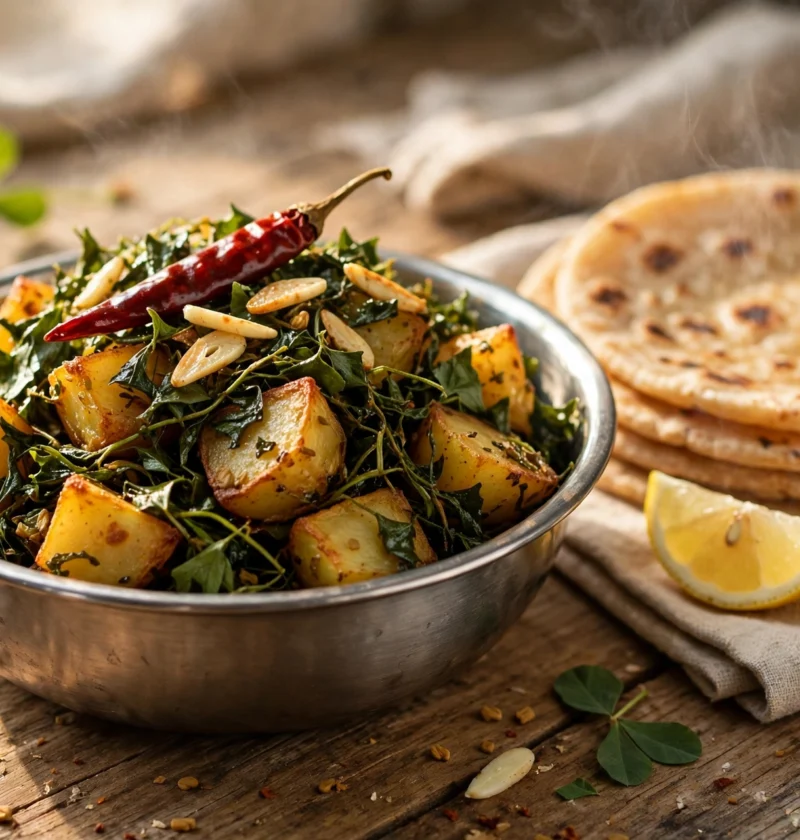
Growing up, I knew methi season had arrived before I ever saw the leaves. My father would come home from the sabzi mandi with two enormous bunches of fenugreek sticking out of the bag like green fireworks, and the whole kitchen would fill with that smell — grassy, earthy, faintly bitter, the smell of winter cooking. Aloo methi was his sabzi: he claimed the potatoes existed only to give you something sweet and soft to land on between bites of the greens. The first time I cooked this aloo methi recipe on my own, I ignored everything he stood for. I threw the methi in with the raw potatoes, clamped the lid on, and let it steam away while I set the table.
What came out twenty minutes later was a khaki-colored swamp. The leaves had gone the shade of old army blankets, and the bitterness — the same bitterness my father calls “the point of the dish” — had turned harsh and medicinal, the kind that makes your whole mouth pucker. On the phone he was unsparing: “Methi akhir mein jati hai, aur dhakkan kabhi nahi lagta.” The methi goes in at the end, and the lid never goes on. It took me three more winters to fully understand why, but this aloo methi recipe is built on those two laws: the potatoes are crisped properly and completely before a single leaf appears, and the leaves themselves get four uncovered minutes — no more — so they stay green, silky, and pleasantly bitter instead of dark and aggressive.
Why This Aloo Methi Recipe Works
Aloo methi fails in exactly two ways — bitter, blackened leaves or potatoes that never got their moment — and both failures are timing failures. This aloo methi recipe is arranged so neither can happen:
- The potatoes are crisped first, and finished first. Methi leaves need four minutes in the pan; potatoes need fifteen. There is no version of sharing the clock that works, so this aloo methi recipe cooks the potatoes in hot oil until their edges turn golden and a knife slides through — completely done — before the greens are even invited. The leaves then coat potatoes that are already perfect, instead of steaming them into softness.
- The methi goes in last, and the lid stays off. A covered pan traps steam, and steam does two ugly things to fenugreek: it drags the bright green down to khaki, and it concentrates the bitter compounds until they taste harsh. Uncovered, over lively heat, the leaves wilt fast and stay vivid, and the bitterness stays where this aloo methi recipe wants it — a clean, appetizing edge, not a punishment.
- Only the leaves and the tender stems are used. The thick lower stalks of a methi bunch are fibrous and carry the harshest bitterness in the plant. Picking the leaves and just the soft top stems takes ten unglamorous minutes at the sink, and it is the difference between a sabzi that tastes pleasantly bitter and one that tastes like a tonic. Coarse stems also refuse to wilt evenly, so they sabotage the texture of this aloo methi recipe twice.
- No tomato, and no water. Many sabzis welcome tomato; this one cannot afford it. Tomato brings moisture and acid, and moisture is what turns a four-minute wilt into a fifteen-minute stew. This aloo methi recipe is a dry sabzi in the strictest sense — the only liquid in the pan is the oil and whatever the leaves themselves release. The masala is garlic, ginger, and dried red chili, and it is enough.
- Salt goes on after the leaves wilt. Salted early, fenugreek dumps its water into the pan and boils in its own juice, which again means dark leaves and sharpened bitterness. Salting at the very end, once the leaves have already collapsed, seasons this aloo methi recipe without ever giving the leaves a reason to weep. A squeeze of lemon over the top at serving brightens everything without cooking anything further.
Ingredients
Serves 4
For the sabzi:
- 2 large bunches fresh fenugreek (methi), about 300g — leaves and tender top stems picked, roughly 4 packed cups
- 3 medium potatoes (about 500g), peeled and cut into 3/4-inch chunks
- 3 tablespoons mustard oil (or any neutral oil)
- 4 garlic cloves, thinly sliced
- 1 tablespoon fresh ginger, grated
- 1 teaspoon cumin seeds (zeera)
- 2 dried red chilies, whole
- 2 green chilies, slit lengthwise
- 1 teaspoon ground coriander (dhaniya)
- 1/2 teaspoon turmeric powder (haldi)
- 1 teaspoon salt, added at the end
- 1/2 teaspoon red chili powder, or to taste
- Juice of half a lemon, for serving
The whole dish stands on one plant, so it is worth knowing: fenugreek is one of the oldest cultivated greens of our region, prized as much for the way it aids digestion as for its flavor — which is why a bitter little sabzi like this one traditionally appears after heavy, festive eating. Its humble partner, the potato, is doing quiet structural work in this aloo methi recipe: its mild, starchy sweetness is the cushion that lets the methi be as bold as it wants to be.
How to Make This Aloo Methi Recipe – Step by Step
Step 1: Pick, wash, and dry the methi.
Strip the leaves and tender top stems from the bunches, discarding the thick stalks. Wash the leaves in two changes of water — methi grows low and carries grit — then drain them thoroughly in a colander and spread them on a clean towel for ten minutes. Wet leaves are the enemy here: water hitting the hot oil steams the sabzi before it starts. Chop the leaves coarsely, two or three cuts with the knife, no more — this aloo methi recipe wants leaf pieces, not a green puree.
Step 2: Crisp the potatoes until completely done.
Heat the oil in a wide, heavy pan over medium-high heat until it just shimmers (if using mustard oil, let it reach the first wisp of smoke, then cool it a few seconds — this burns off its raw bite). Add the cumin seeds and dried red chilies for 30 seconds, then tip in the potato chunks in a single layer. Fry, turning every few minutes, for 12 to 15 minutes, until the potatoes are golden at the edges and tender right through. Do not move on early; in this aloo methi recipe the potatoes get no second chance once the leaves arrive.
Step 3: Add garlic, ginger, and the ground spices.
Push the potatoes to the edges of the pan and drop the sliced garlic into the center. Give it 30 seconds to turn pale gold, then stir in the grated ginger and green chilies. Sprinkle over the turmeric, ground coriander, and red chili powder and toss everything together for one minute, letting the spices toast in the oil and coat the potatoes. The pan should smell warm and garlicky — the quiet masala base of this aloo methi recipe, done in a minute flat.
Step 4: Wilt the methi — uncovered, four minutes.
Add the chopped methi by the handful, tossing with tongs as each handful collapses into the pan. Keep the heat lively and the lid off, and keep tossing for 3 to 4 minutes, just until every leaf has wilted, darkened to a deep glossy green, and folded itself among the potatoes. Stop while the leaves still look alive — they will soften a shade more in the residual heat, and an extra two minutes is exactly where this aloo methi recipe tips from pleasantly bitter into harsh.
Step 5: Salt, lemon, and off the heat.
Sprinkle the salt over the sabzi now, with the cooking finished, and toss once more. Take the pan off the heat, squeeze the lemon juice over the top, and let this aloo methi recipe rest uncovered for 2 minutes before serving. Serve straight from the pan with hot rotis — the leaves should be bright, the potatoes crisp-edged, and the first bite gently, deliberately bitter.
Serving Suggestions
Aloo methi is a weeknight sabzi in the best sense: hot rotis, a bowl of plain daal, maybe sliced onions with a green chili on the side, and dinner is complete. It is also the traditional corrective after a run of rich food — a few days of dawats and biryanis, and my father would request this aloo methi recipe by name, the way you request a reset button. A spoonful of plain yogurt on the side softens the bitterness for anyone at the table still making their peace with it.
Among its green relatives on this site, the contrasts are instructive. My gobhi aloo is the gentle, sweet-tempered dry sabzi — all softness and ginger — while this one is its sharper sibling, the one with an opinion. And against my sarson ka saag, which simmers its greens for hours into a deep, mellow puree, this aloo methi recipe is the sprinter: four minutes, lid off, bitterness intact. Serve the saag when you have a winter afternoon; serve this when you have twenty minutes and a bunch of methi that will not wait.
Storage and Reheating
This aloo methi recipe keeps for up to 3 days in a sealed container in the fridge, but honesty matters here: the leaves darken a little more every day, and the bitterness rounds and deepens as it sits. Day one is the dish at its brightest. Reheat it in an open pan over medium heat for 3 to 4 minutes, shaking rather than stirring, until the potatoes re-crisp slightly at the edges — the microwave softens everything and dulls the leaves fastest. Freezing is not recommended; thawed fenugreek turns limp and watery, and a sabzi whose entire identity is a four-minute wilt should not be asked to survive the freezer.
Frequently Asked Questions
Why is my aloo methi unbearably bitter?
One of three causes, usually: the methi was cooked too long or under a lid, which concentrates the harsh notes; the bunch was old, with thick stems and yellowing leaves, which are bitter before they ever reach the pan; or the thick stalks went in along with the leaves. Buy bright bunches, pick off the tough stems, and keep the leaves’ cooking to four uncovered minutes, exactly as this aloo methi recipe insists. A pinch of sugar stirred in at the end can round an aggressive batch, but prevention is the real cure.
Can I use dried fenugreek (kasuri methi) instead of fresh?
Not as a substitute — it is a different ingredient with a different job. Kasuri methi is a dried herb used by the spoonful as a seasoning; it cannot give you a pan of greens. If fresh methi is out of season, a tablespoon of kasuri methi crumbled over plain fried potatoes makes a pleasant, aromatic aloo sabzi, but it is not this aloo methi recipe. Frozen fresh methi, thawed and squeezed very dry, is the one honest stand-in.
How do I wash methi without it turning to mush?
Fill a big bowl with cold water, dunk the picked leaves, and lift them out with your hands, leaving the grit behind in the bowl. Repeat with fresh water until the bowl stays clean. Never wash methi under a hard running tap after chopping — chopping first cuts the leaves open, and washing then bleeds their flavor and color straight down the drain. Pick, wash, drain well, then chop: the order in this aloo methi recipe is deliberate.
Can I add onion or tomato to this recipe?
You can, and many households do — a sliced onion fried with the potatoes is the most common version. I keep this aloo methi recipe without either, for two reasons: onion adds sweetness that blurs the bitterness I am trying to protect, and tomato adds the moisture that darkens the leaves. If you prefer the onion version, fry it golden before the potatoes and accept a softer, sweeter sabzi — a good dish, simply a different one.
Recipe Summary
- Prep time: 20 minutes
- Cook time: 20 minutes
- Total time: 40 minutes
- Servings: 4
- Cuisine: Pakistani
- Course: Main