This sarson ka saag recipe is my nani’s authentic Punjabi method — slow-simmered mustard greens finished with a sizzling desi ghee tadka, served with hand-patted makai ki roti.
Saag is not a dish you make on a whim. It’s a commitment — a big bunch of mustard greens, hours of slow simmering, and a kitchen that smells like a Punjabi winter. But it’s also one of those dishes that, done right, makes people go quiet at the table.
My nani made saag every winter in Lahore, and the whole ritual is burned into my memory: the greens simmering away all afternoon, the rhythmic chop-chop-chop of the wooden masher, and then the final act — a sizzling tadka of desi ghee, garlic, and dried red chilies poured over the top, hissing and crackling. We’d eat it with makai ki roti, a knob of white butter melting on top, a chunk of gur (jaggery) on the side, and glasses of lassi. Winter didn’t get better than that.
My first solo saag was a humbling experience. I undercooked the greens (bitter and fibrous), skipped the bathua and spinach (even more bitter), and tried to roll the makai ki roti with a rolling pin like wheat dough — it shattered into sad cornmeal confetti. My nani laughed, then showed me the two things that fix everything: time, and your hands instead of a rolling pin. This recipe is her method, written down properly for the first time. Follow this sarson ka saag recipe once, and you’ll understand why Punjabis wait all year for winter greens.
If you’ve never made it from scratch, this sarson ka saag recipe walks you through every stage — from washing the greens to the final sizzling tadka.
Why This Sarson Ka Saag Recipe Works
Great saag is about taming bitterness and building texture. Mustard greens are assertively bitter — that’s their character — and the traditional method handles it. Nail these five elements and your sarson ka saag recipe will rival any dhaba’s:
- The three-green blend. Pure sarson (mustard greens) is intensely bitter. The classic Punjabi ratio mixes it with bathua (goosefoot) and palak (spinach), which mellow the bitterness while keeping that distinctive mustard pungency. If you can’t find bathua, use extra spinach — the principle is the same: don’t go 100% mustard.
- The long, slow simmer. Two to three hours of gentle cooking does what no shortcut can: it breaks down the fibrous greens completely and mellows the harsh raw bitterness into deep, earthy flavor. Rushing saag is the number one reason homemade versions taste harsh.
- Makai atta stirred in. A few tablespoons of cornmeal (makai ka atta) stirred into the simmering greens thickens the saag and adds a subtle sweetness that balances the bitterness. It’s the traditional thickener, and it works better than any modern substitute.
- The ghee tadka finish. The saag simmers plain; all the flavor fireworks come at the end — desi ghee heated until fragrant, with sliced garlic, ginger, green chilies, and dried red chilies. Poured sizzling over the saag, it transforms the whole dish. Don’t be shy with the ghee here. This is not the place for restraint.
- Hand-patted makai roti. Makai flour has no gluten, so it can’t be rolled — it must be patted by hand between damp palms or pressed between plastic sheets. Once you accept this and stop fighting it, makai roti is easy and deeply satisfying.
Ingredients for This Sarson Ka Saag Recipe
Serves 6–8
For the saag:
- 1 kg (about 2.2 lbs) sarson (mustard greens), tough stems removed, roughly chopped
- 250g (about 1/2 lb) bathua (goosefoot greens) — or substitute extra spinach
- 250g (about 1/2 lb) palak (spinach), roughly chopped
- 4–5 green chilies
- 1-inch piece ginger, roughly chopped
- 8–10 garlic cloves
- 1 1/2 teaspoons salt (adjust to taste)
- 3 tablespoons makai ka atta (cornmeal), for thickening
- 4 cups water (plus more as needed)
For the tadka:
- 4–5 tablespoons desi ghee (this is the soul of the dish — use the real thing)
- 6 garlic cloves, thinly sliced
- 1-inch piece ginger, cut into juliennes
- 2–3 dried red chilies
- 1 teaspoon cumin seeds
- A pinch of asafoetida (hing) — optional
For the makai ki roti (makes 8):
- 2 cups makai ka atta (fine cornmeal / maize flour)
- 1 teaspoon salt
- 1/2 teaspoon ajwain (carom seeds) — optional, but lovely
- About 1 1/4 cups warm water
- Desi ghee, for cooking and serving
For serving:
- White butter (makhan) or salted butter
- Gur (jaggery), in chunks
- Sliced raw onions and green chilies
- Lassi on the side (optional but traditional)
On sourcing greens: in Pakistan, sarson and bathua are winter staples available everywhere from November to February. Abroad, look for mustard greens at South Asian or East Asian grocers (they’re common), and bathua is sometimes sold as “goosefoot” or “lamb’s quarters” at farmers’ markets. When in doubt, a mix of mustard greens and spinach still makes excellent saag — this sarson ka saag recipe is forgiving that way.
Follow these steps closely and this sarson ka saag recipe turns out creamy and mellow every single time — no bitterness, no guesswork.
How to Make This Sarson Ka Saag Recipe – Step by Step
Step 1: Wash the greens obsessively.
Mustard greens grow close to the ground and hold a lot of grit. Wash the sarson, bathua, and palak in several changes of water until the water runs completely clear. Then wash once more. Gritty saag is ruined saag — this step matters more than any other.
Step 2: The long simmer.
Put all the greens in your largest heavy pot with the green chilies, chopped ginger, garlic cloves, salt, and 4 cups of water. Bring to a boil, then reduce to a gentle simmer, partially covered. Cook for 2 to 2 1/2 hours, stirring occasionally. The greens will collapse dramatically, darken to a deep olive green, and become completely tender. If the water evaporates too fast, add a little more — you want the greens swimming, not frying. This long, gentle simmer is the heart of the sarson ka saag recipe, so don’t rush it.
Step 3: Mash it.
Traditionally this is done with a wooden masher (madhani) right in the pot. A potato masher works fine. Mash the cooked greens until they’re broken down but not pureed — you want a coarse, rustic texture with some body, not baby food. This takes a good 10 minutes of mashing. Put on some music; it’s meditative.
Step 4: Thicken with makai atta.
Whisk the makai ka atta with a cup of warm water until smooth (no lumps!), then stir it into the saag. Simmer for another 20–30 minutes, stirring often — it thickens noticeably and the raw cornmeal taste cooks out. The saag should be thick enough to mound on a spoon. Taste and adjust salt. The bitterness should now be mellow and earthy, not harsh. Get this step right and your sarson ka saag recipe is practically foolproof.
Step 5: The tadka.
Heat the desi ghee in a small pan until it shimmers. Add the cumin seeds and dried red chilies; when they sizzle, add the sliced garlic and ginger juliennes. Fry until the garlic is golden (not brown — brown garlic is bitter). Pour this entire sizzling mixture over the saag and stir it through. The hiss, the smell — this is the moment the dish comes alive. Keep a spoonful of the tadka back to drizzle over each serving.
Step 6: Make the makai roti.
Mix the makai atta, salt, and ajwain with warm water to form a soft, pliable dough — wetter than wheat dough, but holding together. Divide into 8 balls. Now the technique: wet your palms, take a ball, and pat it gently between your hands, rotating and flattening, until you have a disc about 1/4-inch thick. No rolling pin — it will crack. If it cracks at the edges, wet your fingers and smooth them. (Alternatively, press each ball between two sheets of plastic wrap with a flat plate.)
Step 7: Cook the roti.
Heat a tawa or cast-iron skillet over medium-high. Carefully transfer a roti onto the hot tawa (use the plastic sheet to help if you pressed them). Cook 2–3 minutes until the underside has golden spots, flip, and cook 2 minutes more. Brush generously with ghee on both sides. Makai roti is thicker and more delicate than wheat roti — handle gently, and don’t expect it to puff like a phulka (though sometimes, gloriously, it does).
Once you’ve mastered this sarson ka saag recipe, plating it the traditional way takes it from great to unforgettable.
Serving Suggestions for This Sarson Ka Saag Recipe
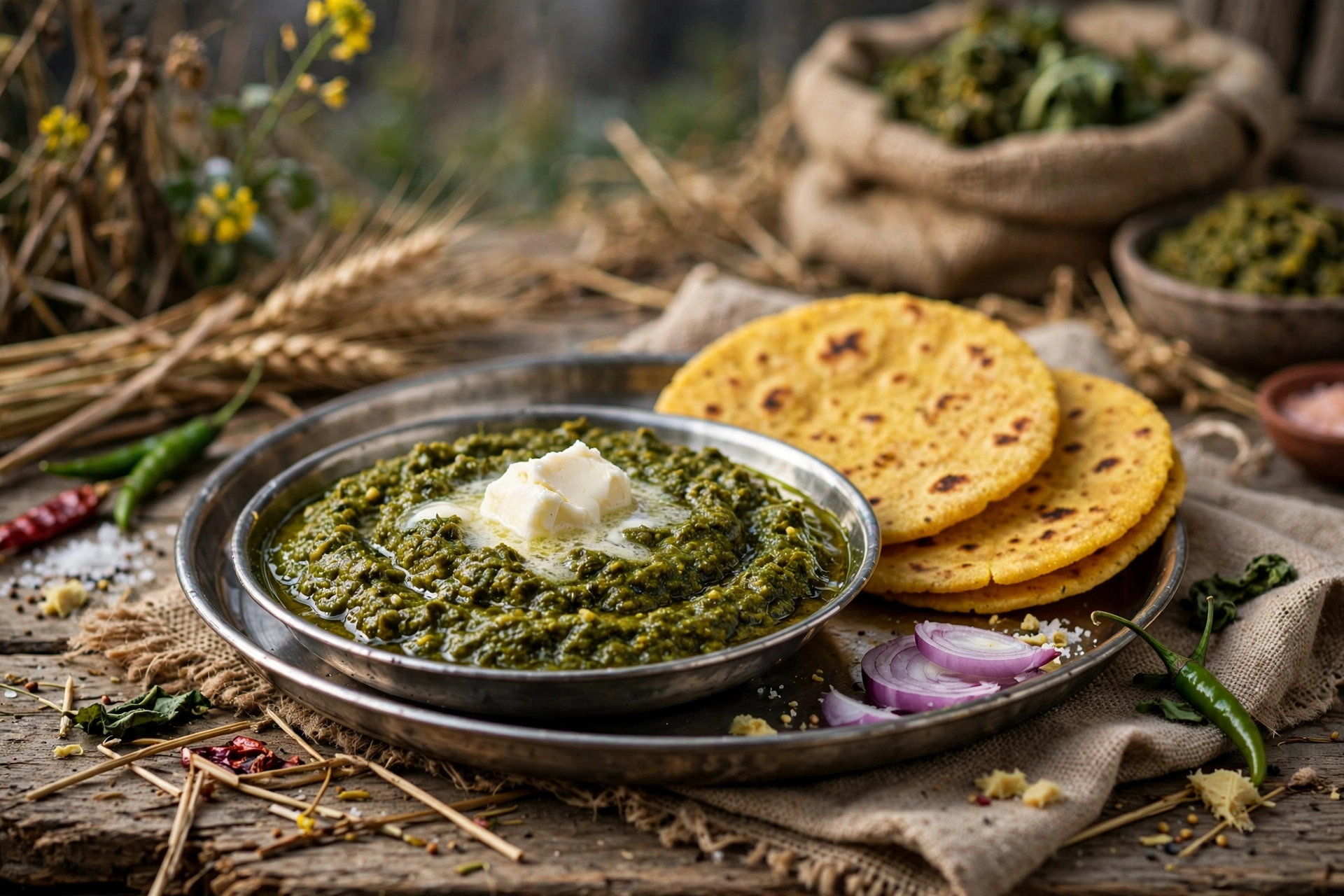
The traditional plate: a generous mound of saag, a makai ki roti alongside, a knob of white butter melting into the saag, a chunk of gur, sliced onions, and a green chili for the brave. The sweet gur against the earthy, ghee-rich saag is one of Punjabi cuisine’s great contrasts — don’t skip it. That sweet-salty contrast is what makes this sarson ka saag recipe truly unforgettable.
If you’re building a winter vegetarian spread, this pairs wonderfully with my mix sabzi recipe — the dhaba-style mixed vegetables bring a completely different texture and spice profile to the table. And since you’ll have the tawa hot anyway, my aloo paratha recipe makes an excellent alternative bread for anyone who finds makai roti tricky on the first try.
One of the best things about this sarson ka saag recipe is that the leftovers taste even better the next day.
How to Store and Reheat This Sarson Ka Saag Recipe
Saag keeps in the fridge for 4–5 days and — like most slow-cooked greens — tastes even better on day two. It freezes excellently for up to 3 months; freeze before adding the tadka, then do a fresh tadka when reheating for the full effect. Reheat gently on the stove with a splash of water, stirring. Makai roti is best fresh but keeps a day wrapped in a cloth; reheat on a hot tawa with a brush of ghee. You can also refrigerate the raw makai dough for a day. Like all slow-cooked greens, this sarson ka saag recipe is a true meal-prep champion.
Still have questions about this sarson ka saag recipe? These are the ones I get asked most often.
Sarson Ka Saag Recipe FAQs
My saag tastes bitter. What went wrong?
Usually one of three things: you used only mustard greens without mellowing greens, you undercooked it (it needs the full 2+ hours), or you skipped the makai atta. More spinach/bathua, more time, and the cornmeal thickener fix bitterness every time.
I can’t find bathua. What should I do?
Use extra spinach — the saag will be slightly less complex but still delicious. Some people add a handful of radish greens (mooli ke patte) for a similar peppery note. The key is just not using 100% mustard greens.
My makai roti keeps breaking. Help!
Three fixes: make the dough wetter (it should be soft and slightly sticky), pat it with wet hands instead of rolling, and keep it thick — thin makai roti has no structural integrity. It also helps to cook it on a well-heated tawa; a lukewarm tawa makes it stick and tear.
Can I use a pressure cooker for the saag?
Yes — it cuts the simmer to about 25–30 minutes at pressure (after the greens collapse). But many Punjabi cooks insist the slow simmer gives deeper flavor, and honestly, I agree. Use the pressure cooker when you’re short on time, not as the default.
Can I freeze this sarson ka saag recipe?
Absolutely — cool it completely and freeze in portions for up to 3 months. The flavor of this sarson ka saag recipe actually deepens after a freeze-thaw cycle; just do a fresh tadka when reheating.
How do I know when the saag is done?
The greens should collapse completely and mash easily with a spoon. In this sarson ka saag recipe, you’re looking for a coarse, rustic texture with some body — never a smooth puree.
Sarson Ka Saag Recipe Summary
- Prep time: 30 minutes
- Cook time: 2 1/2 – 3 hours (+ roti)
- Total time: About 3 1/2 hours
- Servings: 6–8
- Cuisine: Pakistani / Punjabi
- Course: Main (vegetarian)
More About This Sarson Ka Saag Recipe
Want to go deeper? The Wikipedia article on sarson ka saag traces the dish’s Punjabi roots, and the entry on mustard greens (Brassica juncea) explains the science behind their peppery bite.
I hope this sarson ka saag recipe becomes a winter staple in your home, just as it is in mine. Serve it piping hot with makai ki roti, a knob of white butter, and jaggery on the side — and watch it disappear.