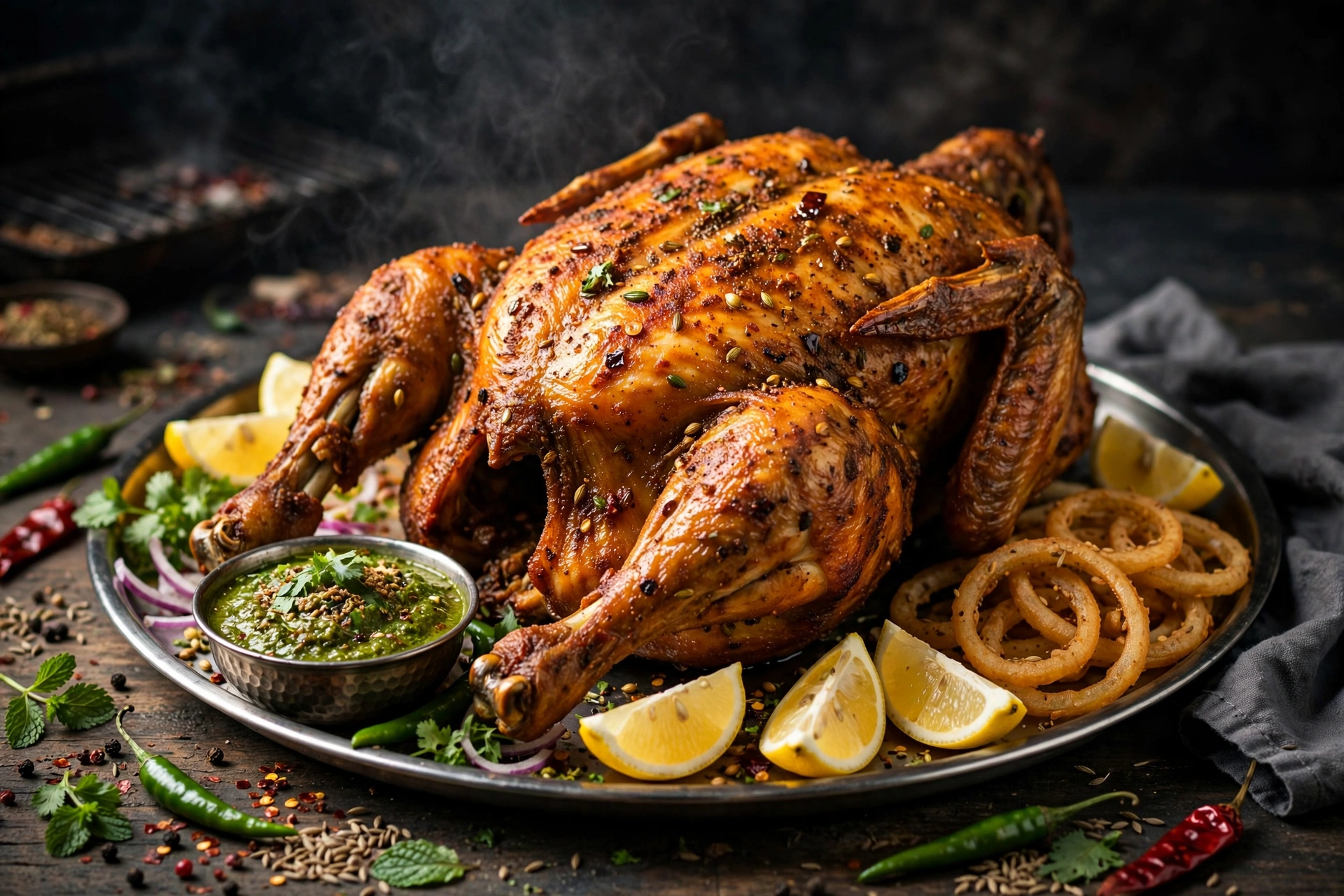
The first time I ate cafreal, it was not in a restaurant. It was in a friend’s family kitchen in Mapusa, on a Sunday, with the market’s noise still drifting in through the open window and a ceiling fan doing its best against the Goan humidity. My friend’s mother had been to the Friday market for the chicken, and by the time we sat down, the legs she served were dressed in a green so dark it was almost black, glistening, with fried potato wedges pushed around them. I asked for the secret, expecting a long list. She laughed and said the secret was patience — fresh masala, a proper marinade, and never rushing the pan. This chicken cafreal recipe is my attempt to cook it the way she did, in my own kitchen, far from Mapusa but with her rules intact.
Cafreal came to Goa with the Portuguese, who brought the idea from their African colonies — a green, herb-heavy marinade built on fresh coriander, chillies and warm whole spices, sharpened with vinegar. What makes it its own dish, and not just another green chicken, is the finish. There is no coconut in it, the way xacuti insists on coconut. There is no tomato-and-yogurt gravy, the way a hara masala chicken simmers. Cafreal is semi-dry: the chicken fries in its own marinade until the masala gives up its raw, leafy smell, darkens, and clings to the meat in a thick coat. When it is right, you do not need a sauce on the side. The coating is the sauce.
Why This Chicken Cafreal Recipe Works
Cafreal rewards a cook who respects three things: freshness, time, and a hot pan watched carefully. This chicken cafreal recipe is built around all three:
- The green masala is ground fresh and goes on the chicken raw. Coriander, mint, green chillies, garlic, ginger and whole spices are blitzed with vinegar into a rough, vivid paste and used exactly as they are — never fried first, never cooked before marinating. That rawness is deliberate: the herbs season the meat from the inside during the marinade, and they only cook once, in the pan, against the chicken.
- Scoring the legs and marinating for hours changes everything. Deep slashes cut to the bone give the masala a way in, and two hours is the honest minimum — overnight is better. A quick thirty-minute dip flavours the surface and stops there; a long marinade is the difference between green chicken and cafreal.
- The masala must fry until the oil separates and the green turns dark. This is the step nobody may skip. Undercooked cafreal masala tastes grassy and sharp, almost medicinal. Given time in the pan, the herbs mellow, the raw garlic bite disappears, the colour deepens to a dark bottle green, and beads of oil appear at the edges — that is your signal the dish has arrived.
- Vinegar does two jobs, and its balance is delicate. It tenderises the chicken gently during the marinade and gives the finished dish its quiet tang, the note that keeps a rich, fried plate from feeling heavy. Too little and the cafreal tastes flat; too much and it turns sour and thin. Two tablespoons for this quantity is the balance my friend’s mother used, and I have not improved on it.
- The potato wedges fry in the same pan, in the masala’s own oil. Once the chicken comes out, the pan holds a pool of green, spice-loaded oil that no sane cook would waste. Wedges fried in it pick up every bit of that flavour, crisp at the edges, and arrive at the table tasting like part of the dish — because in Goan homes, they are.
Ingredients
Cafreal is one of the defining dishes of Goan cuisine, a plate where Portuguese technique met Goan ingredients and neither side gave in. The masala list looks long, but most of it is whole spices you likely own, and the grinder does the work in under a minute. Two things matter when you shop for this chicken cafreal recipe: the coriander must be fresh and perky, stems included, because tired herbs make a dull, khaki marinade; and bone-in legs beat breast here, because dark meat stays juicy through the long fry and gives the masala something to cling to. Goan toddy vinegar is traditional; a good white wine vinegar stands in honourably.
Serves 4
For the cafreal masala:
- 2 cups fresh coriander leaves and tender stems, roughly chopped
- 1/2 cup fresh mint leaves
- 6 to 8 green chillies, stems removed (adjust to your heat tolerance)
- 8 garlic cloves, peeled
- 1 1/2-inch piece fresh ginger, roughly chopped
- 1 teaspoon cumin seeds
- 1 teaspoon black peppercorns
- 4 whole cloves
- 1 cinnamon stick (about 1 inch), broken up
- 1/2 teaspoon ground turmeric
- 2 tablespoons vinegar (Goan toddy vinegar or white wine vinegar)
- 1 teaspoon sugar
- 1 1/2 teaspoons salt
For the chicken and serving:
- 2 1/2 pounds chicken legs (drumsticks and thighs), skin removed
- 3 tablespoons oil, plus a little more if the pan runs dry
- 3 medium potatoes, cut into thick wedges
- 1 lemon, cut into wedges
- 1 small onion, sliced into rings
- Extra salt, for the potato wedges
How to Make This Chicken Cafreal Recipe – Step by Step
Step 1: Grind the cafreal masala fresh, and keep it rough. Put everything for the masala into a blender or grinder — herbs, chillies, garlic, ginger, whole spices, turmeric, vinegar, sugar and salt — and blitz to a thick, slightly coarse paste, stopping to push the mixture down as needed. Add water only by the teaspoon if the blades refuse to catch; a wet, runny masala will steam the chicken instead of coating it. Taste a fingertip’s worth: it should be fiery, herby and bright, with the vinegar humming underneath. This paste goes onto the chicken exactly as it is, uncooked.
Step 2: Score the chicken deeply and marinate it properly. With a sharp knife, cut two or three deep slashes into each chicken leg, right down to the bone. Rub the green masala over every piece, working it down into the slashes with your fingers, and turn the chicken until it is completely dressed. Seal the bowl and chill it for at least two hours, ideally overnight — this patience is the spine of the dish. Set it on the counter 30 minutes before cooking, because cold chicken in a hot pan seizes and steams instead of searing.
Step 3: Sear the chicken in a wide, heavy pan. Heat the oil in a large, heavy frying pan or karahi over medium-high heat until it shimmers. Lift the chicken pieces out of the marinade — keep every spoonful of the leftover masala, it is precious — and lay them in the pan in a single layer with space between them. Sear for 4 to 5 minutes per side until the coating sets and takes on deep golden-brown patches. Work in two batches rather than crowding; a crowded pan sweats, and sweat is the enemy of that dark, fried finish.
Step 4: Pour in the remaining masala and reduce it until it clings. Return all the chicken to the pan and spoon the reserved marinade over and around it. Lower the heat to medium, cover loosely, and cook for 12 to 15 minutes, turning the pieces once or twice, until the chicken is cooked through. Then take the lid off and let the masala fry down in earnest: the liquid should bubble away, the green should darken several shades, and the oil should begin to separate and glisten at the edges of the pan. Keep turning the legs so the thickening masala coats them instead of catching. When the pan is nearly dry and each leg wears a dark, glossy green coat, the cafreal is done.
Step 5: Fry the potato wedges in the same pan and serve. Lift the chicken onto a warm platter and keep it covered. In the same pan, in the green oil left behind, fry the potato wedges over medium-high heat for 10 to 12 minutes, turning them as they crisp, until golden outside and soft inside; add a splash of fresh oil only if the pan is dry. Salt them while hot, tuck them around the chicken, and finish the platter with lemon wedges and raw onion rings. Serve this chicken cafreal recipe straight away, while the coating is still dark and shining.
Serving Suggestions
In Goa, cafreal often arrives with nothing more than the potato wedges, a slice of lemon and a piece of poi — the soft, hollow Goan bread that is perfect for wiping a plate clean. At home, plain steamed rice works beautifully too, especially if a spoonful or two of the pan’s green oil gets drizzled over it, and a simple salad of sliced onion, tomato and cucumber with salt and lemon keeps the plate fresh against the richness. Because the dish is semi-dry and concentrated, a small portion goes further than you expect; I usually put the whole platter in the middle of the table and let people help themselves, family style, exactly as it was served to me in Mapusa.
Goa gives this site three very different chickens, and it is worth knowing them apart. My chicken xacuti is the celebration curry — roasted coconut and a long whole-spice blend ground into a dark, gravied masala. The chicken vindaloo goes the other way entirely: fiery, sharp with vinegar and garlic, a curry with real sour heat. This chicken cafreal recipe sits between them in spirit but apart in method — no coconut, no gravy, just a fresh green marinade fried down onto the meat. Cook all three across a month and you have a fair map of how one small coastal state thinks about chicken.
Storage and Reheating
Leftover cafreal keeps well in the fridge, covered, for up to 3 days, and I would argue the flavour deepens overnight as the masala settles into the meat. Reheat it gently — a low oven at 325°F (165°C) for about 15 minutes, or a covered pan over the lowest heat with a teaspoon of water — so the coating warms through without scorching; the microwave works but softens the fried edges that make the dish. Freezing is possible for up to a month, though the herbs lose some brightness. Potato wedges do not store well — fry a fresh batch when you reheat the chicken, and the plate is itself again.
Frequently Asked Questions
Why does my cafreal taste raw and grassy?
Because the masala did not cook long enough in the pan. Fresh herb pastes taste sharp and almost medicinal until they have fried properly — you are waiting for the liquid to reduce, the green to darken several shades, and the oil to separate at the edges. Give the reduction stage its full time and turn the chicken through the thickening masala; that transformation, not the marinade, is where cafreal’s deep flavour is made.
Can I make this chicken cafreal recipe with chicken breast?
You can, but treat it gently. Breast dries out during a long fry, so cut it into large chunks, marinate for no more than 2 hours, sear quickly, and shorten the covered cooking so the pieces finish just as the masala reduces. Bone-in legs are the better instrument here — the dish was built around them — but a careful breast version eats very well.
I cannot find toddy vinegar. What should I use?
White wine vinegar is the closest stand-in and the one I use most often outside Goa. Apple cider vinegar also works, with a slightly fruitier edge. What I would avoid is harsh distilled white vinegar in the full quantity — if that is all you have, use a tablespoon and a half plus a pinch more sugar, so the tang stays balanced instead of aggressive.
How spicy is cafreal supposed to be?
Properly warm, but the chillies are not the point — the herbs and whole spices are. Six green chillies gives this version a confident heat that most people enjoy; go to eight if your table likes fire, or drop to four and remove the chilli seeds for a gentler plate. Remember that the pepper and ginger add their own background warmth, so the dish never tastes bland even when the chilli count falls.
Recipe Summary
- Prep time: 25 minutes, plus at least 2 hours of marinating
- Cook time: 40 minutes
- Total time: About 3 hours 5 minutes, including the minimum marinade
- Servings: 4
- Cuisine: Pakistani
- Course: Main Course