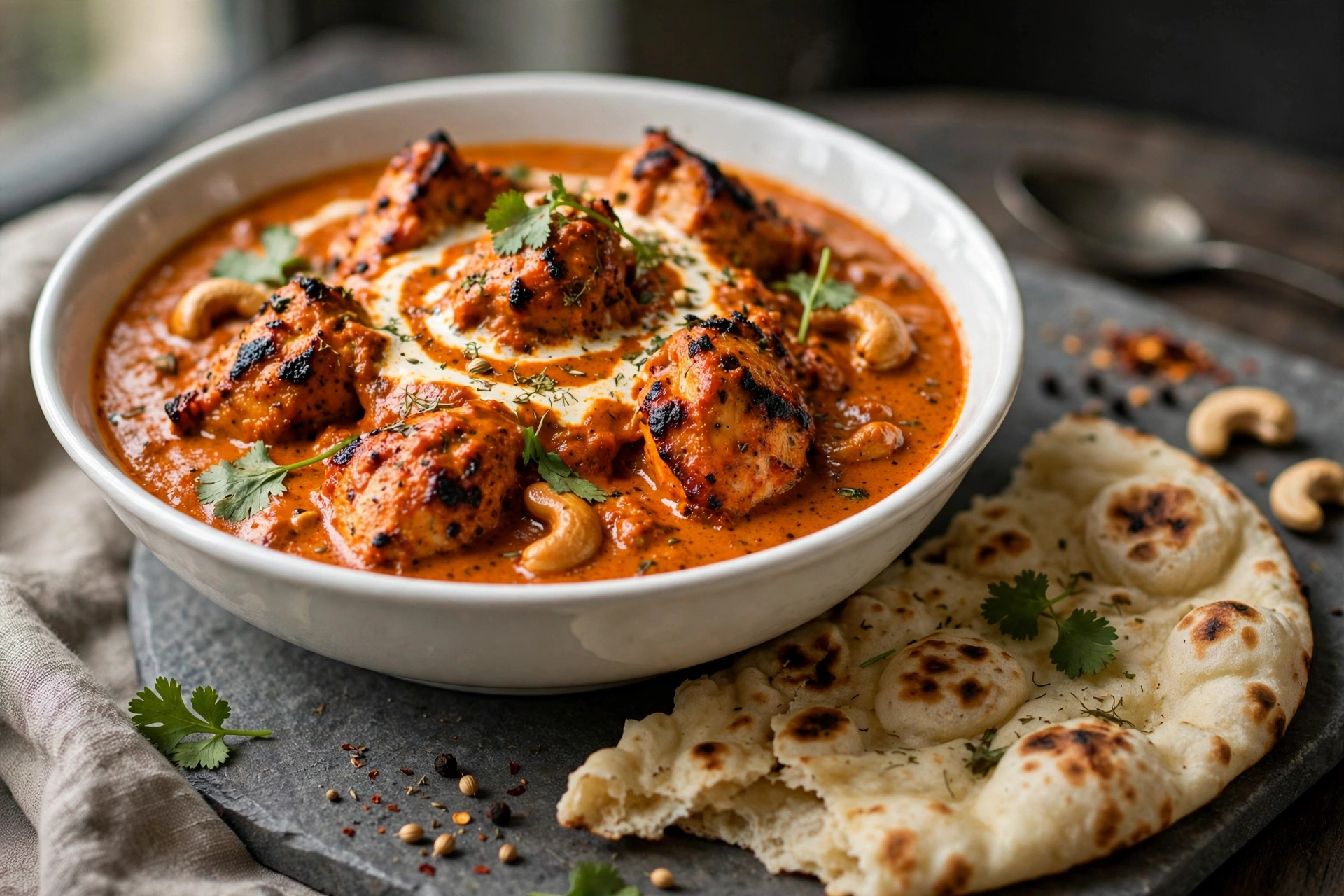
The first time our family ate at a “fancy” restaurant — the kind with cloth napkins and a waiter who called my father “sir” — Abbu ordered chicken tikka masala for the table, and I remember the exact moment the plate landed in front of me. The gravy was this impossible orange-red, glossy as glass, with pieces of chicken that had actual charred edges peeking through. I was maybe ten, and up until then chicken at our house meant karahi or salan — home food. This was different. This tasted like smoke and cream at the same time, and I spent the whole meal trying to figure out how something could be both. On the drive home I announced I was going to learn to make it. It took me fifteen years, but here we are.
What I eventually learned is that chicken tikka masala is really two recipes wearing one name. There’s the tikka — marinated chicken, blistered and smoky — and there’s the masala — a silky, buttery tomato gravy. Restaurants make them separately and marry them at the end, which is why home versions that cook raw chicken straight in the sauce never taste like the restaurant. The char is not decoration; it’s the entire point. This chicken tikka masala recipe follows the two-stage method, and once you taste the difference, there’s no going back to the one-pot shortcut.
Why This Chicken Tikka Masala Recipe Works
Most homemade tikka masala fails in the same three ways: the chicken is pale and rubbery, the gravy is thin and sharp, or the whole thing tastes like tomato soup with chicken in it. Here’s how this chicken tikka masala recipe fixes all three:
- Two-stage cooking, always. The chicken is marinated and charred separately — under a broiler or on screaming-hot cast iron — before it ever meets the gravy. That blistered, smoky exterior is what separates restaurant tikka masala from every home version that simmers raw chicken in sauce. This chicken tikka masala recipe never skips the char.
- Mustard oil in the marinade. A spoonful of mustard oil in the tikka marinade does two jobs: it helps the yogurt cling to the chicken instead of sliding off, and it adds a sharp, pungent note that reads as “restaurant” to your palate. It’s the ingredient nobody names when they try to copy restaurant flavor at home.
- Cashews, not just cream, for silkiness. Cream alone makes a gravy rich but one-dimensional. Soaked cashews blended into the tomato base give that thick, velvety body that coats a spoon — the texture that makes you close your eyes. The cream goes in at the end for gloss; the cashews do the structural work.
- Kasuri methi crushed at the finish. Dried fenugreek leaves, crushed between your palms and stirred in during the last two minutes, are the signature aroma of restaurant tikka masala. Skip it and the dish tastes 80% right; add it and people start asking what your secret is.
- The gravy gets fully blended. No chunky bits, no onion pieces floating around — the onion-tomato base is blended completely smooth before the chicken goes in. Restaurant gravies are silk; home gravies are often rustic. For this dish, silk wins.
Ingredients
Serves 4–5
For the chicken tikka marinade:
- 750g (about 1.65 lbs) boneless chicken thighs, cut into 1.5-inch pieces
- 3/4 cup (180g) plain full-fat yogurt, whisked smooth
- 1 tablespoon ginger-garlic paste
- 1 tablespoon mustard oil
- 1 teaspoon ground cumin (zeera)
- 1 teaspoon ground coriander (dhaniya)
- 1/2 teaspoon ground turmeric (haldi)
- 1 1/2 teaspoons Kashmiri chili powder (color, mild heat)
- 1 teaspoon hot red chili powder
- 1 teaspoon garam masala
- 1 1/2 teaspoons salt
- Juice of half a lemon
For the masala gravy:
- 2 medium onions (about 300g), roughly chopped
- 3 medium tomatoes (about 350g), roughly chopped — or 1 can (400g) crushed tomatoes
- 1/4 cup (35g) cashews, soaked in hot water 30 minutes
- 1 tablespoon ginger-garlic paste
- 3 tablespoons butter, plus 1 tablespoon ghee
- 1 teaspoon cumin seeds
- 1 teaspoon Kashmiri chili powder
- 1/2 teaspoon ground turmeric
- 1 teaspoon ground coriander
- 1 teaspoon salt — add more to taste
- 1 cup hot water, as needed
For finishing:
- 1/2 cup (120 ml) heavy cream, plus more for drizzling
- 1 tablespoon kasuri methi (dried fenugreek leaves)
- 1/2 teaspoon garam masala
- 2 tablespoons fresh coriander leaves, chopped
- 1 teaspoon honey or sugar (to balance the tomatoes)
A note on the chicken: thighs, not breast — this matters more here than in most recipes. Breast dries out under the broiler’s blast heat; thighs stay juicy with those perfect charred edges. And Kashmiri chili powder is worth finding for this chicken tikka masala recipe — it gives the signature deep red-orange color without making the dish inedibly hot, so the color and the heat can be controlled separately.
How to Make This Chicken Tikka Masala Recipe – Step by Step
Step 1: Marinate the chicken.
Combine all the marinade ingredients in a large bowl and mix thoroughly, massaging the marinade into every piece of chicken. Cover and refrigerate for at least 2 hours — overnight is better. The yogurt tenderizes, the mustard oil helps everything cling, and the long rest means the flavor goes all the way through, not just on the surface. Don’t shortcut this to 20 minutes; it shows.
Step 2: Char the tikka.
Thread the marinated chicken onto skewers (or spread on a foil-lined tray) and place under a preheated broiler on its highest setting, about 4 inches from the heat. Broil 5–6 minutes per side until the edges are genuinely charred and blistered in spots — you want blackened bits, not just cooked. No broiler? Use a screaming-hot cast-iron pan with a touch of oil, 3–4 minutes per side. Set the charred tikka aside; it finishes cooking in the gravy.
Step 3: Build the gravy base.
In a heavy pot, melt the butter with the ghee over medium heat. Add the cumin seeds and let them crackle for 30 seconds. Add the chopped onions and cook 10–12 minutes until deeply golden. Stir in the ginger-garlic paste and cook 2 minutes, then add the Kashmiri chili, turmeric, coriander powder, and salt. Add the tomatoes and cook 8–10 minutes until they collapse completely into the masala and the fat starts separating.
Step 4: Blend it silky.
Let the mixture cool for 5 minutes, then transfer to a blender with the drained soaked cashews and blend until completely, utterly smooth — no flecks, no bits. This is the restaurant texture. Return the blended gravy to the pot. If it’s too thick, thin with hot water a quarter cup at a time; you’re aiming for a gravy that coats the back of a spoon thickly.
Step 5: Marry the tikka and the masala.
Bring the gravy to a gentle simmer and slide in the charred tikka pieces along with any resting juices. Simmer on low for 10–12 minutes, stirring occasionally, until the chicken is cooked through and has absorbed some of the gravy. Taste and adjust — add the honey or sugar now if the tomatoes are sharp, and more salt until the flavors pop.
Step 6: Finish like a restaurant.
Stir in the heavy cream and simmer 2 more minutes until glossy. Crush the kasuri methi between your palms directly over the pot — you’ll smell it bloom instantly — and stir through with the final garam masala. Rest 5 minutes off the heat. Serve with a dramatic swirl of cream on top and a shower of fresh coriander.
Serving Suggestions
Chicken tikka masala demands naan — hot, blistered, buttered naan for scooping up that silky gravy. That’s the restaurant plate and there’s no improving it: naan, a simple onion-laccha salad with lemon, and maybe a cold salted lassi if the chilies built up. Basmati rice works too, and honestly the gravy over steamed rice the next day might be even better than the main event. My father still orders it every time we go out, and he still says mine is better.
For a full curry-house spread at home, pair this chicken tikka masala recipe with my chicken tikka as a starter — the plain charred tikka first, then the masala version as the main, shows off both sides of the marinade. Add a pot of my chicken pulao for the rice lovers, and you’ve got a dawat without leaving the house.
Storage and Reheating
Tomato-cream curries are leftover champions, and this chicken tikka masala recipe is no exception — the charred chicken keeps drinking up gravy overnight. Store it sealed in the fridge for up to 4 days; warm it back up over gentle heat, stirring often, because cream gravies split if you blast them. It also freezes well for up to 2 months — defrost in the fridge overnight, reheat low and slow, and finish with a fresh swirl of cream to bring the shine back.
Frequently Asked Questions
Can I make chicken tikka masala without a broiler or tandoor?
Absolutely — a cast-iron skillet on your stove’s highest heat gets you 90% of the way there. Get it smoking hot, lay the marinated pieces in a single layer without crowding, and don’t touch them for 3–4 minutes per side. You want genuine char, not just browning. An air fryer at its max temperature also works surprisingly well: 200°C/400°F for 10–12 minutes, flipping once.
What’s the difference between tikka masala and butter chicken?
Cousins, not twins. Butter chicken uses tandoori chicken folded into a milder, sweeter, more buttery tomato-fenugreek gravy. This chicken tikka masala recipe has a bolder spice profile, more heat, and the kasuri methi finish is more pronounced. Butter chicken whispers; tikka masala talks. Both are delicious; they’re just different moods.
My gravy tastes too sharp/acidic — how do I fix it?
Tomatoes vary wildly in acidity. The fixes, in order: a teaspoon of honey or sugar, an extra knob of butter, and a longer simmer (acidity mellows with time). Also, make sure you cooked the tomato base long enough in step 3 — undercooked tomatoes are the usual culprit behind sharp gravy. When in doubt, simmer 10 more minutes.
Can I make this dairy-free?
You can get close. Swap the yogurt marinade for coconut yogurt, use coconut cream instead of heavy cream, and replace the butter with more ghee-style vegan butter or oil. The cashews already do much of the creamy work, so the texture holds up well. It won’t be identical — dairy has a specific richness — but it’s genuinely good in its own right.
Recipe Summary
- Prep time: 20 minutes (+ 2 hours marinating)
- Cook time: 40 minutes
- Total time: 1 hour (+ marinating)
- Servings: 4–5
- Cuisine: Pakistani / North Indian-inspired
- Course: Main