Methi arrives in our bazaars with the cold weather, in bundles so green they look lit from inside, and the first cold morning of the year is when my mother sends someone out for two bundles before the chai is even made. Because winter breakfast in a Punjabi house means methi parathas: the fresh fenugreek leaves kneaded right into the dough with ajwain and green chili, so every bite of the flatbread carries that green, slightly bitter perfume, and a knob of white butter melts into the hot surface faster than you can spread it. This methi paratha recipe is hers — the one measured in handfuls for forty years and written down by me, over her shoulder, with a notebook she pretended not to notice.
My solo attempts supplied the usual education. The first batch was harsh and bitter enough to make the whole table quiet, because I had chopped in the thick stems along with the leaves and skipped washing half the grit out of the bundle. The second batch tore at the rolling pin and fried up damp, because the chopped leaves had wept their green water into the dough while it rested and I had done nothing about it. The third batch blistered beautifully and then turned bitter at the edges, because my tawa was roaring hot and the little leaf flecks scorched where the dough was thinnest. The rules of this methi paratha recipe are those three breakfasts: leaves only, washed clean; the leaves salted and squeezed before they meet the flour; and a steady medium tawa, never a furious one.
Why This Methi Paratha Recipe Works
A methi paratha is a negotiation between a delicate leaf and a sturdy dough, and the leaf loses every argument about water. This methi paratha recipe settles the negotiation before the flour comes out:
- The leaves are salted and squeezed first. Twenty minutes with a little salt draws out methi’s bitter green juice; a firm squeeze in your fist or a cloth wrings it away. That one step is the difference between a fragrant paratha and a damp, harsh one — a methi paratha recipe lives or dies on the squeeze.
- Only the leaves go in — never the stems. The thick stalks of the bundle carry most of the bitterness and none of the tenderness. Picking the leaves takes ten unhurried minutes and removes, at a stroke, the harshness people blame on methi itself.
- The greens are in the dough, not on it. Kneaded through the atta, the leaves season every layer of the bread evenly and stay protected inside it as it fries. A filling-style methi paratha tears and leaks; an in-the-dough methi paratha recipe rolls like any other dough and fries like a dream.
- The dough rests so the leaves soften into it. Thirty minutes under a damp cloth lets the squeezed leaves relax, the flour hydrate, and the ajwain and chili perfume the whole ball. Rolled immediately, the dough is springy and fights the pin; rested, it rolls thin and even.
- The tawa stays at a steady medium. Too hot and the exposed leaf flecks scorch bitter before the bread cooks; too cool and the paratha drinks ghee and goes leathery. Medium heat, a blister, a flip, a gentle press — that rhythm is the whole frying technique of a methi paratha recipe.
Ingredients
Makes 6 parathas
For the methi leaves:
- 2 packed cups fresh methi (fenugreek) leaves — from about 2 medium bundles, leaves picked off the stems
- 1/2 teaspoon salt, for salting the leaves
For the dough:
- 2 cups atta (whole wheat flour), with more for dusting as you roll
- 1 teaspoon ajwain (carom seeds), rubbed between your palms
- 1 to 2 green chilies, minced very fine
- 1 teaspoon fresh ginger, grated
- 1/4 teaspoon turmeric powder
- 1/2 teaspoon red chili powder (optional)
- 3/4 teaspoon salt
- 1 tablespoon melted ghee or oil, worked into the flour
- Warm water, roughly 1/2 cup, added a splash at a time — you will need less than usual
For frying and serving:
- Ghee or oil, about 1 teaspoon per paratha
- White butter, for the top
- Plain yogurt, achaar, and hot chai, to serve
The leaf at the center of the dough has an ancient résumé: fenugreek has been grown around the Mediterranean and across South Asia for thousands of years, valued as much in old medicine chests as in kitchens, and its fresh winter leaves are a season unto themselves in Punjab. The bread it enters is the beloved paratha, the tawa-fried flatbread that turns an ordinary breakfast into an occasion. A methi paratha recipe is simply the two of them introduced properly: the leaf disciplined by salt and a squeeze, the dough waiting to receive it.
How to Make This Methi Paratha Recipe – Step by Step
Step 1: Pick, wash, salt, and squeeze the leaves.
Pick the leaves off the stems — keep only the tender top sprigs whole, and leave every thick stalk behind. Wash the leaves in two or three changes of water, lifting them out each time so the grit stays at the bottom of the bowl, then drain them well. Toss with the half teaspoon of salt and leave for 20 minutes. The leaves will slump and darken as the salt pulls out their juice; now take them up in handfuls and squeeze firmly over the sink, then once more in a clean cloth, until they feel merely damp. This squeezed bundle — it will look shockingly small — is the flavor of your methi paratha recipe, with the bitterness left in the sink.
Step 2: Knead the dough with the leaves in it.
Put the flour in a wide bowl and rub in the oil or ghee until it disappears. Add the squeezed methi, ajwain, green chili, ginger, turmeric, chili powder, and salt, and work the leaves through the dry flour with your fingertips until the whole mixture looks like green-flecked crumbs. Now add warm water a little at a time, kneading as you go — the leaves still hold some moisture, so stop the moment a soft, smooth dough forms, usually well before the half cup is gone. Knead for 5 to 6 minutes until the dough is supple and barely tacky. Dough for a methi paratha recipe should be soft but never wet; a wet dough is the squeezed step undone.
Step 3: Rest the dough and divide it.
Cover the dough with a damp cloth and rest it for 30 minutes. In that time the leaves soften further into the flour, the dough relaxes, and the little flecks of green settle evenly through the ball. Divide it into 6 equal portions, roll each into a smooth ball between your palms, and keep the balls covered while you work — an uncovered ball skins over in minutes, and in a methi paratha recipe a skinned dough tears at the pin exactly where you can least afford it.
Step 4: Roll thin and keep it even.
Dust a ball with flour and roll it out to a disc of 7 to 8 inches, turning it a quarter turn between strokes and dusting lightly whenever it threatens to stick. Aim for an even thinness throughout — the leaf flecks should show through the surface like print through paper. If the dough springs back and resists, rest that ball for 5 minutes and roll the next one; in a methi paratha recipe, rested dough always surrenders in the end. A methi paratha recipe asks for thin, even discs, because thin-and-even is what fries to an all-over blister instead of a raw center with scorched edges.
Step 5: Fry at a steady medium heat.
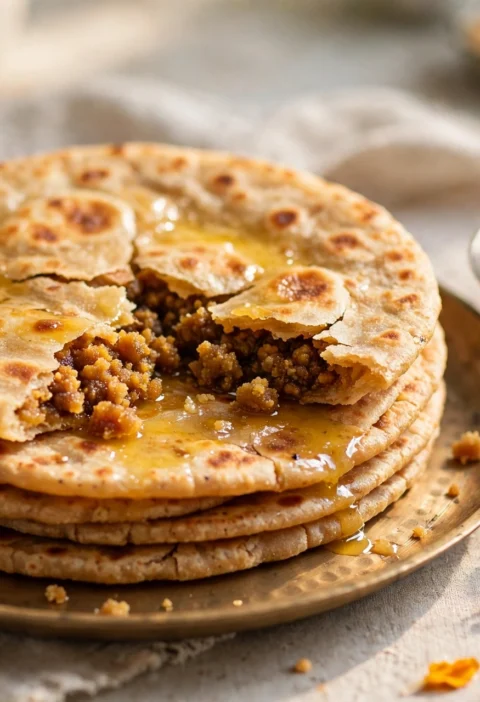
Heat a tawa or heavy skillet over medium heat until a drop of water skitters. Lay the paratha on the dry tawa for about 45 seconds, until the surface firms and small bubbles rise; flip it and give the second side the same moment. Now spoon half a teaspoon of ghee over the top and let it run out to the edges, flip once more, and press gently with a spatula, working around the edges — the paratha will blister and puff in patches where the steam builds. Fry, turning once or twice more, until both sides carry golden, blistered spots and smell unmistakably of toasted methi, about 2 to 3 minutes in all. Slide each methi paratha recipe onto a cloth-lined plate, crown it with white butter, and send it to the table while the butter is still melting.
Serving Suggestions
A methi paratha recipe is winter morning food, and it keeps winter morning company: white butter melting on top, plain yogurt or a quick raita beside it, a spoonful of achaar for the bite, and chai — strong, milky, and sweet — as the fourth member of the plate, because the slight bitterness of methi and the sweetness of doodh patti were made for each other. A fried egg on the side turns it into a fuller breakfast, and a bowl of leftover daal from the night before, warmed through, is the old farmhouse companion.
To place it among the breads on this site: my missi roti builds its body from besan and atta with onion and spices — a hearty, earthy flatbread, but its flavor comes from the flour blend, not from greens. My aloo paratha is the stuffed sibling, a spiced potato mash sealed inside plain dough. The methi paratha recipe keeps nothing hidden and seals nothing in: the greens are worked through the dough itself, so the flavor is in every layer and every bite, right out to the crisp edges.
Storage and Reheating
Cooked methi parathas keep well for 2 days in the fridge, wrapped in a cloth inside an airtight box, and revive on a hot dry tawa for half a minute a side; a fresh whisper of ghee at the end brings them back. They freeze honestly for up to a month too — stack them with parchment between, freeze until solid, then warm them straight from frozen over a gentle heat. The kneaded dough keeps a day in the refrigerator, well wrapped; bring it back to room temperature before rolling. What does not keep is a methi paratha recipe left stacked and covered while hot — the trapped steam softens the blisters you worked for, so let the stack cool uncovered if it is headed for storage.
Frequently Asked Questions
Why is my methi paratha bitter?
Almost always the stems, or unsqueezed leaves. Thick methi stalks are the bitter part of the plant, and the juice the leaves hold is bitter too. Pick leaves only, wash them clean of grit, and honor the salt-and-squeeze step — twenty minutes and a firm wring. A methi paratha recipe made that way tastes green and warm, with bitterness only as a pleasant edge, the way black pepper is an edge.
Can I use dried kasuri methi instead of fresh leaves?
You can, in a pinch and out of season. Crush 3 tablespoons of kasuri methi and knead it into the same dough, adding a spoon or two more water since there are no fresh leaves to contribute moisture. The result is fragrant and perfectly edible, but it is a different pleasure — kasuri methi perfumes like a spice, while fresh leaves make a methi paratha recipe taste of the season. When the bundles are in the bazaar, buy the bundles.
Why does my dough tear when I roll it?
Water, usually — either the leaves went in unsqueezed and wept into the dough during the rest, or too much kneading water was added on top of the leaves’ moisture. Squeeze harder than feels polite, add water gradually and stop early, and let resistant balls rest 5 minutes before rolling again. A rested, correctly hydrated methi paratha recipe rolls as obediently as any plain dough.
Can I make these without ghee, more like a thepla?
Yes — the Gujarati thepla is close kin to this paratha: roll the discs even thinner, cook them on the dry tawa with just a brush of oil, and stack them soft. They travel famously well and keep for days, which is the whole point of a thepla. You trade the blistered, ghee-crisped edges of a methi paratha recipe for keeping power; on a winter morning at home, I take the ghee.
Recipe Summary
- Prep time: 25 minutes (plus 20 minutes salting the leaves and 30 minutes resting the dough)
- Cook time: About 20 minutes, parathas fried one by one
- Total time: Around 1 hour 15 minutes
- Servings: 6 parathas, serving 3 people
- Cuisine: Pakistani (Punjabi)
- Course: Breakfast