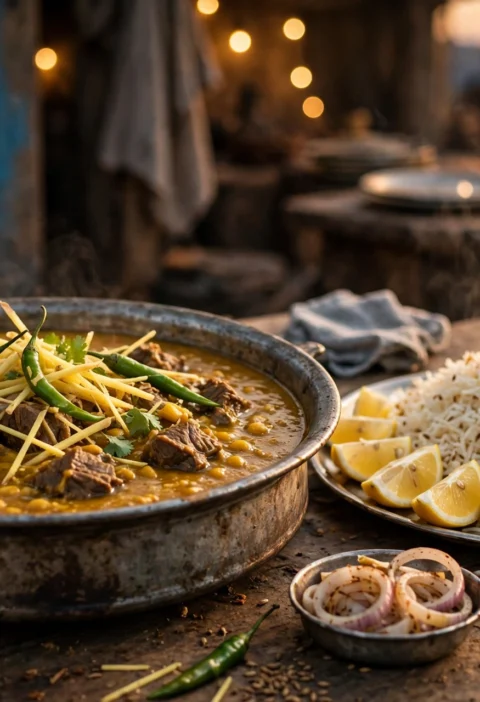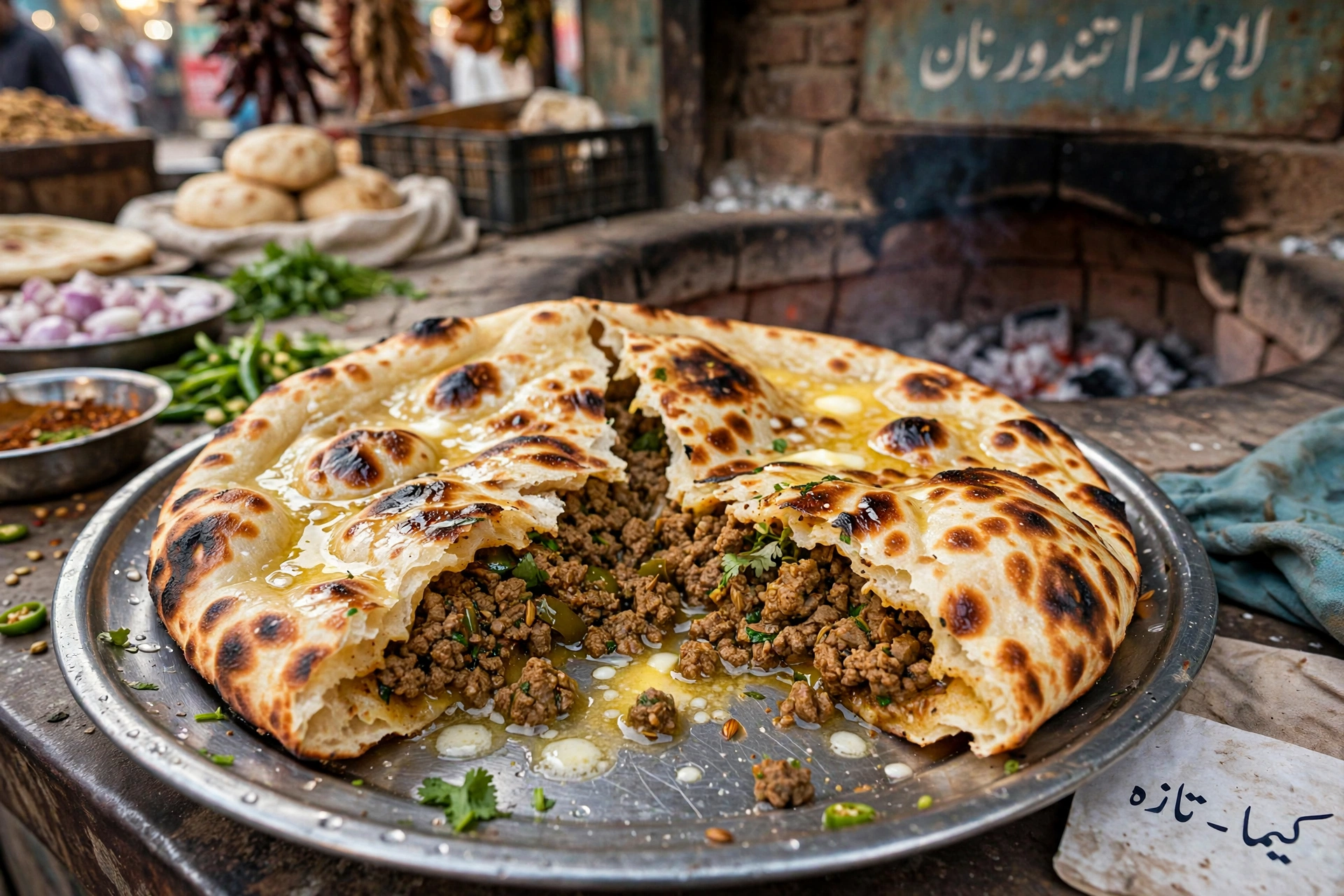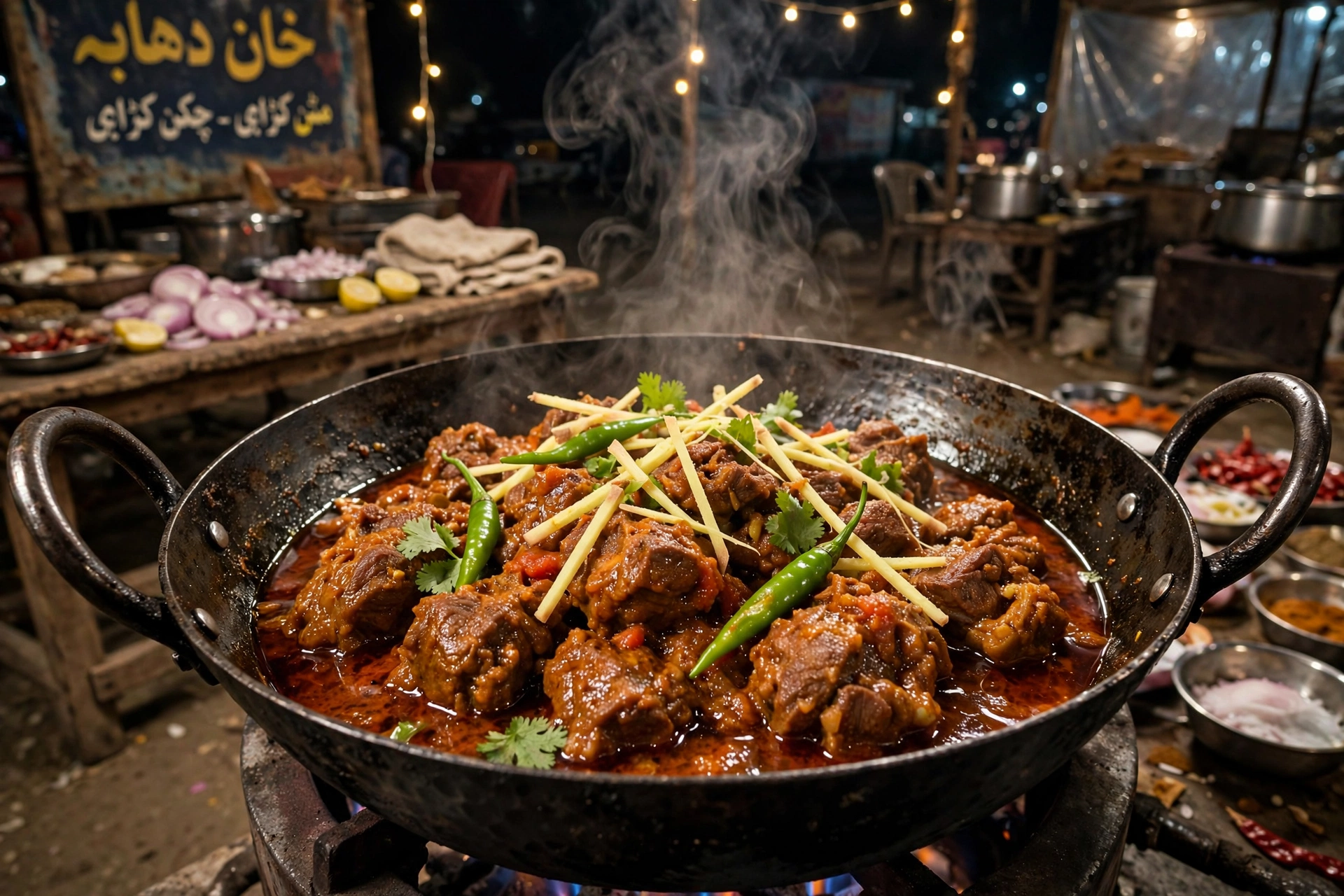
The first karahi I ever fell in love with wasn’t chicken — it was mutton, at a roadside dhaba outside Lahore at midnight, eaten with my cousins after a wedding that had run four hours too long. The cook worked a wok the size of a bathtub over a flame you could feel from ten feet away, and he made our mutton karahi to order: chunks of mutton, fresh tomatoes, ginger, green chilies, nothing else. No onion — he said it like a warning. Twenty minutes of violent, hissing, high-heat cooking later, he slid it onto our table still bubbling, the gravy thick and brick-red, the meat surrendering at the touch of a spoon. We ate in the kind of silence that only truly great food produces.
What I learned that night, and in the dozen attempts it took to recreate it, is that mutton karahi is a completely different animal from chicken karahi — literally. Mutton needs time that chicken doesn’t, and the high-heat karahi method that makes chicken sing will leave mutton tough if you don’t respect the clock. The trick is a two-stage cook: a patient covered braise until the meat gives up, then the fierce open-karahi finish with tomatoes and ginger that gives the dish its name. This mutton karahi recipe follows that rhythm, and it tastes like midnight on the Grand Trunk Road.
Why This Mutton Karahi Recipe Works
Mutton karahi fails when the meat is chewy, the gravy is thin, or someone sneaks onion in and turns it into generic salan. This mutton karahi recipe guards against all three:
- No onion, ever — tomatoes do the work. Authentic karahi has no onion in it. The body comes from fresh tomatoes cooked down hard in the karahi’s fierce heat until they collapse into a thick, brick-red masala. Onion would sweeten and dilute it; tomatoes keep it sharp and bright. This mutton karahi recipe is unapologetically onion-free.
- A covered braise first, then the karahi blast. Mutton needs 40–50 minutes of gentle covered cooking to turn tender — no amount of high heat shortcuts that. So the meat braises quietly in its own juices first, and only when it’s nearly done does the fierce open-wok finish happen: tomatoes crushed in, heat cranked, gravy reduced to a glaze. Two stages, one dish.
- Ginger goes in twice. Crushed ginger cooked into the masala builds the warm background; fresh julienned ginger scattered over the finished karahi adds the sharp, bright top note that defines the dish. One without the other tastes half-finished.
- The tomatoes are crushed by hand, not blended. Roughly crushed tomatoes break down into a gravy with texture — little jammy pockets of tomato throughout. Blended tomatoes make a smooth sauce that tastes like pasta night. Karahi gravy should be rustic, thick, and clinging.
- Green chilies stay whole until the end. Slit but intact, added in the final minutes, they perfume the gravy with heat without disintegrating into it. Chopped chilies early on make the whole dish aggressively hot; whole chilies late make it fragrant. There’s a difference, and your guests will taste it.
Ingredients
Serves 4–5
For the mutton:
- 1 kg (about 2.2 lbs) mutton, bone-in pieces (shoulder or leg, cut into 2-inch chunks)
- 1/2 cup (120 ml) mustard oil or neutral oil
- 1 tablespoon crushed garlic
- 1 tablespoon crushed fresh ginger, plus a 2-inch piece cut into juliennes for finishing
- 1 1/2 teaspoons salt, plus more to taste
For the karahi masala:
- 5 medium tomatoes (about 600g), roughly chopped and hand-crushed
- 1 teaspoon ground cumin (zeera), dry-roasted
- 1 teaspoon ground coriander (dhaniya)
- 1 1/2 teaspoons red chili flakes (kutti mirch)
- 1/2 teaspoon ground black pepper (kali mirch)
- 1/2 teaspoon garam masala
- 4–6 green chilies, slit lengthwise
For finishing:
- 2-inch knob of fresh ginger, sliced into fine matchsticks
- A generous handful of fresh coriander, roughly chopped
- 1 tablespoon butter or ghee (optional, for gloss)
- Lemon wedges, to serve
A note on the mutton: bone-in is essential for this mutton karahi recipe — the bones enrich the gravy and the meat around them stays the juiciest. Ask your butcher for shoulder or leg cut into generous 2-inch pieces; tiny pieces dry out, huge pieces never cook through. And buy from a butcher you trust — tender young mutton versus tough old goat is the difference between 45 minutes and two hours on the stove.
How to Make This Mutton Karahi Recipe – Step by Step
Step 1: Sear the mutton hard.
Heat the oil in a heavy karahi or wok over the highest heat your stove can manage until it shimmers. Add the mutton pieces in a single layer (work in two batches if needed) and sear 3–4 minutes per side until deeply browned. This isn’t about cooking through — it’s about building the caramelized crust that becomes the gravy’s flavor foundation. Don’t skip the sear; gray mutton makes gray karahi.
Step 2: Braise it tender, covered.
Return all the mutton to the karahi, add the crushed garlic, crushed ginger, and salt, then pour in 1 cup of hot water. Once it bubbles, turn the heat to its lowest, put the lid on tight, and let it braise gently for 40–50 minutes until the mutton is nearly falling off the bone. Check halfway and add a splash of hot water if it’s drying out. The meat should yield to a fork with barely any resistance — if it doesn’t, give it more time, not more heat.
Step 3: Crush in the tomatoes.
Uncover, turn the heat back up to high, and add the hand-crushed tomatoes. Cook 10–12 minutes, stirring and scraping, until the tomatoes completely break down and the mixture thickens into a brick-red masala that clings to the meat. The watery tomato liquid should cook off entirely — you’re looking for a thick glaze, not a soup.
Step 4: Spice it the karahi way.
Stir in the roasted cumin, coriander, chili flakes, black pepper, and garam masala. Fry 3–4 minutes on high heat, tossing constantly, until the spices bloom into the oil and the whole karahi smells like a dhaba at midnight. This dry-fry is where the karahi’s signature smoky depth comes from.
Step 5: The green chili finish.
Toss in the slit green chilies and cook 2 more minutes — just enough for them to soften slightly and perfume the gravy. If the masala is sticking, add the butter or ghee now; it adds a beautiful gloss and rounds the heat. Taste and adjust the salt — karahi should be boldly seasoned.
Step 6: Ginger, coriander, serve screaming hot.
Turn off the heat and shower the karahi with the ginger juliennes and fresh coriander. Serve immediately, straight from the karahi if you’re feeling theatrical, with lemon wedges on the side. Karahi waits for no one — it should hit the table still bubbling.
Serving Suggestions
Mutton karahi demands fresh, blistered naan — nothing else scoops up that thick, brick-red gravy properly. Tear, scoop, repeat; that’s the whole ritual. A simple plate of sliced onions with lemon on the side cuts through the richness, and that’s genuinely all the accompaniment this dish needs. This is midnight-dhaba food, and it should be eaten like it.
When I’m building a bigger table around it, this mutton karahi recipe pairs beautifully with a stack of my aloo parathas for the bread basket — the stuffed parathas and the fierce karahi are a combination my family fights over. And put out a bowl of my dahi baray alongside; the cool, tangy yogurt dumplings are the perfect counterpoint to the karahi’s heat.
Storage and Reheating
Mutton karahi is best the moment it leaves the wok, but the leftovers hold their own — an overnight rest lets the spices sink deeper into the meat. Keep it sealed in the refrigerator and use within 3 days. To reheat, toss it in a hot karahi with a spoonful of water until it bubbles fiercely again; a microwave turns the mutton rubbery, so skip it. You can also freeze it for a couple of months — defrost in the fridge overnight, then blast it hot in the pan the same way. Reheated properly, second-day karahi can outshine the first.
Frequently Asked Questions
Why is my mutton still tough?
It needed more time — that’s almost always the answer. Mutton varies enormously; young tender meat surrenders in 40 minutes, older tougher cuts can need 70. The fork test is the only test that matters: if the meat doesn’t yield easily, cover it back up and keep braising. Never try to fix tough mutton with higher heat — that just tightens the fibers further. Low, slow, and patient wins this mutton karahi recipe every time.
Can I make this mutton karahi recipe in a pressure cooker?
Yes, and it’s the smart weeknight move. Do the sear in the cooker, add garlic, ginger, salt, and water, and pressure cook for 4–5 whistles (about 20–25 minutes). Release, then continue from Step 3 in an open karahi or wide pan for the tomato reduction and spice fry — the open-wok finish is non-negotiable for real karahi flavor.
What’s the difference between mutton karahi and chicken karahi?
Method and clock. Chicken karahi cooks start-to-finish on high heat in 25 minutes because chicken is tender; mutton karahi needs the covered braise first or the meat stays chewy. The spice profile is nearly identical — tomatoes, ginger, green chilies, no onion — but mutton brings a deeper, gamier richness that chicken can’t match. Both are essential; they’re just different evenings.
Can I use boneless mutton?
You can, but you’ll lose something. The bones contribute gelatin and flavor to the gravy that boneless meat simply doesn’t, and bone-in pieces stay juicier through the long braise. If you must go boneless, use leg meat cut into large 2-inch chunks and reduce the braising time by about 10 minutes — and accept that the gravy won’t be quite as rich.
Recipe Summary
- Prep time: 15 minutes
- Cook time: 1 hour 10 minutes
- Total time: 1 hour 25 minutes
- Servings: 4–5
- Cuisine: Pakistani
- Course: Main