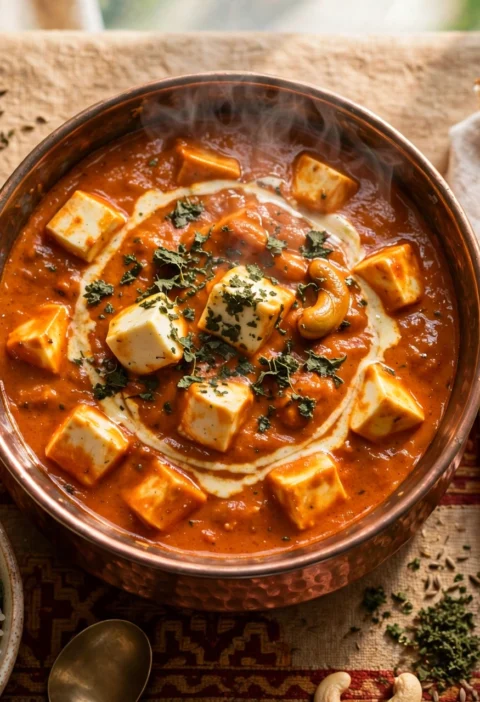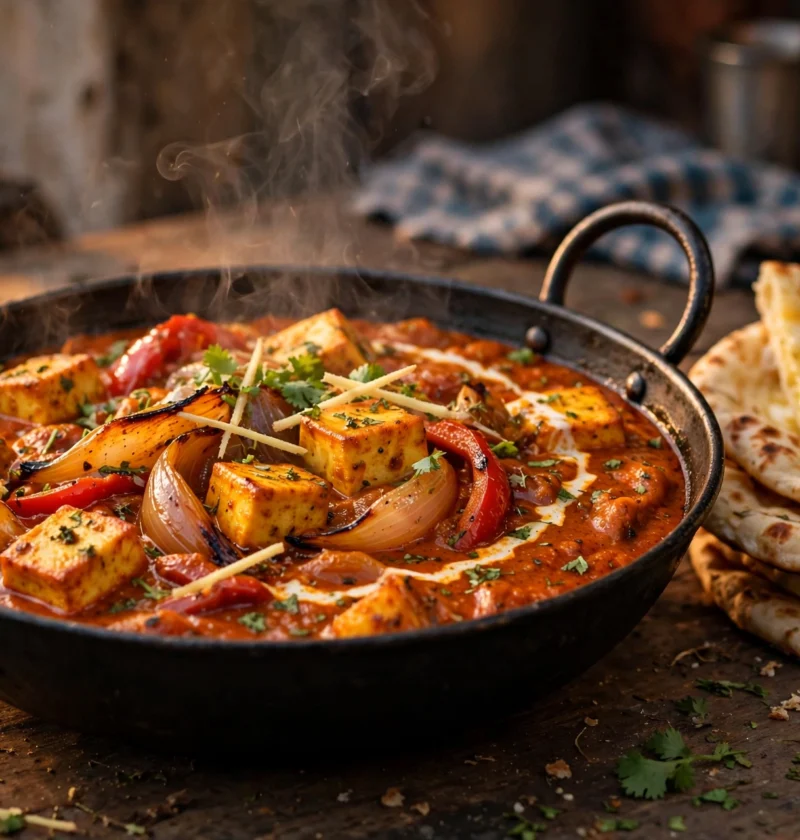
The first time I ordered this at a highway dhaba outside Gujranwala, I honestly thought the waiter had misheard me. The plate that landed in front of me looked like an onion dish with paneer in it, not the other way around — big, glossy petals of onion, charred at the edges, tumbling over soft white cubes in a masala that clung instead of pooled. One bite and I understood completely. A good paneer do pyaza recipe is not shy about its main idea: the onion is not a background singer here. It shows up twice, in two different forms, and both of them matter.
That double act is what I chased in my own kitchen for months. The first onions disappear — chopped fine and cooked down until they melt into the tomato masala and give it body and sweetness. The second onions arrive at the end as thick petals, blistered in a ripping-hot pan until their edges catch, so they stay chunky and sharp-sweet against the soft paneer. Get both right and you have a curry that is dry-ish, bold, and completely unlike the smooth restaurant gravies most people expect from paneer. My family now asks for it by a name of their own: the one with all the onion. They are not wrong.
Why This Paneer Do Pyaza Recipe Works
Most paneer curries fail quietly — bland cubes, a thin masala, everything tasting the same from first bite to last. This paneer do pyaza recipe is built against that, on five small decisions:
- The onion works two shifts. Half of it melts down into the base and becomes the gravy’s backbone; the other half stays in big petals with bite. Two textures of the same ingredient give the dish more depth than any extra spice could.
- The petals are blistered before anything else happens. Two minutes in a very hot, barely oiled pan puts char on their edges while the centres stay crisp and sweet. Boiled or steamed in the gravy instead, they slide into the background and the whole point is lost.
- The masala is cooked until the oil lets go. That moment when fat glistens at the pan’s edges means the tomatoes have lost their raw edge and the spices have bloomed. Stop earlier and the curry tastes unfinished, whatever you add later.
- The paneer goes in late and leaves early. Paneer needs only a few minutes in the hot masala to warm through and pick up flavour. Simmer it like meat and it turns squeaky and tough; treat it like a guest, not a tenant.
- Kasuri methi and capsicum close the show. Crushed dried fenugreek in the last minute adds the unmistakable dhaba perfume, and the capsicum — barely cooked — keeps a green freshness running through a rich plate.
Ingredients for This Paneer Do Pyaza Recipe
The name itself is the shopping list’s headline: a dopiaza is built around onion used in unusual abundance, and cooks argue happily about whether it means double the quantity or onions added at two separate stages — this paneer do pyaza recipe does both, so nobody has to take sides. The other pillar is the paneer itself: buy the firmest, freshest block you can find, the kind that slices without crumbling, because soft paneer will shed water into the masala and thin it. If your paneer comes vacuum-packed and hard from the fridge, a ten-minute soak in warm water before cubing restores a tenderness that matters here. Everything else — tomato, capsicum, whole spices — is ordinary dhaba pantry stock.
For the onion petals
- 1 very large onion (about 8 ounces / 225 g), cut into thick petals
- 1 tablespoon neutral oil
- A small pinch of salt
For the masala base
- 2 tablespoons ghee or neutral oil
- 1 teaspoon cumin seeds
- 1 bay leaf
- 2 green cardamom pods, lightly cracked
- 1 small cinnamon stick (about 1 inch)
- 2 medium onions (about 10 ounces / 285 g), finely chopped
- 1 tablespoon ginger-garlic paste
- 3 medium ripe tomatoes (about 12 ounces / 340 g), finely chopped or crushed
- 1 1/2 teaspoons ground coriander
- 1 teaspoon Kashmiri red chili powder
- 3/4 teaspoon fine sea salt, or to taste
- 1/2 teaspoon ground turmeric
For the paneer and the finish
- 14 ounces (400 g) paneer, cut into 1-inch cubes
- 1 small green capsicum (bell pepper), cut into rough squares (about 3/4 cup)
- 2 fresh green chilies, slit lengthwise
- 1 teaspoon dried fenugreek leaves (kasuri methi)
- 1/2 teaspoon garam masala
- 2 tablespoons chopped fresh cilantro
- 2 tablespoons heavy cream (optional, for a small swirl at the end)
- 1 teaspoon julienned fresh ginger, to serve
How to Make This Paneer Do Pyaza Recipe – Step by Step
Step 1: Blister the onion petals and set them aside. Heat the tablespoon of oil in a wide karahi or heavy skillet over high heat until it just begins to shimmer. Spread the onion petals in a single layer, sprinkle the salt, and then resist the urge to move them — a full minute untouched is what earns the char. Let the metal do its work. Turn them once and give them one more minute, until the edges are browned and blistered in spots while the middles are still firm and pale. Tip them onto a plate. They will finish softening later, off the heat of the gravy, keeping their shape and their char.
Step 2: Melt the chopped onions into the base. In the same pan, over medium heat, add the ghee and let the cumin seeds, bay leaf, cardamom and cinnamon crackle for about thirty seconds. Add the finely chopped onions with a pinch of their salt and cook, stirring now and then, for ten to twelve minutes. You are not looking for deep biryani-style browning; you want them soft, golden at the edges and properly sweet, because this melted onion is half the dish’s name. Stir in the ginger-garlic paste for the final minute, until the raw smell cooks away.
Step 3: Build the tomato masala and fry it properly. Add the tomatoes, Kashmiri chili, coriander, turmeric and the remaining salt. Raise the heat a touch and fry the mixture, stirring and scraping the bottom, for eight to ten minutes. It will go from loose and pink to thick, dark and glossy, and small beads of oil will appear around the sides of the pan. That separation is your sign that the tomatoes have fully cooked down and the masala can carry the paneer without tasting raw or sharp.
Step 4: Add the paneer and the capsicum, gently. Pour in about a quarter cup of water if the masala looks very dry, just enough to loosen it into a coating consistency. Slide in the paneer cubes and the capsicum squares and fold everything together with a wide spatula, lifting from the bottom rather than stirring hard — paneer corners chip if you bully them. Cover and cook on the lowest heat for three to four minutes, only until the paneer is warmed through and the capsicum has softened at the edges while staying green and alive.
Step 5: Fold the petals back in and finish like a dhaba. Scatter the reserved onion petals and the slit green chilies over the top, sprinkle in the garam masala, and fold once or twice so the petals nestle into the masala without breaking. Crush the kasuri methi between your palms directly over the pan — the friction wakes up its aroma — and add the cream in a thin swirl if you are using it. Rest the pan off the heat for five minutes, shower with cilantro and ginger, and take it to the table in the karahi if you can. That little rest lets the petals drink in just enough of the masala.
Serving Suggestions
This is bread food, full stop. Tandoori roti, butter naan or a plain chapati torn and used as a scoop gives you paneer, petal and masala in every mouthful, which is exactly how it should be eaten. If rice must appear, keep it honest — steamed basmati or a quiet jeera rice — because a loud pulao will wrestle with the onion. A bowl of plain raita and a few slices of raw onion with lemon on the side are all the company it needs.
Set it next to its paneer relatives and its personality sharpens. My paneer bhurji is the crumbled, gravy-free scramble built for scooping onto toast and rotis, while paneer butter masala hides its cubes in a smooth, sweet makhani blanket. This paneer do pyaza recipe refuses both costumes: whole cubes, a chunky masala you can see, and onion standing in the front row. And if your table leans toward chicken, the same two-onion idea runs through my chicken dopiaza — though there the meat needs a longer simmer, and the petals meet a deeper, darker gravy.
Storage and Reheating
Leftovers keep well for two days in the fridge, sealed, and the masala arguably tastes rounder the next day as the spices settle. The onion petals are the delicate part: they soften further with every reheating, so a next-day plate will be a little less chunky than the first — still delicious, just gentler. Reheat in a pan over low heat with a splash of water, lid on, only until the paneer is warm in the centre; a microwave works if you use short bursts and stir once, because blasting paneer is how it turns rubbery. I do not freeze this dish. Paneer freezes acceptably, but the petals come back limp and sad, and they are half the reason the recipe exists.
Frequently Asked Questions
Why is it called do pyaza — what does the name actually mean?
Honest answer: the cooks have never fully agreed, and both stories have been told for a very long time. One camp says pyaza points to the onion being used in double quantity compared with an ordinary curry. The other says the onions are added at two different times — some melted into the base, some thrown in later as pieces. A folk tale even pins the dish on a courtier named Do-Piaza at a Mughal court, which most historians treat as a good story rather than a fact. This recipe quietly satisfies the first two explanations at once, and the third makes fine dinner conversation.
Should I fry the paneer before adding it, or put it in raw?
Both routes work, but they give different plates. Straight in, the paneer stays soft and milky and drinks up masala — that is the version written above, and the one I make on weekdays. Lightly seared in a film of oil until pale gold, it gains a firmer skin and a toasted edge, and it holds up better for guests. What ruins paneer is time, not the pan: whichever you choose, keep its total cooking under five minutes. If a batch has gone rubbery, soak the cubes in warm salted water for ten minutes before they meet the gravy, and never let the curry boil once they are in.
How do I make it properly dhaba-style — hotter and bolder?
Dhaba cooks lean on three things: fat, fresh chili and black pepper. Swap the oil for ghee, raise the green chilies to three or four and add them earlier so their heat cooks into the masala rather than perfuming the top, and finish with half a teaspoon of coarsely crushed black pepper alongside the garam masala. A few dhaba hands also fry the petals in mustard oil for a sharper edge — try it once and decide which camp you belong to. What I would not do is simply double the chili powder; it darkens the masala and muddies the onion’s sweetness, which is the whole point of the dish.
My onion petals fall apart into strings. How do I keep them chunky?
Cut them thick to begin with — petals separated from a halved onion, each one or two layers thick, never sliced thin. Then respect the blister: high heat, a single uncrowded layer, and no stirring for the first minute, so a light crust forms before the layers can separate. Cook them only about three-quarters of the way in the pan; they finish in the resting gravy. And when you fold them back in at the end, fold — two or three wide, gentle turns — rather than stirring the pan like a pot of daal. Petals that go in last and get handled least are the ones that reach the table intact.
Recipe Summary
- Prep time: 20 minutes
- Cook time: 30 minutes
- Total time: About 50 minutes
- Servings: 4
- Cuisine: Pakistani
- Course: Main Course