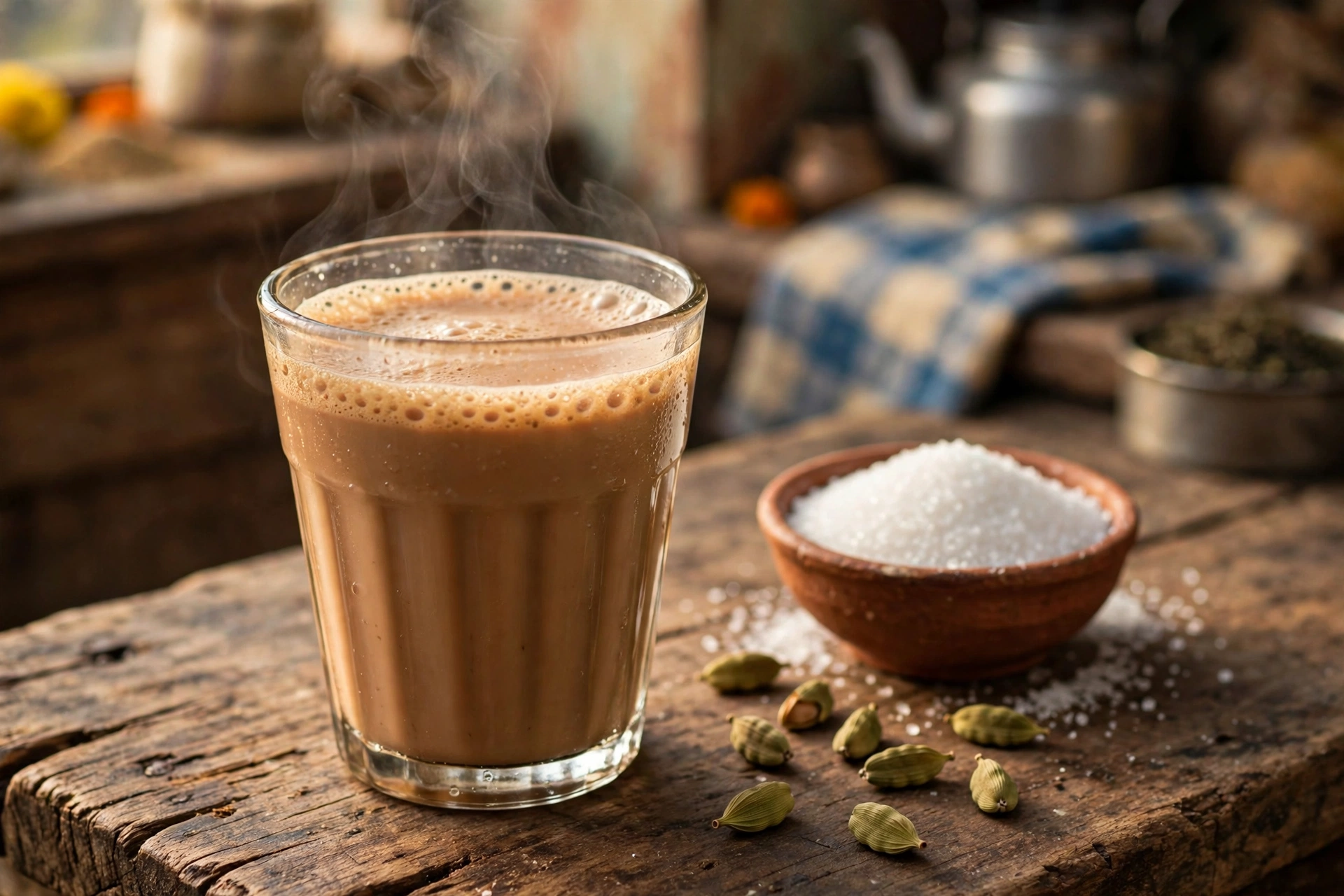
I did not grow up drinking elaichi chai every day. In our house, the everyday pot was doodh patti, strong and simple, and cardamom was the guest-star spice, saved for Sundays or for when someone special came over. The first time I really noticed it, I was maybe twelve, sitting cross-legged on my grandmother’s kitchen floor while she crushed green cardamom pods with the flat of a knife and dropped them into the simmering milk. The whole kitchen changed in seconds. That warm, lemony, almost floral smell wrapped around the steam, and when she handed me my cup, I understood why she called it the queen of spices. This elaichi chai recipe is my attempt to bottle that exact memory, and after years of tweaking, this is the version I make when I want chai to feel like an occasion rather than a routine.
What I love about this elaichi chai recipe is how little it asks of you and how much it gives back. There is no long spice list, no special equipment, and no technique to master. You crush a few pods, simmer them with tea leaves and milk, sweeten to your taste, and in about twenty minutes you have a cup that tastes like it came from a proper dhaba at dawn. It is gentler than masala chai and more fragrant than plain doodh patti, which makes it the perfect middle ground for mornings when you want comfort with a little ceremony. I make it when friends visit, when the weather turns cool, and on ordinary Tuesdays too.
Why This Elaichi Chai Recipe Works
- The cardamom is crushed, not powdered. Crushing the pods open releases the tiny black seeds inside, which is where the real fragrance lives. Pre-ground cardamom loses its oils fast and tastes flat by comparison, while freshly crushed pods give this elaichi chai recipe its bright, lemony perfume.
- The spices simmer in water first. Boiling the cardamom and tea leaves in water before the milk goes in lets the flavour bloom properly. Milk added too early mutes the spice, but this order keeps this elaichi chai recipe bold and aromatic from the first sip to the last.
- The milk-to-water ratio is tested. Too much water and the chai tastes thin; too much milk and it turns heavy. This elaichi chai recipe uses a balance that brews up creamy and rich without sitting like a stone in your stomach.
- The pull, or kharka, builds the texture. Pouring the chai from a height between two vessels a few times froths it lightly and blends the milk and tea into one silky body. It is a small step that makes this elaichi chai recipe taste like it came from a street stall rather than a rushed kitchen.
- It is forgiving and flexible. Stronger, sweeter, lighter, with ginger or without, this elaichi chai recipe bends to your mood without breaking. Once you know the base, make it your own.
Ingredients
Everything here is pantry-simple, measured in cups and spoons so you can brew without thinking twice. The one thing I would not compromise on is fresh green cardamom pods. Old pods that have sat in the back of a cupboard for a year will smell like almost nothing when you crush them, and no amount of extra pods will rescue a dull batch. Buy small quantities, keep them airtight, and sniff a pod before you start.
- 4 green cardamom pods (elaichi), lightly crushed
- 2 cups water
- 2 cups whole milk
- 2 tablespoons loose black tea leaves (or 3 black tea bags)
- 3 tablespoons sugar, plus more to taste
- 1 small piece of ginger (about 1/2 inch), optional, lightly crushed
- A pinch of salt (optional, but it rounds out the sweetness)
- Crushed pistachios, to garnish (optional)
A note on the tea leaves: a strong CTC or Assam-style black tea stands up best to milk and cardamom, and it is what most dhabas use. Delicate teas will get lost here. If you only have tea bags, use three and squeeze them before removing them.
Method
Step 1: Crush the cardamom and start the water
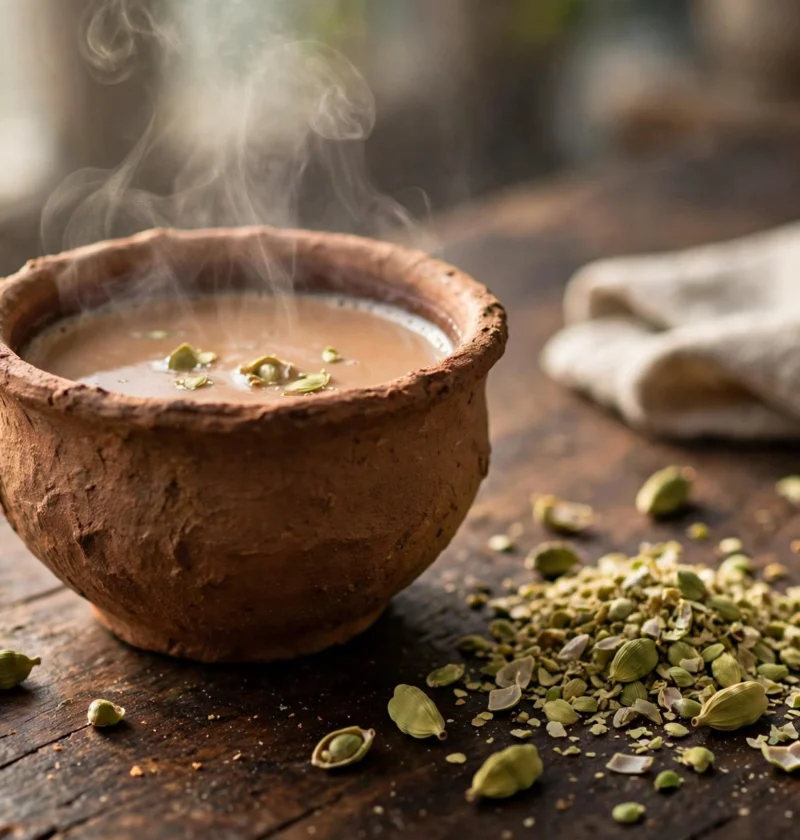
Place the green cardamom pods on a chopping board and press them firmly with the flat side of a large knife until the husks split and the little black seeds show. Do not pulverise them; cracked pods release flavour slowly and strain out easily. Put 2 cups of water in a small saucepan, add the crushed cardamom and the optional ginger, and bring it to a rolling boil over medium-high heat. Let it bubble for 2 minutes so the water itself turns fragrant. This is the foundation of this elaichi chai recipe, and skipping it is the difference between chai that merely smells of cardamom and chai that truly tastes of it.
Step 2: Brew the tea leaves strong
Once the water is fragrant, add the loose tea leaves and lower the heat to medium. Let the tea simmer for 3 to 4 minutes, stirring once or twice, until the liquid turns a deep reddish-brown and smells rich and malty. You want a brew that is stronger than you would drink on its own, because the milk is about to soften it considerably. If you are using tea bags, drop them in now and press them gently against the side of the pan with a spoon after a couple of minutes. Do not let it boil violently, or it can turn bitter.
Step 3: Add the milk and simmer gently
Pour in the 2 cups of whole milk and the sugar, and stir until the sugar dissolves. Bring the chai back to a gentle simmer over medium heat, watching the pan, since milk boils over fast. Let it simmer softly for 5 to 6 minutes, stirring now and then, until the colour turns a warm caramel brown and the cardamom perfume rises with the steam. This slow simmer is where this elaichi chai recipe comes together: the milk takes on the spice, the tea deepens, and the whole pot starts smelling like my grandmother’s kitchen.
Step 4: Pull the chai for froth and body
Now comes the fun part. Lift the pan and pour the chai from a height of about a foot into a clean jug or a second pan, then pour it back. Repeat this pull three or four times, You will see light froth form, and the chai will turn silkier. This is the same technique street vendors use, and it genuinely changes the mouthfeel. If you are nervous about splashing, start with a lower height and work your way up; even a modest pull beats no pull at all. Taste at this point and adjust the sugar if needed.
Step 5: Strain and serve hot
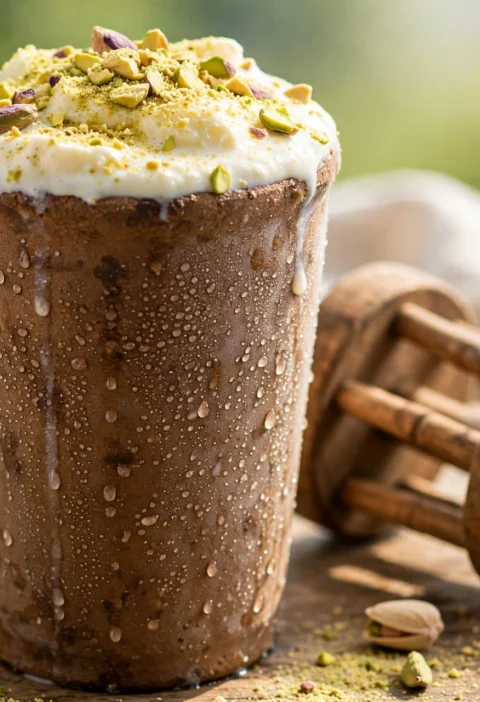
Strain the chai through a fine sieve into cups or, better, into clay kulhads if you have them. The kulhad keeps chai hot and adds an earthy note. Garnish with a pinch of crushed pistachios if you like, and serve immediately while the froth is still sitting on top. Chai waits for no one, and this one is at its absolute best in the first five minutes, when the cardamom is loudest and the steam is still curling up from the cup.
Serving Suggestions for This Elaichi Chai Recipe
In my house, this elaichi chai recipe rarely arrives alone. The classic pairing is something crisp and buttery to dunk, and nothing beats a plate of warm rusks or a few slices of cake rusk beside a steaming kulhad. The cardamom in the chai loves the company of baked things, so it also sits beautifully next to masala chai loyalists at a gathering, offering a lighter alternative on the same table.
For guests, I like to set out a small tray: the pot of chai, a bowl of extra sugar, a dish of crushed pistachios, and a plate of biscuits or adrak chai fans can compare the two side by side, since ginger and cardamom are the two great chai philosophies and everyone has a favourite. On cold evenings, serve it after dinner with dates or cake. On busy mornings, skip the garnish and drink it standing in the kitchen, which is honestly how I enjoy it most days.
Storage and Reheating
Chai is best fresh, and I will be honest with you: reheated chai is never quite the same as the first brew. But life happens, and leftover chai does not have to be wasted. Let it cool completely, strain out any leaves or cardamom husks, and keep it in a covered jug in the refrigerator for up to 2 days. The flavour settles overnight, though the froth will be gone.
To reheat this elaichi chai recipe, pour it into a saucepan and warm it gently over low heat, stirring often, until it is steaming but not boiling. Never microwave it on full power, because it heats unevenly and can scald the milk, leaving a skin and a slightly burnt taste. A quick fresh pull after reheating brings back some froth. If you want to get ahead for guests, you can brew the spiced tea-water base a day early and refrigerate it, then add fresh milk and simmer just before serving, which gives you nearly fresh chai with half the last-minute work.
Elaichi Chai Recipe FAQs
Can I use cardamom powder instead of whole pods?
You can, but this elaichi chai recipe will taste noticeably duller. Ground cardamom loses its volatile oils within weeks of grinding, while whole pods keep their fragrance for months in an airtight jar. If powder is all you have, use 1/2 teaspoon and add it with the milk rather than the water, so it does not cook away completely. Buy whole pods for this one; they are the point.
Why does my chai taste weak even with cardamom?
Almost always, the culprit is one of three things: old cardamom pods with no smell left in them, tea that was not brewed strong enough before the milk went in, or too much milk for the amount of tea. Fix all three in this elaichi chai recipe by sniffing your pods first, simmering the leaves in water for a full 3 to 4 minutes, and sticking to the equal milk-and-water ratio. A pinch of salt also sharpens sweetness and spice.
Is elaichi chai good for digestion?
Cardamom has been used in South Asian kitchens for generations as a warming, fragrant spice, and a cup of this elaichi chai recipe after a heavy meal is one of the oldest comfort rituals I know. I make no medical claims for it, but I can tell you that a warm, lightly spiced cup settles my own stomach after a rich dinner far better than anything cold or fizzy. Keep the sugar modest and enjoy it as the gentle ritual it is.
Can I make this elaichi chai recipe dairy-free?
Yes, with one honest caveat: the flavour will shift. Oat milk is the best substitute here because it froths well and has a neutral, slightly sweet taste that lets the cardamom shine. Almond milk works too but thins the body, and coconut milk adds a tropical note that competes with the spice. Whatever you choose, warm it gently and never let it boil hard, since plant milks split more easily than dairy. The cardamom-water base stays exactly the same, so the heart of this elaichi chai recipe survives the swap intact.
Recipe Summary
This elaichi chai recipe takes the simplest chai base and lifts it with one perfect spice: green cardamom pods, crushed fresh, simmered in water, brewed strong with black tea, and finished with milk, sugar, and a proper pull for froth. It takes about 20 minutes, serves 2 generously, and tastes like a small ceremony in a cup, fragrant, creamy, and warming without being heavy. If you have only ever had cardamom as a background note in mixed spice blends, this is the cup that will make you buy a jar of pods just for itself.
Before you go, a little background for the curious: cardamom is one of the world’s oldest and most prized spices, traded for centuries across South Asia, the Middle East, and Scandinavia, while chai itself is far more than a drink in Pakistan and India, it is a pause, a welcome, and a daily ritual. Bringing the two together in one kulhad feels like honouring both traditions at once, and that is exactly what this elaichi chai recipe tastes like.