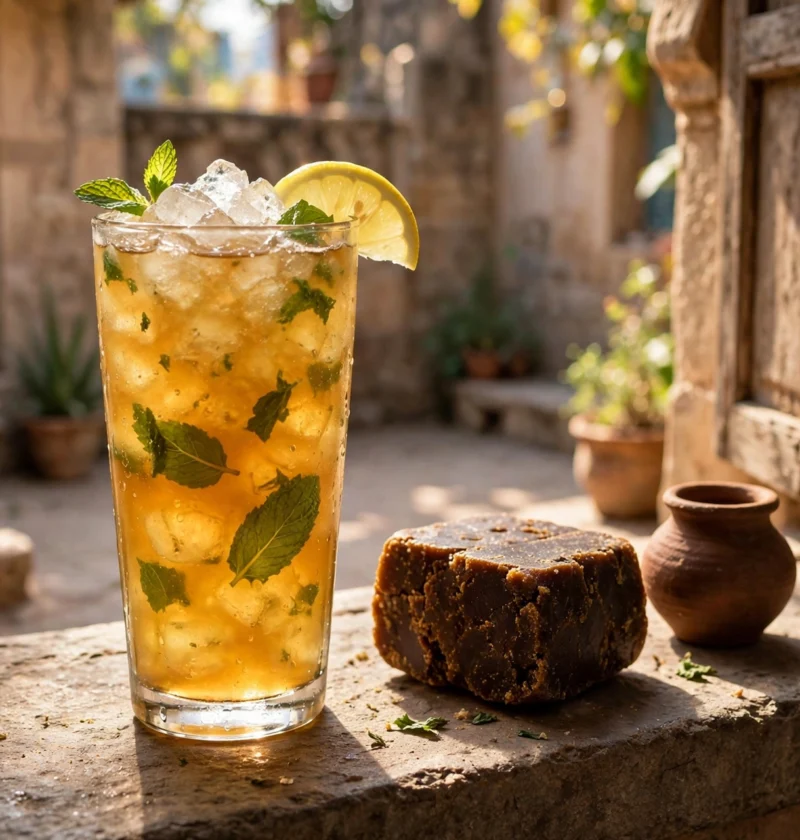
Gud sharbat came into my kitchen through my grandmother’s hands, not through any cookbook. On summer afternoons when the power cut took the fan with it, she would disappear into the kitchen and return with a steel jug sweating in the heat, filled with a golden drink that tasted like the earth itself had been sweetened. She never measured anything. A lump of jaggery went into a jug of water, a lemon was squeezed in, and a pinch of something from the spice dabba followed, and somehow the result was always perfect. I drank it sitting on the cool floor with my legs crossed, and the heat outside stopped mattering for a while. This gud sharbat recipe is my attempt to write down what she never wrote down, and after many summers of adjusting the sweetness and the salt, this is the version that tastes like those afternoons.
What I love most about this drink is its honesty. There is no syrup to cook, no fruit to strain, and no fancy ingredient to hunt down. A block of jaggery, cold water, lemon, and a little salt are enough to make something that cools you down and genuinely restores you, the way a sugary soda never does. Jaggery has sweetened Indian kitchens for centuries, long before refined sugar arrived in every pantry, and a glass of gud sharbat still feels like the drink of village summers and grandmother kitchens. Once you learn the balance between earthy sweet and bright sour, you will find yourself making this gud sharbat recipe whenever the heat climbs, and probably on ordinary days too, when a chilled glass after lunch feels like a small kindness.
Why This Gud Sharbat Recipe Works
- The jaggery is dissolved, never boiled. Stirring grated jaggery into cool water keeps its deep, almost molasses-like flavour intact, which is why this gud sharbat recipe tastes earthy and complex instead of flat and sugary.
- Lemon brightens the whole glass. A squeeze of fresh lemon lifts the jaggery’s heaviness and gives the drink a clean finish, so this gud sharbat recipe never tastes cloying even on the hottest day.
- A pinch of salt makes the sweetness sing. Salt does not make the drink salty; it sharpens the jaggery and rounds the lemon, which is the quiet trick behind this gud sharbat recipe.
- Black salt adds a rustic edge. Kala namak brings a faint, savoury depth that plain salt cannot copy, giving this gud sharbat recipe the street-cart character that separates it from plain sugar water.
- It is served properly ice-cold. Chilling the jug and pouring over crushed ice matters as much as the flavour itself, so this gud sharbat recipe is always cold enough to frost the glass.
Ingredients
The shopping list is short enough to remember after one batch, and every item is an ordinary pantry staple. The one ingredient worth choosing carefully is the jaggery itself. Look for a dark, soft block that smells faintly of molasses and crumbles easily when you press it, not a pale, rock-hard lump that has dried out on the shelf. Dark jaggery gives a deeper flavour, while lighter jaggery tastes milder, and either works as long as it is fresh.
- Cold water, 4 cups
- 3/4 cup grated jaggery (gur), plus more to taste
- 2 tablespoons lemon juice, freshly squeezed
- Regular salt, 1/4 teaspoon, or to taste
- Black salt (kala namak), 1/4 teaspoon
- 1/4 teaspoon roasted cumin powder (optional)
- Fresh mint leaves, a small handful, lightly bruised
- Crushed ice, plenty, for serving
- Lemon wedges and mint sprigs, to garnish
A note on the jaggery: different blocks vary a lot in sweetness and moisture, so start with the three-quarter cup and adjust after tasting. If your jaggery is very dark and strong, you may want a little less; if it is pale and mild, a little more. Taste the base before chilling, because that is the moment to correct it.
Method
Step 1: Grate the jaggery fine
Break off a piece of the jaggery block and grate it on the coarse side of a box grater, or chop it finely with a heavy knife if you prefer. Fine pieces dissolve far faster than a solid lump, and they let you measure honestly instead of guessing at a chunk’s weight. If your jaggery is soft and sticky, chilling it in the fridge for twenty minutes first makes grating much easier. Set the grated jaggery aside in a small bowl while you prepare the water.
Step 2: Dissolve the jaggery in a little warm water
Pour one cup of the water, warmed but not hot, over the grated jaggery in a large jug and stir steadily for two to three minutes until every grain has melted. Warm water is a kindness here, not a shortcut: it dissolves the jaggery completely without cooking away its flavour. If a few stubborn bits remain, let the jug sit for five minutes and stir again. The liquid should look clear and golden, with no grit at the bottom when you run a spoon through it.
Step 3: Season the base with lemon and salt
Stir in the lemon juice, black salt, regular salt, and roasted cumin powder if you are using it. Pause here and taste before adding the rest of the water, because the seasoning you settle on now is the seasoning the finished drink will carry. The base ought to taste punchy and assertive, clearly too strong to drink as it stands, since three cups of cold water are still waiting. When the sweetness feels heavy on the tongue, work in lemon a teaspoon at a time; when the flavour feels dull, another pinch of black salt tends to sharpen it quicker than more lemon. Getting this balance right is what turns this gud sharbat recipe from a guess into a recipe you can repeat with confidence.
Step 4: Dilute, chill, and add the mint
Tip the remaining three cups of cold water into the jug, stir until the colour is even, then tuck in the lightly crushed mint leaves and slide the whole jug into the fridge for at least half an hour. Cold is not an afterthought for this drink: a well-chilled gud sharbat recipe tastes smoother and more refreshing than the same mixture sipped at room temperature, and the mint gets time to lend its fragrance while the jug sits.
Step 5: Pour over crushed ice and garnish
Pack tall glasses full of crushed ice and pour the chilled sharbat over the top, stopping just short of the rim so the ice has room to settle. Stir each glass once, then finish with a lemon wedge and a mint sprig. Drink it right away, while the glass is still misted and the ice is snapping, because this gud sharbat recipe is at its peak in those first few minutes, when the cold is sharpest and the earthy sweetness shines brightest.
Serving Suggestions for This Gud Sharbat Recipe
On a plain hot day, this gud sharbat recipe wants nothing next to it. I fill the tallest glass in the cupboard, heap in far more ice than looks sensible, and sip it by the kitchen window while the afternoon sorts itself out. It is the drink I pour after a rich, spicy meal, when something sweet and cold feels like the right full stop, and it is just as welcome at a family lunch, where its old-fashioned flavour feels like a quiet nod to the kitchens we grew up in.
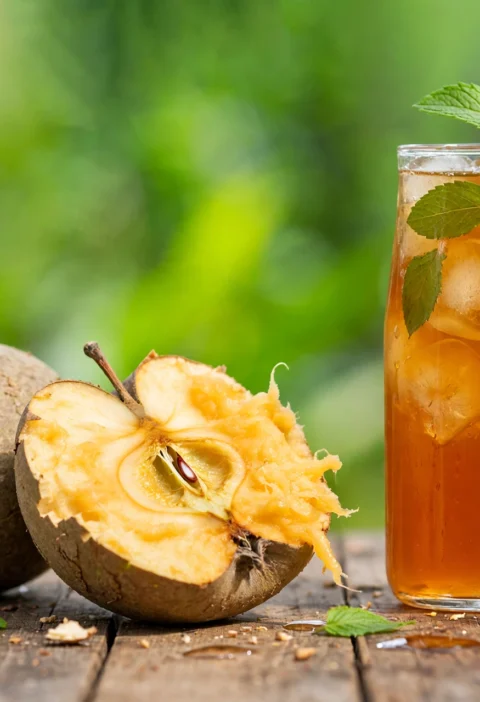
When friends drop by, I put the jug at the centre of the table beside a bowl of crushed ice, extra lemon wedges, and a bunch of mint, and let everyone pour their own. If your guests already know our imli sharbat, set the two jugs out together and let them taste the contrast, jaggery’s dark, grounded sweetness against tamarind’s bright, punchy sourness. And for a softer, floral note on the same table, a jug of our bel sharbat brings a gentle wood-apple fragrance beside this gud sharbat recipe’s rustic warmth.
Storage and Reheating
Gud sharbat is one of the kinder coolers to keep, which is another reason a jug of it lives in my fridge all summer. The concentrated base, jaggery dissolved and seasoned but not yet thinned, holds well in a sealed glass jar in the refrigerator for up to five days, and a day of resting actually lets the salt and cumin settle deeper into the syrup. To serve, simply thin a portion with cold water and ice. Once diluted, the drink stays pleasant for two days in the fridge, though the mint leaves are best fished out after day one, before they darken and flatten the flavour.
Freezing gives this gud sharbat recipe a second act. Pour the thinned drink into ice cube trays and freeze it solid, and those amber cubes are lovely dropped into soda water or lemonade when you fancy something lighter. One practical warning: keep the drink out of reactive metal jugs for long storage, since its acidity can take on a metallic edge; glass or food-grade plastic keeps it clean.
Gud Sharbat Recipe FAQs
Is gud sharbat the same as sugar water?
No, and the difference is the whole point of the drink. Refined sugar dissolves into plain sweetness with nothing behind it, while jaggery carries minerals, molasses notes, and a deep earthy character that makes the glass taste like something with a past. This gud sharbat recipe leans on that character, then brightens it with lemon and salt, so the result is layered rather than one-note. If you swap in sugar, you will get a sweet drink, but you will lose the flavour that makes this gud sharbat recipe worth making.
Can I make this gud sharbat recipe without lemon?
You can, but the drink changes quite a bit. Without lemon, the jaggery’s sweetness sits heavier and the glass tastes flatter, more like a syrup than a cooler. If lemons are out of reach, a tablespoon of orange juice or a pinch of citric acid gives some of the same brightness, though neither copies lemon exactly. Whatever you use, keep some sour note in the glass, because that contrast is what keeps this gud sharbat recipe refreshing instead of cloying.
Why is my sharbat cloudy or gritty?
Cloudiness almost always comes from jaggery that has not fully dissolved, or from a block carrying fine sediment. Grating the jaggery fine and dissolving it in warm water first solves most of it, and straining the base through a fine sieve before diluting catches anything left behind. Grit at the bottom of the glass means undissolved pieces slipped through, so stir the base again and strain it. A clear, golden pour is the sign that this gud sharbat recipe was made with care.
Can I serve gud sharbat warm in winter?
You can, and it is unexpectedly comforting served that way. Heat the thinned sharbat gently until it steams, without letting it boil, and pour it into small cups like a winter tonic, perhaps with an extra pinch of roasted cumin and a thin slice of ginger. Warm, the flavours open differently, closer to a soothing digestive than a cooler, and it makes a lovely drink after dinner on cold nights. Only avoid a hard boil, which flattens the jaggery’s delicate notes, and this gud sharbat recipe depends on keeping that flavour soft.
Recipe Summary
Dissolving time: about 10 minutes. Chilling time: 30 minutes. Hands-on time: roughly 10 minutes. Total time: under an hour, most of it waiting. Makes about 4 tall glasses. Level: easy, with the sweet-sour balance the only detail worth tasting twice. This gud sharbat recipe takes a block of jaggery, cold water, lemon, and a pinch of salt, and turns them into the chilled, earthy cooler I reach for whenever summer presses in. Make it once on the next warm day, and I suspect a jug of it will become a fixture in your fridge too.
A little background for the curious: jaggery is a traditional unrefined sweetener made by boiling down sugarcane or palm sap and setting it into blocks, and it sweetened South Asian cooking for thousands of years before refined sugar became common. And sharbat covers a whole family of sweet, chilled drinks poured across South Asia and the Middle East, built from fruit, flowers, or herbs and served over ice. Pairing the two in a single frosted glass is a very old idea, kept simple, and that simplicity is exactly what you taste in this gud sharbat recipe.