Bread rolls were the first fried snack I ever learned to make without a recipe book open beside me. I was fourteen, home alone after school, and hungry in that way where only something hot and salty will do. My mother kept boiled potatoes in the fridge and white bread on the counter, and I remembered watching her press potato filling into damp bread slices, roll them up like little parcels, and slide them into oil. My first batch came out lopsided and one burst open, but the rest turned a deep, even gold, and I ate them standing at the counter with ketchup straight from the bottle. This bread roll recipe is that same snack, refined over years of after-school experiments into something I can now make half asleep.
What keeps me coming back to bread rolls is how forgiving they are. Stale bread works better than fresh, leftover potatoes are perfect, and the filling welcomes whatever you have on hand, from peas and corn to grated paneer or cheese. There is no dough to knead and no batter to rest, just bread, filling, and hot oil, and in about thirty-five minutes you have crunchy, golden rolls that disappear faster than anything else I put on the table. When friends drop by unannounced, this bread roll recipe is my rescue, because it looks planned even when it was not.
Why This Bread Roll Recipe Works
- Stale bread seals better than fresh. Day-old slices hold their shape when dampened and roll without tearing, while very fresh bread turns to mush.
- The filling is mashed, not chunky. A smooth, well-seasoned potato mixture stays put inside the roll instead of poking through the bread, so this bread roll recipe fries up neat and sealed.
- A quick dip, not a soak. Each slice meets the water for barely a second, just enough to soften it, and the excess is pressed out immediately — that light touch keeps this bread roll recipe crisp instead of soggy.
- Sealed edges fry clean. Pressing the seams firmly and rolling with gentle, even pressure means the rolls hold together in hot oil, giving you whole golden cylinders rather than unravelled scraps, which is the seal this bread roll recipe depends on.
- Medium-hot oil does the crisping. Properly heated oil browns the bread quickly and seals the outside before it can drink up grease, which is why this bread roll recipe stays crunchy long after it leaves the pan.
Ingredients
You will not need a special shopping trip for this bread roll recipe, since nearly everything on the list is probably already sitting in your kitchen. The two choices that matter most are the bread and the potatoes. Plain white sandwich bread is the classic choice because it softens evenly and fries to a uniform gold, though whole wheat works too with well-trimmed crusts. For the potatoes, use a floury variety that mashes smoothly, boiled until completely tender, because even one firm lump can tear the bread from inside.
- 8 slices white sandwich bread, preferably a day old, crusts trimmed
- 3 medium potatoes (about 1 pound), boiled, peeled, and mashed
- 1 small onion, very finely chopped
- 1/2 cup frozen green peas, thawed
- 1 green chilli, deseeded and finely chopped
- 1 tablespoon ginger, finely grated
- 2 tablespoons fresh coriander leaves, chopped
- 1 teaspoon cumin seeds
- 1 teaspoon garam masala
- 1/2 teaspoon Kashmiri red chilli powder
- 1/2 teaspoon amchur (dried mango powder)
- 1 teaspoon salt, adjusted to your taste
- 1 tablespoon freshly squeezed lemon juice
- 1/4 cup water, for dampening the bread
- 3 cups vegetable oil, for frying
- Mint chutney and tomato ketchup, to serve
A note on the peas: if using frozen peas, boil them for two minutes and drain well before they go into the filling. Wet peas make the filling loose, and a loose filling is the main reason rolls split during frying. The mashed potatoes should likewise be dry and fluffy, not wet and sticky.
Method
Step 1: Cook the spiced potato filling
Heat a teaspoon of oil over medium heat and let the cumin seeds crackle until they smell nutty. Add the onion and cook gently for three to four minutes until soft and translucent, then stir in the ginger and green chilli for one more minute. Tip in the peas, garam masala, chilli powder, and amchur, and stir for another minute so the spices bloom. Take the pan off the heat, fold in the mashed potatoes, coriander, salt, and lemon juice, and mix until evenly combined. Taste and adjust the salt and lemon now, because once the filling is inside the bread there is no fixing it. Let the mixture cool completely, about fifteen minutes, since warm filling softens the bread too much. Getting this filling right is the foundation of this bread roll recipe.
Step 2: Trim and prepare the bread slices
Cut the crusts off every slice with a sharp knife, keeping the cuts straight so the slices stay even. Stack the trimmed slices and press each one lightly with a rolling pin, just one gentle pass, which flattens the crumb and makes the bread flexible enough to roll without cracking. Keep the slices under a clean, barely damp cloth while you work, because exposed bread dries out within minutes and splits at the seam. This quiet preparation step is what separates tidy, bakery-looking rolls from ragged ones, and it matters in this bread roll recipe.
Step 3: Dampen, fill, and roll each slice
Pour the water into a shallow plate. Dip one slice for barely a second, lift it out immediately, then press it gently between your palms to squeeze out the excess moisture. The bread should feel soft and pliable, not dripping. Spoon about two tablespoons of cooled filling along one short edge, shaping it into a small log. Roll the slice away from you, tucking the filling in snugly, and press the far edge down firmly to seal it. Roll the cylinder lightly between your palms to smooth the seam, which is the shaping habit this bread roll recipe relies on, and set it seam-side down. Repeat with the remaining slices.
Step 4: Fry in medium-hot oil until deep gold
Warm the oil in a deep kadhai on a medium flame until it hits roughly 350°F. A small scrap of bread dropped in should sizzle at once and turn golden within half a minute. Slide four rolls at a time into the oil, seam-side down first, and fry for three to four minutes, turning gently with tongs so they brown evenly. Keep the heat steady and do not crowd the pan, because too many rolls at once pull the temperature down and the bread soaks up oil instead of crisping. Lift the rolls out when they are a rich, even gold all over.
Step 5: Drain, rest briefly, and serve hot
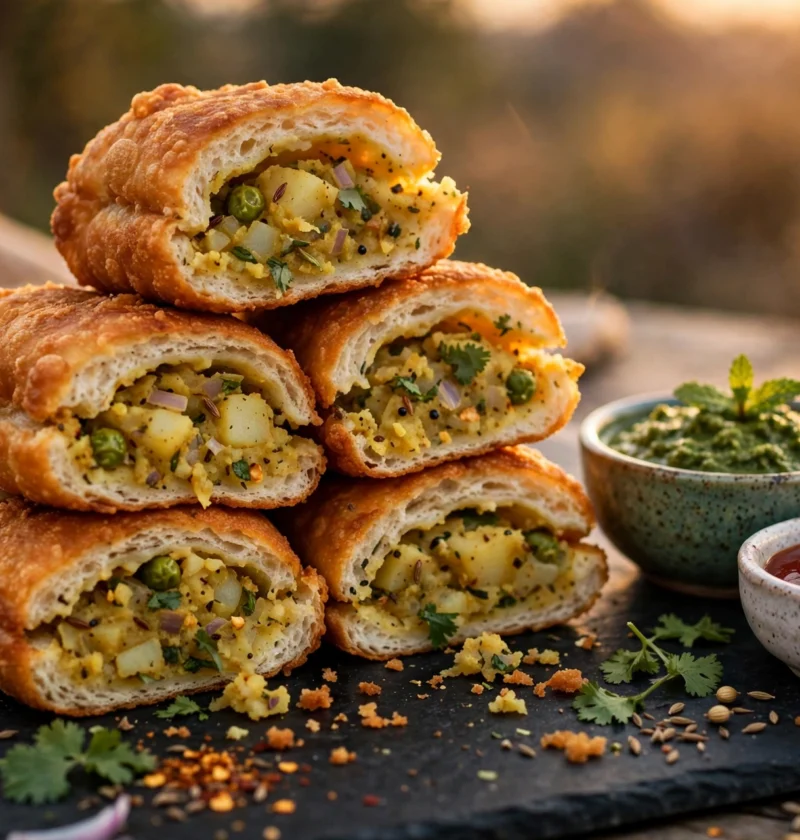
Set the fried rolls on a wire rack so air can circulate underneath and keep the crust crisp instead of letting it steam soft. Let them rest for two to three minutes, long enough for the filling to settle and the outside to firm up, but short enough that they are still properly hot at the table. Serve this bread roll recipe with mint chutney and ketchup on the side, and cut one roll open at the table if you want the golden crust and soft spiced centre to do the talking.
Serving Suggestions for This Bread Roll Recipe
At my house, bread rolls rarely survive long enough to be arranged on a platter. Someone always wanders in while the first batch is still draining on the rack, and a roll or two vanishes before I have finished frying the second round. When they do make it to the table intact, mint chutney is my go-to, cool and tangy beside the warm spices, with ketchup for anyone who prefers something sweeter. A cup of masala chai alongside turns this bread roll recipe into a proper evening snack.
For a party spread, slice each roll diagonally and stand the pieces upright, which shows off the golden crust and spiced filling and makes a small batch look generous. If your guests already love our bread pakora, serve the two together and let people compare them, the stuffed, rolled bread against the batter-dipped slice, and for a softer contrast, a plate of aloo bonda brings round, spiced potato dumplings to balance the crisp cylinders.
Storage and Reheating
Bread rolls are at their finest straight from the pan, and I would rather say that plainly than pretend otherwise. The crust is at its crispest in the first twenty minutes, then gradually softens as moisture from the filling works outward. A leftover batch is still worth keeping, though. Once completely cool, place the rolls in a single layer in a sealed container and refrigerate for up to two days, chutney in a separate bowl so dampness never reaches the crust.
To bring this bread roll recipe back to life, spread the rolls on a tray and warm them in a hot 375°F oven for around seven minutes, flipping them halfway, until the outside crisps again. An air fryer at 350°F for four minutes works just as well for a small batch. Skip the microwave, which turns the crust rubbery within seconds. The uncooked filling keeps chilled for two days, so the smartest party move is to prepare the filling ahead and roll and fry fresh just before guests arrive.
Bread Roll Recipe FAQs
Why do my bread rolls burst open while frying?
Almost always, the bread was too wet or the seam was not pressed firmly enough. A dripping slice turns weak in hot oil, and a loose edge gives the filling an easy escape route. Dip each slice for barely a second, squeeze out the excess right away, press the seam down with your palm, and fry seam-side down first so the heat seals the join shut, which is the sealing trick this bread roll recipe depends on.
Can I make this bread roll recipe in an air fryer?
Yes, and the results are genuinely good, though the crust is a touch less deep-gold than deep-fried rolls. Brush or spray the rolls generously with oil, arrange them seam-side down in a single layer, and cook at 375°F for ten to twelve minutes, turning once halfway, until crisp and golden. Work in small batches so the rolls do not touch, because crowded rolls steam each other soft. The filling and rolling steps of this bread roll recipe stay exactly the same.
Can I use whole wheat bread for bread rolls?
You can, with one adjustment. Whole wheat slices are sturdier and drier, so they need a slightly longer dip and a firmer press with the rolling pin to become flexible. Trim the crusts carefully, because whole wheat crusts are tougher and resist sealing. The flavour is heartier and nuttier, suiting the spiced potato well, and the rolls fry to a darker, more rustic gold.
What fillings work besides potato?
The potato base is classic, but it welcomes company. Grated paneer stirred through the mash adds richness, sweet corn brings pops of sweetness that children love, and a spoonful of grated cheese in the centre melts into a gooey surprise. Keep any addition modest and the filling dry, because a wet or overstuffed filling is what makes rolls split. Whatever you add, season the mixture and taste it before rolling, since the bread itself adds no flavour of its own, and that tasting habit is part of what makes this bread roll recipe reliable.
Recipe Summary
Prep time: 20 minutes, plus cooling time for the filling. Frying: about 12 minutes across batches. Total time: roughly 35 minutes. Makes 8 rolls, enough for 4 as a snack. Level: easy, though dampening deserves a light hand. This bread roll recipe takes everyday bread and potatoes and turns them into golden, crunchy cylinders with a warmly spiced centre, a snack that suits chai time, lunchboxes, and unexpected guests equally well. Try it once on a lazy evening, and I suspect it will become your standby for hungry afternoons.
For the curious, the bread roll has cousins in bakeries all over the world, from soft dinner rolls to stuffed street snacks, while bread itself is one of the oldest prepared foods humans have made. Wrapping a spiced filling in a slice of it and frying the parcel crisp is a small, clever twist on that long history, and it is exactly the twist you taste in this bread roll recipe.