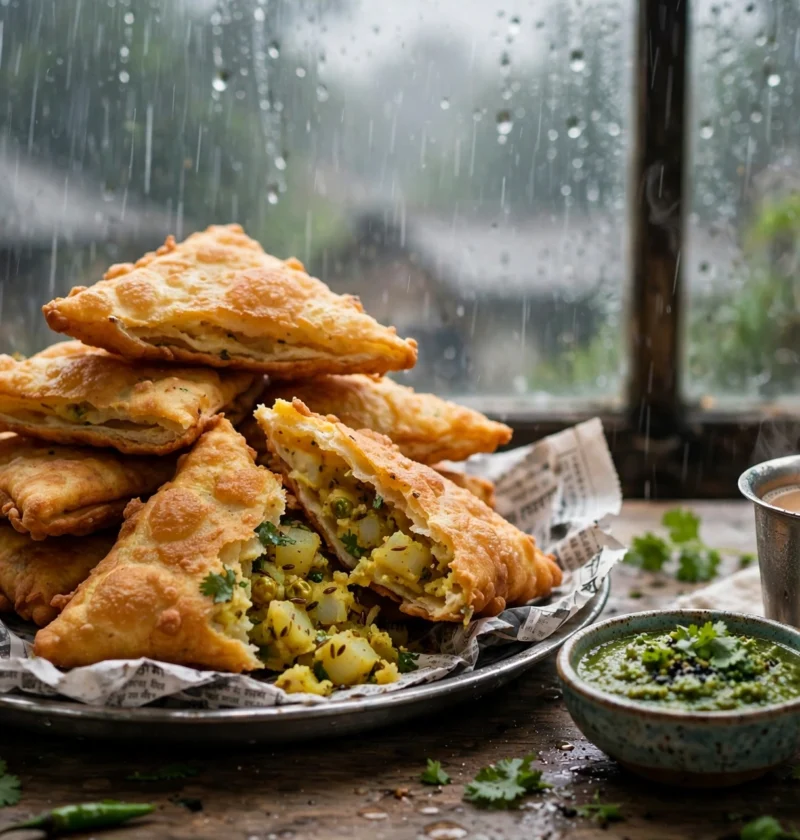
Some snacks belong to a weather, and bread pakora belongs to rain. The first monsoon shower of the year, and every tea stall in the bazaar would have a karahi going — soft white bread triangles disappearing into yellow batter and coming out puffed, golden, and too hot to hold, while the rain hammered the awning. At home it was the same ritual: the sound of rain, the smell of wet earth, and my mother announcing a pakora day, which nobody argued with. This bread pakora recipe is that stall pakora rebuilt in my kitchen: bread sandwiched around a thin layer of spiced potato, dipped in a seasoned besan batter, and fried until the coat puffs into a crisp pillow around the soft middle.
My early attempts produced a small gallery of batter failures. My first batch came out oil-logged and soggy in the middle, because my batter was thin as crepe batter and the oil was barely warm — the coat never set, and the bread inside drank grease by the spoonful. My second batch shed its coats in the oil like snakeskins, because the bread was fresh and damp and the batter simply slid off it. And my third wore coats so doughy that each pakora ate like a fried dumpling with a rumour of bread inside. The rules of this bread pakora recipe are those three karahis of lessons: the batter must coat like a ribbon, the bread must be dry and fully sealed by its dip, and the oil must be hot enough to set the coat before the crumb starts drinking.
Why This Bread Pakora Recipe Works
A bread pakora is a race between a batter setting and a bread soaking, and the batter must win in the first ten seconds. This bread pakora recipe is arranged so that it does:
- The batter is mixed to ribbon consistency. Whisked besan that falls off the spoon in a thick ribbon — coating the back of a spoon and holding its trail — is thick enough to cling and seal, yet light enough to puff. Watery batter slides and soaks; paste-thick batter fries into dough. The ribbon is the whole target of a bread pakora recipe.
- The bread goes in dry, and the dip seals every edge. Bread that is a day old, or fresh bread left out for half an hour, takes batter far better than a damp, just-bagged slice. A full dip coats the cut edges too, and sealed edges keep the oil outside the sandwich where it belongs.
- The oil is at 350°F (175°C) and held there. At that heat the batter sets into a shell almost on contact, before the bread beneath it can absorb anything. Cool oil means the coat stays raw and porous while the crumb drinks. The soggy middle is born in cool oil, every time.
- The potato layer is thin and dry. A thick or wet filling steams from inside, splits the seams, and pushes the batter off. Spread thin and mashed dry, the potato seasons the bite without ever threatening the coat — a filling in a bread pakora recipe is a whisper, not a shout.
- The batter rests before it fries. Ten minutes of rest lets the besan hydrate fully, so the batter turns smooth, lump-free, and better at clinging — and it shows in every pakora.
Ingredients
Makes 8 pakoras (4 sandwiches), serves 4
For the spiced potato filling:
- 2 medium potatoes, boiled, peeled, and mashed dry
- 1 green chili, minced fine
- 1 tablespoon fresh coriander leaves, chopped
- 1/4 teaspoon red chili powder
- 1/2 teaspoon roasted cumin powder
- 1/2 teaspoon chaat masala
- 1/2 teaspoon salt, or to taste
For the besan batter:
- 1 1/2 cups besan (gram flour), sifted
- 2 tablespoons rice flour (optional, for extra crispness)
- 1/2 teaspoon ajwain (carom seeds), lightly crushed
- 1/2 teaspoon red chili powder
- 1/4 teaspoon turmeric powder
- 1/2 teaspoon salt
- A pinch of baking soda
- About 3/4 cup water, added gradually
For frying and serving:
- 8 slices soft white bread, crusts left on or trimmed, as you like
- Oil, for deep-frying
- Green chutney and tomato ketchup, to serve
- Chaat masala, for a final dusting (optional)
The batter at the heart of this snack coats half the subcontinent’s fried food — gram flour, besan, ground from chickpeas, whisked with water and spice into the golden cloak of every pakora ever fried. What the bread version does with that old batter is a small act of bazaar genius: it takes the cheapest, plainest slice and, in ninety seconds of hot oil, turns it into the thing the whole street queues for. A bread pakora recipe is proof that a great snack is mostly technique wearing humble ingredients.
How to Make This Bread Pakora Recipe – Step by Step
Step 1: Mash the potato filling — dry.
While the potatoes are still warm, mash them thoroughly with the green chili, coriander, chaat masala, cumin, chili powder, and salt, until the mixture is smooth and evenly spiced. It should feel like a firm, dry mash, not a soft puree — if your potatoes were watery, dry the mash for a minute in a warm pan, stirring, until the steam stops. Taste it now — this thin layer is all the seasoning the middle gets, so it should taste bolder than you think it needs to. Set it aside to cool completely; warm filling steams its own sandwich apart, and a bread pakora recipe keeps its components cool-headed.
Step 2: Build the sandwiches and cut them into triangles.
Spread a thin, even layer of the potato mash — about 2 tablespoons — over 4 of the bread slices, taking it right to the edges so every bite is seasoned. Lay the remaining slices on top and press each sandwich firmly with your palm, so the layers hold together. Cut each sandwich diagonally into 2 triangles. If your bread is very fresh and soft, leave the triangles out on the counter for 15 to 20 minutes so their surfaces dry slightly — this one habit saves more coats than any other trick in this bread pakora recipe.
Step 3: Whisk the batter to a ribbon, then rest it.
Whisk the besan, rice flour, ajwain, chili powder, turmeric, and salt together in a wide bowl. Add the water a little at a time, whisking constantly, until it slides off the spoon in a slow, heavy ribbon and briefly keeps its trail on the surface before sinking — roughly pancake batter, a shade thicker. Stir in the pinch of baking soda last, then rest the batter for 10 minutes. It thickens slightly as the besan drinks; loosen a pasty batter with a spoonful of water. A ribbon, not a river and not a paste — aim there and the bread pakora recipe does the rest.
Step 4: Dip, seal, and fry until puffed and golden.
Fill a karahi or deep pan with 2 to 3 inches of oil and heat it to 350°F (175°C); a test drop of batter should sizzle, puff, and bob to the surface within seconds. Working one triangle at a time, lay it in the batter, turn it so every face and cut edge is coated, let the excess drip a second, and slide it into the oil. Fry 3 or 4 at a time, turning once, for 3 to 4 minutes, until the coat is deep gold, puffed, and crisp all over. Do not crowd the pan — the temperature dip is how coats go pale and greasy, and this quick, hot, uncrowded frying is where a bread pakora recipe is won.
Step 5: Drain standing up, and serve at once.
Drain the pakoras upright on a rack for a moment, so no side sits in its own oil, then move them to a warm plate. A dusting of chaat masala over the hot coats is the stall keeper’s finishing touch. Serve this bread pakora recipe within minutes, with green chutney for the purists and ketchup for the children, and chai — there must be chai — alongside. A bread pakora waits for no one — it is at its puffed, shattering best in its first five minutes.
Serving Suggestions
A bread pakora recipe is tea-time food in its bones: a plate of them, still too hot, beside glasses of doodh patti while the rain falls outside. They open a snack spread beautifully, and they are natural citizens of a rainy-Ramadan iftar table, where they vanish between the dates and the dinner. Serve the chutney sharp and the chai strong; the pakora brings the comfort, and its companions should bring the contrast.
To place it among its fried cousins on this site: my pakora is the loose, free-form original — onions and greens dragged through the same besan batter and dropped in by the spoonful, all craggy edges and no structure. My samosa is the pastry route to the same destination, a rolled dough case folded around its filling and sealed by hand. The bread pakora recipe borrows the samosa’s sandwich architecture and the pakora’s batter, then refuses both labors: no dough to roll, no fritters to shape — just a slice, a dip, and ninety seconds of oil between you and the plate. That economy is the whole charm of a bread pakora recipe.
Storage and Reheating
Let us be honest first: a bread pakora recipe is a same-hour food, and no storage method resurrects that first puff. That said, leftovers keep a day in the refrigerator in a sealed box, and they reheat respectably — 5 to 6 minutes in a hot oven at 375°F (190°C), or a shorter blast in the air fryer — until the coat crisps again; never the microwave, which returns them steamed and floppy. The potato filling keeps 2 days refrigerated, and sandwiches can be assembled an hour or two ahead, covered — but whisk the batter fresh and fry at the moment of eating. Freezing does not suit a bread pakora recipe at all — the bread turns to sponge on thawing, and some plates must be made fresh.
Frequently Asked Questions
Why are my bread pakoras soggy and oily in the middle?
Almost always the batter was too thin or the oil too cool — usually both, since thin batter needs time to set and cool oil gives the bread every chance to drink. Mix the batter to a slow ribbon, check that the oil has reached 350°F (175°C) before the first triangle goes in, and fry in small batches so the temperature holds. Sogginess in a bread pakora recipe is never the bread’s fault; it is the batter and the thermometer negotiating badly.
Why did the batter slide off my pakoras in the oil?
The bread surface was too damp, or the batter too runny to grip it. Fresh, just-bagged bread is the usual culprit — let the cut triangles rest on the counter until their surfaces feel dry to the touch, dip them fully so the coat wraps the edges, and check your batter against the ribbon test. A coat that clings in the bowl will cling in the karahi; a coat that slides off the spoon will slide off the bread, and a bread pakora recipe cannot insure against either shortcut.
Can I skip the potato filling?
Yes — the plain version, just bread in batter, is a bazaar classic in its own right and fries up lighter and puffier still. You can also go the other direction: a smear of green chutney inside, a thin slice of paneer, or a cheese-and-chili layer all work, provided it is dry and thin. Wet fillings — anything saucy, anything fresh from the fridge with condensation on it — will steam the sandwich open. Keep the inside dry and the bread pakora recipe will keep its promises.
Can I bake or air-fry bread pakoras instead?
An air fryer gives you a respectable approximation: spray the dipped triangles generously with oil and cook at 390°F (200°C) for 8 to 10 minutes, turning once — the coat sets crisp, though less puffed than the fried original. Baking is harder to love, since wet batter drips and pools before it sets. This is one snack where the karahi honestly earns its place; if you do air-fry, a slightly thicker batter is your friend, and the bread pakora recipe forgives the experiment.
Recipe Summary
- Prep time: 25 minutes (plus 10 minutes batter resting)
- Cook time: About 15 minutes
- Total time: Around 50 minutes
- Servings: 8 pakoras, serving 4 people
- Cuisine: Pakistani
- Course: Snack / Tea-Time