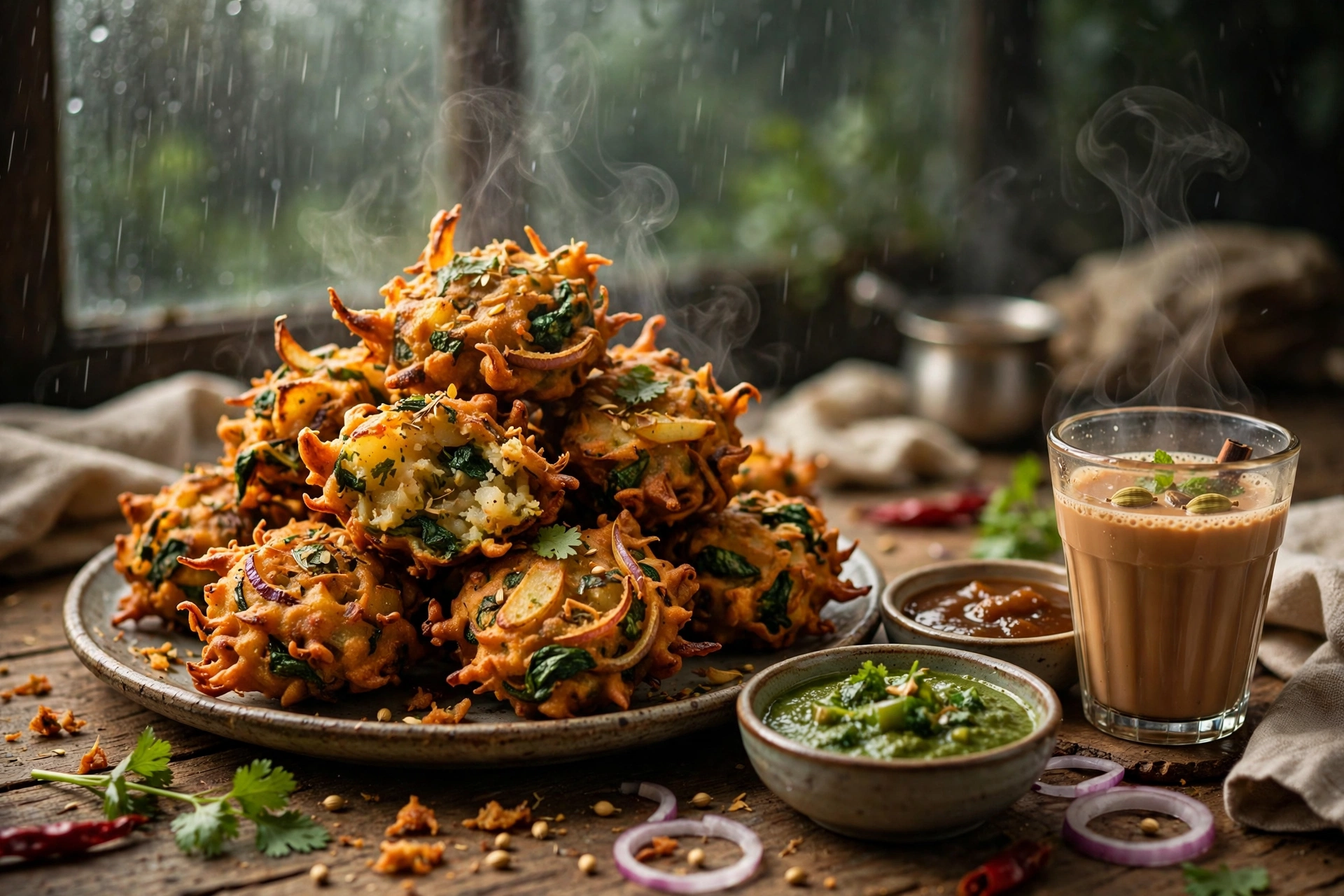
In Pakistan, pakoras are not really a recipe — they’re a weather event. The moment the sky goes dark and the first fat drops hit the courtyard, someone in the house yells “pakoray!” and the whole evening rearranges itself around the karahi. My childhood barish memory isn’t the rain itself; it’s the sound of batter hitting hot oil, the smell of ajwain and frying onions drifting through a house with all the windows open, and a plate of pakoras that never quite made it to the table because we ate them standing around the stove, burning our fingers.
If you’re new to these fritters, Wikipedia’s pakora article gives a nice overview of their history across South Asia — but for the crispiest homemade batch, this pakora recipe is the one to follow.
This pakora recipe is the result of many, many rainy seasons of trial and error. Because here’s the thing nobody tells beginners: making pakoras is easy, but making crispy pakoras — the kind that stay crunchy instead of going limp and oily in ten minutes — is a small science. I learned it the hard way, serving my cousins a plate of sad, greasy pakoras one monsoon evening and watching them politely chew while exchanging looks. My ami fixed my technique in about five minutes, and I’ve never made a soggy pakora since. Below is the exact pakora recipe my ami taught me, with the four rules that make all the difference.
Why This Pakora Recipe Works
Crispiness in pakoras comes down to four things, and most pakora recipes only tell you two of them. Here’s the full picture:
- Besan plus rice flour. Pure besan (gram flour) gives you flavor but a slightly soft, bready crust. My ami’s ratio — roughly 3 parts besan to 1 part rice flour — gives you a crust that shatters. The rice flour doesn’t absorb as much oil, so the pakoras fry up lighter and stay crisp far longer. This single change fixed 80% of my sogginess problem.
- Thick batter, minimal water. The vegetables release moisture as they sit, so you need far less water than you think. A thick batter clings to the vegetables and fries crisp; a thin batter slides off, absorbs oil, and steams instead of frying. Add water a spoonful at a time — you can always add more, but you can’t take it back.
- Hot oil, but not smoking. The oil needs to be properly hot (around 175°C / 350°F) before the first pakora goes in. Too cool and the pakoras drink oil like sponges. Too hot and the outside burns before the inside cooks. Test with a tiny drop of batter — it should sizzle immediately and rise to the surface within a couple of seconds.
- Don’t crowd the karahi. This was my biggest sin as a beginner. Cramming in pakoras drops the oil temperature, and then everything steams in lukewarm oil. Fry in small batches, give each pakora room, and the crunch takes care of itself.
Nail these four details and this pakora recipe delivers shatteringly crisp results every single time.
Pakora Recipe Ingredients
Makes about 25–30 pakoras (serves 4–6 as a snack)
- 1 1/2 cups besan (gram flour / chickpea flour)
- 1/2 cup rice flour (the crispiness secret — don’t skip it)
- 2 medium potatoes, peeled and cut into thin half-moons
- 1 large onion, thinly sliced
- 1 cup fresh spinach leaves, roughly chopped (palak)
- 2–3 green chilies, finely chopped (adjust to your heat tolerance)
- 1/4 cup fresh coriander leaves, chopped
- 1 teaspoon ajwain (carom seeds) — the classic pakora spice
- 1 teaspoon cumin seeds, lightly crushed
- 1 teaspoon red chili powder
- 1/2 teaspoon turmeric powder
- 1/2 teaspoon baking soda (my ami’s trick for a lighter, puffier pakora)
- 1 1/2 teaspoons salt (adjust to taste)
- 1 tablespoon lemon juice (brightens everything)
- About 1/2 cup water, added gradually
- Oil for deep frying (mustard oil is traditional; any neutral oil works)
A word on the vegetables: this is a mix pakora recipe, and the mix is the point. Potatoes give you soft, creamy centers. Onions caramelize at the edges into crispy lace. Spinach wilts into savory little pockets. You can absolutely riff on this — cauliflower florets, sliced eggplant, green chilies stuffed with a pinch of masala — but keep the vegetable-to-batter ratio roughly as written. Too many vegetables and the batter can’t coat them; too much batter and you’re eating fried dough. Every vegetable in this pakora recipe earns its place.
How to Make This Pakora Recipe – Step by Step
Step 1: Prep the vegetables.
Slice everything before you touch the batter. Potatoes in thin half-moons (thick slices stay raw inside), onions in thin half-rings, spinach roughly chopped. Pat the potatoes dry with a kitchen towel — surface moisture is the enemy of crispiness. Toss all the vegetables with the salt and lemon juice and let them sit for 10 minutes. They’ll release some water, which means you’ll need less added water later.
Step 2: Mix the dry batter.
In a large bowl, whisk together the besan, rice flour, ajwain, cumin seeds, red chili powder, turmeric, baking soda, and the remaining salt. Whisking the dry ingredients first distributes the spices and baking soda evenly — biting into a pocket of pure baking soda is a mistake you make exactly once.
Step 3: Bring it together — gently.
Add the vegetables, green chilies, and coriander to the dry mix and toss with your hands until everything is coated. Now add water, a few tablespoons at a time, mixing until you have a thick batter that clings heavily to the vegetables. It should look like the vegetables are wearing the batter, not swimming in it. Let it rest 10 minutes — the vegetables release a bit more moisture and the flours hydrate.
Step 4: Heat the oil properly.
Pour oil into a deep karahi or wok to about 2–3 inches depth and heat over medium-high. Test with a pea-sized drop of batter: it should sizzle vigorously and bob up within 2–3 seconds. If it sinks and sits there, wait longer. If it browns instantly, the oil’s too hot — take it off the heat for a minute.
New to deep frying? This deep frying overview explains why holding the right oil temperature matters so much for this pakora recipe.
Step 5: Fry in small batches.
Using your fingers or a spoon, drop tablespoon-sized mounds of the mixture into the oil — don’t shape them neatly; the craggy, irregular edges are what get crispiest. Fry 5–6 at a time, no more. Let them fry undisturbed for a minute so the crust sets, then turn. Total frying time is about 4–5 minutes per batch, until deep golden all over. The sound changes when they’re done — the sizzle gets quieter and sharper. That’s the moisture leaving, and it’s the sound of crispiness.
Step 6: Drain right.Lift out with a slotted spoon and drain on a wire rack set over a tray — not on paper towels, which trap steam underneath and soften the bottom. Sprinkle with a pinch of chaat masala while they’re hot, if you like. Serve immediately. Pakoras wait for no one. Proper draining is the final secret of this pakora recipe — skip the paper towels and the crunch lasts for hours.
Serving Suggestions for This Pakora Recipe
The only correct beverage with pakoras is doodh patti — strong, milky, sweet chai. The combination of crunchy, spicy pakoras and sweet creamy chai is one of the great flavor pairings of Pakistani cuisine, and rainy days were invented for it. On the plate: imli (tamarind) chutney for tang, mint raita for cooling, and ketchup for the kids (and, honestly, for me too). It’s the pairing this pakora recipe was made for.
If you fry extra — and you should, because they vanish — don’t let them go to waste. Day-old pakoras are the perfect excuse to make my kadhi pakora recipe, where crispy pakoras get folded into a tangy yogurt curry. And if the rain settles in for the evening, follow the pakoras with a proper dinner — my daal tadka recipe with steamed rice is the cozy, low-effort meal that rainy nights deserve.
Storage and Reheating
Pakoras are at their absolute best within 30 minutes of frying — that’s just the truth. But thanks to the rice flour, these stay respectably crisp for 2–3 hours at room temperature on a wire rack. To revive leftovers, spread them on a baking tray and bake at 200°C (400°F) for 8–10 minutes — they come back remarkably well. Never microwave them unless you enjoy chewing on rubber. You can refrigerate cooked pakoras for up to 2 days, but honestly, they’re rarely around that long.
The uncooked batter keeps in the fridge for up to a day, though the vegetables will release more water — stir well and add a spoonful of besan to thicken before frying.
Frequently Asked Questions
Why are my pakoras soggy and oily?Almost always: oil wasn’t hot enough, batter was too thin, or you crowded the pan. All three cause the same problem — the pakora steams in oil instead of frying in it. Fix the oil temperature first; it’s the culprit 90% of the time. Follow the temperatures in this pakora recipe and you’ll never have this problem.
Can I make pakoras in an air fryer?
You can, but manage expectations. Spray the pakoras generously with oil and air fry at 200°C (400°F) for 12–15 minutes, flipping once. They’ll be tasty and much lighter, but they won’t have that shattering deep-fried crust. For barish days, deep frying is worth it.
Why add rice flour? Can I skip it?
You can skip it, but you’ll notice the difference. Rice flour absorbs less oil and fries up crisper and lighter than pure besan. Cornstarch works as a substitute in the same quantity. But don’t replace it with more besan — that just makes the crust heavier.
My pakoras are browning too fast but raw inside. What went wrong?
Your oil is too hot, or your vegetable pieces are too thick. Lower the heat slightly and slice potatoes thinner. The inside needs time to cook through — rushing it with high heat just burns the outside.
Can I make this pakora recipe ahead of time?
You can mix the dry batter and chop the vegetables a few hours ahead, but only combine and fry when you’re ready to serve — this pakora recipe is at its best within 30 minutes of frying.
Recipe Summary
- Prep time: 20 minutes (+ 20 minutes resting)
- Cook time: 25–30 minutes (in batches)
- Servings: 4–6 as a snack
- Cuisine: Pakistani
- Course: Snack / Appetizer (vegetarian)
This pakora recipe makes about 25–30 pakoras — enough for 4–6 people as a snack, or one very happy family on a rainy evening.