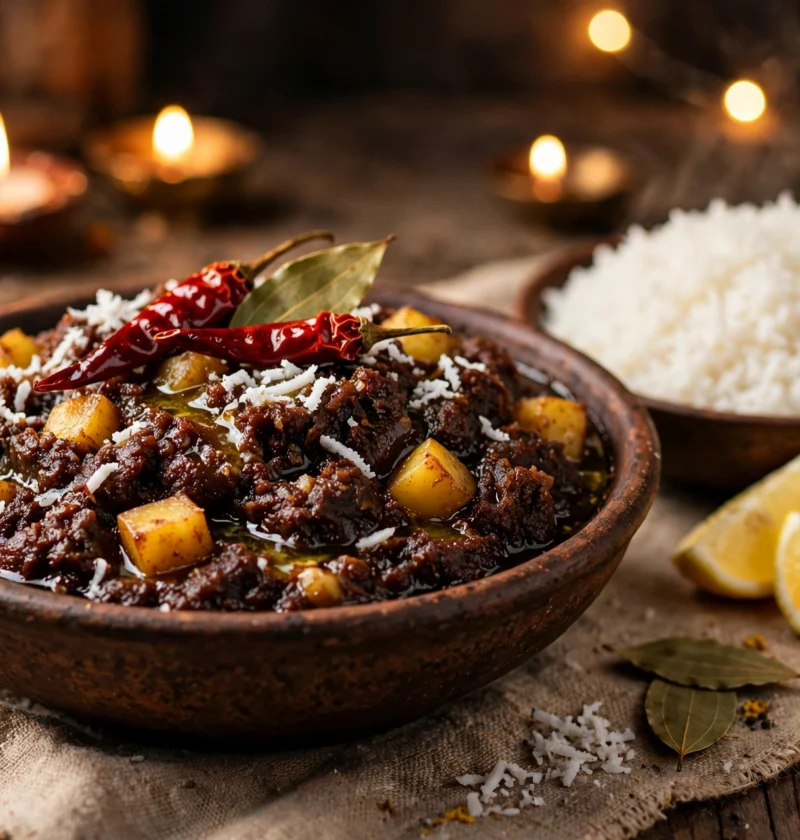
The first time I helped clean a banana blossom, I genuinely believed my aunt was testing my patience. We sat on her veranda with a steel bowl of turmeric water between us, peeling away purple bract after purple bract, plucking out the little florets, pinching the hard stamen from the heart of each one, my fingers slowly staining the colour of strong tea. It took the better part of an hour. Then she chopped the whole pile fine, folded it through spiced potato and coconut, and finished it with ghee until the pan held something dark, glossy and so good that the hour of peeling felt like a bargain. That afternoon is why this mochar ghonto recipe exists in my kitchen — some dishes you earn, and this is one of them.
Mocha is the Bengali name for the banana flower, the deep purple teardrop hanging at the end of a banana bunch, and ghonto means a dry, mashed-together curry — no gravy, everything cooked down until the ingredients lose their edges and become one rich mass. In Bengal this is celebration food, served at weddings and annaprashan feasts precisely because it is laborious; nobody makes it on a tired Tuesday. Cooked properly, the blossom turns almost meaty — earthy, faintly bitter, deeply savoury. A good mochar ghonto recipe is really two recipes in one: how to tame the blossom, and how to build enough warmth around it — fried potato, coconut, whole spices, a last spoon of ghee — that the bitterness reads as depth instead of a flaw.
Why This Mochar Ghonto Recipe Works
Banana blossom defeats beginners in predictable ways: it blackens, it stays stringy, or it floods the pan with bitter sap. Every habit in this mochar ghonto recipe is aimed at one of those failures:
- The blossom is cleaned properly, stamen by stamen. Inside every floret sits a stiff stamen and a plastic-like scale that never softens, however long you cook it. Removing both is the difference between a silky ghonto and a mouthful of splinters.
- Turmeric water does double duty from the first cut. Dropping the chopped blossom straight into turmeric water stops it oxidising into a grey-brown mess and draws out the harsh sap before it ever reaches the pan.
- The blossom is boiled before it is fried. A short boil in salted turmeric water softens the fibres completely, so the mash turns tender instead of chewy.
- Potato and coconut give the blossom company it needs. Fried potato brings body and crisp edges, coconut brings sweetness and fat — together they round the blossom’s earthiness into something festive rather than austere.
- Ghee and garam masala go in at the very end. Adding them off the fiercest heat, then resting the pan covered, lets the perfume settle through the mash. Cook them hard from the start and that wedding-dish aroma boils away.
Ingredients
The star here is the flower of the banana plant, sold fresh at South Asian grocers — look for a firm, heavy blossom with tight, glossy purple bracts and no blackened tips. It sits at the heart of Bengali cuisine‘s tradition of turning humble plants into feast dishes. Everything else is a pantry regular, but buy coconut fresh or frozen if you can; desiccated works in a pinch, though it never melts into the mash like fresh does. One honest warning: do not wear white. The sap stains fingers brown, and Bengali grandmothers consider it the uniform of someone who has done the work.
Serves 4
For the banana blossom:
- 1 large banana blossom (mocha), about 1 1/2 pounds
- 1 teaspoon ground turmeric, for the soaking water
- 1 teaspoon salt, for the soaking water, plus more for boiling
- 1 tablespoon mustard oil or neutral oil, rubbed on your hands and knife
For the ghonto:
- 2 medium potatoes (about 3/4 pound), peeled and cut into 1/2-inch cubes
- 3 tablespoons mustard oil (or neutral oil)
- 1 teaspoon ghee, plus 1 more teaspoon to finish
- 2 dried bay leaves
- 2 dried red chillies
- 1 teaspoon cumin seeds
- 1 cinnamon stick, about 2 inches
- 3 green cardamom pods, bruised
- 3 whole cloves
- 1 medium onion, finely chopped (about 1 cup)
- 1 tablespoon ginger paste
- 2 medium tomatoes, finely chopped (about 1 cup)
- 1 teaspoon ground turmeric
- 1 teaspoon ground coriander
- 1 teaspoon ground cumin
- 3/4 teaspoon red chilli powder, or to taste
- 1/2 cup grated fresh or frozen coconut, plus 2 tablespoons more for garnish
- 2 fresh green chillies, slit lengthways
- 1 teaspoon sugar
- 1 teaspoon fine salt, or to taste
- 1/2 teaspoon garam masala
- 2 tablespoons fresh coriander leaves, chopped
How to Make This Mochar Ghonto Recipe – Step by Step
Step 1: Clean the banana blossom — the ritual that makes the dish. Fill a large bowl with water; stir in the teaspoon of turmeric and teaspoon of salt. Rub oil over your hands and knife; sap stains less on oiled skin. Peel away the tough outer purple bracts until the florets loosen — tender inner bracts can stay, chopped, since they are edible too. Open every floret and pinch out the stiff, matchstick-like stamen and the thin translucent scale hugging it; they never soften, so both go in the bin. Work down to the pale, tender heart and slice it thinly. Chop the cleaned florets roughly, drop everything into the turmeric water as you go, and soak at least 30 minutes — or refrigerate overnight, which mellows the flavour further — while the water pulls the bitterness out.
Step 2: Boil the blossom until it gives up its fight. Drain the soaked blossom and rinse it once. Bring a pot of water to a boil with a pinch each of salt and turmeric, add the blossom, and simmer 8 to 10 minutes, until a piece squashes easily between your fingers with no fibrous resistance. Drain well and squeeze gently by the handful — damp, not dripping. This boiling guarantees the finished ghonto mashes down silkily instead of staying stringy, so do not skip it and fry the blossom raw; raw blossom in a dry curry stays chewy however long the pan runs.
Step 3: Fry the potatoes until they earn their place. Heat the mustard oil in a broad, heavy-bottomed kadhai over medium-high heat until it just begins to smoke, then let it settle a few seconds — that brief smoking tames mustard oil’s raw pungency. Scatter the potato cubes in with a pinch of salt, keeping them in one layer, and fry, turning occasionally, for 6 to 8 minutes, until golden at the edges and just tender inside. Scoop them out and keep the spiced oil in the pan. Frying them separately matters: boiled-in potato would dissolve into the mash, while these hold their shape and give you something to bite.
Step 4: Build the masala and fold the blossom through it. Drop the teaspoon of ghee into the same pan, add the bay leaves, dried red chillies, cumin seeds, cinnamon, cardamom and cloves, and let them crackle for half a minute. Tip in the onion and fry 6 to 7 minutes until deeply golden at the edges. Stir in the ginger paste for a minute, then the tomatoes, turmeric, coriander, cumin and chilli powder, and cook the masala down 5 to 6 minutes, splashing in water whenever it threatens to catch, until the oil glistens at the edges. Add the boiled blossom, fried potatoes, half cup of coconut, green chillies, sugar and salt. Stir together, cover, and cook on low 10 to 12 minutes, pressing and folding with your spatula, until the blossom breaks down into a dark, cohesive mash clinging to the potato.
Step 5: Finish with ghee and garam masala, then let it rest. When the ghonto looks glossy and leaves the sides of the pan cleanly, scatter over the garam masala and the final teaspoon of ghee, fold through once or twice, and taste — earthy, gently sweet, warm rather than fiery is what you want. Switch off the heat, cover, and leave it a full 10 minutes. In that rest the ghee perfumes the whole mass and the texture tightens into the scoopable richness that makes a mochar ghonto recipe taste like a celebration. Shower with coriander and the reserved coconut, and serve still warm.
Serving Suggestions
Mochar ghonto belongs in the middle of a proper Bengali lunch, with plain steamed white rice, a wedge of lemon, and dal alongside — the rice carries it, the lemon brightens it, nothing else needs to compete. Because it is rich and dry, it loves a gentle course before it: my shukto opens the meal the traditional way, bitter and milky and calm, so by the time the dark, ghee-rich ghonto arrives your palate is ready for its weight. On rainy days, plenty of Bengali homes skip the formal spread and serve it over a soft bowl of my khichdi instead — yellow, soupy khichdi under a mound of dark blossom mash — the pairing I make most often at home.
One more thing worth knowing: this is a forgiving plate for guests who think they do not like banana blossom. The long cooking changes it so completely that most people guess mushrooms, or jackfruit, before flower — and by then the bowl is usually empty. That transformation is the real charm of a good mochar ghonto recipe: humble ingredients, patient hands, a finish rich enough for a wedding table.
Storage and Reheating
Mochar ghonto keeps remarkably well, and many cooks insist it tastes better the day after, once the spices have settled into the blossom. Cool completely, pack into a lidded airtight box, and refrigerate — it stays good for up to 3 days. The raw, cleaned blossom also holds in its turmeric water in the fridge for a day, so you can split the labour — clean on Sunday evening, cook on Monday — which is how most working Bengali households actually manage this dish. This mochar ghonto recipe was written to split that way on purpose; a dish this good should not wait for a holiday.
To bring leftovers back, set the ghonto in a pan over the lowest heat, sprinkle a tablespoon of water across the top, cover, and fold the mash over itself a few times until steam rises through — about 6 to 8 minutes. A teaspoon of fresh ghee stirred in at the end revives the gloss. The microwave works on medium power, covered, in short bursts. It freezes up to a month, though the potato softens on thawing — still good, just less distinct.
Frequently Asked Questions
Where do I find a banana blossom, and what if I cannot?
Fresh blossoms turn up at South Asian, Sri Lankan and Southeast Asian grocery stores, usually near the bananas, and frozen cleaned blossom is increasingly common. Canned banana blossom in brine also works — drain, rinse well, and skip straight to the boiling step, though the texture will be softer. Finely chopped banana stem or artichoke hearts give you a ghonto in the same spirit.
Why did my ghonto turn black and bitter?
Two usual causes. The chopped blossom sat in the air while you worked, oxidising and darkening — it must fall into turmeric water the moment it is cut. Or stamens and scales were left in some florets, and they carry a harshness that spreads through the pan. Clean patiently, soak generously, boil before frying; those habits keep colour and bitterness where they belong.
Can I make this mochar ghonto recipe ahead for a celebration?
Yes, and you probably should — it is the smart way to serve it. The blossom can be cleaned and boiled a day ahead and kept refrigerated, and the finished ghonto reheats beautifully, arguably better than fresh. Make it the morning of the feast at the latest, reheat gently with a little water and fresh ghee, and save your energy for the dishes that refuse to wait. That friendliness is why this mochar ghonto recipe stays in my celebration rotation.
Is mochar ghonto vegan?
Nearly — the only non-vegan element is the ghee, and swapping it for an extra spoon of mustard oil gives you a fully vegan dish that loses very little. Festival plates for strict vegetarian observances often skip even the onion, leaning on ginger, coconut and whole spices, and it is delicious in that austere form too.
Recipe Summary
- Prep time: 45 minutes, including cleaning the blossom, plus 30 minutes soaking
- Cook time: 35 minutes
- Total time: About 1 hour 50 minutes, including soaking
- Servings: 4
- Cuisine: Pakistani
- Course: Main Course