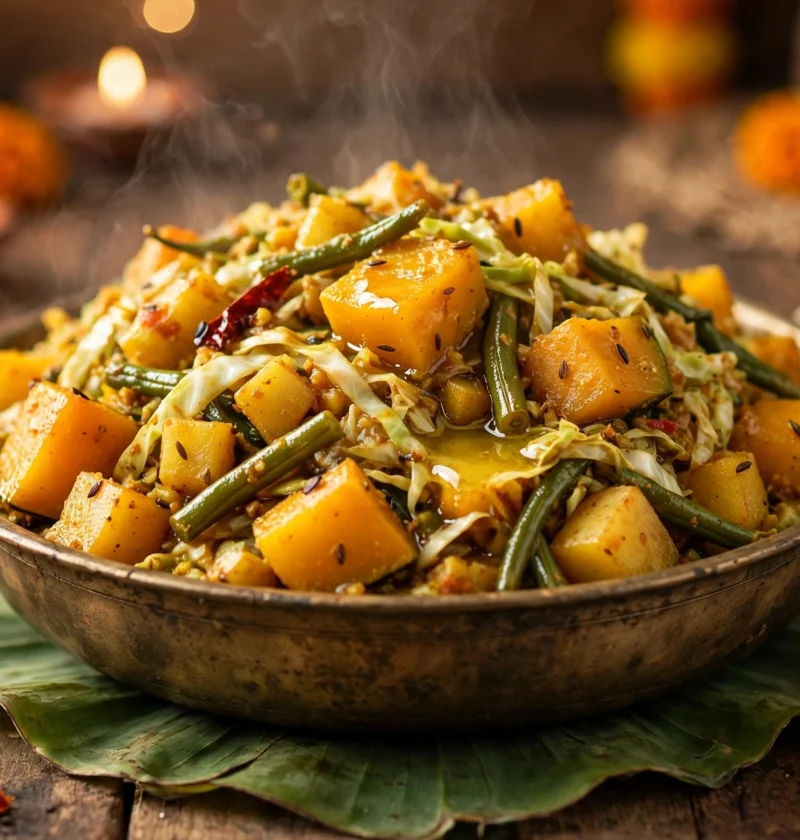
The first time I ate labra the way it is meant to be eaten, I was sitting cross-legged on the floor of a neighbourhood pandal in Kolkata during Durga Puja, balancing a banana-leaf plate on my knees while a volunteer moved down the row with a bucket and a ladle. Khichuri landed first, then a generous, gleaming scoop of mixed vegetables that smelled of ginger and warm ghee. Nobody asked if I wanted more; the ladle simply came back around. I have chased that flavour for years, and this labra recipe is the version that finally tastes like that afternoon — soft, golden, faintly sweet, and completely unhurried.
Labra is Bengal’s great festive mixed vegetable, the dish cooked in enormous pots for pujas and community feasts, where it is offered as bhog before it feeds the crowd. It is a planned dish, not a fridge clean-out: pumpkin, potato, sweet potato, brinjal, radish, cabbage and beans are chosen on purpose and simmered together until they slump into each other. The classic bhog style uses no onion and no garlic at all — ginger leads, panch phoron perfumes, and ghee finishes. That sets it apart from chorchuri, the home-style medley built on mustard paste and whatever vegetables are left over, and from shukto, which opens a meal with deliberate bitterness and a splash of milk. Labra wants neither bite nor bitterness. It is the gentle centre of the feast — and that is exactly the spirit this labra recipe is built on: a celebration dish, planned and made on purpose, scaled down to a home-sized pot without losing its soul.
Why This Labra Recipe Works
A pot of seven different vegetables can easily become a pot of mush with a few raw survivors. This labra recipe avoids that through a handful of quiet decisions:
- The vegetables go in by density, not all at once. Potato, sweet potato and radish get a head start, beans and cabbage follow, and the pumpkin and brinjal — which cook fastest and give the dish its soft body — go in last. Everything reaches tenderness together, and nothing dissolves into soup.
- Ginger does the aromatic work alone. With no onion and no garlic in the pot, grated ginger becomes the backbone rather than a background note. Its warmth is cleaner and lighter, which is exactly the flavour a bhog plate is supposed to carry.
- The panch phoron blooms in hot oil before anything else. Those few seconds of crackling wake up all five seeds — fenugreek, nigella, cumin, black mustard and fennel — and their combined perfume seasons the whole pot from underneath, so every vegetable tastes seasoned rather than merely salted.
- A spoonful of sugar is seasoning here, not sweetness for its own sake. Pumpkin and sweet potato already lean sweet; the sugar simply rounds them, balances the radish’s peppery edge, and gives labra its characteristic mellow finish that plain salt never achieves.
- The ghee goes in off the heat, at the very end. Stirred through after the lid comes off, it stays fragrant instead of frying away. That last-minute gloss is the difference between a good mixed vegetable and the labra people remember from feast days.
Ingredients
Labra belongs to the feast cooking of Durga Puja, when community kitchens feed hundreds from a handful of shared pots, and it is one of the defining vegetable dishes of Bengali cuisine — proof that a completely vegetarian pot, with no onion or garlic anywhere near it, can hold the centre of a celebration. Buy the vegetables fresh and firm; in a dish this simple, a tired cabbage or a woody radish has nowhere to hide. Everything this labra recipe asks for is easy to find in a US supermarket — daikon stands in for the Indian white radish, and any firm orange pumpkin or butternut squash works in place of the Bengali kind. Cut everything into generous, similar-sized chunks, because labra is a rustic dish and small dice will vanish during the simmer.
Serves 6
For the vegetables:
- 2 cups pumpkin, peeled and cut into 1 1/2-inch chunks (about 3/4 pound)
- 2 medium potatoes, peeled and cut into chunks (about 1 pound)
- 1 medium sweet potato, peeled and cut into chunks
- 1 small eggplant (brinjal), cut into chunks (about 2 cups)
- 1 cup daikon radish, peeled and cut into chunks
- 2 cups cabbage, cut into thick ribbons
- 1 cup green beans, trimmed and cut into 1-inch pieces
For the tempering and seasoning:
- 3 tablespoons mustard oil (or 2 tablespoons neutral oil plus 1 tablespoon ghee)
- 2 teaspoons panch phoron (five-spice seed mix)
- 2 bay leaves
- 2 dried red chillies, snapped in half
- 1 tablespoon grated fresh ginger
- 1 teaspoon ground turmeric
- 1 teaspoon sugar
- 1 1/2 teaspoons fine salt, or to taste
- 2 green chillies, slit lengthways
- About 3/4 cup hot water, added a splash at a time
To finish:
- 1 1/2 tablespoons ghee
- 1/2 teaspoon roasted cumin powder (optional)
- A small handful of fresh coriander leaves (optional — the pandal version skips them)
How to Make This Labra Recipe – Step by Step
Step 1: Cut the vegetables and sort them into three groups. Keep the chunks big and rough — roughly 1 1/2 inches — because they will soften and settle during cooking. Make three piles on your board: the hard group of potato, sweet potato and radish; the middle group of beans and cabbage; and the soft group of pumpkin and eggplant. This small act of sorting is the entire secret of the dish, so do not skip it and tip everything in together.
Step 2: Heat the oil and bloom the whole spices. Set a deep, heavy pot over medium-high heat and pour in the mustard oil. Let it heat until it lightens in colour and just begins to shimmer — mustard oil needs that moment to lose its raw pungency. Lower the heat a touch, add the dried red chillies, bay leaves and panch phoron, and stand back while the seeds crackle and dance for about 20 seconds. Stir in the grated ginger and fry for another half minute, until the sharp raw smell softens into something warm and sweet.
Step 3: Start with the hard vegetables. Tip in the potato, sweet potato and radish along with the turmeric, salt and sugar. Stir well so every chunk wears a golden coat of spiced oil, then splash in about 1/4 cup of hot water, cover the pot, and lower the heat. Let this group cook for 8 to 10 minutes, stirring once halfway. The radish will turn translucent at the edges and the potatoes will be about halfway to tender — that is your signal to move on.
Step 4: Add the remaining vegetables in order and let them collapse together. Scatter the beans and cabbage over the top, cover again, and give them 5 minutes to wilt down into the pot. Finally add the pumpkin, eggplant and slit green chillies. Fold everything together gently, add another splash of hot water only if the pot looks dry, and cover. Simmer on low for 12 to 15 minutes, folding the vegetables over just once or twice. Resist the urge to stir often or to drown the pot — the vegetables release their own juices, and labra should finish moist and glossy, thick enough to sit in a scoop, never swimming.
Step 5: Finish with ghee and let the pot rest. Check that the pumpkin yields to a spoon and the radish is completely tender, then take the pot off the heat. Drizzle the ghee over the surface, dust with roasted cumin powder if you are using it, and put the lid back on for 5 minutes. This rest is part of the recipe, not a pause: the ghee perfumes the steam, the flavours settle into each other, and the texture firms from loose to that soft, scoopable bhog consistency.
Serving Suggestions
The classic plate is the bhog plate, and it needs no improvement: a mound of soft, golden khichuri with labra ladled generously beside it, the two blurring into each other at the edges. My khichdi is the natural partner — moong dal, rice and mild spice cooked down to feast softness. If you are building a larger Bengali vegetarian spread at home, this labra recipe sits happily alongside my chorchuri, and serving the two together actually teaches the difference better than any description: the chorchuri is punchy, mustardy and home-style, while the labra is calmer, gingery and dressed for a festival. Add a tomato chutney, a crisp papad and a wedge of lemon, and the table is complete. On an ordinary weeknight the feast trimmings fall away and it still works beautifully: this labra recipe over plain steamed rice with a thin masoor dal and a green chilli on the side is the kind of quiet, complete dinner you end up making far more often than the celebration that inspired it.
Storage and Reheating
This labra recipe keeps beautifully, and many Bengali cooks insist it tastes even better the following day, once the ginger and panch phoron have had a night to settle into the vegetables. Cool the pot completely, refrigerate in a covered container, and use within 3 days.
To reheat, scrape the cold labra into a heavy pot, loosen it with two or three spoonfuls of water, and warm it very slowly over the lowest flame with the lid on — about 8 minutes, until steam curls out the moment you lift the lid. The microwave works if you heat in short bursts and fold the vegetables over between them, because pumpkin breaks down fast under harsh, uneven heat. I do not freeze labra; the pumpkin and cabbage turn watery and tired on thawing, and this is a dish that deserves better.
Frequently Asked Questions
Why does this labra recipe use no onion and no garlic?
Because the bhog version is niramish — food cooked for offering at a puja, where onion and garlic are traditionally left out. That is not a limitation to work around; it is the dish’s identity. Ginger, panch phoron and ghee build a flavour that is complete on its own, and most people who taste this version never miss what is missing.
Can I change the vegetables in labra?
Yes, within reason — this labra recipe flexes with the season the way labra always has. Cauliflower, raw banana, drumsticks and ridge gourd all appear in home versions. Keep the total volume about the same, keep something sweet in the mix (pumpkin or sweet potato) to hold the dish’s character, and respect the staging: hard vegetables early, soft ones late, whatever you choose.
My labra turned watery and mushy. What happened?
Usually too much water, added all at once, or too much stirring. Cabbage and pumpkin release a surprising amount of juice as they cook, so begin with splashes rather than cups and let the pot tell you if it needs more. Cut the chunks large, fold rather than stir, and if the finished dish is loose, simmer it uncovered for the last few minutes to let the excess steam away.
I cannot find panch phoron or mustard oil. What can I use instead?
Mix your own panch phoron from equal parts fenugreek, nigella, cumin, black mustard and fennel seeds — most home cooks do exactly that. For the oil, use a neutral oil with a spoonful of ghee stirred in at the tempering stage; you lose the mustardy pungency, but the dish still works. Do not reach for olive oil here — its flavour fights the spices.
Recipe Summary
- Prep time: 25 minutes
- Cook time: 35 minutes
- Total time: About 1 hour
- Servings: 6
- Cuisine: Pakistani
- Course: Main Course