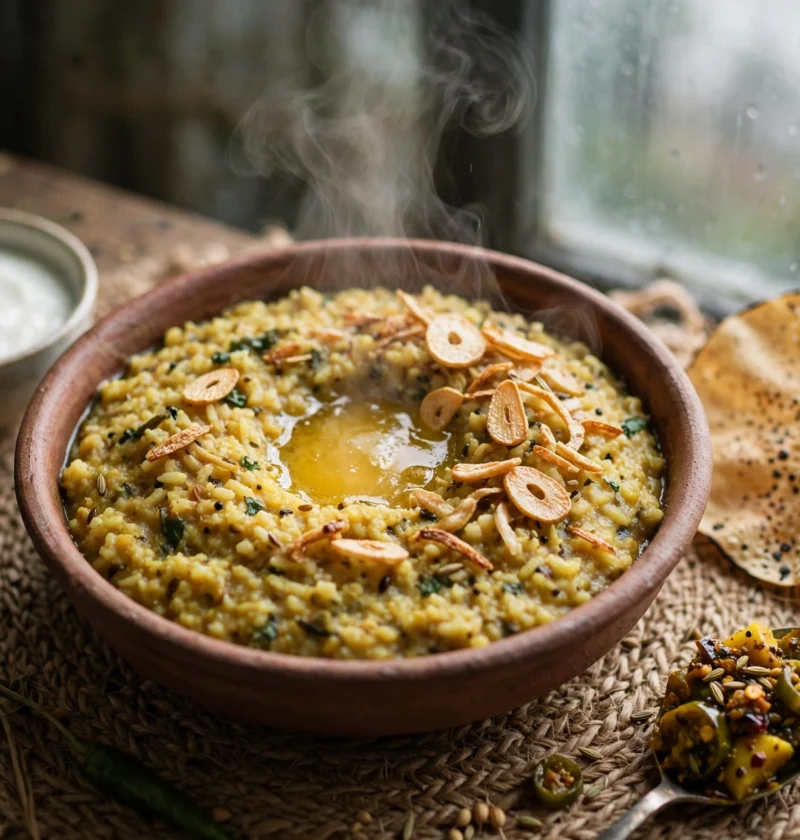
Every desi home keeps one dish in reserve for the days when nothing else will do — somebody is feverish, the rain has been falling since morning, or the stomach simply asks for mercy after a week of rich food. In our house that dish was khichdi. My grandmother would set the pot on without being asked, the way other people put on a kettle, and the smell of rice and daal softening together would drift through the rooms like a nurse making her rounds. This khichdi recipe is hers: rice and yellow moong daal cooked down into something soft, golden, and spoonable, woken up at the very end by a sizzling tadka of ghee, garlic, and dried red chilies.
Getting it right took me longer than I like to admit, because khichdi punishes impatience in a specific way — it turns to glue. My first attempts were wallpaper paste: I stirred the pot constantly, thinking I was helping, and beat every grain of rice into starch. Another batch stayed stubbornly crunchy because I measured the water like it was pulao, forgetting the daal drinks deeply too. And once I skipped the tadka to save time and produced a bowl so bland it could have been served in a hospital corridor. The rules in this khichdi recipe are the fixes: the right rice-to-daal ratio, water poured in hot, almost no stirring once it simmers, and a tadka that is never, ever optional.
Why This Khichdi Recipe Works
Khichdi lives or dies on texture — too firm and it is undercooked pulao, too broken and it is porridge for a toothache. This khichdi recipe is built to land exactly in the soft middle:
- The rice-to-daal ratio is balanced for softness. Equal parts rice and moong daal give a khichdi that holds together on the spoon without setting into a slab. More rice and it firms up like a pilaf; more daal and it slumps into soup. The one-to-one balance is what makes this khichdi recipe reliably spoonable, batch after batch.
- The rice is washed until the water runs nearly clear. Surface starch is the glue in gluey khichdi. Rinsing it away before the pot means the grains can soften and swell individually instead of cementing together, and a short soak lets them cook evenly alongside the daal.
- The water goes in hot. Cold water shocks the pot, drops everything back to a simmer slowly, and gives the starch extra time to leak and thicken unevenly. Hot water keeps the cooking gentle and continuous — a small habit that quietly protects the texture of this khichdi recipe.
- It simmers almost untouched. One stir at the start to settle everything, then the lid stays on and the spoon stays out. Every stir breaks softening grains and releases more starch, so restraint is an ingredient here. The khichdi finishes in its own steam during a covered rest.
- The tadka is made last and poured over loud. Ghee, garlic, cumin, and dried red chilies bloomed in a small pan for thirty seconds and tipped, still sizzling, over the finished pot. That final crackle is the dish’s whole personality — without it, this khichdi recipe is merely kind; with it, the bowl is kind and unforgettable.
Ingredients
Serves 4
For the khichdi:
- 3/4 cup basmati rice (or any short-grain rice), washed and soaked 20 minutes
- 3/4 cup yellow moong daal (split and skinned), washed
- 1 tablespoon ghee
- 1 teaspoon cumin seeds
- 1 small onion, finely sliced (optional, for the masala version)
- 1 teaspoon grated fresh ginger
- 1 green chili, slit
- 1/2 teaspoon turmeric powder
- 1 teaspoon salt, or to taste
- 4 1/2 cups hot water
For the tadka and serving:
- 2 tablespoons ghee
- 3 garlic cloves, thinly sliced
- 1/2 teaspoon cumin seeds
- 2 dried red chilies, broken
- A pinch of asafoetida (hing), optional
- Plain yogurt, roasted papad, and pickle, to serve
- Lemon wedges and fresh coriander, to finish
The khichdi on our table is one of the oldest cooked dishes in the subcontinent — rice and lentils simmered together appear in records well over a thousand years old, and travelers carried versions of it across Asia. Its gentle partner, the mung bean, is among the easiest of all lentils to digest, which is precisely why this pairing became the food of sickrooms and rainy evenings alike. Unlike a pulao, where spiced rice stands alone and every grain stays separate, khichdi marries the rice to the daal until they soften into one another — that marriage, not the spice list, is what this khichdi recipe is really about.
How to Make This Khichdi Recipe – Step by Step
Step 1: Wash the rice and daal, and soak the rice briefly.
Rinse the rice in several changes of water until it runs nearly clear, then soak it for 20 minutes and drain. Wash the moong daal until the water loses its cloudiness. This washing is not fussiness — it is the step that decides whether this khichdi recipe finishes silky or sticky, so give it its two honest minutes.
Step 2: Bloom the spices and soften the onion.
Melt 1 tablespoon of ghee in a deep, heavy pot set over medium heat. Drop in the cumin seeds and let them crackle, then add the sliced onion if you are using it, and fry until it turns soft and pale gold, about 5 minutes. Stir in the ginger, green chili, and turmeric, and cook for thirty seconds more, until the raw edge of the ginger disappears into the ghee.
Step 3: Add the rice, daal, and hot water, then simmer untouched.
Tip in the drained rice and the washed daal and stir once, gently, to coat them in the spiced ghee. Pour in the hot water and the salt, bring everything to a soft boil, then reduce the heat to the lowest setting, cover the pot tightly, and cook for 20 to 22 minutes without lifting the lid or stirring. Trust the pot — this restraint is the quiet engine of this khichdi recipe.
Step 4: Rest the khichdi in its own steam.
Turn off the heat and leave the covered pot alone for 10 minutes. The grains finish swelling, the daal settles into them, and the texture evens out from slightly loose to softly spoonable. When you lift the lid it should look like a thick, steaming porridge that still mounds gently on a spoon — if it seems too thick, stir in a splash of hot water; too loose, give it five minutes more of rest.
Step 5: Make the tadka and pour it over, sizzling.
In a small pan, heat the remaining 2 tablespoons of ghee until it shimmers. Add the dried red chilies and cumin seeds together, then scatter in the garlic slices, and fry for about 30 seconds until the garlic turns golden at the edges — not brown. Add the asafoetida if using, swirl once, and pour the entire crackling tadka over the khichdi. Stir it through at the table, finish with coriander and lemon, and serve this khichdi recipe immediately, while the ghee still shines.
Serving Suggestions
This khichdi recipe is served the way it is cooked — without ceremony. The classic plate is a deep bowl of khichdi with a crater of ghee in the middle, plain yogurt on one side, a papad roasted crisp over the flame, a spoonful of sharp pickle, and a lemon wedge. My grandmother called yogurt, papad, achar, and ghee the four friends of khichdi, and no bowl in our house has ever appeared without at least three of them. The sharp, crunchy, and cool elements exist to argue with the softness, spoonful by spoonful.
If you love the daal half of this marriage, meet it on its own in my moong daal — the same yellow lentils cooked as a light, lemony daal to eat with plain rice. And the pickle that belongs beside every bowl is the homemade kind: my mixed vegetable achar brings exactly the mustard-oil heat and crunch that a gentle khichdi recipe needs standing next to it.
Storage and Reheating
Leftovers of this khichdi recipe keep in the fridge for up to 2 days, in a container with a tight lid, but know that it thickens considerably as it sits — cold khichdi can be sliced, and that is normal, not spoiled. Reheat it in a pot over low heat with a generous splash of hot water, stirring as it loosens, until it returns to its soft, porridge-like flow. A fresh mini tadka of ghee and garlic over the reheated bowl brings it almost entirely back to life. Freezing is not recommended; the rice turns grainy and the whole dish loses the silkiness that is its reason to exist.
Frequently Asked Questions
Can I make this khichdi in a pressure cooker or Instant Pot?
Yes, and on busy evenings most of us do. Use the same proportions, reduce the water to 4 cups, and cook for 8 minutes at high pressure (or 2 whistles), letting the pressure release naturally for 10 minutes. The texture lands a touch softer than the stovetop version of this khichdi recipe, which for khichdi is hardly a flaw. Make the tadka separately on the stove and pour it over as usual.
Why did my khichdi turn out gluey?
Almost always one of three causes: the rice was not washed, so its surface starch thickened the pot; the khichdi was stirred while it cooked, breaking the grains; or too little water left everything crowded and pasty. Wash well, stir once at the beginning, keep the lid on, and this khichdi recipe will come out silky instead of sticky.
Can I add vegetables to this khichdi?
Certainly — peas, diced carrot, small cauliflower florets, and chopped spinach all belong here, and a vegetable-loaded version is a complete light dinner on its own. Add firm vegetables with the rice and daal, and leafy greens in the last five minutes of the rest. Just do not confuse it with tahiri, the rice-and-vegetable dish with no daal and a firm, separate grain; khichdi stays soft, and daal is non-negotiable in any khichdi recipe worth the name.
What is the best rice-to-daal ratio?
One-to-one, as in this khichdi recipe, is the homestyle standard for a soft but structured result. For someone recovering from illness, shift to more daal than rice — two parts daal to one part rice — and an extra cup of water for a thinner, soupier bowl that is easier to eat. For a slightly firmer, dinner-party version, a little more rice works, but never let the rice dominate completely or you have made a pulao with lentils hiding in it.
Recipe Summary
- Prep time: 10 minutes (plus 20 minutes of soaking)
- Cook time: 25 minutes
- Total time: About 1 hour, soaking included
- Servings: 4
- Cuisine: Pakistani
- Course: Main Course