The Curry That Cleared My Sinuses and Won My Heart
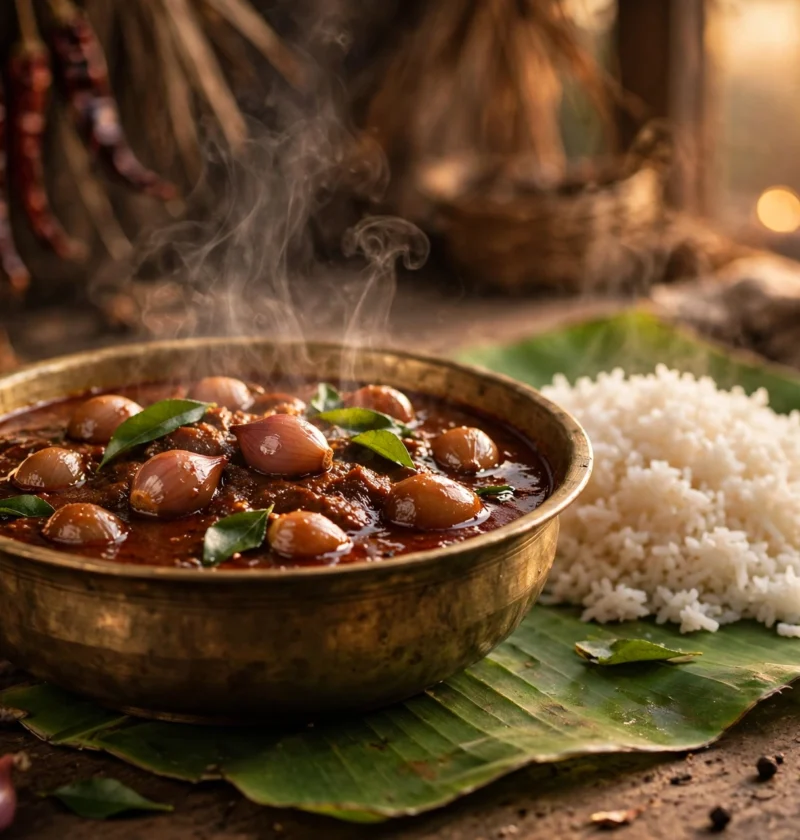
The first time I tasted kara kuzhambu, I was sitting cross-legged on the floor of a tiny mess in Madurai, sweating through my shirt before the rice even arrived. The waiter ladled a dark, rust-red curry over my rice, and one spoonful stopped me mid-sentence — sour tamarind first, then a slow chilli heat that built at the back of my throat, then the deep sweetness of shallots cooked down to silk. There was no coconut to soften it and no dal to thicken it, just tamarind, spice and patience. I wiped my eyes, asked for more rice, and begged the cook for this kara kuzhambu recipe before I left. He laughed and said there was nothing to beg for — it was the curry his mother made whenever someone in the house caught a cold, because it cleared the head and settled the stomach at the same time.
Years later, this kara kuzhambu recipe is the one I reach for when plain rice needs rescuing or when I want dinner to feel like an event without spending the evening in the kitchen. This kara kuzhambu recipe is a Tamil home-style curry built on tamarind water, shallots, garlic and a spoonful of roasted spice powder, tempered in sesame oil until the whole kitchen smells like a Madurai lane at lunchtime. Everything happens in one pan, it takes about thirty-five minutes from soaking the tamarind to ladling it out, and it tastes even better the next day. If you love sour, spicy food and have never cooked with tamarind, this is the perfect place to start.
Why This Kara Kuzhambu Recipe Works
- Tamarind does the talking: The sour backbone of this kara kuzhambu recipe comes from real tamarind water, not vinegar or lemon, so the tang is deep and rounded rather than sharp, and it carries the spice instead of fighting it.
- No coconut, no dal, no fuss: Unlike many South Indian curries, this kara kuzhambu recipe skips coconut paste and lentils entirely, which keeps it light, fast and pantry-friendly — the body comes from shallots cooked down and a careful simmer.
- The heat is yours to tune: Kara means spicy, but in this kara kuzhambu recipe you are in charge. Dried red chillies and black pepper bring the fire, and a pinch of jaggery rounds the edges, so you can make it roaring hot or gently warm without changing the method.
- One pan, thirty-five minutes: From tempering to table, this kara kuzhambu recipe uses a single kadai or deep skillet and a handful of spices you probably already own, which makes it a genuine weeknight curry.
- It improves overnight: Like most tamarind curries, this one deepens as it rests. The shallots soften further, the spices settle into the broth, and tomorrow’s lunch tastes like you cooked it all over again.
Ingredients for This Kara Kuzhambu Recipe
The list below feeds four generously alongside rice. Give it a quick read first, because once the oil is hot the tempering stage goes quickly, and you will want the spices measured and the tamarind water standing by.
For the tamarind water
- 1 lemon-sized ball of seedless tamarind (about 2 tablespoons packed)
- 2 cups warm water, for soaking and extracting
For the curry
- 3 tablespoons sesame oil (gingelly oil if you have it)
- 1 teaspoon mustard seeds
- 1/2 teaspoon fenugreek seeds
- 2 dried red chillies, broken in half
- 1/4 teaspoon asafoetida (hing)
- 2 sprigs fresh curry leaves (about 20 leaves)
- 15 small shallots (about 1 1/2 cups), peeled and left whole
- 8 cloves garlic, lightly crushed
- 1 large tomato, finely chopped
- 1/2 teaspoon ground turmeric
- 2 tablespoons kuzhambu powder or sambar powder
- 1 teaspoon black pepper, freshly ground
- 1 teaspoon jaggery, grated, plus more to taste
- 1 teaspoon fine sea salt, plus more to taste
- Fresh cilantro, for garnish
How to Make This Kara Kuzhambu Recipe in 5 Steps
The method for this kara kuzhambu recipe is five stages with one golden rule: do not rush the shallots, and do not burn the fenugreek. The tamarind broth itself needs only fifteen minutes of simmering, but the flavour of this kara kuzhambu recipe is built in the tempering and in the slow softening of the shallots, so give those stages your full attention.
Step 1: Soak the tamarind and squeeze out the extract
Put the tamarind in a bowl with the 2 cups of warm water and leave it for 15 minutes until it softens and the water turns dark brown. Squeeze and knead the pulp with your fingers, then strain the liquid through a fine sieve into a jug, pressing the pulp well to get every drop. Discard the fibres. You should have about 2 cups of tamarind water — thin and sour, the colour of strong tea. If you are using tamarind paste instead, whisk 2 tablespoons of paste into 2 cups of warm water and skip the soaking, though the block gives a rounder flavour that I prefer for this kara kuzhambu recipe.
Step 2: Temper the spices in sesame oil
Pour the sesame oil into a deep kadai or heavy skillet and set it over a medium flame until the surface ripples with heat. Tip in the mustard seeds and listen for the sputtering to die down, then follow with the fenugreek and keep everything moving for no more than twenty seconds — you want the seeds pale gold, not a shade darker, since scorched fenugreek will sour the whole pot with bitterness. Next go the broken red chillies, the asafoetida and the curry leaves; toss them for a few seconds until the leaves crisp and a toasted, nutty aroma fills the kitchen. Treat this stage as the heart of the curry and stay beside the stove — medium heat, constant attention, no wandering off.
Step 3: Soften the shallots and garlic until sweet
Add the whole shallots and crushed garlic to the pan with a pinch of salt, and cook over medium heat, stirring often, for about 8 minutes until the shallots turn soft, translucent and golden at the edges. Do not chop the shallots — left whole, they collapse gently into the broth and give this kara kuzhambu recipe its silky body. If a few catch and brown deeply, that is fine; those caramelised edges add sweetness. When the raw smell of garlic has mellowed and the shallots yield easily to a spoon, you are ready for the next stage.
Step 4: Bloom the spices, then simmer in tamarind water
Stir in the chopped tomato and cook for 3 minutes, pressing it down until it collapses into the shallots. Add the turmeric, kuzhambu powder and black pepper, and fry briefly until the oil turns glossy around the edges of the pan and the spice smells toasted rather than raw. Pour in the tamarind water, scraping up any browned bits, and bring the curry to a gentle boil. Lower the heat and simmer uncovered for 15 minutes, until the broth darkens, thickens slightly and coats the back of a spoon. Taste it now — it should be boldly sour and spicy, with the shallots sweet underneath.
Step 5: Balance with jaggery, rest and garnish
Stir in the jaggery and salt, and simmer for 2 minutes more while the jaggery melts and rounds off the tamarind’s edge. Taste again and adjust: a little more jaggery if the sourness bites too hard, a pinch more salt if the flavours feel flat. Take the pan off the heat, scatter over the cilantro, and let the curry rest covered for 5 minutes so the flavours settle. Serve this kara kuzhambu recipe hot over steamed rice with a drizzle of sesame oil or ghee on top — and warn your guests that the second helping disappears fast.
Serving Suggestions
Nothing beats the simplest pairing: a mound of hot steamed rice with this curry spooned lavishly over it until every grain glows rust-red, plus a crisp papad and a small bowl of curd for a cooling contrast. That is the way this kara kuzhambu recipe usually reaches my table, and it asks for nothing more — tamarind, spice and rice make a complete meal on their own. For a fuller Tamil spread, add a dry vegetable stir-fry and some fried appalam for crunch.
When cooking for a crowd that loves South Indian food, I set this curry beside its gentler cousins so guests can compare — my Sambar for those who want lentils and comfort, or the Rasam when the table wants something light, peppery and soup-like to sip between bites. A glass of buttermilk suits the heat beautifully, and a simple cucumber salad gives everyone a cool bite to come back to.
Storage and Reheating
Anything left over keeps in a sealed box in the fridge and stays good for 4 days — in fact, this kara kuzhambu recipe tastes better on day two, once the shallots have softened further and the spices have settled into the broth. To reheat, warm it gently in a covered pan over low heat for 5 minutes, stirring once, and add a splash of water if it has thickened too much. The microwave works in a pinch but heats unevenly, so stir halfway through if you use it. This curry also freezes well for up to a month: cool it completely, freeze in portions, and thaw overnight in the fridge before reheating. I often double this kara kuzhambu recipe on a Sunday just to have a box waiting for a busy Tuesday.
Frequently Asked Questions
How spicy is kara kuzhambu, and can I make it milder?
It is properly spicy — kara literally means spicy in Tamil — but you control the heat. The fire comes from the dried red chillies, the kuzhambu powder and the black pepper, so use one chilli instead of two and halve the pepper for a gentler pot, and keep the jaggery as written since it rounds the edges. Children tend to enjoy this kara kuzhambu recipe with the chillies cut back and a spoonful of curd alongside, and grown-ups chasing more heat can toss a chopped green chilli into the tempering.
Can I use tamarind paste instead of a tamarind block?
Yes, and it is a fine weeknight shortcut. Whisk 2 tablespoons of tamarind paste into 2 cups of warm water and use it exactly like the fresh extract. The block gives a slightly rounder, fruitier sourness, but paste is consistent and fast, and most of the flavour of this kara kuzhambu recipe comes from the tempering and the shallots anyway. Taste the broth before adding jaggery, since pastes vary in strength — add a little more water if it tastes too sharp.
What vegetables can I add to kara kuzhambu?
The classic version keeps it to shallots and garlic, but drumstick pieces, brinjal cubes and even ladies finger all work beautifully. Add drumstick with the shallots so it softens in the simmer, or fry brinjal separately until golden and stir it in during the last 5 minutes so it holds its shape. Avoid watery vegetables like bottle gourd, which dilute the tamarind broth, and always keep the shallots — they are the heart of this kara kuzhambu recipe, not an optional extra.
Why did my kuzhambu taste bitter?
Almost always, the fenugreek seeds went too dark. Fenugreek turns from golden and nutty to bitter in a matter of seconds, and once burnt, no amount of jaggery will rescue the pot. Keep the heat at medium, count to twenty after the seeds go in, and move straight to the chillies and curry leaves. If you are nervous, temper the fenugreek separately and tip it in at the end — that way a mistake costs you a spoonful of seeds, not this kara kuzhambu recipe.
Recipe Summary
Count on a quarter of an hour for prep and soaking, then roughly twenty minutes of cooking, which brings this kara kuzhambu recipe to your table in about thirty-five minutes, enough for four. It sits firmly on the Tamil home-cooking shelf, and a serving with rice lands near 280 calories.
If you give this dish a go, I hope the first spoonful does to you what it did to me in that Madurai mess — the sour hit, the slow heat, and then the quiet decision to make it again next week. That is the whole point of this kara kuzhambu recipe: simple ingredients, honestly cooked, tasting far bigger than the effort. For more background on the tradition behind it, read about Kuzhambu and Tamarind on Wikipedia.