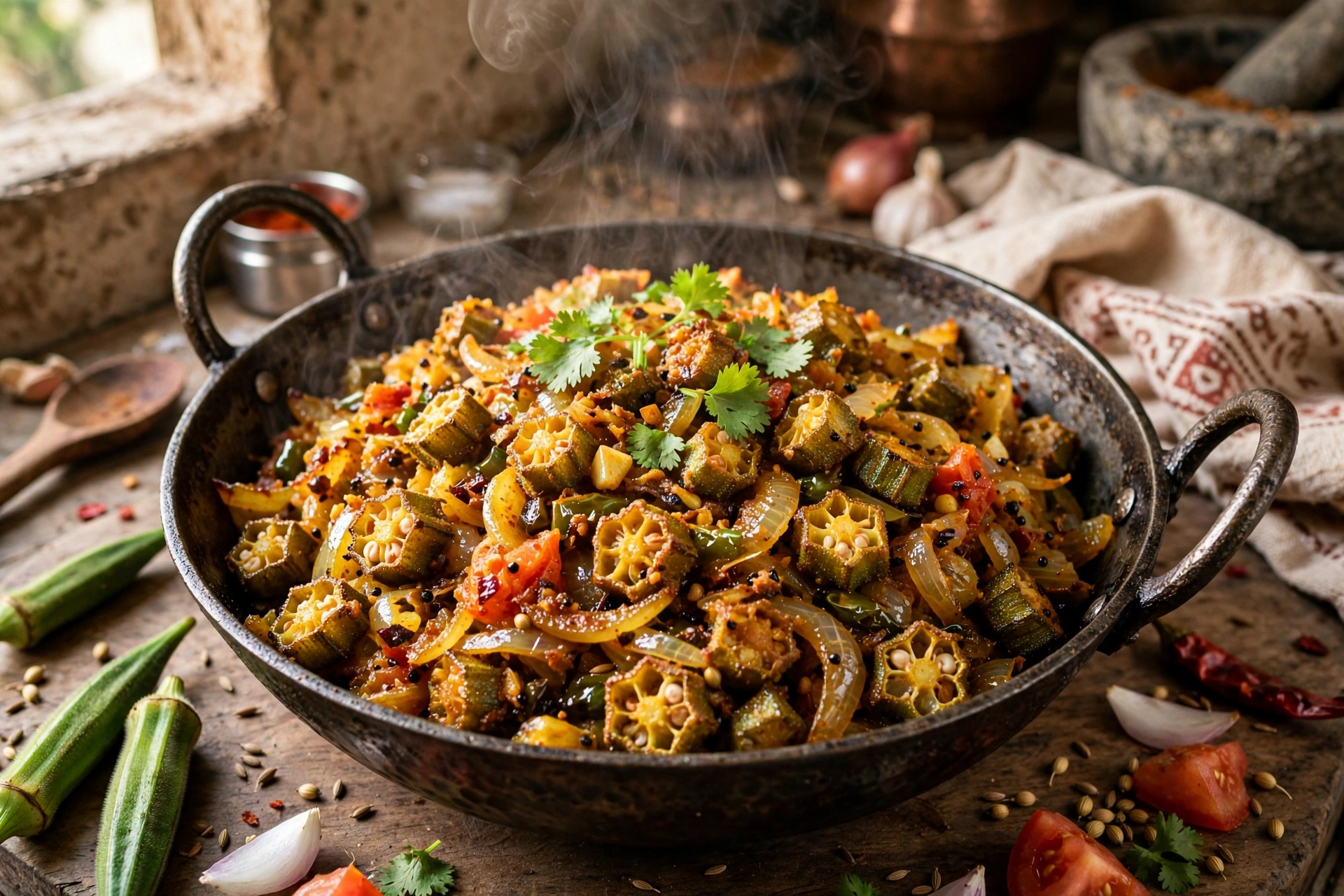
Bhindi was the vegetable that divided our house cleanly in two. Abbu and I loved it; Ammi and my sister treated it like a punishment. Every time Ammi announced bhindi for dinner, my sister would stage a full protest at the table — arms crossed, plate pushed away — until one day Ammi changed tactics. Instead of the usual soft, stewed bhindi, she made it the way her own mother had: sliced thin, fried hard in mustard oil until the edges went crispy and golden, then tossed with tomatoes and spices at the very end. The kitchen smelled like a dhaba. My sister ate two helpings in silence, then asked — in the smallest voice — if there was more. This bhindi masala recipe is that version, and it converts okra skeptics the way nothing else does.
The thing about bhindi is that almost everyone has eaten a bad version of it: gray-green, slimy, tasting vaguely of nothing. That version ruins the vegetable’s reputation for years. But real bhindi masala — the kind where each piece is distinct, slightly crisp, coated in a tangy, spice-heavy masala — is genuinely one of the best vegetarian curries in Pakistani cooking. The difference between the two isn’t talent; it’s technique, and most of it comes down to three things: dry bhindi, hot oil, and not crowding the pan. This bhindi masala recipe gets all three right, and the result is a dish people fight over.
Why This Bhindi Masala Recipe Works
Homemade bhindi usually fails as either slimy, soggy, or bland. Here’s how this bhindi masala recipe delivers crispy, distinct, properly spiced okra every time:
- Bone-dry bhindi, no exceptions. Water is what makes okra slimy — it’s that simple. This bhindi masala recipe starts with bhindi that’s been washed, then dried completely (towel-dried, then air-dried for an hour). Moisture on the surface turns to steam in the pan and steams the okra into mush; dry bhindi fries into crispness.
- Fried in batches, never crowded. Okra needs direct contact with hot oil to crisp. Pile it all in at once and it steams in its own moisture — slimy again. Two batches, single layer, hot mustard oil: that’s the whole discipline of this bhindi masala recipe.
- Tomatoes go in last, not first. Most recipes cook the bhindi in the tomato gravy from the start, which is exactly how it turns soft and sad. Here the bhindi is fried to crisp first, set aside, and only tossed with the tomato masala at the very end — so it stays distinct and the masala stays punchy.
- Amchur for the signature tang. Dried mango powder adds a sharp, fruity sourness that tomatoes alone can’t deliver — it’s the tang that makes dhaba bhindi taste like dhaba bhindi. Lemon juice works in a pinch, but amchur is the real deal in this bhindi masala recipe.
- The masala is bold, not shy. Bhindi is a mild vegetable; it needs a loud masala. Generous cumin, coriander, red chili, and a final hit of garam masala — this isn’t the dish for delicate seasoning. Under-seasoned bhindi tastes like wet grass; properly spiced bhindi tastes like a celebration.
Ingredients
Serves 4–5
For the bhindi:
- 750g (about 1.65 lbs) fresh bhindi (okra), washed, thoroughly dried, and sliced into 1-inch pieces
- 1/3 cup (80 ml) mustard oil (or neutral oil, but mustard oil is traditional)
- 1/2 teaspoon salt, for the frying stage
For the masala:
- 2 medium onions (around 300g), diced small
- 2 medium tomatoes (around 250g), cut into small dice
- 1 tablespoon ginger-garlic paste
- 1 teaspoon cumin seeds (zeera)
- 1 teaspoon red chili powder (lal mirch)
- 1 1/2 teaspoons coriander powder (dhaniya)
- 1 teaspoon amchur (dried mango powder)
- 1/2 teaspoon turmeric powder (haldi)
- 1 teaspoon salt, plus more to taste
- 1/2 teaspoon garam masala
For finishing:
- 2 green chilies, slit lengthwise
- 1-inch piece fresh ginger, cut into thin juliennes
- 1/2 cup fresh coriander leaves, chopped
- Juice of half a lemon
A note on the bhindi: buy it fresh, firm, and bright green — bend a pod and it should snap, not flop. Limp, dull, oversized okra was picked too late and will be fibrous no matter what you do. Small-to-medium pods are the sweet spot for this bhindi masala recipe. And the drying step is not optional; I’ve tried skipping it and regretted it every time.
How to Make This Bhindi Masala Recipe – Step by Step
Step 1: Wash, dry, and cut the bhindi.
Wash the bhindi well, then spread it on a clean kitchen towel and pat completely dry. Leave it to air-dry for at least an hour — longer is better. Trim the tops and tails, then slice into 1-inch pieces on a slight diagonal. Work with dry hands and a dry knife; the less water involved, the less slime you’ll ever see.
Step 2: Crisp-fry the bhindi in batches.
Heat the mustard oil in your widest pan over medium-high heat until it just starts to smoke (mustard oil needs this to mellow its raw pungency), then reduce to medium. Fry the bhindi in two batches: single layer, undisturbed for 2–3 minutes, then stir and cook 6–8 minutes total until the edges are golden-brown and crisp. Sprinkle each batch with a pinch of salt as it fries. Scoop out with a slotted spoon and set aside — don’t cover it, or the steam softens the crisp.
Step 3: Build the onion-tomato masala.
In the same pan with the remaining oil, toss in the cumin seeds and give them half a minute to pop and turn fragrant. Tip in the diced onions and fry 8–10 minutes until they soften and catch golden color around the edges. Work in the ginger-garlic paste and fry for a couple of minutes, then add the tomatoes with the red chili powder, turmeric, coriander powder, and salt. Cook 8–10 minutes, stirring, until the tomatoes collapse completely and oil glistens at the edges.
Step 4: Marry the bhindi and the masala.
Return the crisped bhindi to the pan and toss gently to coat every piece in the masala — 2–3 minutes, no more. You want the masala clinging to the bhindi, not the bhindi drowning in it. The bhindi should still have its crisp edges; if you cook it longer, it starts softening, and that’s the line you don’t cross.
Step 5: Finish with tang and freshness.
Sprinkle over the amchur and garam masala and toss once more. Stir in the slit green chilies and ginger juliennes, squeeze over the lemon juice, and shower with fresh coriander. Serve immediately — this bhindi masala recipe is at its absolute best in the first twenty minutes, while the bhindi still has its crisp.
Serving Suggestions
Bhindi masala was made for hot, fresh chapattis — the crisp okra and tangy masala scooped up in soft bread is one of the great simple pleasures of Pakistani home cooking. A bowl of plain yogurt on the side cools the chili heat, and sliced onions with lemon are the traditional accompaniment. This is the weeknight plate: bhindi, chapattis, yogurt, done. Nobody at my table has ever asked for more than that.
For a bigger vegetarian dawat, this bhindi masala recipe sits beautifully next to my chicken karahi — the crisp, tangy okra against the rich tomato chicken gives the table two completely different textures. And start the meal with a glass of my doodh patti chai while the bhindi fries; by the time the chai is done, dinner is ready.
Storage and Reheating
Let’s be honest: bhindi masala is a cook-it-and-eat-it dish. The crisp edges that make it special soften within a couple of hours, and no reheating method fully brings them back. That said, leftovers keep in a sealed container in the fridge for 2–3 days and still taste good — just softer. Reheat in a hot, dry pan (not the microwave) for the best texture recovery; a few minutes of direct heat re-crisps the edges better than anything. I don’t recommend freezing — thawed okra goes limp and watery.
Frequently Asked Questions
How do I stop bhindi from being slimy?
Three rules: dry the bhindi completely before it touches the pan, fry it in hot oil in uncrowded batches, and don’t add tomatoes or water until the bhindi is already crisp. Slime is released when okra steams in moisture; high dry heat is its enemy. This bhindi masala recipe is built around exactly that principle.
Can I use frozen okra for this bhindi masala recipe?
You can, but manage your expectations. Thaw it completely, then dry it obsessively — frozen okra releases far more water than fresh. The result will be tasty but never quite as crisp as fresh. If fresh bhindi is available, it’s worth the trip to the market.
What is amchur, and can I skip it?
Amchur is dried, ground green mango — it adds a sharp, fruity tang that’s different from lemon or tomato sourness. In a pinch, use an extra squeeze of lemon juice or a teaspoon of anardana (dried pomegranate seeds), but amchur is worth keeping in your masala dabba if you cook Pakistani food regularly.
Why mustard oil? Can I use regular oil?
Mustard oil gives bhindi its traditional dhaba flavor — pungent, sharp, unmistakable. If the raw pungency bothers you, heat it to just-smoking first, which mellows it. Neutral oil works fine and the dish will still be delicious, but it’ll taste more “homestyle” and less “dhaba.”
Recipe Summary
- Prep time: 20 minutes (+ 1 hour drying)
- Cook time: 25 minutes
- Total time: 45 minutes (+ drying)
- Servings: 4–5
- Cuisine: Pakistani
- Course: Main (Vegetarian)