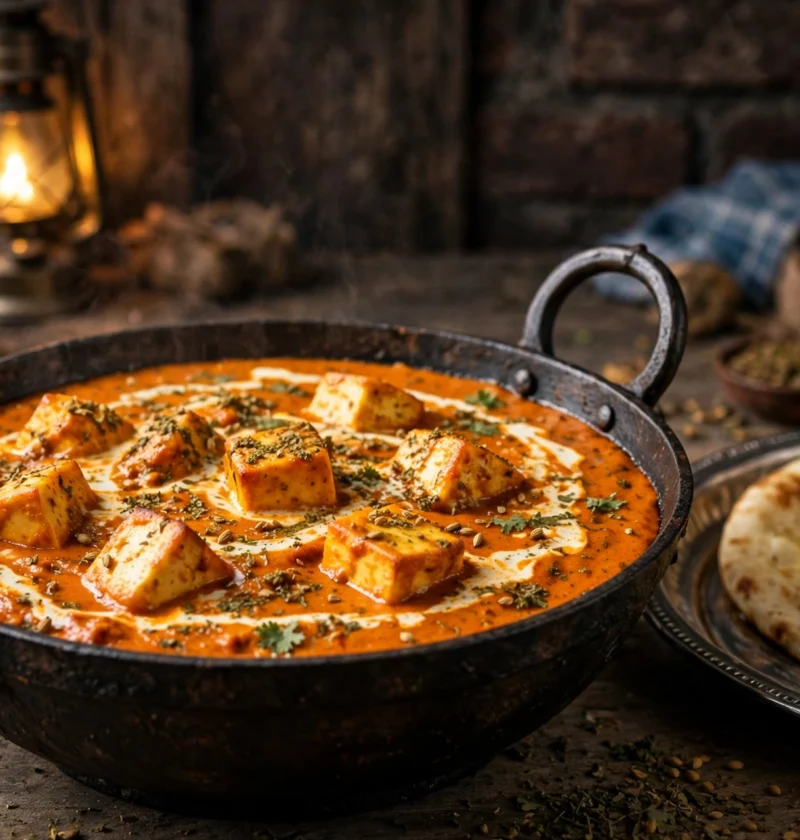
Some curries you learn from a book, and some you learn by watching a man who has made the same dish ten thousand times. Mine came from a roadside dhaba outside Lahore, the kind of place with plastic chairs and a roaring tandoor. I ordered the paneer because the table next to me had it, and when it arrived the gravy looked different from any paneer curry I knew — thicker, almost clinging, with a richness that spooned up in slow folds. Halfway through the meal I asked him what made it so full-bodied, and he grinned and showed me his real secret: a fistful of paneer, grated on the coarse side of the box grater and stirred straight into the sauce, where it melted and gave the whole pot body. This paneer lababdar recipe is my home version of that dhaba pot, built around his trick, and it has spoiled restaurant paneer for me ever since.
Lababdar, the cook told me, roughly means something your heart keeps reaching back for — food you crave in an unrestrained, slightly greedy way. That name made complete sense by my second roti. The gravy is a tomato-onion base cooked down until its sharpness disappears, then loosened with cream, warmed through with garam masala, and finished with the smoky, hay-like perfume of dried fenugreek. The cubes stay whole and soft, the grated portion disappears into the sauce, and together they give you two textures in one bite. I went home with the method scribbled on the back of a bill, and this paneer lababdar recipe has carried that smoky roadside kitchen into mine ever since.
Why This Paneer Lababdar Recipe Works
A lababdar lives or dies on the body of its gravy, so this paneer lababdar recipe is built on five habits borrowed from that dhaba counter:
- Grated paneer melts directly into the gravy. Roughly one third of the cheese is grated and stirred into the hot sauce, where it softens, thickens, and disappears, leaving behind a gravy that coats a spoon like a blanket. The remaining cubes stay intact for proper bites. No flour, no nut pastes — the paneer itself builds the body.
- The tomato-onion base is cooked past politeness. Most home curries stop cooking the base too early, when the tomatoes still taste bright and raw. Here the masala fries until the oil gathers at the edges and the mixture darkens a full shade — that long, patient bhunai is what turns sharp tomato into something deep, rounded, and faintly sweet.
- The paneer cubes get a quick fry, not a long one. Sixty to ninety seconds in hot ghee gives the cubes golden patches and a delicate skin that holds them together in the sauce. Fry longer and they toughen; skip the fry and they can crumble. That brief colouring is the sweet spot.
- Cream goes in late and off the fiercest heat. Cream boiled hard can split and grain the sauce. Here it slips in near the end, over gentle heat, to round the edges and lend that silkiness. The gravy is already rich from the melted paneer, so the cream perfumes rather than dominates.
- Kasuri methi is the final voice, not background noise. The dried leaves are rubbed between the palms at the very end so their aroma lands fresh and unmistakable on every serving. Add them early and the long cooking dulls them into bitterness; add them last and you get that warm, smoky note people always ask about.
Ingredients
Everything here is an ordinary desi pantry staple, but two ingredients carry this dish and deserve a word. Paneer is the fresh, unaged cheese at the centre of the pot — firm enough to cube and fry, mild enough to absorb whatever gravy surrounds it, and, in this dish, generous enough to be grated into its own sauce. The finishing spice is kasuri methi, the dried leaves of the fenugreek plant, whose aroma sits somewhere between celery, hay, and gentle smoke. Buy the brightest green packet you can find, and store it airtight.
Serves 4–5
For the gravy base:
- 3 tablespoons ghee or neutral oil
- 1 large onion (about 7 oz / 200 g), finely chopped
- 1 tablespoon ginger-garlic paste
- 2 green chilies, finely chopped (optional)
- 4 large tomatoes (about 1 1/4 lb / 560 g), puréed — or 1 (14-oz) can tomato purée
- 1/2 teaspoon ground turmeric
- 1 teaspoon Kashmiri chili powder, for colour and mild heat
- 1 teaspoon ground coriander
- 1/2 teaspoon regular chili powder (optional, for more fire)
- 1 teaspoon fine salt, plus more to taste
- 1/2 teaspoon sugar, to balance the tomatoes
- 3/4 cup water, as needed to loosen the masala
For the paneer and finishing:
- 14 oz (400 g) paneer, divided — about 10 oz (300 g) cut into 1-inch cubes, the rest kept as one block for grating
- 1 tablespoon ghee, for frying the cubes
- 1/3 cup (80 ml) heavy cream, plus a little extra to drizzle
- 1 teaspoon garam masala
- 1 tablespoon kasuri methi (dried fenugreek leaves)
- 1 tablespoon butter, to finish (optional but lovely)
- Fresh coriander leaves and fine ginger julienne, to garnish
How to Make Paneer Lababdar Recipe – Step by Step
Step 1: Fry the paneer cubes golden.
Pat the cubes dry with kitchen paper — surface moisture is what makes cheese spit and stick. Warm the tablespoon of ghee in a wide non-stick pan over medium-high heat until it shimmers, then lay the cubes in a single layer. Leave them alone for a full minute so a golden crust can form, then turn and colour one or two more sides, about 90 seconds in total. Lift them onto a plate. They will feel firm; do not worry, the hot gravy relaxes them again.
Step 2: Build and bhuno the gravy base.
In a heavy pot or kadhai, heat the 3 tablespoons of ghee over medium heat and add the chopped onion with a pinch of the salt. Cook, stirring now and then, for 8 to 10 minutes until the onion melts down and turns properly golden — pale and crunchy will not do here. Stir in the ginger-garlic paste and green chilies and fry for a minute until the raw smell leaves. Pour in the tomato purée with the coriander, turmeric, both chili powders, the remaining salt, and the sugar. Cook this masala for 10 to 12 minutes, stirring often, until it thickens, darkens, and throws little beads of oil around the edges. Splash in water whenever it threatens to catch.
Step 3: Grate paneer straight into the sauce.
Take the reserved block of paneer and grate it on the coarse holes of a box grater — you should have roughly 1 loosely packed cup. Lower the heat, sprinkle the gratings over the masala, and stir them through with the 3/4 cup of water. Over the next 3 to 4 minutes the shreds soften, slump, and melt into the base, and the sauce visibly changes character — thicker, paler, glossy, clinging to the spoon instead of running off it. This transformation is the soul of the dish, the moment a good tomato masala becomes a true lababdar gravy.
Step 4: Cream, spice, and perfume.
Turn the heat down to its gentlest setting and pour in the cream, stirring as you go so it blends smoothly rather than splitting into the hot sauce. Let the pot barely simmer for 3 minutes — lazy bubbles at the edge, nothing more violent. Sprinkle over the garam masala. Warm the kasuri methi in a dry pan for 20 seconds until crisp, then rub it between your palms directly over the pot so the leaves shower down in fragrant dust. Stir once, taste, and adjust the salt; the gravy should taste rich and rounded, with the tomato sweetness up front and the fenugreek humming underneath.
Step 5: Bring the cubes home and serve.
Slide the fried paneer cubes into the gravy along with any juices resting on their plate. Simmer on low for just 3 to 4 minutes, turning the cubes once with a gentle hand, only until they are heated through and have drunk in a little sauce — longer cooking is what toughens them. Drop in the butter if you are using it, let it melt into a glossy pool, and rest the pot off the heat for 5 minutes. Serve this paneer lababdar recipe in a wide bowl with a swirl of cream, ginger julienne, and coriander over the top.
Serving Suggestions
A good paneer lababdar recipe asks for bread with some chew to it — garlic naan, flaky lachha paratha, or plain tandoori roti all drag beautifully through a gravy this thick. If rice is the plan, keep it simple: steamed basmati or a gentle jeera rice that seasons without competing. On the side, sliced onions with lemon and a green salad reset the palate between rich mouthfuls, and salty lassi suits the dhaba mood.
How does this pot sit beside the other classics on the site? Each one earns its place differently. My shahi paneer is the dressed-up cousin — a strained cashew gravy, saffron in the background, made for celebration tables. My matar paneer is the homely weeknight pot, peas and paneer in a lighter everyday masala that comes together without any fuss at all. Lababdar sits proudly between them: richer than the weeknight curry, earthier than the royal one, and the dish I reach for when guests are coming but I still want to cook like I am feeding family.
Storage and Reheating
This paneer lababdar recipe keeps happily in the refrigerator for up to 3 days in a sealed container, and like most masala-based curries it genuinely improves overnight, because the cubes slowly absorb the spiced gravy and the fenugreek settles deeper into the sauce. The surface may set a little as the ghee cools; that is normal, not a problem. Reheat it in a covered pan over the lowest heat you have, with 2 or 3 tablespoons of water loosened through, stirring gently until it just steams — a hard boil at this stage is the fastest route to tough paneer. In the microwave, heat it in short bursts, stirring in between, until steaming. To freeze, pack it into a tub for up to a month; the sauce may look a little split after thawing and the cubes slightly firmer, but an overnight thaw in the fridge, a slow warm-through, and a fresh drizzle of cream fix the finish.
Frequently Asked Questions
How is this paneer lababdar recipe different from shahi paneer and butter paneer?
Three close cousins, three different gravies. Shahi paneer is the royal one: a strained tomato-cashew sauce perfumed with saffron and cardamom, sweet and silky. Butter paneer leans on butter and cream in a smooth makhani-style tomato base. Lababdar is the dhaba soul of the family — an onion-forward masala cooked down hard, never strained, and thickened by grated paneer melted into the sauce itself, which gives it a heartier texture and a more robust, less sweet flavour.
Why does my paneer turn rubbery, and how do I fix it?
Heat and time are almost always the culprits. Paneer firms up when it is fried for many minutes, boiled hard in the gravy, or reheated aggressively, because its proteins tighten under sustained high heat. The fix is a light touch at every stage: fry the cubes only until golden patches appear, simmer them in the finished sauce for 3 to 4 minutes at most, and reheat leftovers gently. If your purchased paneer feels especially firm, a 10-minute soak in warm salted water before frying softens it noticeably.
Can I skip the grating and use only cubes?
You can, and the curry will still taste good — but it will be a paneer masala, not a lababdar. The melted gratings are what give this gravy its signature body without flour or nut pastes, and they make every spoonful taste of paneer rather than just sauce. If grating feels like a faff, crumble it finely with your fingers instead; little crumbs melt in almost as well.
Can I make this dish ahead for guests?
Yes, and it is one of the kindest curries to cook in advance. Prepare the gravy completely, grated paneer and all, then refrigerate it for up to 2 days. Fry the cubes fresh on the day — two minutes’ work — warm the gravy through gently, and finish Steps 4 and 5 before serving. The cream, garam masala, and kasuri methi all go in at the end, so the finished dish tastes freshly made even when the real work happened yesterday.
Recipe Summary
- Prep time: 15 minutes
- Cook time: 25 minutes
- Total time: 40 minutes
- Servings: 4–5
- Cuisine: Pakistani
- Course: Main