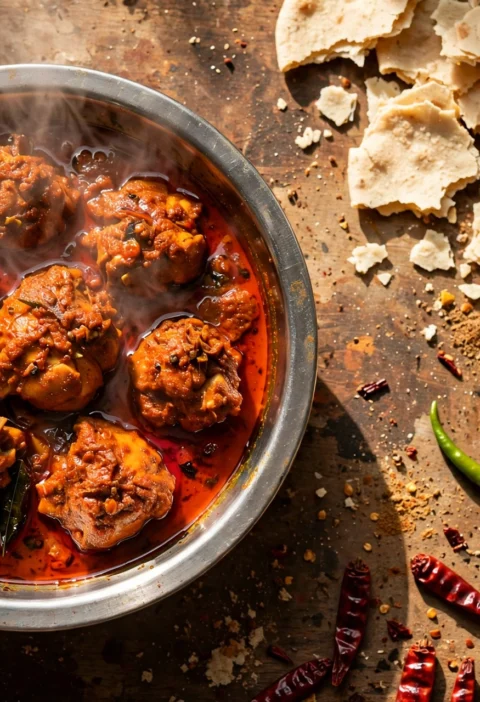
The first time I ordered chicken handi at a restaurant, I did it entirely because of the pot. It arrived at the table still bubbling in a little clay handi, the gravy a deep orange-gold, a swirl of cream on top catching the light — and I remember thinking that no curry served in a regular bowl could possibly taste as good as something that arrived like that. I was right to trust the theater. The gravy was the creamiest thing I’d ever eaten outside my own kitchen: buttery, tomato-rich, with chicken so tender it fell apart at a look. Abbu watched me scrape the pot clean and said, “Ghar pe banao, phir dekhtay hain” — make it at home, then we’ll see. This chicken handi recipe is the result of about a dozen attempts to prove him wrong. He admitted defeat on attempt nine.
Here’s what separates handi from every other creamy chicken curry: the pot is the method, not just the presentation. A handi’s narrow mouth and thick walls trap steam and heat, so the chicken braises gently in its own juices while the gravy reduces around it — no watery sauce, no dry chicken. You don’t need an actual clay handi (though they’re cheap and wonderful); a heavy Dutch oven with the lid slightly ajar does the same job. This chicken handi recipe recreates that slow, steamy braise, and the gravy it produces is the reason people lick the pot.
Why This Chicken Handi Recipe Works
Most homemade handi fails as either thin, bland, or tasting like every other tomato chicken curry. Here’s how this chicken handi recipe delivers the real restaurant richness:
- The chicken braises in the handi, covered. Bone-in pieces simmered on low heat with the lid on cook in their own steam and juices — the meat stays impossibly tender and the gravy concentrates instead of watering out. This slow, covered braise is the soul of this chicken handi recipe.
- Tomatoes are cooked down to sweetness. Raw-tasting tomato gravy is the giveaway of a rushed handi. Here the tomatoes cook a full 10 minutes until they collapse into jammy sweetness and the oil separates — that caramelized depth is what makes the gravy taste slow-cooked even when it wasn’t, quite.
- Cream goes in at the end, off the heat. Boiled cream turns grainy and dull. This chicken handi recipe stirs the cream through after the pot comes off the flame, so it stays silky and glossy — that restaurant shine is literally a temperature trick.
- Kasuri methi and butter are the finishers. A knob of butter melted through at the end and crushed dried fenugreek leaves give that unmistakable curry-house aroma — rich, slightly bitter, deeply savory. Skip them and it’s just chicken curry; add them and it’s handi.
- Ginger juliennes on top, always. It sounds like garnish, but those fresh, peppery ginger strips cut through the richness with every bite. The contrast between the creamy gravy and the sharp fresh ginger is what keeps you going back for “one more piece.”
Ingredients
Serves 4–5
For the chicken:
- 1 kg (about 2.2 lbs) chicken, bone-in pieces (leg and thigh are best)
- 1 cup (240g) plain full-fat yogurt, whisked smooth
- 1 tablespoon ginger-garlic paste
- 1 teaspoon salt
- 1 teaspoon red chili powder (lal mirch)
For the gravy:
- 3 medium tomatoes (about 350g), pureed smooth — or 1 can (400g) crushed tomatoes
- 2 medium onions (about 300g), chopped very fine
- 1/4 cup (60 ml) neutral oil, plus 2 tablespoons butter
- 1 teaspoon cumin seeds (zeera)
- 1 1/2 teaspoons coriander powder (dhaniya)
- 1/2 teaspoon turmeric powder (haldi)
- 1 teaspoon garam masala, divided
- 1/2 teaspoon black pepper, freshly ground
For finishing:
- 1/2 cup (120 ml) heavy cream, at room temperature
- 1 tablespoon kasuri methi (dried fenugreek leaves)
- 1-inch piece fresh ginger, cut into thin juliennes
- 2 green chilies, slit lengthwise
- 1/2 cup fresh coriander leaves, chopped
A note on the chicken: bone-in, always, for this chicken handi recipe — the bones enrich the gravy as it braises and the meat stays juicier through the slow cook. Boneless pieces work in a hurry but give you a thinner gravy and drier chicken; if you must, reduce the covered cooking time by 10 minutes and add a splash more cream at the end.
How to Make This Chicken Handi Recipe – Step by Step
Step 1: Marinate the chicken.
Rub the chicken pieces all over with the whisked yogurt, ginger-garlic paste, salt, and red chili powder, working the marinade into every piece. Cover and rest at room temperature for 30 minutes (or up to 3 hours in the fridge — bring back to room temp before cooking). The yogurt marinade tenderizes and becomes part of the gravy later, so don’t wipe it off.
Step 2: Brown the onions deeply.
Heat the oil in a heavy handi or Dutch oven over medium-high heat. Add the cumin seeds, let them crackle 30 seconds, then add the finely chopped onions. Cook 10–12 minutes, stirring often, until deep golden-brown — darker than you’d go for most curries. These caramelized onions are the gravy’s backbone; pale onions make a pale, thin handi.
Step 3: Cook down the tomatoes.
Add the tomato puree, coriander powder, turmeric, black pepper, and half the garam masala. Cook on medium heat for a full 10 minutes, stirring, until the mixture darkens, thickens, and the oil visibly separates around the edges. This is the step people rush — don’t. The jammy, sweet-tart tomato base is what this chicken handi recipe is built on.
Step 4: Add chicken and braise covered.
Add the marinated chicken with all its marinade and stir to coat. Let it come to a boil, then turn the flame down to the gentlest simmer, put the lid on tight, and leave it 25–30 minutes, stirring once halfway. The chicken will release its juices and braise in them — don’t add water unless the pot looks genuinely dry. The meat should be completely tender and the gravy thick and glossy.
Step 5: Uncover and reduce.
Remove the lid, turn the heat to medium, and simmer 5–7 minutes, stirring, until the gravy thickens to coat the chicken heavily. You’re looking for a gravy that clings, not pools. Stir in the butter and let it melt through — watch the gravy turn glossy.
Step 6: Finish off the heat.
Take the pot off the flame entirely. Stir in the room-temperature cream until the gravy turns a uniform creamy orange. Crush the kasuri methi between your palms over the pot and stir through with the remaining garam masala. Top with ginger juliennes, slit green chilies, and fresh coriander. Rest 5 minutes, then serve — preferably still in the handi, for the full effect.
Serving Suggestions
Chicken handi demands naan — hot, blistered, preferably garlic naan — because that creamy gravy needs something to be scooped up with. A simple kachumber salad on the side cuts the richness, and that’s the complete restaurant plate. At home, I serve it the way the curry houses do: handi in the center of the table, naan stacked in a cloth-lined basket, everyone reaching in. It never lasts long enough for seconds to be a real question.
For a full curry-house dinner at home, start with my seekh kababs as the appetizer — the smoky charred skewers first, then the creamy handi as the main, is exactly the restaurant progression. Finish with a bowl of my dahi baray on the side to cool everything down.
Storage and Reheating
Cream-based curries reheat better than their reputation suggests, and this chicken handi recipe is no exception — the flavors deepen overnight as the chicken keeps absorbing the gravy. Refrigerate in a sealed container for up to 3 days; warm it gently on the stovetop over low heat, stirring often, and never boil it or the cream can split. It freezes for up to 2 months, though the cream texture softens slightly on thawing — stir in a fresh tablespoon of cream after reheating to bring the gloss back. Honestly, leftovers have never survived past day two in my house.
Frequently Asked Questions
Do I need an actual clay handi?
No — but they’re wonderful if you find one. A heavy Dutch oven or any thick-bottomed pot with a tight lid gives you the same slow, steamy braise. The key is the covered, low-heat cooking in step 4, not the vessel. If you do buy a clay handi, season it first (soak overnight, then simmer rice water in it) so it doesn’t crack.
Why did my cream split in the gravy?
Almost always because it went into a boiling-hot pot, or the cream was fridge-cold. This chicken handi recipe adds room-temperature cream off the heat for exactly that reason. If it splits slightly, a vigorous whisk or 10 seconds with an immersion blender usually pulls it back together.
What’s the difference between handi and karahi?
The karahi is cooked fast and hot in a wide wok-like pan — smoky, tomato-forward, slightly charred. The handi is braised slow and covered in a deep pot — creamy, buttery, mellow. Same family, different temperaments. This chicken handi recipe is the gentle one.
Can I make this with boneless chicken?
Yes — use thigh pieces, not breast, and cut the covered braise to 18–20 minutes. The gravy will be slightly thinner (no bones enriching it), so reduce it a touch longer in step 5. It’ll still be delicious; just a weeknight version of the weekend original.
Recipe Summary
- Prep time: 15 minutes (+ 30 minutes marinating)
- Cook time: 50 minutes
- Total time: 1 hour 5 minutes (+ marinating)
- Servings: 4–5
- Cuisine: Pakistani
- Course: Main