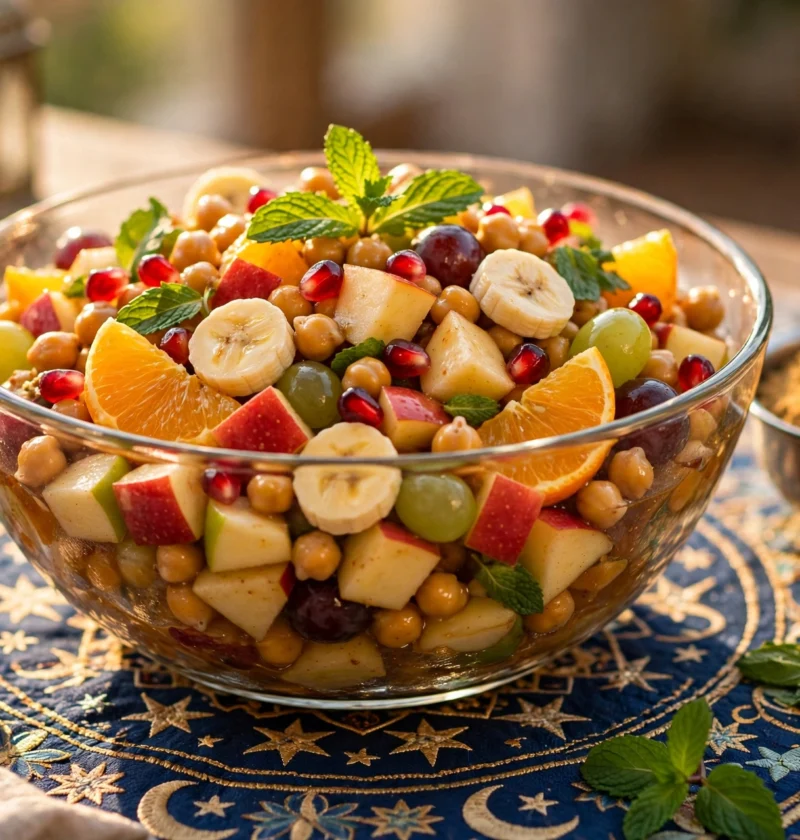
On our iftar table there was a strict order of disappearance. The dates went first, obviously — but second, before the pakoras had even finished their round, the fruit chaat would be down to a spoonful of pink juice and one lonely grape. Somebody’s auntie always said she was “just tasting it,” standing over the bowl with the serving spoon. This fruit chaat recipe is the one from those evenings: whatever fruit was in season, cut into a bright jumble, sharpened with chaat masala and black salt, and loosened with a squeeze of orange juice — including the boiled chickpeas my father insisted on, because that is how the bazaar stalls near our home always made it.
It sounds too simple to get wrong, and yet I have produced every bad version. There was the grey-brown bowl, where I cut the bananas and apples an hour early and watched them oxidize into sadness while the guests were still arriving. There was the soup, where I salted and sugared everything well in advance and the fruit wept a full cup of liquid into the bowl. And there was the gritty batch, where the chaat masala went on dry at the end and sat on the fruit like dust instead of dressing. This fruit chaat recipe is the correction of all three: the masala blooms in citrus juice first, the soft fruits go in last, and nothing waits in its dressing longer than an hour.
Why This Fruit Chaat Recipe Works
A no-cook dish has nowhere to hide, so its few techniques carry the whole result. This fruit chaat recipe rests on five of them:
- The chaat masala blooms in juice, never lands dry. Whisking the spices into orange and lemon juice before the fruit goes in dissolves the salt, wakes up the masala, and turns a dusty sprinkle into an actual dressing that coats every piece evenly. It is the single biggest difference between a home bowl and a bazaar bowl in this fruit chaat recipe.
- Everything is cut to the same bite. Even pieces mean every spoonful carries contrast — something crisp, something soft, something that bursts. A bowl of giant apple chunks and whole grapes eats like two separate salads arguing; a bowl of even dice eats like a chaat.
- Bananas and apples go in last, under citrus. These two brown faster than everything else in the bowl, so they are cut at the final moment and folded straight into the acidic dressing, which slows the browning and keeps them looking fresh. Order is a preservative in this fruit chaat recipe.
- The bowl is served cold, and within the hour. Fruit in salted, spiced juice is on a clock — the salt draws liquid, the pieces soften, and the brightness fades. Chilled and served promptly, the chaat is crisp and electric; left standing, it becomes fruit soup. This fruit chaat recipe plans for the good window.
- Chickpeas make it the fuller bazaar version. A cup of boiled chickpeas sounds like a guest from another dish, but at every good stall they are there — soft, nutty, and happy to soak up the spiced juice. They turn a side bowl into something closer to a light meal and stretch the fruit further at a crowded iftar.
Ingredients
Serves 6
For the chaat:
- 2 apples, cored and diced (skin on for color)
- 2 bananas, sliced into coins — cut these last
- 2 oranges — 1 segmented and chopped, 1 juiced for the dressing
- 1 cup green or red grapes, halved
- 1 cup pomegranate seeds
- 1 ripe mango or 2 guavas, diced, when in season
- 1 cup boiled chickpeas (canned, rinsed, is fine)
- A few fresh mint leaves, torn, to finish
For the dressing:
- 1/4 cup fresh orange juice (from the second orange)
- 1 tablespoon lemon juice
- 1 1/2 teaspoons chaat masala
- 1/2 teaspoon black salt (kala namak)
- 1/4 teaspoon roasted cumin powder
- 1-2 teaspoons sugar, only if the fruit is very tart
- A pinch of regular salt, to taste
The chaat family is the subcontinent’s great argument that sweet, sour, salty, and spicy belong in the same bite — it began as roadside snack food and now anchors every iftar and bazaar evening. Fruit chaat is its freshest member: where a Western fruit salad leans sweet and quiet, ours is seasoned like it means it, with the sulphurous whisper of black salt doing work no plain sugar ever could. If you have only known the gentle version, the first spoonful of this fruit chaat recipe — cold, tart, faintly fiery — explains in one bite why the bowl empties before the pakoras do.
How to Make This Fruit Chaat Recipe – Step by Step
Step 1: Make the dressing first, and let the masala bloom.
In the bottom of your largest serving bowl, whisk together the orange juice, lemon juice, chaat masala, black salt, roasted cumin, and sugar if you are using it. Leave it for 5 minutes while you cut the fruit. The spices hydrate, the salt dissolves completely, and the dressing turns from gritty to glossy — the foundation this fruit chaat recipe is built on.
Step 2: Cut the sturdy fruits and the citrus.
Dice the apples, halve the grapes, chop the orange segments, and dice the mango or guava, keeping every piece roughly the size of a grape half. Add them to the bowl along with the pomegranate seeds as you work, giving the bowl a gentle toss now and then so the cut surfaces meet the acidic dressing early and stay bright.
Step 3: Fold in the chickpeas.
Add the boiled chickpeas and fold them through the fruit and dressing. They will look plain for about ten seconds and then start drinking in the spiced juice, which is exactly what you want from them. Give the bowl one careful stir so nothing gets crushed at the bottom of this fruit chaat recipe.
Step 4: Slice the bananas last and fold them in gently.
Only when everything else is dressed and ready, slice the bananas into coins and fold them in with two or three gentle turns of the spoon. Their cut faces coat themselves in citrus as they land, which buys them their freshness. Resist the urge to stir the bowl again after this point; banana coins bruise if you look at them too firmly.
Step 5: Chill briefly and serve within the hour.
Cover the bowl and refrigerate it for 15 to 30 minutes — just long enough for everything to turn properly cold and the flavors to introduce themselves. Scatter the torn mint over the top, taste one piece for salt and tartness, adjust with a last squeeze of lemon if it needs waking up, and serve this fruit chaat recipe immediately, in small bowls, with spoons.
Serving Suggestions
Fruit chaat’s natural home is the iftar table, where it lands between the dates and the fried things and refreshes every palate it touches. Serve it in small glass bowls so the colors show, with nothing heavier than a mint leaf on top. Paired with a tall, cold glass of my rooh afza sharbat, it makes the rose-pink, sweet-tart opening act that Ramadan evenings in our house were built around — the same combination the bazaar stalls sell by the thousands.
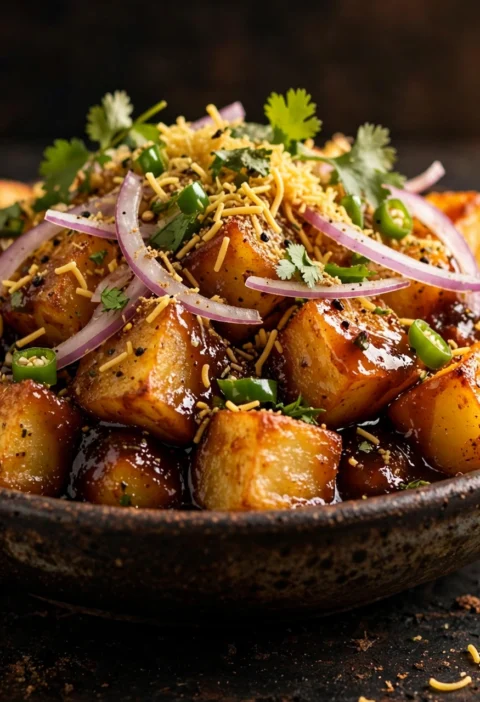
On the same table, its savory twin does the opposite job: my aloo chaat is potato-based, warm-spiced, and tangled with chutneys — everything this fruit chaat recipe is not. Setting the two side by side is my favorite way to serve either: one bowl cool and bright and gone in minutes, the other hearty and lingering, and guests drifting happily between them.
Storage and Reheating
There is no reheating here — fruit chaat is a fresh dish on a short clock, and honesty about that is part of this fruit chaat recipe. Leftovers keep in a sealed container in the refrigerator for up to 1 day, but expect the bananas to darken, the apples to soften, and a pool of juice to gather; it still tastes good spooned over yogurt the next morning, even if its party looks have faded. To get ahead for guests, cut the sturdy fruits and make the dressing up to 4 hours early, storing them separately in the fridge; slice the bananas, combine everything, and chill only in the final half hour before serving.
Frequently Asked Questions
Can I make fruit chaat ahead of time?
Partly, and the split matters. The dressing and the sturdy fruits — apple, grapes, orange, pomegranate — can be prepared a few hours ahead and kept separately in the fridge. The bananas must be cut and folded in at the end, and the assembled chaat should be served within the hour. Assemble this fruit chaat recipe the morning of a party and you will serve a brown, watery shadow of it by evening.
Which fruits should I avoid?
Watermelon is the main troublemaker — it releases so much juice that the dressing drowns and everything else tastes of melon. Very ripe, soft fruit of any kind collapses for the same reason. Keep to fruit that is ripe but firm, and this fruit chaat recipe will hold its crisp, separate pieces. Canned fruit cocktail, sweetened and soft, is also a poor substitute for fresh; the dish is built on freshness.
What if I do not have chaat masala?
You can approximate it with 1/2 teaspoon each of roasted cumin powder and black salt, 1/4 teaspoon of red chili powder, and a good pinch of amchur (dried mango powder) or an extra squeeze of lemon for the sourness. It will be close in spirit, though the real blend has a funk and depth that is hard to fake. What this fruit chaat recipe cannot survive is no seasoning at all — undressed, it is just a fruit salad wearing the wrong name.
Do I need to add sugar?
Only if your fruit demands it. Ripe, in-season fruit usually needs no sugar at all — the orange juice carries enough sweetness, and the point of the dish is the sweet-tart argument, not dessert-level sugar. Taste the dressed chaat before adding any; if a particular batch of oranges or guavas is aggressively sour, a teaspoon or two restores the balance this fruit chaat recipe aims for.
Recipe Summary
- Prep time: 15 minutes
- Cook time: 0 minutes (no cooking)
- Total time: About 30 minutes, including chilling
- Servings: 6
- Cuisine: Pakistani
- Course: Snack