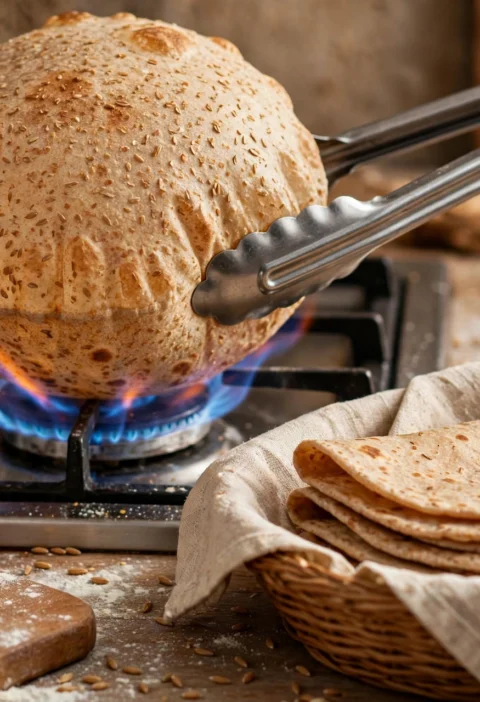
The first time I understood that a paratha could be an event, I was standing at a truck-stop dhaba outside Gujranwala, watching a halwai work a tawa the size of a cartwheel. He rolled a sheet of dough so thin I could see the board through it, painted it with ghee, folded it into pleats like the bellows of a harmonium, coiled the whole strip into a spiral, rolled it once more — gently, the way you would handle something breakable — and laid it on the iron. Two minutes later he lifted off a paratha that came apart in rings, layer over crisp layer, and crushed it once between his palms so the strata sprang open like the pages of a book. I have been chasing that spiral in my own kitchen ever since, and this lachha paratha recipe is where the chase finally ended.
The early attempts were humbling. My first coil unrolled beautifully and then fried into a single solid disc, because I rolled the spiral with the same force I use for a roti and welded every layer into one. The next batch came off the tawa leathery enough to bend rather than tear — the dough had been too dry and I had skipped its rest, so the gluten fought me at every turn. And the batch after that drank so much oil it ate like a wet flannel: the tawa was barely warm when the parathas went on, so they stewed in grease instead of crisping in it. The rules in this lachha paratha recipe are simply those three failures, fixed: a soft and properly rested dough, a gentle hand on the rolling pin, and a tawa that is honestly hot before anything touches it.
Why This Lachha Paratha Recipe Works
A stuffed paratha can hide behind its filling; a lachha has nothing but structure to offer, so structure is everything. This lachha paratha recipe is built to protect the layers from the moment the dough is mixed to the second it leaves the tawa:
- The dough is soft and given a real rest. Slightly softer than roti dough and rested a full 30 minutes, it rolls out thin without snapping back or tearing. Tight, under-rested dough resists the rolling pin, and every extra push you give it costs you layers later — the first quiet discipline of this lachha paratha recipe.
- Ghee and flour guard every layer twice. The rolled sheet is painted with ghee and then dusted with dry flour before pleating. In this lachha paratha recipe, neither coating is optional. The fat keeps the folded layers from sticking to each other, and the flour acts as a second, drier barrier between them — together they are why the finished paratha peels apart in rings instead of tearing like bread.
- Pleating builds the count, coiling locks it in. Folding the sheet into accordion pleats stacks a dozen or more layers into one strip, and coiling that strip into a spiral turns the stack into rings. When the coil is rolled and fried, those rings are what separate and crisp on the tawa.
- The coil rests before it is rolled. Fifteen minutes under a damp cloth lets the spiral relax. Roll a tense coil and it fights you, tears at the edges, and needs exactly the hard pressure that welds layers shut. A rested coil in this lachha paratha recipe flattens willingly under a light pin.
- It fries on a properly hot tawa. Heat sets the outer layers crisp before the ghee can soak inward. A timid tawa gives the fat time to migrate and turn the paratha greasy and limp; a hot one gives you shattering layers with clean, separate bite — which is why this lachha paratha recipe insists the tawa be properly hot before the first coil is even rolled.
Ingredients
Makes 6 parathas
For the dough:
- 2 cups whole wheat flour (atta), plus more for dusting
- 1 teaspoon salt
- 1 tablespoon ghee or neutral oil, for the dough
- About 3/4 cup warm water, added gradually
For the layers and frying:
- 1/3 cup ghee, melted, for painting the sheets
- Extra flour, for dusting between the layers
- Ghee or oil, for shallow-frying, about 1 teaspoon per paratha
The paratha is the subcontinent’s great layered flatbread, and its family tree explains where this lachha paratha recipe belongs in it: the aloo paratha is stuffed, the anda paratha wears an egg, but the lachha carries nothing at all — its entire identity is the empty, pleated spiral. The fat that makes those layers possible is traditionally ghee, whose high smoke point and nutty perfume suit a hot tawa exactly; oil will fry the bread, but ghee is what makes it smell like a dhaba at breakfast time.
How to Make This Lachha Paratha Recipe – Step by Step
Step 1: Knead a soft dough and rest it well.
Stir the flour and salt together in a wide bowl, rub in the tablespoon of ghee with your fingertips, then add the warm water a little at a time, kneading as you go, until you have a dough that is soft and slightly tacky — noticeably softer than chapati dough. Knead for 8 to 10 minutes until it turns smooth and elastic, cover with a damp cloth, and rest it for 30 minutes. This rest is not idle time; it is what allows the thin sheet in this lachha paratha recipe to roll out without a fight.
Step 2: Roll a thin sheet and paint it with ghee.
Divide the dough into 6 equal balls. On a lightly floured board, roll one ball into the largest, thinnest circle you can manage — 10 to 12 inches across, thin enough that the board almost shows through at the edges. Small tears do not matter here; they vanish into the folds. Brush the entire surface generously with melted ghee, right to the edges, then dust it evenly with a pinch of dry flour. Both coatings matter: the ghee separates, the flour keeps the separation dry — skip either one and a lachha paratha recipe loses its layers before it ever meets the tawa.
Step 3: Pleat the sheet and coil it into a spiral.
Starting at the edge nearest you, fold the sheet back and forth into accordion pleats about 1 inch wide, the way you would fold a paper fan, until the whole circle has become one long, layered strip. Lift the strip and stretch it very gently lengthways — you will feel it give a little — then coil it tightly around itself into a spiral, like a snail shell, and tuck the loose end underneath. Set the coil seam-side down and repeat with the remaining balls. Cover all the coils and rest them for 15 minutes — in every lachha paratha recipe, this quiet pause is what keeps the spiral intact through the rolling.
Step 4: Roll the coil gently — this is where layers live or die.
Place one coil spiral-side up and press it flat with your palm. Roll from the center outward with light, even pressure, turning the disc as you go, until it is 6 to 7 inches across and still slightly thick. Never bear down and never roll it thin like a roti: pressure is what fused my first batch into a single slab, and gentleness is the whole secret of this lachha paratha recipe at this stage.
Step 5: Fry on a hot tawa and crush to open the rings.
Heat a heavy tawa or cast-iron skillet over medium-high heat until a flick of water dances on it. Lay the paratha down and cook for 30 to 40 seconds, until pale bubbles rise and the underside shows faint spots. Brush the top with ghee, flip it, and press the edges lightly with a spatula so the layers puff apart as they fry. Cook the second side until it is golden with deep brown freckles, about a minute more, flipping once again if needed. Lift it off, and — working through a clean cloth to protect your hands — crush it once gently between your palms. The spiral springs open into rings — the shattering signature of a lachha paratha recipe done right. Serve at once, and keep the rest warm in a cloth while you fry the batch.
Serving Suggestions
A lachha paratha recipe earns its keep at the table in the first thirty seconds, while the layers are still crisp and the ghee still smells warm. Eat it the way the dhaba intends: tear off a ring with your fingers, feel it flake, and use it to scoop. It is a breakfast bread by birth — with a cup of strong doodh patti and something sharp on the side, it needs very little else — but it holds its own at dinner just as happily.
Its finest partners are dishes with gravy to catch in the layers. A bowl of my daal tadka, with its own sizzling ghee tempering poured over the top, is the classic vegetarian pairing — flake scooping lentil, layer after layer. And on the days the tawa is already hot and the mood is festive, nothing flatters this lachha paratha recipe like my chicken karahi: tomato-rich, ginger-flecked, and made to be eaten with bread torn by hand.
Storage and Reheating
Lachha parathas are at their peak within minutes of the tawa, but the batch keeps gracefully if you plan for it. Cooked parathas wrapped in a clean cloth hold their softness for a few hours at room temperature; for longer, refrigerate them stacked with small squares of parchment between each one, for up to 2 days. Reheat them one at a time on a dry, hot tawa for about 30 seconds a side, until the layers crisp again — never the microwave, whose steam welds the strata shut and undoes everything this lachha paratha recipe worked for. The raw coils also freeze well for up to a month, separated by parchment; thaw them in the fridge, rest them at room temperature for 15 minutes, and roll and fry as above.
Frequently Asked Questions
Why did my layers disappear and fuse into one solid paratha?
Almost always, the coil was rolled too hard. Heavy pressure on the pin squeezes the ghee out from between the layers and presses them into a single sheet of dough. The other usual culprit is a stingy layer of ghee or a skipped flour dusting. Roll the rested coil with a light hand, keep it slightly thick, and the rings in this lachha paratha recipe will open on the tawa as they should.
Can I use all-purpose flour instead of whole wheat atta?
You can, and many bakeries do — the parathas will be paler, a touch richer, and a little less nutty. My own preference is atta for its flavor and the way it browns, or half of each if you want a compromise. What does not change is the method: soft dough, full rests, and gentle rolling matter far more to a lachha paratha recipe than which flour you choose.
Why did my parathas come out leathery and tough?
Leather comes from a tight dough — too little water, or a rest that was cut short, so the gluten stayed clenched and the rolled sheet stayed thick. The dough for this lachha paratha recipe should feel soft, almost slack, when you knead it, and it should get its full 30 minutes under the cloth. If your kitchen is cold, give it an extra ten; rested dough rolls thin, and thin is what fries crisp.
Can I shape the coils ahead of time?
Yes — this is one of the kindest make-ahead breads I know. Coil all the spirals in the morning, park them under a damp cloth in the fridge, and they will wait happily for up to a day. Let them sit at room temperature for 15 minutes before rolling so the ghee inside softens and the spiral relaxes; roll a fridge-cold coil and you are back to fighting it, which is the one thing this lachha paratha recipe asks you never to do.
Recipe Summary
- Prep time: 25 minutes (plus 45 minutes of resting)
- Cook time: 20 minutes
- Total time: About 1 hour 30 minutes
- Servings: 6 parathas
- Cuisine: Pakistani
- Course: Side Dish