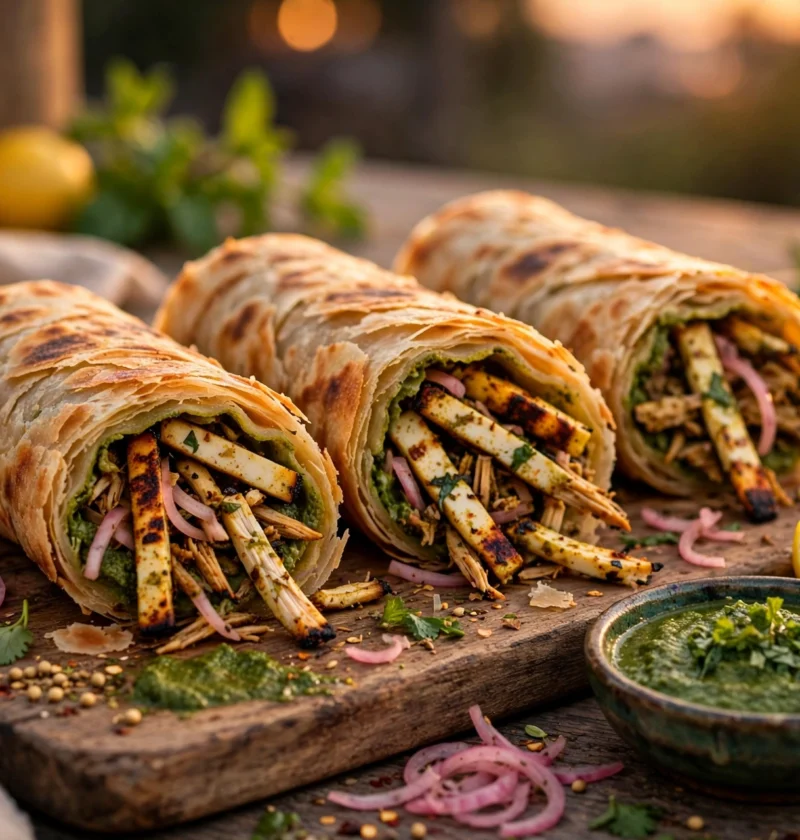
I first ate a paneer roll standing outside a college canteen in Delhi, and I still recall how mistaken my expectations were. I had assumed it would be a pale imitation of the chicken kathi rolls everyone else was ordering, a vegetarian afterthought wrapped in a tired paratha. Then the vendor slid a flaky, blistered roll across the counter, and the first bite changed my mind completely. The paneer inside was smoky and charred at the edges, the chutney was sharp and green, and the onions were pickled just enough to cut through the richness. I ordered a second one before I had finished the first. This paneer roll recipe is my attempt to recreate that canteen roll at home, and this is the version I now make whenever friends come over.
What I love about this dish is how it turns ordinary ingredients into something that feels like street food. No special equipment, no overnight marinating, no dough that needs hours of resting. A quick spiced yogurt marinade, a pan-fried paratha, and a few fresh accompaniments are all it takes. This paneer roll recipe has become my answer to busy weeknights when everyone wants something exciting.
Why This Paneer Roll Recipe Works
- The paneer is marinated, not just seasoned. A thick yogurt and spice marinade coats every strip and keeps the paneer moist in the pan, which is why this paneer roll recipe never gives you dry, squeaky cheese.
- High heat gives the char. Searing the marinated strips in a screaming-hot pan creates smoky, browned edges that mimic a tandoor, and that char is the flavour this paneer roll recipe is built around.
- The paratha is flaky, not flat. Folding and rolling the dough with ghee creates layers that shatter when you bite, so this paneer roll recipe feels like a proper street snack rather than a plain wrap.
- Pickled onions cut the richness. A quick vinegar pickle takes ten minutes and adds the sharp crunch that balances the creamy paneer, which is why this paneer roll recipe never tastes heavy.
- Everything is assembled hot. Rolling the paratha around the paneer while both are still warm lets the chutney melt slightly into the layers, so this paneer roll recipe eats as one thing instead of separate fillings.
Ingredients
Most of this list is probably in your kitchen already, and the few fresh items are worth the trip. The one ingredient I would choose with care is the paneer itself. Look for a block that feels firm but not rubbery, and press it gently between paper towels before cubing so the marinade clings instead of sliding off. Malai paneer from a good dairy works beautifully here, but any fresh, full-fat block will do.
- 2 cups plain flour (maida), plus more for dusting
- 1/2 teaspoon sea salt, for the dough
- 2 tablespoons ghee, melted, plus more for cooking the parathas
- 3/4 cup warm water, added gradually
- 12 ounces paneer, cut into long strips about 1/2 inch thick
- 1/2 cup thick yogurt, whisked smooth
- 1 tablespoon mustard oil (or vegetable oil)
- 1 teaspoon Kashmiri chilli powder
- 1 teaspoon garam masala
- 1/2 teaspoon turmeric powder
- 1 teaspoon chaat masala, with more to sprinkle on top
- 1/2 teaspoon roasted cumin powder
- 1 tablespoon ginger-garlic paste
- 1 tablespoon lemon juice, freshly squeezed
- 1 teaspoon fine salt, for the marinade
- 1 large red onion, thinly sliced
- 1/4 cup white vinegar
- 1 teaspoon sugar
- 1/2 cup mint chutney, homemade or store-bought
- 1 green chilli, deseeded and thinly sliced (optional)
- Fresh coriander leaves, chopped, for garnish
- Lemon wedges, to serve
A note on the paratha flour: plain maida gives the flakiest, most street-style result, and I recommend it for a first attempt. If you prefer whole wheat, swap half the flour for atta, but expect a slightly denser roll. Either way, rest the dough properly, because rested dough rolls thin without tearing.
Method
Step 1: Knead and rest the paratha dough
Tip the flour and salt into a wide bowl and stir in the melted ghee until the mixture looks like coarse crumbs. Pour in the warm water gradually, kneading all the while, until a soft, smooth dough comes together that springs back when poked. It should feel like a relaxed earlobe, neither sticky nor stiff. Cover the bowl with a damp cloth and leave it for 30 minutes. That rest lets the gluten relax, which is what allows this paneer roll recipe to produce parathas that roll paper-thin without shrinking back.
Step 2: Marinate the paneer strips
Whisk the yogurt, mustard oil, chilli powder, turmeric, garam masala, chaat masala, cumin, ginger-garlic paste, lemon juice, and salt into a thick, brick-red paste. Add the paneer strips and turn them with a spoon until every strip is coated, taking care not to break them. Cover and refrigerate for 20 minutes. While the paneer marinates, toss the sliced onion with the vinegar, sugar, and a pinch of salt in a small bowl and set it aside to pickle. Those ten minutes of pickling are enough to turn raw onion into the sharp, pink ribbons that make this paneer roll recipe sing.
Step 3: Roll and cook flaky parathas
Split the rested dough into 4 equal pieces. Roll one piece into a thin round, brush it lightly with ghee, fold it into quarters like a fan, then roll it out again into a round about 8 inches across. Cook it on a hot dry tawa over medium-high heat for about a minute per side, brushing each side with ghee as it cooks, until golden spots appear and the layers puff slightly. Keep the cooked parathas wrapped in a clean towel so they stay soft. Repeat with the remaining dough. The layering trick is the whole secret of this paneer roll recipe, because a flat paratha would never give you that shattering street-style bite.
Step 4: Sear the paneer until charred at the edges
Heat a heavy cast-iron skillet over fierce heat until it just begins to smoke, then add a teaspoon of oil. Lay the marinated paneer strips in a single layer and sear them for 2 to 3 minutes per side without moving them, until the marinade caramelises and the edges char in spots. Work in two batches if the pan is crowded, because a crowded pan steams instead of searing. The strips should look smoky and browned on the outside while staying soft and creamy inside. Sprinkle them with a little extra chaat masala and lemon juice the moment they leave the pan.
Step 5: Assemble and roll while everything is hot
Lay a warm paratha flat and spread a generous spoonful of mint chutney down the centre. Arrange a row of seared paneer strips over the chutney, top with a tangle of pickled onions, sliced green chilli, and chopped coriander, and add one more squeeze of lemon. Fold the bottom edge up slightly, then roll the paratha snugly around the filling, tucking as you go, so the roll holds its shape. Wrap the bottom third in parchment paper for easy eating, street-cart style. This paneer roll recipe is at its best eaten within minutes, when the paratha is still crisp at the edges and the paneer is warm enough to melt into the chutney.
Serving Suggestions for This Paneer Roll Recipe
At my place, these rolls rarely make it to a plate. Someone always hovers by the stove while the paneer sears, and the first roll gets eaten standing up, wrapped in paper, like the canteen version. When I do serve this paneer roll recipe properly, I set out extra mint chutney, pickled onions, and lemon wedges, so everyone can customise their roll. A glass of sweet lassi on the side cools the spice nicely.
For a crowd, set up a roll station instead of assembling everything yourself. Stack the warm parathas in a towel, keep the seared paneer in a warm skillet, and lay out chutneys, pickled onions, and sliced chillies, letting guests build their own. This paneer roll recipe travels well wrapped in foil for picnics and lunchboxes. If your table already loves our bread roll, serve the two together and let people compare them, the soft, spiced bread roll against this flaky, smoky paratha roll. And for a different paneer mood on the same menu, our paneer tikka brings the same charred, marinated flavour in a skewered, chaat-style form.
Storage and Reheating
Honest truth first: a paneer roll is best eaten fresh, when the paratha is still flaky and the paneer is warm. Once rolled and left sitting, the chutney softens the layers. Still, the components of this paneer roll recipe store beautifully on their own. Keep the parathas stacked in foil in the fridge for up to two days, the seared paneer in a sealed box for a day, and the pickled onions in their vinegar for up to a week.
To revive this paneer roll recipe, warm a paratha on a dry tawa until it crisps again, heat the paneer in a hot pan for a minute per side, and assemble fresh. Assembled rolls can be reheated in a 375°F oven for 8 to 10 minutes wrapped in foil, then unwrapped for a final 2 minutes to re-crisp the outside. Skip the microwave, which turns the flaky paratha soggy within seconds. The marinade itself keeps in the fridge for a day, so you can marinate the paneer in the morning and sear it fresh in the evening.
Paneer Roll Recipe FAQs
Is a paneer roll the same as a chicken kathi roll?
No, and the distinction matters. A chicken kathi roll wraps spiced chicken, usually cooked kebab-style, in a paratha with chutney and onions. This paneer roll recipe is the vegetarian cousin: smoky, yogurt-marinated paneer strips instead of chicken, with the same flaky paratha, mint chutney, and pickled onions around them. The structure is similar, but the filling, marinade, and flavour are entirely its own. If you came here looking for the chicken version, you will want a chicken roll recipe instead.
Why does my paneer turn rubbery in the pan?
Almost always, the heat was too low or the paneer sat in the pan too long. Low heat dries paneer out before it browns, and overcooking squeezes out its moisture. Sear this paneer roll recipe over genuinely high heat for just 2 to 3 minutes per side, and pull the strips the moment they char at the edges. A thick yogurt marinade also protects the paneer, so never skip it, and press the paneer dry before marinating so the coating clings properly.
Can I make this paneer roll recipe ahead for a party?
Yes, with one rule: keep the components separate until serving time. Make the parathas and the pickled onions ahead, marinate the paneer in the morning, and sear it just before guests arrive. Set everything out as a roll station and let people assemble their own, which is faster for you and more fun for them. Assembled rolls held for hours go soft, so this paneer roll recipe rewards last-minute assembly every time.
What chutney goes best with a paneer roll?
Mint chutney is my first choice, because its cool sharpness cuts through the smoky, spiced paneer. Tamarind chutney works too, darker and sweeter, and a spoonful of garlic chutney adds heat for anyone who wants it. Avoid very thick, mayonnaise-based sauces here, because they weigh down the flaky paratha. Serve the chutney both inside the roll and on the side for dipping, so every bite of this paneer roll recipe has something bright to balance the richness.
Recipe Summary
Prep time: 30 minutes, including dough resting and marinating. Cooking: about 15 minutes across parathas and paneer. Total time: roughly 45 minutes, though much of it is waiting. Makes 4 large rolls. Level: easy to moderate, with the paratha folding as the main skill to practise. This paneer roll recipe takes smoky marinated paneer, a flaky folded paratha, sharp pickled onions, and green chutney, and turns them into the street-style roll that beats takeout on any weeknight at my house.
For readers who like the backstory: paneer is a fresh, firm curd cheese found in countless North Indian dishes, prized because it keeps its shape in a hot pan instead of melting away. And the kathi roll is Kolkata’s gift to street food, a kebab wrapped in a flaky paratha that travelled across India and picked up a vegetarian paneer version along the way. Wrapping smoky paneer in that same flaky bread is a natural marriage, and that marriage is exactly what you taste in this paneer roll recipe.