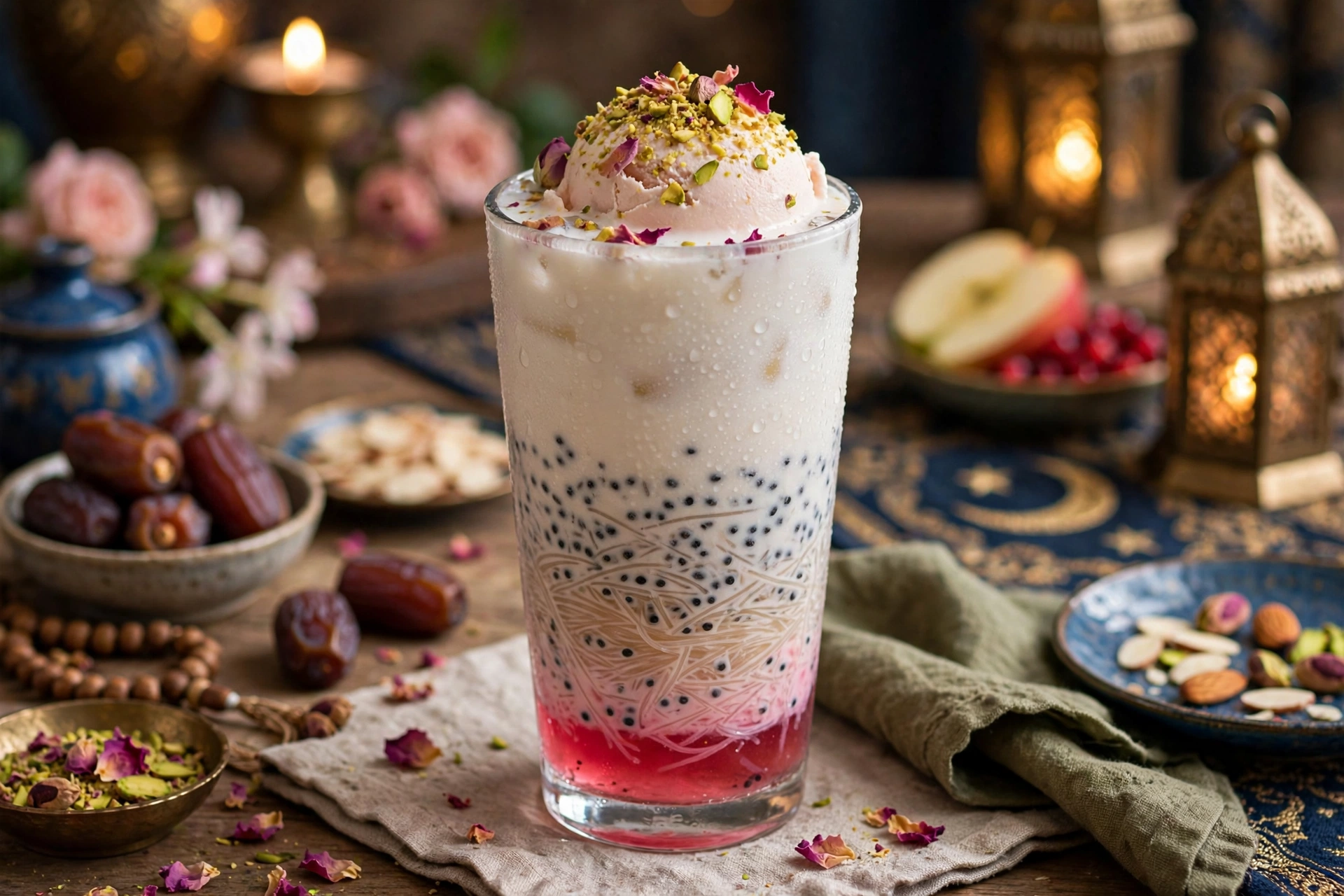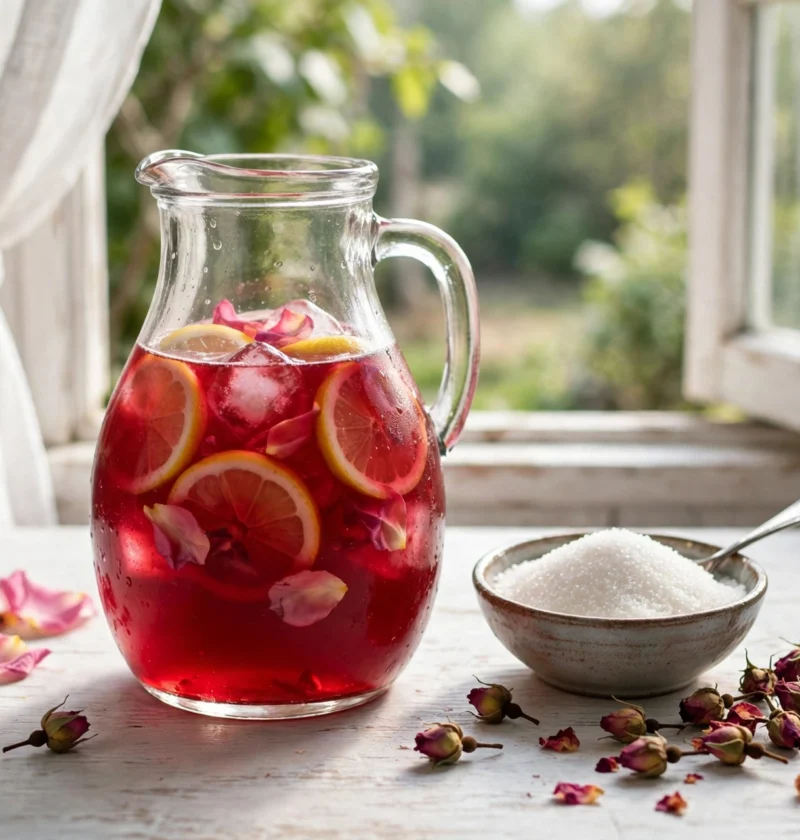
The rose sharbat I make now began with a jar my neighbour pressed into my hands one June, when her garden roses were blooming faster than she could pick them. Inside was a deep red syrup that smelled like a flower shop after rain, and she told me to stir a spoonful into cold water and taste summer the way her mother had served it. I did, and the glass that came out was nothing like the bottled drinks I had grown up with. It was lighter and cleaner, and the rose flavour tasted like an actual flower rather than a perfume counter. That jar lasted a week, and when it ran out I went looking for the method behind it. This rose sharbat recipe is the version I settled on after many batches, and it is the one I now keep in the fridge from the first hot week until the last.
What makes this drink worth the small effort is that it starts from real petals, not a bottle. Dried rose buds steeped in a simple sugar syrup give a fragrance that no ready-made cordial quite matches, and because you control the sweetness yourself, the finished glass never turns cloying. A jug of syrup sits in the fridge for weeks, so a cold drink is only a spoonful and a splash of water away. Once you have tasted a glass of this rose sharbat recipe made this way, with lemon squeezed in at the last moment and ice cracking as it settles, the shop-bought version starts to feel like a pale copy.
Why This Rose Sharbat Recipe Works
- Real petals carry the fragrance. Dried rose buds release a gentle, garden-like scent into the syrup that bottled flavourings cannot copy, which is why this rose sharbat recipe tastes like flowers rather than scented soap.
- The syrup is steeped, never boiled hard. A short, gentle simmer followed by a long steep keeps the rose notes bright, so this rose sharbat recipe stays clear and floral instead of turning muddy or bitter.
- Lemon is added at serving, not in the pot. Squeezing lemon into each glass keeps its brightness alive, giving this rose sharbat recipe a fresh finish that a pre-mixed batch would lose in the fridge.
- You set the sweetness yourself. Because the syrup and the water stay separate until pouring, this rose sharbat recipe lets every glass be tuned, lighter for children, stronger for guests who like it bold.
- One batch serves all summer. A single jar of syrup stretches across dozens of glasses, so this rose sharbat recipe rewards a little Sunday effort for weeks afterwards.
Ingredients
The list is short, and the only item worth hunting for is the rose buds themselves. Buy food-grade dried rose buds from a spice shop or trusted online seller, never florist roses, which may be sprayed. The buds should smell sweet and rosy when opened; if they smell of nothing, they will give you nothing. Everything else is ordinary pantry stock.
- 1 cup dried food-grade rose buds (about 25 grams), lightly crushed
- 2 cups water, for the syrup
- 1 1/2 cups granulated sugar
- 1 tablespoon lemon juice, freshly squeezed, for the syrup
- 1/4 teaspoon citric acid (optional, for a brighter tang)
- 1 small piece of beetroot, about 1 inch, peeled (optional, for colour)
- Cold water or soda water, for serving
- Crushed ice, plenty, for serving
- Lemon slices and fresh rose petals, to garnish
- 1 teaspoon rose water (optional, for a stronger bloom)
A word on colour: dried rose buds give a soft pink syrup on their own, and that pale blush is perfectly lovely. If you want the deep ruby shade of the sharbat stalls, the little piece of beetroot in the pot does the job without changing the flavour. Skip it if you prefer a paler glass of this rose sharbat recipe; the taste is the same either way.
Method
Step 1: Rinse the rose buds and start the syrup
Tip the dried rose buds into a fine sieve and rinse them quickly under cold water to shake off any dust, then tip them into a medium saucepan. Add the 2 cups of water and the sugar, and stir once so the sugar begins to dissolve. Set the pan over medium heat. Do not rush this rose sharbat recipe stage with high heat; a calm start lets the petals soften gradually and release their scent instead of scorching.
Step 2: Simmer gently, then steep off the heat
Bring the pan just to a gentle simmer, where small bubbles break at the edges, and let it bubble quietly for 5 minutes. If you are using the beetroot piece, add it now. Then take the pan off the heat, cover it, and leave it undisturbed for two hours at least, or overnight if time allows. This long steep is where the real flavour happens. The syrup darkens and the rose scent deepens while the pan sits, and skipping the wait gives a thin syrup.
Step 3: Strain the syrup twice for a clear pour
Pour the cooled syrup through a fine sieve into a clean bowl, pressing the petals gently to release the last liquid. Then strain it again through muslin or a coffee filter. The second strain catches the fine petal dust that would otherwise cloud the glass. What you want from this rose sharbat recipe is a clear, ruby liquid that catches the light. Stir in the lemon juice and the citric acid if using it, and taste. It should be intensely sweet and floral at this stage, since it is a concentrate, not a finished drink.
Step 4: Bottle the syrup and chill it well
Funnel the finished syrup into a clean, dry glass bottle or jar with a tight lid, and store it in the fridge. It keeps for 3 to 4 weeks chilled, and the flavour actually rounds out after the first day. I keep a small jug at the front of the fridge all summer, next to the lemons, so making a glass takes under a minute. Label the bottle with the date, so it is not forgotten at the back of the shelf.
Step 5: Pour over ice with lemon and serve
Fill tall glasses with crushed ice. Pour in 3 to 4 tablespoons of the chilled syrup per glass, top up with cold water, and stir once. Squeeze a lemon wedge over each glass and drop it in, then scatter a few fresh rose petals on top if you have them. Taste and adjust this rose sharbat recipe: more syrup for a bolder glass, more water for a lighter one. This rose sharbat recipe is at its best in the first few minutes, while the ice is still crackling and the lemon is bright.
Serving Suggestions for This Rose Sharbat Recipe
On an ordinary hot afternoon, this rose sharbat recipe asks for nothing more than a tall glass and shade. I pour it after lunch, when the house is warm and quiet, and the first cold sip feels like someone opened a window. It is also the drink I reach for after spicy food, when something sweet, cold and floral resets the palate better than plain water.
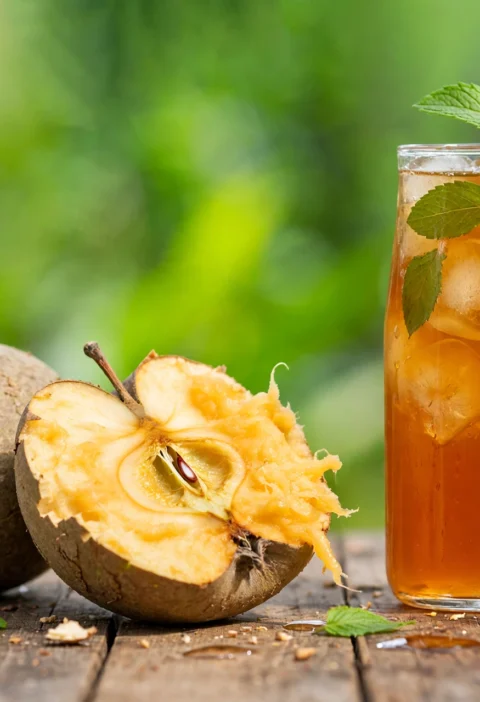
For guests, set the syrup bottle on a tray with a jug of cold water, a bowl of ice, lemon wedges, and a small dish of fresh petals, and let everyone mix their own strength. It turns a simple drink into a small ritual, and people always ask what it is. If a second cooler would round out the table, our gud sharbat brings a dark, earthy jaggery sweetness beside this rose sharbat recipe’s floral lightness, while our bel sharbat adds a soft, wood-apple fragrance that sits happily between the two. A plate of salty snacks nearby, roasted chickpeas or spiced nuts, makes the sweet glasses taste better.
Storage and Reheating
In this rose sharbat recipe, the syrup is the part worth storing, not the finished drink. Kept sealed in the fridge, it stays good for 3 to 4 weeks, and I have stretched a batch to five weeks without any change in flavour. Keep the bottle clean and dry, and always pour with a clean spoon, since stray crumbs or water shorten its life. A diluted glass, once mixed, should be drunk the same day; left overnight it loses its sparkle and the lemon dulls.
Freezing is a fine backup if you made too much syrup. Pour it into small freezer-safe jars or ice cube trays, leaving room for expansion, and it holds for 3 months. Frozen syrup cubes dropped into soda water make an instant cooler on days when even a minute of prep feels like too much. On a winter evening, a spoonful of the syrup stirred into hot water makes a gentle rose tea carrying the same fragrance in warmer form.
Rose Sharbat Recipe FAQs
Is rose sharbat the same as rose lassi or rose milk?
No, and the three are easy to tell apart once you know what each one is built on. Rose lassi starts from thick yogurt, so it is creamy, tangy and filling, a drink you could almost call a snack. Rose milk is chilled milk sweetened with rose syrup, lighter than a lassi but still milky. This rose sharbat recipe is water-based, a clear cordial poured over ice, so it drinks light, crisp and thirst-quenching in a way neither milky version does. Same flower, three very different glasses, and the water base is what makes this one a sharbat.
Can I use fresh rose petals instead of dried buds?
Yes, with one condition: they must be unsprayed, food-safe petals, ideally from your own garden or a trusted organic grower. Use about 2 cups of loosely packed fresh petals instead of the dried buds, rinsing them gently before they go into the pot. Fresh petals give a softer, greener fragrance and paler syrup, while dried buds give a deeper, more concentrated scent. Never use florist roses, which are often treated with chemicals not meant for food.
Why does my sharbat taste soapy?
Almost always, too much rose went in, or the syrup steeped far too long at high heat. Rose works within a tight margin: a modest amount smells like a blossom, while a heavier hand smells like a cosmetics counter. If your batch already tastes soapy, dilute it further, add more lemon, and serve over plenty of ice, which softens the floral edge. For the next batch, cut the buds by a third and keep the simmer gentle and short. The lemon at serving time is your best friend here, since its brightness pulls rose back from perfume toward food.
Can I make this rose sharbat recipe without sugar?
You can make a lighter version, but it will not keep the same way. Sugar is doing two jobs here: sweetening and preserving. Swap in honey for a different sweetness, using a little less than the sugar, and expect a warmer, more golden flavour and a shorter fridge life of about a week. A sugar-free sweetener works for a single-day batch, but the syrup will not store for weeks, so mix only what you plan to drink that day. For the classic stall-style glass of this rose sharbat recipe that lasts all summer, sugar remains the honest choice.
Recipe Summary
Syrup time: about 10 minutes of hands-on work plus 2 hours of steeping. Serving time: under a minute per glass. Makes about 2 cups of syrup, enough for 12 to 16 tall glasses. Level: easy, with the steeping wait as the only test of patience. This rose sharbat recipe turns dried rose buds, sugar and water into a ruby cordial that keeps in the fridge for weeks, ready to pour over ice with lemon whenever the heat calls. Make one bottle of this rose sharbat recipe, and I suspect it will become the summer staple your fridge was missing.
A little background for the curious: sharbat is a tradition of sweetened iced drinks enjoyed throughout South Asia and the Middle East for centuries, made from fruit, flowers or herbs and served over ice, while rose water has perfumed the region’s sweets and drinks since Persian and Mughal kitchens first distilled it. A homemade rose cordial sits right at the meeting point of those two traditions, simple, fragrant, and older than any bottle on a shop shelf, and that heritage is exactly what you taste in this rose sharbat recipe.