Winter in my grandmother’s house always announced itself the same way: a vegetable seller at the door with armfuls of fresh fenugreek, leaves still beaded with cold water. My grandmother would settle onto a low stool in the courtyard and start plucking, her fingers moving faster than my eyes could follow, while she told me methi was the green that kept a family sturdy through the coldest months. By midday the whole house smelled of garlic and cumin and something green and faintly bitter, and a dark pot of curry would appear next to a pile of hot rotis. This methi matar recipe is my attempt to put that winter lunch into words, worked over until the bitterness mellows into earthiness and the peas stay sweet and vivid in the gravy.
What draws me back to this curry again and again is the way the two main ingredients correct each other. Fenugreek by itself can be sharp enough to dominate a plate, and peas by themselves can feel a touch too gentle, but folded together into a tomato gravy with garlic and warm spices, they land somewhere neither reaches alone. It is the dish I turn to when the market stalls are full of good methi and I want dinner to taste like home without standing at the stove all evening. Once the rhythm settles in — rinse the leaves properly, build the base patiently, let it bubble quietly — you will find this methi matar recipe becoming a cold-weather habit.
Why This Methi Matar Recipe Works
- A quick blanch softens the bite without dulling the green. Two minutes in boiling water takes the harsh edge off the leaves, so this methi matar recipe comes out earthy rather than aggressively bitter.
- Peas bring sweetness that steadies the fenugreek. Their gentle, fresh sweetness rounds the whole dish, which is why this methi matar recipe needs no sugar to feel balanced.
- Tomatoes cook down into a deep, mellow base. Given time, they collapse into a rich foundation that carries the greens, and that slow-cooked base is what this methi matar recipe leans on.
- Garlic and ginger give the curry its backbone. A generous hand with both aromatics keeps the flavours warm and layered, so this methi matar recipe never falls flat.
- Cream at the end ties the bowl together. One swirl smooths the gravy and softens any lingering sharpness, leaving this methi matar recipe silky and welcoming.
Ingredients
The shopping list is short, and the only item that deserves real attention is the methi. Fresh fenugreek leaves are non-negotiable here; the dried kind is a seasoning, not a vegetable, and it cannot carry a curry built on greens. Pick bunches with small, vivid leaves and no yellowing at all, and buy more than feels sensible — a generous bundle shrinks to a modest pile once plucked.
- 2 cups green peas, fresh from the pod or straight from the freezer
- 4 cups fresh fenugreek leaves, plucked and rinsed (from about 2 large bunches)
- 1 large onion, chopped fine
- 2 large tomatoes, diced small
- 1 tablespoon ginger-garlic paste, freshly pounded
- 1 green chilli, split down the middle
- 2 tablespoons ghee or vegetable oil
- 1 teaspoon cumin seeds
- 1 teaspoon Kashmiri chilli powder
- 1/2 teaspoon ground turmeric
- Half a teaspoon of garam masala, with a little extra kept back for the finish
- 1 teaspoon ground coriander
- 1 teaspoon fine salt, adjusted to your taste
- 2 tablespoons fresh cream, for the finish
- Chopped fresh coriander leaves, for scattering on top
- Thin strips of ginger, to garnish
About the plucking: give yourself ten unhurried minutes for it. Take only the tender leaves and the softest top stems, and throw away anything thick, woody or yellowed. Then rinse the leaves in three separate bowls of water, lifting them out each time instead of tipping the water away, because fine grit settles at the bottom and hides in the folds. This rinsing is the step that matters most in the whole dish, since one sandy mouthful can undo an otherwise lovely curry.
Method
Step 1: Blanch the fenugreek briefly
Set a large pot of water over high heat until it boils hard, then drop in the rinsed methi leaves. Count to 120 and drain them immediately, tipping them straight into a bowl of cold water so they stop cooking. Press out as much water as you can with your hands and chop the leaves coarsely. This brief blanch is the hinge this methi matar recipe swings on: it strips away the fiercest bitterness while leaving the leaves green and full of personality. Leave them in too long and the methi goes dull; skip the step and the curry can turn unpleasantly sharp.
Step 2: Brown the onions slowly
Heat the ghee in a heavy pot over medium heat and scatter in the cumin seeds, watching until they sputter and darken a shade. Add the chopped onion with a pinch of salt and stir often for 8 to 10 minutes, until the pieces turn soft and gold around the edges. That unhurried browning is what lends the finished gravy its golden colour and gentle sweetness. Fold in the ginger-garlic paste and the split green chilli, and cook for one more minute until the raw edge disappears and the kitchen starts smelling like dinner.
Step 3: Wake the spices, then break down the tomatoes
Turn the heat down and stir in the chilli powder, coriander and turmeric, letting them darken a touch and release their fragrance over about 30 seconds. Add the chopped tomatoes with another pinch of salt, nudge the heat up slightly, and cook for 8 to 10 minutes, mashing the tomatoes with the back of a spoon as they soften, until they collapse into a thick, glossy paste and a sheen of oil appears at the rim. Hurrying this stage is the one mistake that shows in the final bowl; a base that has truly cooked down is what turns greens into a curry worth serving.
Step 4: Fold in methi and peas and let it bubble
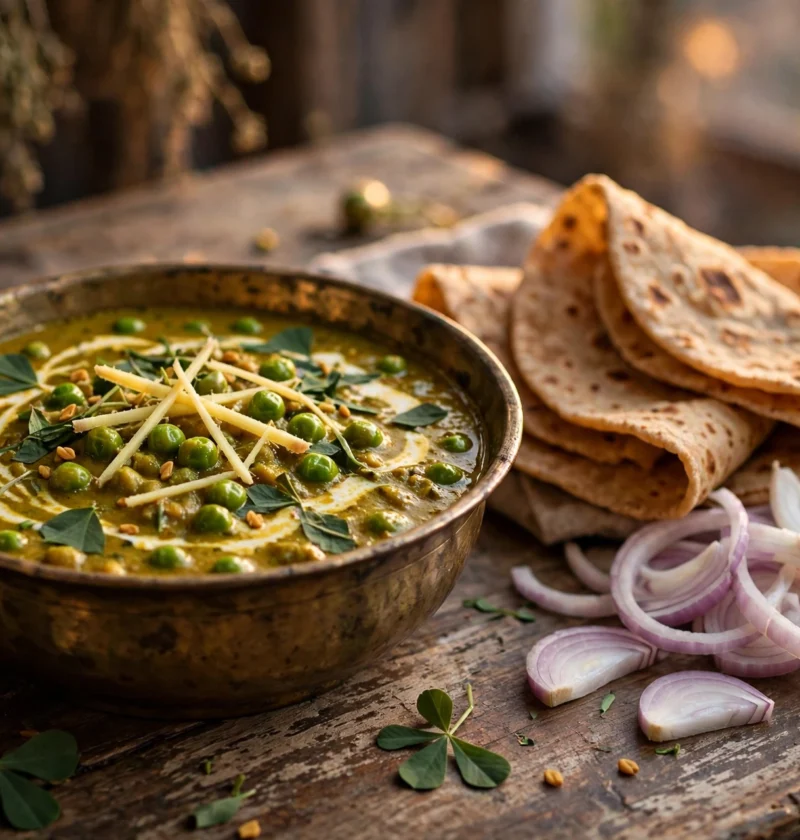
Tip the blanched, chopped methi and the peas into the pot with 1 cup of hot water, and stir until everything wears a coat of the tomato base. Let it come to a gentle boil, cover, and keep it at the lowest simmer for 15 to 18 minutes, stirring now and then, until the peas are fully tender and the leaves have dissolved into the gravy. The pot should look dark green and glossy, peas glinting through like small jewels. Season now while the curry is still over the heat, and loosen it with a splash of water if it feels too dense.
Step 5: Rest with garam masala, cream and garnish
Take the pot from the burner, fold in the garam masala and the fresh cream, then put the lid back on and leave it alone for 10 minutes. That quiet rest belongs to this methi matar recipe as surely as any cooking step, because the leaves soak up gravy as it cools a little and the flavours knit together. Ladle into bowls, scatter coriander and ginger juliennes on top, and serve hot, with an extra pinch of garam masala if you enjoy a bolder finish.
Serving Suggestions for This Methi Matar Recipe
For an ordinary weeknight, this methi matar recipe wants little more than hot rotis and something plain beside it. My usual plate is soft phulkas, a dollop of plain yogurt, and a few onion slices, and that unassuming combination has carried my family through more winters than I can count. It also travels well into the next day’s lunchbox, since the gravy thickens overnight and the flavours grow deeper.
When the table deserves a little more ceremony, serve this methi matar recipe with buttered naan, a cucumber raita, and a sharp green chutney, and it shifts from quick supper to small feast. If your household already enjoys our aloo methi, put both dishes out side by side and let everyone taste the difference, the potato-led version against this pea-led one. And for a richer, paneer-centred cousin another evening, our matar paneer offers the same sweet peas in a creamy, celebratory gravy.
Storage and Reheating
I will say it plainly: this curry improves after a night in the fridge. The methi relaxes further into the gravy, the spices settle, and the whole pot tastes more rounded the next day. Keep this methi matar recipe in a covered box in the refrigerator for no more than 3 days, and heat it slowly in a pan with a little water, stirring until it bubbles again. A gentle reheat keeps the peas bright; a hard boil dulls them.
The freezer is friendly too, with one small warning. Portion this methi matar recipe into boxes for up to 2 months, and thaw overnight in the fridge before warming. The cream can split a little after thawing, and a good stir plus a fresh spoonful of cream pulls the gravy back together. Avoid the microwave when you can, since a slow stovetop warm-up keeps the peas whole and the gravy glossy.
Methi Matar Recipe FAQs
Is methi matar the same as aloo methi?
No, and the swap of the second vegetable changes everything. Aloo methi pairs fenugreek with potatoes, which make the dish starchy and filling, the methi playing the role of a flavouring green. This methi matar recipe pairs those same leaves with green peas, so the result is lighter, sweeter and greener, the peas bursting against the dark leaves instead of absorbing gravy the way potatoes do. One green, two very different partners, and the character of the curry shifts completely with the choice.
How is methi matar different from matar paneer?
They share only the peas. Matar paneer revolves around soft cubes of paneer bathed with peas in a rich, creamy, often cashew-thickened gravy, and it is a dish for celebrations. This methi matar recipe contains no paneer whatsoever; its lead is fresh fenugreek, and the gravy is a simpler spiced tomato base with only a swirl of cream near the end. One is a festive showpiece, the other a homestyle winter green curry, and they answer different moods of the same kitchen.
Is methi matar the same as aloo matar?
Not in the least. Aloo matar is potatoes and peas in a spiced gravy, a comforting, starchy curry with no leafy green anywhere in it. This methi matar recipe drops the potatoes entirely and brings in fresh fenugreek leaves, so the flavour turns earthy with a pleasant bitter edge, the colour goes deep green instead of golden, and the dish eats far lighter. If aloo matar is a warm blanket, methi matar is a brisk walk in cold air — both comforting, but in entirely different ways.
Can I make this methi matar recipe with frozen peas or dried methi?
Frozen peas are perfectly fine — tip them in straight from the freezer and give the simmer a couple of extra minutes. Dried kasuri methi, however, cannot stand in for fresh leaves here. It is far more concentrated and sharp, and it is meant to be crumbled in by the spoonful as a seasoning, not cooked by the cupful as a vegetable. If fresh methi is out of season where you are, it is better to wait than to force this methi matar recipe with dried leaves; the dish is really about the fresh green.
Recipe Summary
Preparation runs about 20 minutes for plucking and rinsing, plus 10 minutes of chopping. Stovetop time is roughly 40 minutes, mostly a quiet simmer. It serves 4. The level is easy to moderate, with the methi rinsing and blanching the only parts worth slowing down for. This methi matar recipe takes fresh fenugreek leaves, sweet green peas, tomatoes and everyday spices, and turns them into the earthy homestyle curry that has anchored my family’s winter lunches for years. Cook it once on a cold evening, and I have a feeling it will earn a regular place in your own weeknight cooking.
A little background for the curious: fenugreek has been cultivated across South Asia for thousands of years, treasured both as a leafy green and as a spice, and known in home kitchens for its unmistakable bitter-earthy note. And peas, sweet and tender when picked young, have long played the gentle partner that softens assertive greens in Indian cooking. Bringing the two together in a spiced tomato gravy is one of the winter kitchen’s oldest moves, and that simple pairing is exactly what you taste in this methi matar recipe.