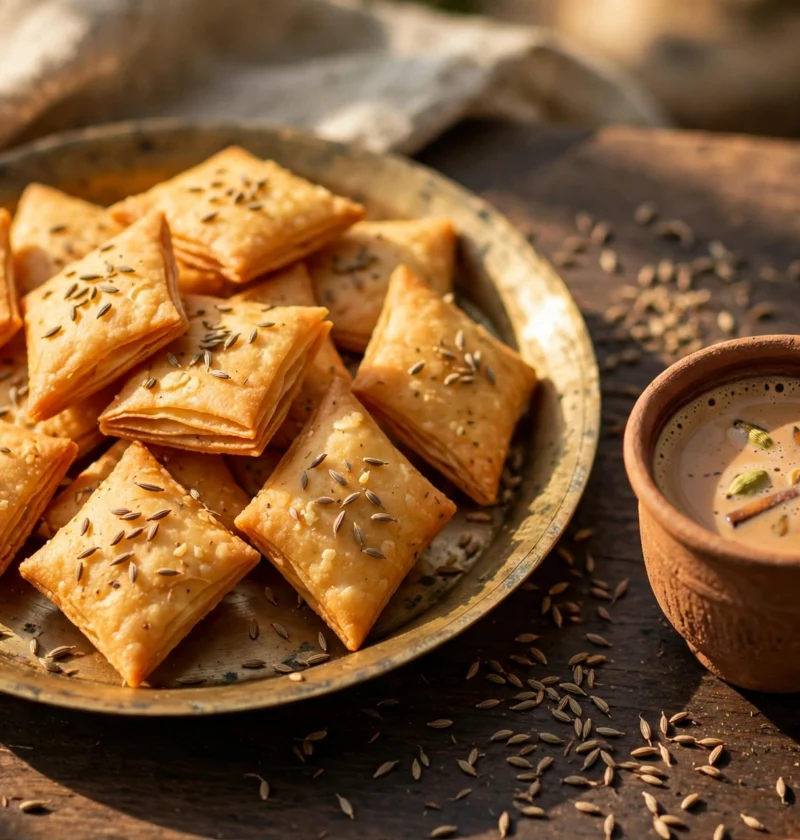
The first time I made namak para on my own, I was trying to settle an argument in my own kitchen. My mother always said the snack jar at tea time mattered as much as the tea itself, and my father insisted that nothing bought from a shop could beat what came out of our own kadhai. One rainy afternoon, with chai already on the stove and nothing crunchy in the house, I decided to test them both. I mixed a stiff dough, rolled it thin, cut it into diamonds, and slid the first batch into hot oil. The kitchen filled with the smell of ghee and ajwain, and by the time the chai was poured, the plate was already half empty. This namak para recipe is the version I have made ever since, and it is the snack my family reaches for first whenever the kettle goes on.
What I love about namak para is how little it asks of you. Four pantry ingredients, one rolling pin, and a pot of oil are all that stand between you and a jar full of golden crackers. There is no yeast to wait for, no fancy shaping to learn, and no special equipment beyond a knife and a kadhai. It keeps for weeks without losing its crunch, it travels well in a dabba, and it turns an ordinary cup of chai into a small occasion. Once you learn the two details that matter — a stiff dough and patient frying on low heat — you will find this namak para recipe becoming the jar you refill without thinking, the way my mother always did.
Why This Namak Para Recipe Works
- A stiff dough fries crisp, never greasy. Less water in the dough means less steam in the oil, so this namak para recipe gives you crackers that snap instead of soaking up fat.
- Ajwain does more than flavour the dough. The carom seeds release their warm, thyme-like aroma as the crackers fry, which is why this namak para recipe smells like a halwai shop before you even taste it.
- Ghee rubbed into the flour makes layers. Coating the flour with fat before adding water creates short, flaky layers, so this namak para recipe shatters gently instead of turning hard like a biscuit.
- Low, slow frying cooks the centre through. A gentle oil temperature lets the inside dry out completely, giving this namak para recipe a crunch that lasts for weeks in the jar.
- Diamond cuts fry evenly and look the part. Small, even pieces cook at the same rate and stack beautifully, which is why this namak para recipe cuts the dough on the diagonal.
Ingredients
The list is short enough to memorise, and that is part of the charm. The only ingredient worth choosing with care is the flour. Plain all-purpose flour gives the classic crisp bite, and a little semolina in the mix adds extra crunch that survives storage. Use ghee rather than oil for rubbing into the flour if you can; its nutty richness is what separates a good namak para from a merely decent one.
- 2 cups all-purpose flour
- 2 tablespoons fine semolina
- 1/4 cup ghee, melted and slightly cooled
- 1 teaspoon ajwain (carom seeds)
- 1 teaspoon fine salt, or to taste
- 1/2 teaspoon black pepper, coarsely crushed
- 1/2 cup water, plus a tablespoon more if needed
- Vegetable oil or ghee, for deep frying
- Chaat masala, to sprinkle while warm (optional)
On the ajwain: crush the seeds lightly between your palms before adding them, which wakes up their oils and spreads the flavour through the dough. If you have never cooked with carom seeds before, do not be put off by their strong smell in the packet; in the finished cracker they mellow into a warm, savoury note that makes the whole batch taste seasoned rather than plain. This namak para recipe uses a full teaspoon because the flavour fades a little in hot oil, and a timid hand leaves the crackers tasting flat.
Method
Step 1: Rub the ghee into the flour
Tip the flour and semolina into a wide bowl and add the salt, crushed ajwain and black pepper. Pour in the melted ghee and work it through the flour with your fingertips, lifting and crumbling the mixture for two or three minutes. You are done when the flour holds together if you squeeze a handful, then crumbles apart when you poke it. This rubbing step is the quiet heart of this namak para recipe: the fat coats the flour particles, shortens the gluten, and guarantees a flaky cracker instead of a tough one.
Step 2: Knead a stiff, smooth dough
Add the water gradually, a splash at a time, working it in with your fingers until the dough just comes together. Knead it firmly on the counter for five or six minutes until it feels smooth, firm and slightly springy — noticeably stiffer than chapati dough, and not sticky at all. If it cracks badly at the edges, add water a teaspoon at a time; if it sticks to your hands, dust in a little flour. Cover the dough with a damp cloth and let it rest for twenty minutes, which relaxes the gluten and makes the rolling in the next stage of this namak para recipe much easier.
Step 3: Roll thin and cut into diamonds
Divide the rested dough into two balls. Roll one ball out on a lightly floured surface into a large, even sheet about one-eighth of an inch thick, turning it often so it stays round and does not stick. With a knife or a pizza cutter, cut the sheet into strips about an inch and a half wide, then cut across the strips on the diagonal to make diamonds. Do not worry if the edge pieces come out as triangles; they fry just as well and taste exactly the same. Repeat with the second ball while the first batch of this namak para recipe waits under a cloth.
Step 4: Fry low and slow until golden
Heat oil in a deep kadhai over medium heat until a small piece of dough dropped in rises slowly to the surface, with gentle bubbles around it — not furiously, which means the oil is too hot. Slide in a handful of diamonds, taking care not to crowd the pan, and fry on low to medium heat for six to eight minutes, stirring gently now and then, until they turn a deep golden colour and the bubbling subsides. Lift them out with a slotted spoon and drain on a wire rack. If the first batch browns in under three minutes, the oil is too hot and the centres will stay soft, so lower the flame before the next round of this namak para recipe.
Step 5: Season, cool and store
While the crackers are still warm, sprinkle them lightly with chaat masala if you like a tangy edge, and toss gently so the seasoning clings. Let them cool completely on the rack — they crisp up further as they cool, so do not judge the texture while they are hot. Once cold, pack them into an airtight jar or tin, where they will stay crunchy for three to four weeks. The hardest part of this namak para recipe is not eating the first batch before it reaches the jar.
Serving Suggestions for This Namak Para Recipe
On a quiet evening, this namak para recipe needs nothing more than a hot cup of masala chai. I pour the tea, set out a small bowl of the crackers, and watch them disappear while the conversation wanders. It is also the snack I pack for train journeys and school tiffins, because it does not crumble into dust, does not go stale in a day, and tastes just as good at room temperature as it does fresh from the kadhai.
For guests, dress the plate up a little. Serve this namak para recipe in a brass bowl with a green chutney and a small dish of pickled onions, and it becomes a proper tea-time spread rather than a handful from the jar. It sits happily beside other fried snacks on a festive table too. If your household already enjoys our masala papad, set the two out together for a fun contrast, a thin, topped papad beside these sturdy, spiced diamonds. And for a soft, rolled snack on another day, our bread roll brings a warm, spiced filling beside this dry, crunchy one.
Storage and Reheating
This is one of the most forgiving snacks to keep, and I would argue it is the whole point of making it. Store this namak para recipe in a clean, dry, airtight jar at room temperature for three to four weeks, and it will stay crisp the entire time, provided no damp spoon ever goes into the jar. Keep the jar away from the stove, since steam and heat soften the crackers faster than time does.
If a batch does go slightly soft after weeks in a humid kitchen, spread the crackers on a tray and warm them in a 300°F oven for five minutes, then cool completely before returning them to the jar. The dry heat drives out the moisture and brings back the snap. Never microwave them for crisping, since it makes them chewy instead, and never store them in the fridge, because condensation is the enemy of every cracker this namak para recipe produces.
Namak Para Recipe FAQs
Is namak para the same as shakkarpara?
No, and the difference is the flavour of the dough itself. Shakkarpara is the sweet cousin, made from a similar flour dough but sweetened with sugar and often dipped in syrup, so it tastes like a dessert cracker. This namak para recipe is deliberately salty and savoury, seasoned with salt, ajwain and black pepper and never a grain of sugar. Same rolling and frying technique, opposite end of the taste spectrum, and the two are never interchangeable on a tea tray.
How is namak para different from mathri?
The two share a dough and a kadhai, but they part ways in shape and texture. Mathri is rolled thicker and cut into round discs, often pricked with a fork, and it fries up dense and flaky, almost like a savoury shortcrust biscuit. This namak para recipe rolls the dough much thinner and cuts it into diamonds, so the crackers come out lighter, crisper and snappier, with more surface to catch seasoning. Think of mathri as the sturdy cousin and namak para as the crisp one.
Why did my namak para turn soft instead of crisp?
Almost always, the oil was too hot or the dough was too soft. Hot oil browns the outside before the inside has time to dry out, leaving a cracker that looks done but goes limp as it cools. A wet, chapati-soft dough has the same problem from the other direction. Keep the dough stiff, keep the flame low, and fry until the bubbling nearly stops — that quiet oil is the sign the moisture is gone and this namak para recipe has reached full crunch.
Can I bake namak para instead of frying it?
Yes, with a small trade-off in richness. Brush the cut diamonds lightly with oil and bake at 375°F for 15 to 18 minutes, flipping once, until deep golden. The baked version is crisp and lighter, but it lacks the even, shattering crunch that only a slow fry gives. For the classic halwai texture this namak para recipe was built around, deep frying on low heat remains the method to beat.
Recipe Summary
Prep time: about 20 minutes of mixing and rolling, plus 20 minutes of resting. Frying: roughly 25 minutes in batches. Makes about 4 cups of crackers. Level: easy, with the stiff dough and low frying temperature as the only steps worth taking seriously. This namak para recipe takes flour, ghee, ajwain and salt, and turns them into golden, flaky diamonds that keep for weeks and make any cup of chai feel like an occasion.
A little background for the curious: namak para is a traditional savoury snack of North India, cut into diamonds and fried crisp for tea time and festivals. And ajwain, the carom seed at its heart, is a pungent spice prized in Indian kitchens for its warm, thyme-like flavour. A stiff dough, a pinch of that seed, and a slow fry are all the tradition asks for, and that simple combination is exactly what you taste in this namak para recipe.