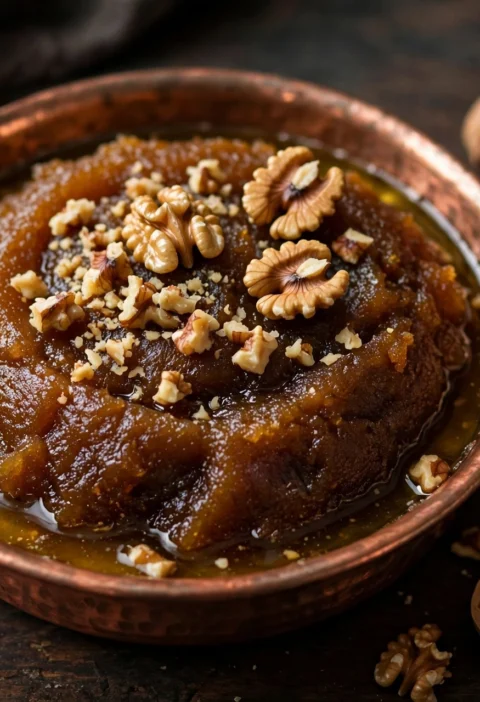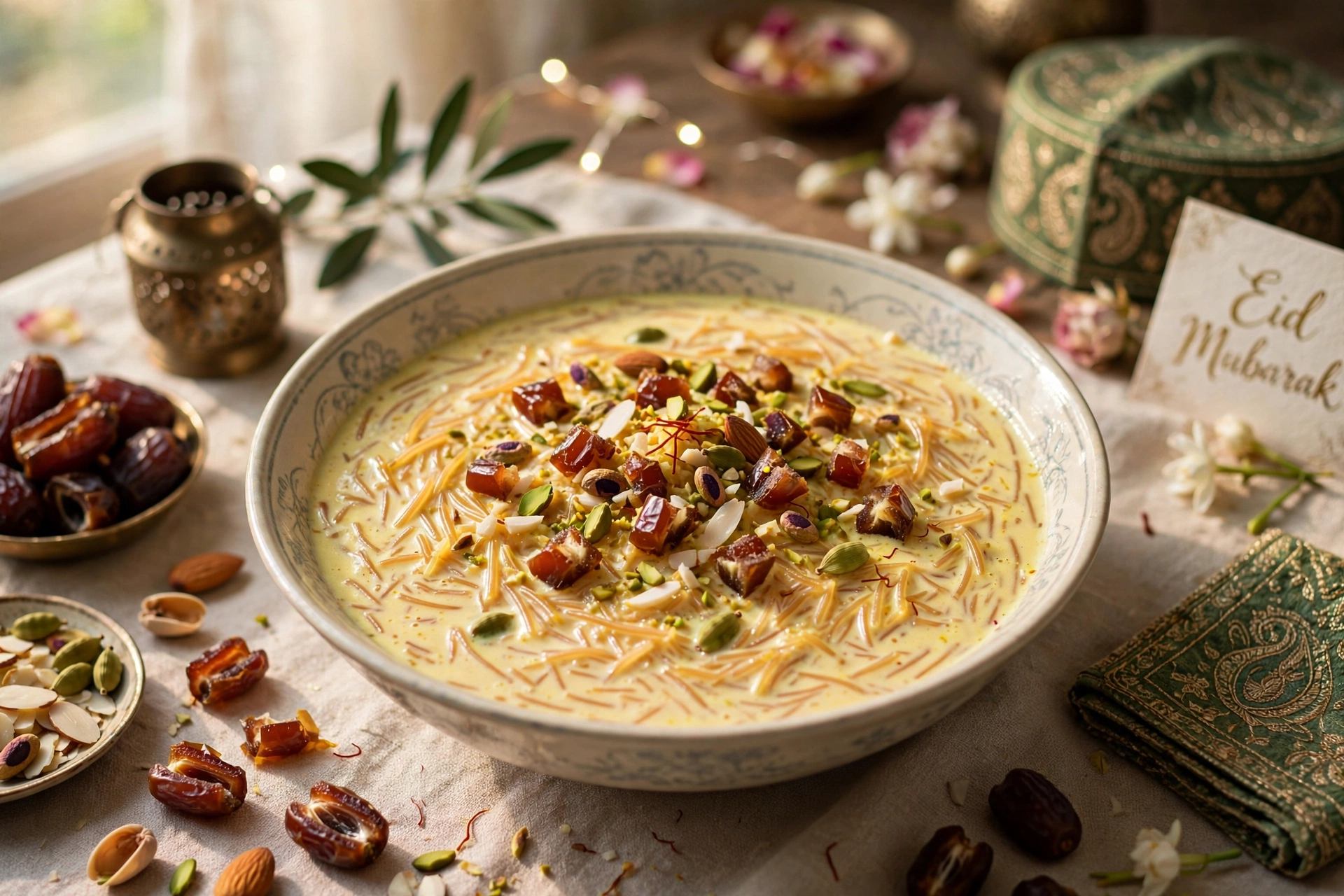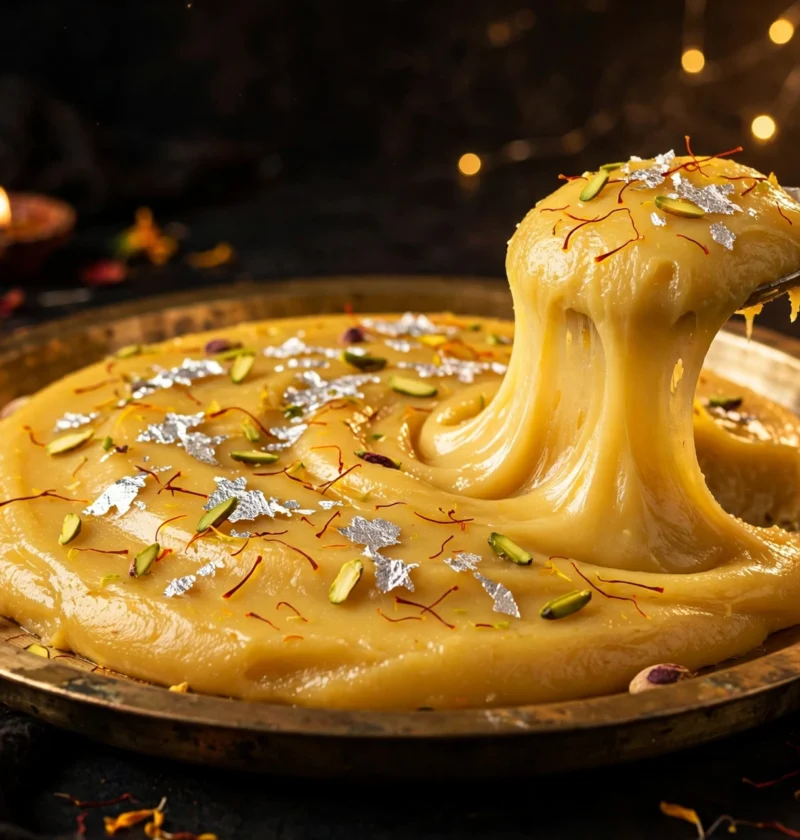
At a Hyderabadi wedding in Karachi, I did something I am not proud of: I laughed at the dessert counter. There, between the double ka meetha and the qubani ka meetha, sat a tray labeled “anday ka halwa” — egg halwa — and my Lahori brain filed it under dare, not dessert. The auntie serving it caught my expression and, with the serene cruelty of aunties everywhere, put a tiny clay bowl in my hand anyway. One spoonful ended the joke. It was silk — warm, golden, perfumed with saffron and cardamom, with a richness that had nothing to do with eggs as I understood them. I ate three bowls and asked for the recipe, which she recited the way family recipes are always recited: fast, approximate, and with one step deliberately vague. This anday ka halwa recipe is that recipe, decoded over several winters of trial, and the vague step — the beating of the eggs with sugar until pale — turned out to be the entire secret.
My first solo attempt is a family legend for the wrong reasons. I whisked the eggs the way I whisk eggs for an omelet — thirty seconds, good enough — tipped them into hot ghee, and produced a dessert that smelled like breakfast and tasted like regret. My mother took one bite, put the spoon down gently, and said, “Beta, this is a very nice… scramble.” The repair took an afternoon of stubbornness: eggs beaten with sugar for a full five minutes until thick and pale, ghee added in stages rather than all at once, and the whole thing cooked low and slow until the ghee rose to the surface like it was surrendering. That version is this anday ka halwa recipe, and no one has called it a scramble since.
Why This Anday Ka Halwa Recipe Works
Eggs in dessert make people nervous, and honestly, they should — the line between halwa and omelet is technique, and it is thinner than you think. This anday ka halwa recipe stays on the right side of it with five decisions:
- The eggs are beaten with sugar until pale and thick. Five full minutes of beating — by hand with a whisk or with a mixer — until the mixture falls in ribbons and has lost its eggy smell. Sugar does two jobs here: it sweetens, and it coats the egg proteins so they cannot seize into curds when they hit the heat. In this anday ka halwa recipe, the whisking is not prep; it is the recipe.
- The ghee goes in stages, not all at once. A third at the start to receive the eggs, a third folded in midway to keep the mixture supple, and the final spoonfuls at the end for gloss. Ghee added all at once pools and fries; ghee added in stages emulsifies. This anday ka halwa recipe treats ghee the way a French cook treats butter in a sauce — gradually, and with respect.
- The cooking is low and slow, for a full 25 minutes. Medium-low heat, constant stirring, no shortcuts. The egg mixture will go through an alarming phase where it looks like wet scrambled eggs — keep going. Around the twenty-minute mark it transforms: the grains dissolve into silk and the ghee begins to separate at the edges. Every rushed anday ka halwa recipe I have tasted stopped before this transformation; patience is the ingredient nobody lists.
- Khoya goes in at the end, off the fiercest heat. Crumbled milk solids folded through in the last five minutes add a milky depth that eggs alone cannot reach, and adding them late keeps them from overcooking into graininess. This anday ka halwa recipe uses khoya the way a curry uses cream at the end — as a finisher, not a foundation.
- Saffron, cardamom, and kewra do the convincing. These are the flavors that tell your nose “dessert” before your brain can object about eggs. Saffron bloomed in warm milk for the color and the perfume, cardamom for warmth, kewra for that unmistakable Hyderabadi floral note. In this anday ka halwa recipe, the aromatics are not garnish — they are the disguise that makes the whole trick work.
Ingredients
Serves 8-10 (about 4 cups)
For the halwa:
- 8 large eggs, at room temperature
- 1 cup (200g) sugar
- 3/4 cup (170g) ghee, plus 2 tablespoons more for finishing
- 1 cup (250g) khoya, crumbled
- 1/2 cup warm milk
- A generous pinch of saffron threads (about 1/4 teaspoon)
- 1/2 teaspoon cardamom powder
- 1/2 teaspoon kewra essence
To finish:
- 1/4 cup sliced almonds
- 1/4 cup sliced pistachios
- 2 tablespoons chironji (or melon seeds), optional
- Silver leaf (varq), for garnish
Two ingredients carry this dessert, and both deserve respect. Ghee — clarified butter with the milk solids browned out — is what gives the halwa its silk and its staying power; the slow bhunai in ghee is literally what cooks the eggs into dessert instead of breakfast. And saffron, the world’s most theatrical spice, does the visual and aromatic work: a pinch bloomed in warm milk turns the whole pan sunset-gold and perfumes it beyond any suspicion of egg.
How to Make This Anday Ka Halwa Recipe – Step by Step
Step 1: Bloom the saffron and beat the eggs pale.
Drop the saffron threads into the warm milk and set aside — in 15 minutes it will turn the milk a deep, glowing orange. Meanwhile, crack the eggs into your largest bowl, add the sugar, and beat for a full 5 minutes until the mixture is pale, thick, and falls from the whisk in slow ribbons. It should smell sweet, not eggy. If it still smells like eggs, keep beating. This step is the insurance policy of the entire anday ka halwa recipe — do not rush it.
Step 2: Start the ghee and pour in the eggs.
Heat a third of the ghee in a wide, heavy kadhai or deep pan over medium-low heat until it shimmers. Pour in the beaten egg mixture and begin stirring immediately with a wooden spoon or spatula, scraping the bottom and corners. The mixture will start to set within a minute — keep it moving, breaking up any large curds. Lower the heat if you hear aggressive sizzling; this anday ka halwa recipe should murmur, never shout.
Step 3: Bhuno low and slow for 25 minutes.
This is the heart of the work: keep stirring, keep the heat low, and add the second third of the ghee in two additions as the mixture thickens. Around minute ten it will look like wet scrambled eggs and you will doubt everything — keep going. By minute twenty the grains begin to melt into each other; by minute twenty-five the mixture turns silky, deep golden, and the ghee starts glistening at the edges. That separation is the signal: the halwa is cooked. Undercooked anday ka halwa recipe batches taste eggy; this one will not.
Step 4: Fold in the khoya and the aromatics.
Stir in the crumbled khoya and cook 5 more minutes, stirring, until it melts completely into the halwa. Pour in the saffron milk, add the cardamom powder and kewra essence, and the remaining ghee, and stir for 2 final minutes until everything is glossy and unified. Taste: it should be rich, sweet, fragrant, with no trace of egginess — just silk. If it needs a touch more sweetness, a tablespoon of sugar stirred in now will dissolve in the heat.
Step 5: Garnish, rest, and serve warm.
Transfer to a serving platter or individual clay bowls, scatter over the almonds, pistachios, and chironji, and lay on the silver leaf. Rest 10 minutes — the halwa firms slightly and the flavors settle. Serve this anday ka halwa recipe warm, not hot and not cold; warm is when the ghee is still fragrant and the texture is at its silkiest. A spoon should stand in it briefly, then slowly surrender.
Serving Suggestions
This anday ka halwa recipe is celebration food — weddings, Eids, the dessert you make when ordinary halwa feels too ordinary. Serve it warm in small portions, because it is rich the way good things are rich: a little goes a long way, and everyone will want a little more. It needs no accompaniment, though a cup of unsweetened doodh patti alongside cuts the richness beautifully. In Hyderabad it sometimes arrives with a drizzle of rabri on top; if you have rabri, do it — if not, the halwa does not suffer.
It sits in proud company on this site. My suji ka halwa is the everyday halwa — quick, humble, the one you make on a Tuesday — and this anday ka halwa recipe is its dressed-up sibling, the one that takes forty minutes and tastes like it took four hours. And my gajar ka halwa shares the same slow-bhunai soul: grated carrot instead of beaten egg, the same ghee, the same patience. Make all three across a winter and you will have strong opinions about which is best. (Mine changes weekly.)
Storage and Reheating
This anday ka halwa recipe keeps 4 to 5 days refrigerated in an airtight container — the ghee preserves it well. It firms up cold into something sliceable; to serve, warm it gently in a heavy pan with a spoonful of milk, stirring until silky again. The microwave works in 30-second bursts with stirring between, but the pan gives a better texture. It also freezes for up to a month: portion it, wrap well, thaw overnight in the fridge, and reheat gently. The saffron perfume fades slightly after freezing, so add a fresh pinch of cardamom when reheating to wake it back up.
Frequently Asked Questions
Will it taste or smell like eggs?
Not if you follow the method — and that is the whole point of this anday ka halwa recipe. The eggy smell comes from under-beaten eggs hitting hot fat and seizing; five minutes of beating with sugar coats the proteins, and the long, slow bhunai cooks them so gently they never get the chance to smell like breakfast. The saffron, cardamom, and kewra finish the disguise. If a batch does smell eggy, it was under-beaten or under-cooked — give it more of both next time.
Can I reduce the ghee?
You can cut it to half a cup, but I will be honest: this anday ka halwa recipe is a ghee dessert, and less ghee means less silk and more risk of sticking and scorching. The ghee is not just richness — it is the cooking medium that makes the slow transformation possible. If you must reduce it, use the heaviest non-stick pan you own, keep the heat truly low, and stir without mercy. Do not reduce the khoya instead; the khoya is doing different work.
My halwa turned out grainy instead of silky. What went wrong?
Almost certainly the heat was too high or the stirring too lazy in the first ten minutes, so the eggs set into curds before the sugar could protect them. The fix for next time: lower heat, constant motion, ghee in stages. For the current batch, all is not lost — push it through a fine sieve or give it a brief blitz with an immersion blender, then return it to the pan with a spoonful of ghee and stir smooth. This anday ka halwa recipe forgives; it just asks for attention first.
Can I make it without khoya?
Yes — replace the khoya with 1/2 cup of full-cream milk powder whisked into the warm saffron milk before adding. The result is slightly less rich but still unmistakably anday ka halwa. What I would not skip is the saffron or the kewra; without them the dessert loses its identity and drifts toward sweet scrambled eggs, which is exactly the territory this anday ka halwa recipe was built to avoid.
Recipe Summary
- Preparation: 15 minutes
- Cooking: 35 minutes
- Total: about 50 minutes
- Servings: 8-10
- Cuisine: Pakistani / Hyderabadi
- Course: Dessert